

Production process of phosphorus slag fine powder for concrete
Published on: 2025-04-07
The production of phosphorus slag fine powder for concrete is a sophisticated process that transforms industrial byproduct into a high-performance supplementary cementitious material (SCM). This article provides a comprehensive overview of the entire workflow, from raw material selection to final powder output, focusing on the advanced grinding technologies employed by Shanghai SBM Machinery Equipment Co., Ltd. (SBM Machinery). As a total solution provider, SBM Machinery offers tailored grinding systems that address common customer pain points including inconsistent fineness, high energy consumption, excessive wear rates, and environmental compliance issues. By leveraging equipment like the MTW European Trapezium Mill, LM Vertical Roller Mill, SCM Ultrafine Mill, LUM Ultrafine Vertical Mill, and optimized Ball Mill, producers can achieve high-efficiency pulverization with precise particle size distribution, stable operation, and low operating costs. The process integrates drying, grinding, classification, and dust collection into a seamless system, ensuring the final product meets stringent concrete industry standards while maximizing return on investment.
Raw Material Preparation and Pre-Processing
Phosphorus slag, a byproduct of yellow phosphorus production, typically contains high levels of SiO₂, CaO, and Al₂O₃, making it suitable for use in concrete as a pozzolanic material. The production process begins with the collection and pre-processing of raw slag. The material first undergoes crushing to reduce particle size to 0-50mm, ensuring compatibility with downstream grinding equipment. At this stage, moisture content is carefully monitored; if the slag exceeds 8% moisture, a drying step is integrated using hot gas from an external source or the mill's own drying chamber. SBM Machinery emphasizes that proper pre-processing minimizes energy loss and maximizes mill throughput. For example, the LM Vertical Roller Mill can handle materials with up to 15% moisture due to its integrated drying function, reducing the need for separate dryers and lowering overall investment costs.
Grinding Process with Advanced Mill Technologies
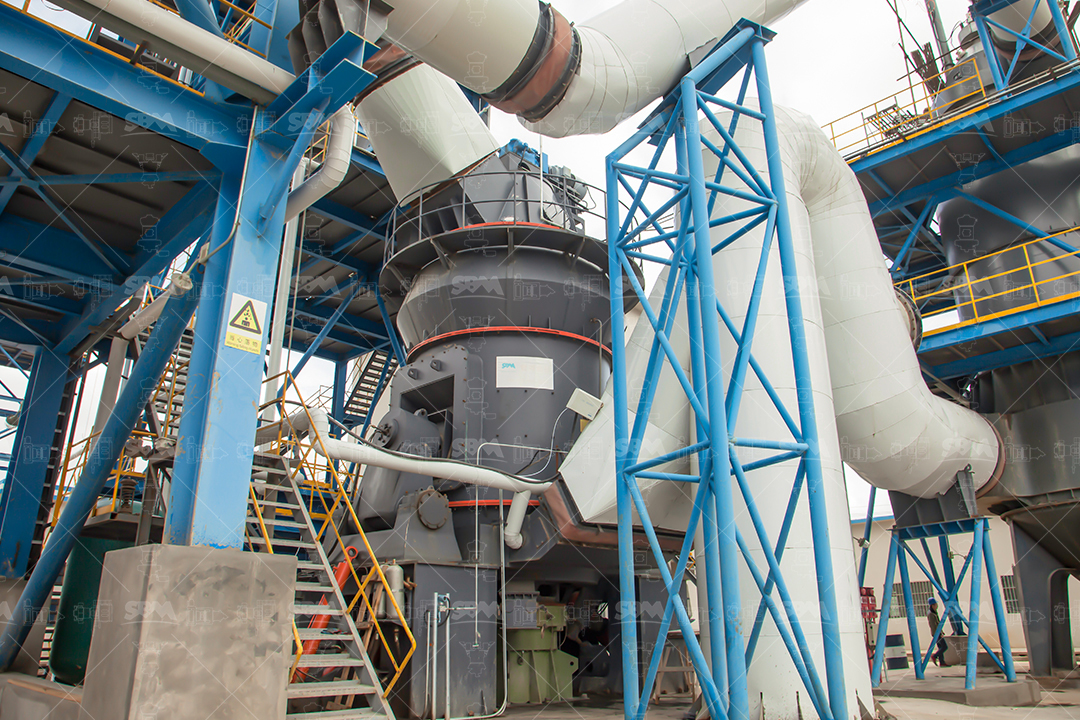
The core of phosphorus slag fine powder production lies in the grinding stage. Depending on required fineness (typically 325 to 400 mesh for concrete applications) and capacity demands (3-400 tph), SBM Machinery offers several mill options. The MTW European Trapezium Grinding Mill is ideal for medium-scale production (3-40 tph) with input sizes up to 50mm and fineness adjustable between 30-400 mesh. Its cone gear whole transmission and arc air duct design ensure high transmission efficiency and low energy loss, while the unique wear-proof perching knife design reduces replacement costs by allowing only the blade to be changed during maintenance. For large-scale operations, the LM Vertical Roller Mill (3-400 tph) excels with low comprehensive investment due to its compact layout (50% less floor space than ball mill systems) and 30-40% lower energy consumption. The grinding rollers do not contact the grinding plate directly, significantly reducing wear and extending service life. Automatic control systems enable remote operation, saving labor costs and ensuring consistent product quality.
Fineness Control and Classification
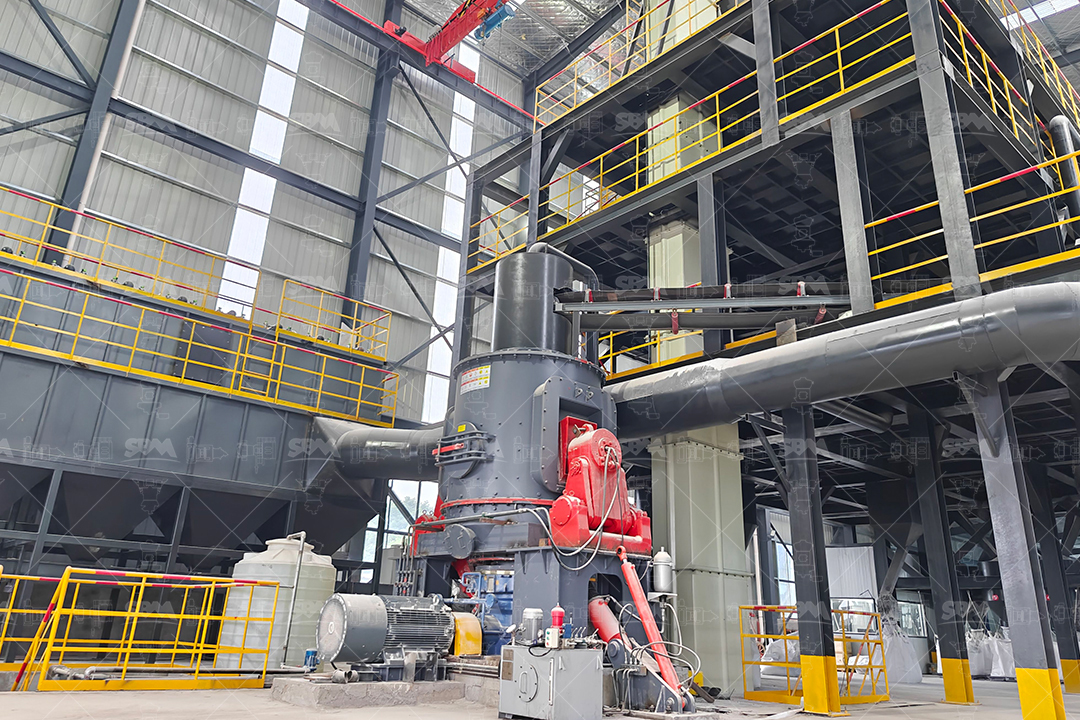
Achieving the precise fineness required for concrete applications is a common customer pain point. SBM Machinery addresses this with advanced classification technology integrated into its mills. For ultra-fine requirements, the SCM Ultrafine Mill (325-2500 mesh) and LUM Ultrafine Vertical Mill (325-4000 mesh) utilize high-efficiency vertical turbine powder classifiers and multi-rotor classifiers respectively. These systems deliver D97≤5μm fineness with accurate cutting size and no spillover of coarse powder. Frequency-conversion control allows operators to adjust fineness in real-time, accommodating different concrete mix designs. The LUM Ultrafine Vertical Mill's grinding curves are uniquely designed based on ultrafine pulverization principles, making it easier to form a material bed, which improves grinding efficiency and increases the proportion of finished products from primary grinding. This reduces recirculation load and energy waste.
Environmental Protection and Dust Control
Environmental compliance is a critical concern for phosphorus slag processing plants. All SBM grinding systems are designed with robust environmental protection features. The LM Vertical Roller Mill operates with little vibration and low noise, with a wholly sealed system under negative pressure to prevent dust spillover. The SCM Ultrafine Mill employs an efficient double powder collecting method using powder collectors and pulse dust collectors, achieving dust collection performance far exceeding international standards. Sound insulation rooms and mufflers further reduce noise pollution. For the Ball Mill, optimized structural design and new wear-resistant materials reduce spare part costs while maintaining low emissions. These features help customers meet national environmental regulations, avoid fines, and maintain community relations.
System Integration and Automation
To address the pain point of complex operation and high labor costs, SBM Machinery provides intelligent control systems across all mill platforms. The LM Vertical Roller Mill features an expert automatic control system that enables free switching between remote and local control. The LUM Ultrafine Vertical Mill uses PLC/DCS automatic control to ensure accurate control of grinding pressure, high efficiency, and stable operation. Frequency-conversion speed regulation allows the mill to be easily adjusted for different materials and fineness requirements. This automation not only reduces human error but also lowers operational costs by optimizing energy use and minimizing downtime. SBM's total solution approach means customers receive a complete system from crusher to storage silo, with all components engineered for seamless integration.
Final Product Quality and Application Benefits
The finished phosphorus slag fine powder, with typical Blaine fineness of 4000-6000 cm²/g, serves as an effective SCM in concrete production. It enhances workability, reduces heat of hydration, improves long-term strength, and lowers permeability. The grinding process ensures stable chemical composition and uniform particle distribution, eliminating common issues like segregation or inconsistent setting times. SBM Machinery's equipment has been deployed in over 180 countries, serving industries including power generation, building materials, and mining. By choosing the appropriate mill type based on capacity and fineness needs, customers can transform a challenging waste material into a valuable resource, reducing landfill burden and creating new revenue streams.
FAQ
1. What is the typical fineness required for phosphorus slag powder used in concrete, and can your equipment achieve it consistently?
The typical fineness for concrete applications ranges from 325 to 400 mesh (45-38 microns). Yes, our MTW and LM mills can achieve this range with precision, and our SCM and LUM mills can go up to 2500 mesh if needed. The automatic control system ensures consistent output batch after batch.
2. How do you solve the high wear rate problem often encountered when grinding abrasive phosphorus slag?
Our mills feature wear-resistant materials and unique designs. For example, the MTW mill has a combined-type shovel blade where only the blade needs replacement, and the curved blade design extends roller and ring life. The LM mill's rollers do not contact the grinding plate directly, reducing wear by up to 30% compared to traditional ball mills.
3. My current system has high energy consumption. How can SBM help reduce operating costs?
Our LM Vertical Roller Mill consumes 30-40% less energy than ball mill systems, while the SCM Ultrafine Mill uses 30% less energy than jet mills. The integrated design also eliminates the need for separate drying and conveying equipment, further lowering total energy use.
4. What environmental certifications does your equipment meet, and how do you control dust emissions?
All systems meet international environmental standards, including EU and US regulations. The entire system operates under negative pressure with sealed enclosures, preventing dust leakage. Our pulse dust collectors achieve over 99.9% dust collection efficiency, and noise levels are kept below 85 dB with optional soundproofing.
5. Can I produce different fineness grades for different concrete applications with the same mill?
Yes, all our mills allow for easy fineness adjustment. The MTW mill has adjustable output from 30-400 mesh, the LM from 30-400 mesh, and the SCM/LUM from 325-4000 mesh. Frequency-conversion speed control and classifier adjustments let you switch between grades in minutes without mechanical changes.


