

Process comparison and selection guide: vertical roller mill vs. ball mill
Selecting the right grinding mill is one of the most critical decisions in mineral processing, power generation, building materials, and chemical industries. Two dominant technologies—vertical roller mill (VRM) and ball mill—compete for preference, each with distinct strengths and trade-offs. This guide provides a comprehensive comparison based on actual operational data, maintenance requirements, energy efficiency, and total cost of ownership. Drawing on decades of field experience and feedback from over 9,500 customers worldwide, we present an unbiased analysis to help engineers and plant managers make informed decisions. Key differentiators include energy consumption (VRM typically 30-40% lower), floor space (VRM occupies about 50% less), fineness control, drying capability, and wear part longevity. While ball mills offer proven reliability for certain applications, VRM technology has evolved to become the mainstream choice for new installations requiring high capacity, low operating costs, and environmental compliance.
Energy consumption and operating costs
The most immediate pain point for grinding operations is energy cost, which often represents 60-70% of total milling expenses. In this regard, the LM Vertical Roller Mill holds a decisive advantage. Its grinding rollers directly compact and shear material on the grinding table without metal-to-metal contact, resulting in specific energy consumption 30-40% lower than a ball mill system. For a typical cement plant producing 100 tons per hour, this translates into annual electricity savings of several million kilowatt-hours. The ball mill, by contrast, relies on impact and attrition through tumbling steel media, which inherently wastes energy as heat and noise. Additionally, the ball mill requires regular replacement of grinding balls—a recurring consumable cost that can exceed 15% of total operational expenditure over a decade. The LM mill's roller and liner materials are engineered for extended service life, with some customers reporting 8,000-12,000 operating hours before replacement, compared to 2,000-4,000 hours for ball mill liners in similar applications.
Floor space and civil engineering investment
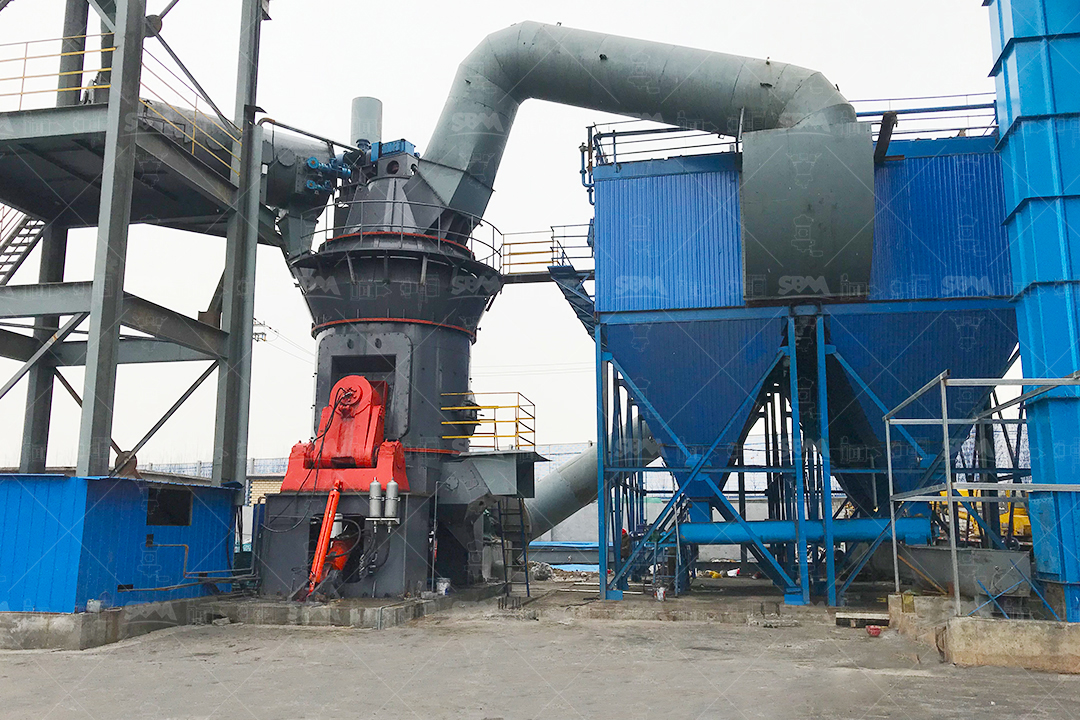
Plant footprint is another major consideration, particularly for brownfield expansions or sites with limited real estate. The LM Vertical Roller Mill integrates crushing, drying, grinding, classifying, and material transport into a single compact unit. Its system occupies approximately 50% of the floor area required by an equivalent ball mill system, which needs separate crushers, elevators, air slides, and multiple storage bins. Moreover, the VRM can be installed outdoors with a simple foundation, whereas ball mills typically require enclosed buildings with heavy crane support for liner and ball maintenance. For a 100 tph grinding circuit, civil engineering costs for a VRM-based system can be 30-45% lower than for a ball mill layout. The SBM LM series also eliminates the need for bulky auxiliary equipment such as bucket elevators and belt conveyors, simplifying project logistics and reducing installation time by several weeks.
Product fineness and particle shape
Fineness requirements vary widely across industries—from 30 mesh for coal fired boilers to 2500 mesh for ultrafine fillers and new energy materials. Both VRM and ball mill can achieve 30-400 mesh outputs, but the distribution and efficiency differ. The ball mill with closed circuit classifier produces a relatively broad particle size distribution, which may be acceptable for cement but problematic for specialty applications like high-grade paper coatings or lithium battery cathode materials. The LM Vertical Roller Mill, especially when equipped with a dynamic classifier, delivers a steeper particle size distribution with fewer oversize particles and better control of the d97 value. For ultrafine requirements (325-2500 mesh), the SCM Ultrafine Mill or LUM Ultrafine Vertical Mill are purpose-built, offering one-pass D97 ≤ 5 microns—a specification that ball mills can only achieve with multiple passes and higher specific energy. Customers in the non-metallic mineral sector (calcite, talc, barite) consistently report that VRM products exhibit superior particle shape (sphericity) and surface area, which improves packing density and downstream process performance.
Maintenance and downtime
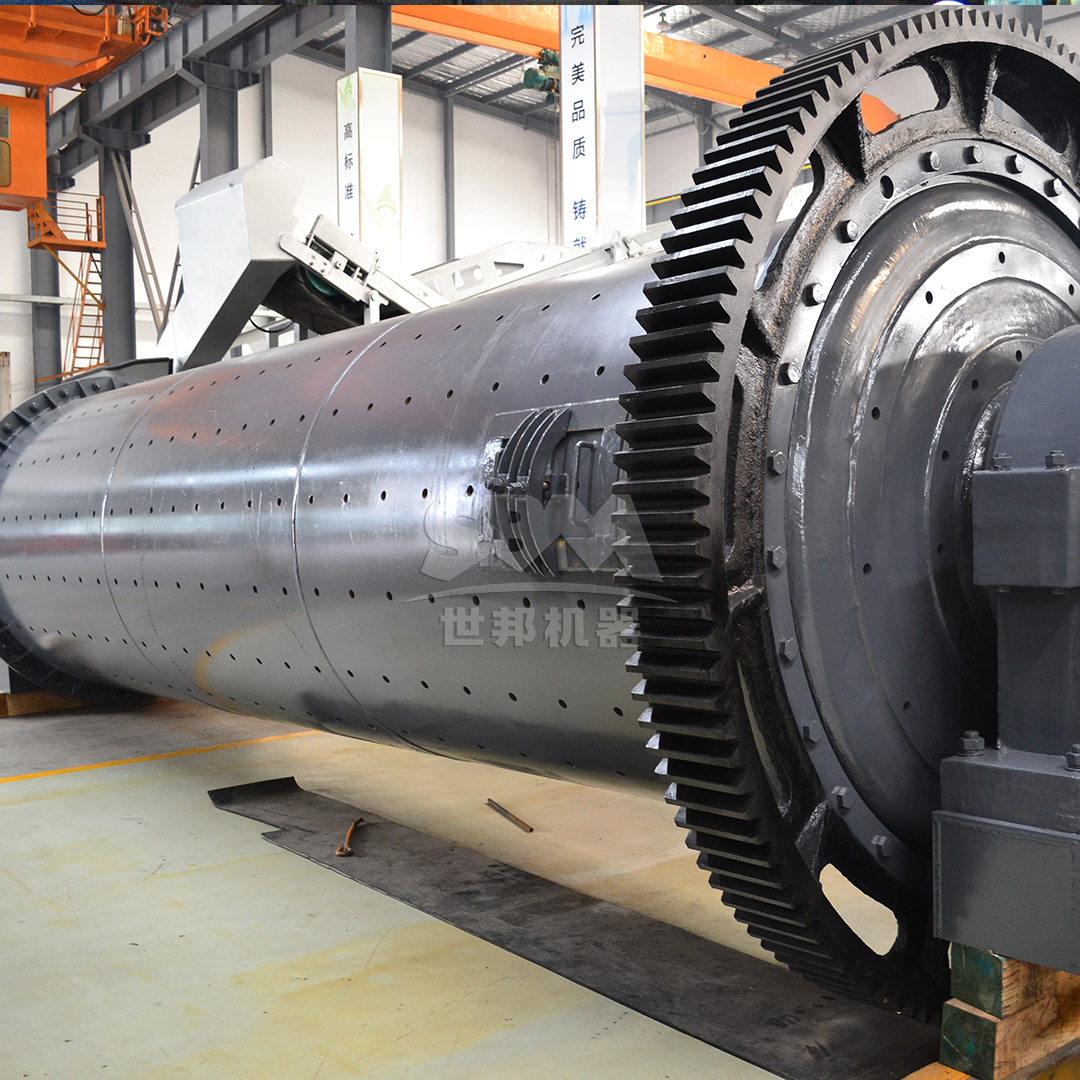
Unplanned downtime is the enemy of production targets. Ball mills suffer from several inherent maintenance challenges: high wear on grinding media and liners, frequent lubrication needs for large ring gears, and structural fatigue from impact loads. Changing 100 tons of grinding balls can shut down a plant for 48-72 hours. In contrast, the LM Vertical Roller Mill's roller shell and liner plate replacement is designed for simplicity—the combined-type shovel blade allows replacing only the blade tip, not the entire assembly. The cone gear whole transmission system eliminates gearbox alignment issues common in ball mills, and the oil absorption lubrication system reduces oil consumption by up to 40%. Field data from over 1,800 LM mill installations shows average availability exceeding 97%, with scheduled maintenance intervals of 6-8 months. For the ball mill, even with optimized liners, typical availability ranges from 85-92% due to more frequent media recharging and liner replacements. The MTW European Trapezium Mill also offers a curved shovel blade design that extends roller and ring life by optimizing the feeding angle, reducing operating costs further.
Environmental compliance and noise
Stringent environmental regulations worldwide are pushing operators toward cleaner technologies. The LM Vertical Roller Mill operates under negative pressure with a fully sealed system, virtually eliminating dust emissions. Its low vibration design produces noise levels typically 15-20 dB(A) lower than equivalently sized ball mills—often below 85 dB(A) at 1 meter, meeting OSHA and EU directives without additional enclosures. The ball mill, by its nature, generates higher noise from steel ball impacts (typically 95-105 dB(A)) and requires soundproof cladding or building insulation, adding capital and maintenance costs. Furthermore, VRM systems eliminate the need for wet grinding in many cases, reducing water consumption and slurry handling issues. For dry grinding applications like limestone desulfurization or slag powder production, the LM mill's integrated drying capability using hot gas from the kiln or furnace makes it the clear choice for greenfield projects aiming for carbon footprint reduction.
Application-specific recommendations
Based on SBM's extensive project database spanning over 180 countries, the following selection guidelines emerge: For cement raw meal and coal powder preparation (3-50 tph), both technologies work, but VRM offers 25-35% lower energy. For large-scale slag micro-powder production (50-400 tph), the LM mill is virtually the only practical option due to its drying and compact layout. For ultra-fine heavy calcium carbonate processing (325-2500 mesh), the LUM Ultrafine Vertical Mill or SCM Ultrafine Mill are optimal, achieving 30% higher throughput than ball mills at equivalent fineness. For small to medium capacity (3-40 tph) with high flexibility on moisture, the MTW European Trapezium Mill (a Raymond mill evolution) combines low capital cost with proven reliability. Finally, for very hard and abrasive materials like quartz or corundum, ball mills with ceramic liners may still be preferred, though SBM's VRM with special wear materials has closed this gap in recent years.
Conclusion
While the ball mill remains a robust workhorse for specific niches, the vertical roller mill has emerged as the superior choice for most modern grinding applications—offering 30-40% energy savings, 50% smaller footprint, higher availability, and better product quality. SBM Machinery, with over 30 years of grinding technology evolution and feedback from 9,500+ customers, provides both solutions but strongly recommends VRM for new installations seeking long-term cost leadership. Our engineering team offers free process simulations and on-site audits to validate the optimal selection based on your specific raw material characteristics, fineness targets, and budget constraints.
FAQ
Q1: Our ball mill frequently breaks down due to gearbox failures. Will switching to a vertical roller mill eliminate this issue?
A1: Yes, the LM vertical roller mill uses a cone gear whole transmission system that is more robust and requires less maintenance than the ring-and-pinion drives of ball mills. Our system has demonstrated 97%+ availability across thousands of installations, with gearbox failures being extremely rare.
Q2: We need to produce 400 mesh limestone powder for FGD. Which mill consumes less electricity?
A2: For 400 mesh FGD limestone, the LM vertical roller mill consumes 30-40% less electricity than a ball mill. Additionally, it can dry up to 10% moisture content in the feed using hot air, eliminating the need for a separate dryer.
Q3: Our current ball mill cannot achieve the required 1250 mesh fineness for paper coating. What should we consider?
A3: For 1250 mesh and above, we recommend the SCM Ultrafine Mill or LUM Ultrafine Vertical Mill. These mills are designed specifically for ultra-fine grinding, achieving D97 ≤ 5 microns in one pass, which a standard ball mill cannot match without multiple re-circulations and significant energy penalty.
Q4: Is it possible to retrofit a ball mill system to reduce energy consumption without buying a new mill?
A4: Partial retrofits like replacing classifiers or adding pre-grinding rollers can improve efficiency by 10-15%, but these modifications rarely achieve the 30-40% reduction of a dedicated VRM. A full replacement delivers the best ROI, with payback periods often under 3 years.
Q5: We are worried about the maintenance complexity of a vertical roller mill compared to our old ball mill.
A5: While VRM maintenance requires specialized knowledge, our design addresses this with easy-access inspection doors, hydraulic roller lift systems, and interchangeable wear parts. We also provide comprehensive training and remote monitoring support. Most plants report that VRM maintenance is simpler due to fewer moving parts and no need for grinding ball inventory management.


