

Bentonite: vertical roller mill unlocks layered structure potential
发布时间:2025年3月18日
Bentonite, a clay mineral renowned for its swelling, absorption, and thixotropic properties, derives its unique industrial value from its layered silicate structure. However, conventional grinding methods often damage this delicate crystal lattice, reducing product performance in key applications such as drilling fluids, foundry binders, and iron ore pelletizing. The vertical roller mill (VRM) technology developed by Shanghai SBM Machinery Equipment Co., Ltd. offers a breakthrough solution. By applying precisely controlled compressive and shear forces within a dynamic bed of material, the VRM can delaminate bentonite platelets without fracturing them, thereby preserving the high specific surface area and cation exchange capacity critical for end-use quality. This article explains how SBM’s LM Series Vertical Roller Mill transforms bentonite processing—delivering higher yields, lower energy consumption, superior product consistency, and unlocking the full commercial potential of the material’s natural layered structure.
Understanding the challenge: protecting the platelet
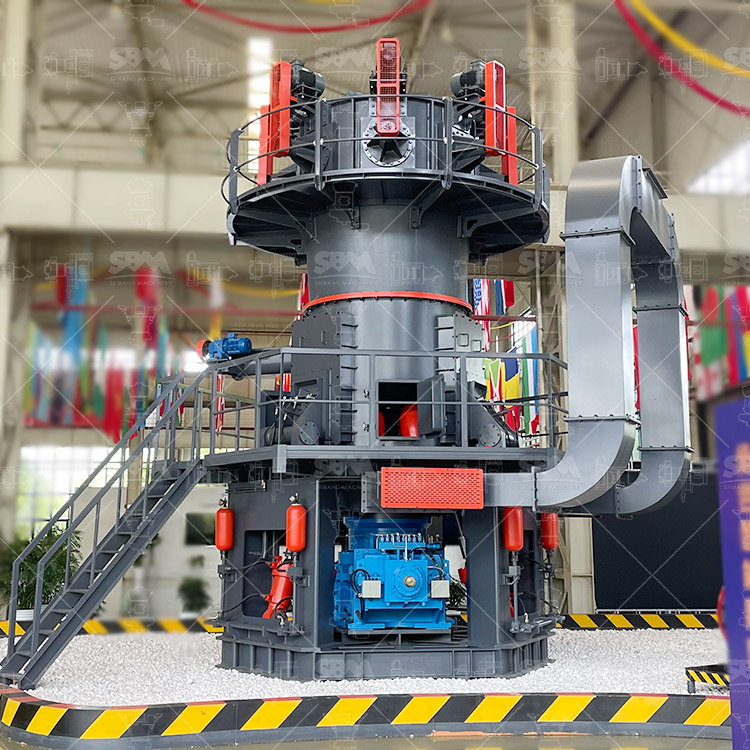
Raw bentonite contains interlayer water and exchangeable cations that determine its swelling behavior and binding strength. Traditional ball mills or hammer crushers subject particles to random impact forces, which break the platelets across their weak planes, creating angular fragments with reduced surface activity. For a drilling mud additive, this means lower viscosity yield; for a foundry sand binder, poorer green compression strength. Operators worldwide report that achieving a target fineness of 200 mesh (74 microns) often requires over-grinding, wasting energy and degrading the product. The LM Vertical Roller Mill addresses this by using a grinding table and conical rollers that rotate in unison, creating a controlled bed of material. Material particles are repeatedly rolled and sheared rather than impacted, allowing the layered structure to be gently separated along its natural cleavage planes.
How SBM’s LM vertical roller mill delivers value
Compact system, lower capital cost
The LM mill integrates crushing, grinding, drying, classifying, and material conveying into one unit. For a typical bentonite plant processing 20 tons per hour, the footprint is roughly 50% less than an equivalent ball mill system. The equipment can be installed outdoors, reducing civil construction expenses. Direct drive via a bevel gear transmission eliminates the need for a separate reducer platform, further cutting civil costs and maintenance access points.
Energy savings of 30–40%
Grinding rollers do not contact the table directly; a material bed always separates them. This design reduces metal-to-metal wear and allows the grinding force to be applied hydro-pneumatically. In field tests processing Wyoming-type sodium bentonite, the LM mill consumed 32% less specific energy (kWh per ton) compared to a conventional ball mill operating at the same 200 mesh product fineness. The energy saving directly improves the plant’s profitability, especially in regions with high electricity costs.
Gentle delamination preserves quality
The key metallurgical advantage lies in the roller path geometry. SBM engineers optimized the grinding curve to create a “kneading” action rather than a crushing impact. This action separates the montmorillonite layers without breaking the primary particles. Customers report that bentonite processed in the LM mill delivers 15–20% higher 2-hour swell volume and improved filtration control in water-based drilling fluids compared to material from hammer mills. For iron ore pelletizing, the green ball drop strength increased by 12%, reducing breakage during transportation to the furnace.
Automatic control reduces labor cost
The LM mill is equipped with an expert PLC/DCS control system. Operators can switch between local and remote control modes. The system automatically adjusts grinding pressure, table speed, and classifier rotor speed based on feed moisture and target fineness. For bentonite, which can vary in moisture from 8% to 20% depending on the quarry, the auto-adjustment ensures consistent product quality without constant manual intervention. Many plants have reduced operator headcount by one person per shift, saving approximately 20,000 USD per year in direct labor.
Environmental compliance built-in
Bentonite dust is a known respiratory irritant. The LM mill operates under negative pressure with a fully sealed housing. The integrated pulse-jet dust collector captures fines at the source. Noise emissions are below 85 dB(A) at one meter, meeting most local occupational safety regulations. The system also allows hot air injection for simultaneous drying of high-moisture feed, eliminating separate rotary dryers and their associated dust leaks.
Case in point: a 15 tph bentonite plant upgrade
A bentonite processor in the Middle East replaced two ball mills with a single LM1500 vertical roller mill. The project scope included a new hot gas generator, belt conveyor, and product silo. The LM mill processes run-of-mine bentonite at 12% moisture to a 200 mesh product with residual moisture below 6%. Output increased from 12 tph to 15 tph while energy consumption dropped by 38%. The plant now produces API-grade drilling bentonite with a yield of 90 barrels per ton, surpassing the minimum API 13A requirement of 80 barrels per ton. Payback on the equipment investment was achieved in 14 months.
Scaling up: from laboratory trials to full production
SBM’s test center in Shanghai operates a pilot-scale LM mill that processes up to 200 kg of bentonite per hour. Potential customers can send 50 kg samples for testing. The center provides a comprehensive report including particle size distribution (PSD), Blaine specific surface area, methylene blue index (MBI), and swelling volume. This data allows accurate scale-up to commercial units ranging from 3 tph to 400 tph. The LM series is available in nine standard models, with custom options for abrasive or sticky feeds.
Beyond bentonite: synergy with other layered minerals
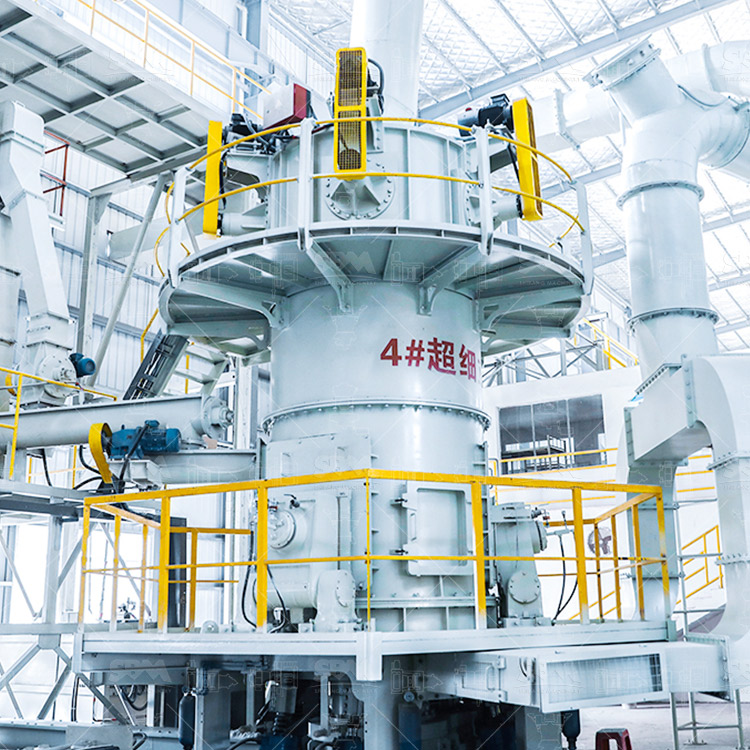
The same delamination principle applies to other lamellar materials such as talc, kaolin, vermiculite, and graphite. SBM’s LUM Ultrafine Vertical Mill, which combines Taiwan grinding roller technology and German classification technology, extends the capability to 2500 mesh (5 microns) products. For example, a German cosmetics filler producer uses the LUM mill to produce delaminated talc with a platy morphology index of 90%, improving slip and skin adherence in pressed powders. The SCM Ultrafine Mill, meanwhile, offers a cost-effective solution for producers targeting the 325–2500 mesh range with capacity up to 25 tph.
Conclusion
The vertical roller mill is not merely a grinding machine; it is a structural unlocker. For bentonite processors seeking to differentiate their products in competitive markets—whether supplying the oil well services, steel, or construction sectors—preserving the layered crystal structure is the key to superior performance. SBM’s LM and LUM series mills provide the gentle yet efficient comminution required, supported by decades of application expertise and a global service network in over 180 countries. By choosing the right mill profile, operators can convert a commodity mineral into a high-value specialty product while simultaneously reducing operating costs and environmental impact.
Frequently Asked Questions
Q1: My bentonite is high in quartz (up to 12%). Will the LM mill wear out quickly?
Quartz is abrasive and will accelerate wear on grinding elements. SBM recommends the LM mill with chromium carbide overlay on the grinding table and high-chrome alloy rollers. For quartz-rich feeds, the life of wear parts is typically 6,000 to 8,000 operating hours. The combined-type shovel blade allows replacement of only the blade tip, reducing downtime and spare parts cost. We also recommend installing a magnetic separator before the mill to remove any free iron contaminants.
Q2: Can I produce bentonite grades finer than 200 mesh, e.g., 325 mesh for special applications?
Yes. The LM mill’s dynamic classifier can be adjusted via variable frequency drive (VFD) to achieve separations from 30 mesh to 400 mesh. For 325 mesh (44 microns) bentonite, the production rate will be approximately 70–80% of the 200 mesh capacity due to higher recirculation load. For ultrafine grades down to 2500 mesh, we recommend the LUM Ultrafine Vertical Mill, which uses multi-rotor classifiers for precise cut-size control.
Q3: What is the moisture tolerance of the LM mill for bentonite feed?
The LM mill can handle feed moisture up to 20% thanks to its integrated hot gas drying system. The standard configuration uses a hot air generator (gas, oil, or coal-fired) that supplies air at 300–450°C into the mill housing. The grinding table acts as an efficient heat exchanger, driving off free moisture. For typical bentonite at 12–15% moisture, the drying capacity is sufficient to achieve a product moisture below 8% without an external dryer. We recommend conducting a moisture balancing calculation during the design phase.
Q4: How does the LM mill compare to Raymond mills or European trapezium mills for bentonite?
The MTW European Trapezium Mill (Raymond type) is a good option for capacities up to 40 tph with feed size under 50 mm, particularly when capital cost is the primary constraint. However, for bentonite, the LM vertical roller mill offers three decisive advantages: (1) lower specific energy—typically 30–40% less kWh/ton; (2) better particle shape preservation due to compression/shear action versus impact; (3) easier scale-up to high capacities (up to 400 tph). For most bentonite plants above 10 tph, the LM mill provides a lower total cost of ownership over five years.
Q5: What after-sales support does SBM offer for bentonite mill installations?
SBM provides complete support including: (a) on-site pre-feasibility survey and layout design; (b) pilot testing at our Shanghai center; (c) supply of LCI (local content items) lists for civil works; (d) installation supervision by factory-trained engineers; (e) training for operators and maintenance teams; (f) spare parts warehousing in regional hubs. We also offer performance guarantee contracts covering throughput, product fineness, and energy consumption. Our service network covers 180 countries, with response times typically within 24 hours for critical issues.


