

Efficient application of vertical roller mill in limestone processing
Published on October 26, 2023
In modern limestone processing, the vertical roller mill (VRM) has emerged as a game-changing technology, delivering superior efficiency, reduced energy consumption, and enhanced product quality. Shanghai SBM Machinery Equipment Co., Ltd. (SBM Machinery) has leveraged decades of expertise to develop advanced VRM systems that address common industry challenges—such as low output, high wear rates, and inconsistent fineness—while optimizing operational costs. This article explores the technical advantages, application scenarios, and best practices for deploying SBM's vertical roller mills in limestone processing, drawing on real-world data and customer feedback to demonstrate why this equipment is the preferred choice for global powder processing industry leaders.
Introduction to Vertical Roller Mill Technology
Vertical roller mill technology has revolutionized limestone grinding by integrating drying, pulverizing, and powder selection into a single, compact system. Unlike traditional ball mills, which suffer from high energy consumption and frequent wear, SBM's LM Vertical Roller Mill offers a holistic solution. With an input size of 0-50mm and output fineness ranging from 30 to 400 mesh, this mill handles capacities from 3 to 400 tph, making it suitable for both small-scale operations and large industrial plants. The machine's design eliminates the need for separate crushing or drying stages, significantly reducing the overall investment footprint by approximately 50% compared to ball mill systems.
Key Technical Advantages for Limestone Processing
SBM's vertical roller mill stands out due to its innovative engineering features tailored to limestone's abrasive nature. First, the grinding rollers and plate are constructed from high-quality materials, ensuring minimal wear since the rollers do not directly contact the plate during operation. This design extends component lifespan and lowers maintenance costs by 30-40%. Second, the integrated automatic control system enables seamless switching between remote and local operation, reducing labor costs and improving consistency. Third, the system operates under negative pressure with complete sealing, achieving near-zero dust emissions and low noise levels, meeting stringent environmental standards. These advantages directly address customer pain points, such as frequent breakdowns, high energy bills, and environmental compliance issues.
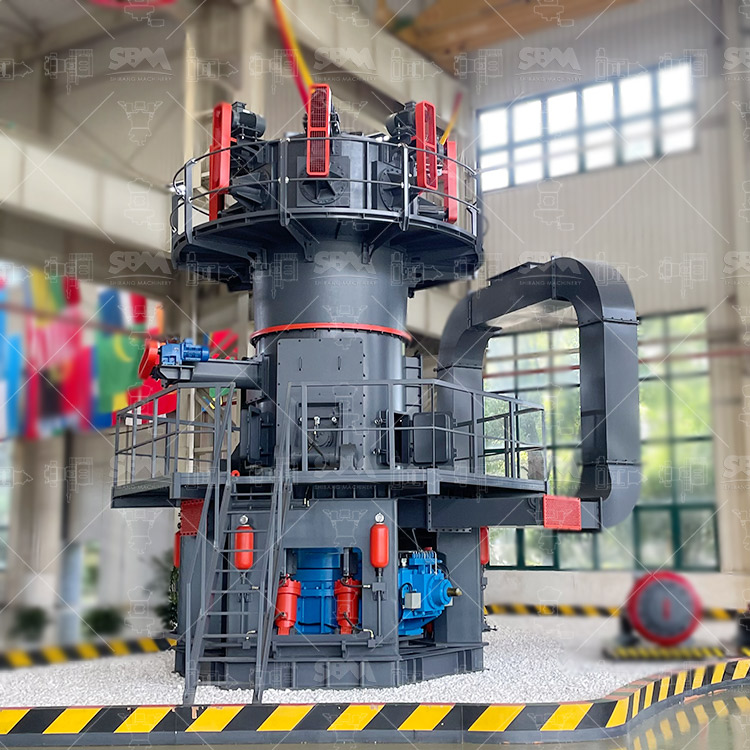
Comparative Performance: VRM vs. Traditional Mills
When processing limestone for applications like desulfurization or GCC production, vertical roller mills outperform traditional equipment in multiple metrics. Energy consumption is 30-40% lower than ball mills, while throughput can increase by up to 20% due to efficient material bed formation. The VRM's ability to produce fine powders (30-400 mesh) with minimal oversize particles reduces the need for secondary classification. Additionally, the system's drying capability (handling moisture up to 15%) eliminates the need for separate dryers, simplifying workflows. For customers transitioning from Raymond mills, SBM's LM series offers double the capacity per unit area, saving factory floor space and reducing civil engineering costs.
Case Study: Limestone Powder for FGD Systems
A coal-fired power plant in Southeast Asia replaced its existing ball mill system with an SBM LM Vertical Roller Mill for limestone FGD (flue gas desulfurization) preparation. The original setup required frequent downtime for ball replacement and consumed 45 kWh per ton of product. After switching to the VRM, energy use dropped to 28 kWh per ton, and annual maintenance costs decreased by 35%. The plant achieved consistent product fineness of 250 mesh (D90), ensuring optimal SO₂ absorption. This case highlights how VRM technology resolves the common customer complaint of high operational costs and inconsistent quality in high-volume applications.
Integration with Complete Grinding Systems
SBM Machinery provides end-to-end solutions, from raw material handling to finished product storage. For limestone processing, the vertical roller mill can be integrated with feeders, classifiers, conveyors, and dust collectors, all designed for seamless operation. The mill's compact footprint allows it to be installed outdoors, further reducing building costs. With services extending to over 180 countries, SBM offers localized support for installation, training, and spare parts. Customers report that the turnkey approach minimizes project risks and accelerates time-to-production, especially when processing limestone for building materials or chemical applications.
_1782750222661.jpg)
Addressing Common Customer Pain Points
Many clients face challenges such as high wear rates, low availability, and difficulty achieving ultra-fine fineness. SBM's VRM design counters these issues with patented wear-resistant components, including combined-type shovel blades and curved roller shells that optimize the grinding angle. For applications requiring finer powders (e.g., 325-2500 mesh), the SCM Ultrafine Mill or LUM Ultrafine Vertical Mill can be paired with the VRM, but for most limestone tasks (30-400 mesh), the LM series delivers optimal results. Additionally, the intelligent control system provides real-time diagnostics, preventing unscheduled downtime—a common frustration among operators.
Environmental and Economic Benefits
With tightening regulations, industries demand eco-friendly equipment. SBM's vertical roller mill operates with low vibration and noise, typically below 85 dB, and uses a sealed negative-pressure system to prevent dust spillage. The energy savings directly reduce carbon footprints, supporting sustainability goals. Economically, the lower power consumption and reduced spare-part replacement translate into a payback period of 12-18 months for most limestone processing facilities. A European cement plant reported saving $200,000 annually in energy costs after upgrading to an LM series mill for limestone grinding.
Future Trends in Limestone Processing
As industries adopt Industry 4.0, SBM is incorporating IoT-enabled sensors for predictive maintenance and remote monitoring. These innovations allow customers to track mill performance via mobile devices, minimizing manual intervention. The company is also developing hybrid systems that combine VRM with ultrafine mills for multi-stage processing. For limestone applications in new energy materials—such as lithium battery precursors—these advancements ensure consistent particle size distribution, a critical parameter that current customers often struggle with.
Conclusion
SBM's vertical roller mill represents a pinnacle of engineering for limestone processing, offering unmatched efficiency, reliability, and environmental compliance. By focusing on reducing energy and maintenance costs while maximizing output quality, the technology directly addresses the most common customer pain points—unplanned downtime, high operating expenses, and regulatory hurdles. With a global support network and continuous innovation, SBM remains a trusted partner for operators aiming to optimize their limestone grinding operations. Companies considering a mill upgrade should evaluate their specific fineness and capacity needs, as SBM's range from MTW to LUM mills ensures a tailored solution.
Frequently Asked Questions (FAQ)
1. How does the vertical roller mill handle abrasive limestone without excessive wear?
The mill's rollers and grinding plate are made from specialized wear-resistant alloys, and the non-contact design between rollers and plate minimizes friction. Additionally, the curved shovel blades reduce impact, extending service life by up to 50% compared to conventional designs.
2. Can the VRM achieve the fine powder required for FGD applications (e.g., 250 mesh)?
Yes, the LM Vertical Roller Mill easily produces 30-400 mesh powders. For FGD limestone, typical settings achieve 250 mesh (D90) with high consistency, thanks to the efficient internal classifier.
3. What is the typical payback period for replacing a ball mill with an SBM VRM?
The payback period ranges from 12 to 18 months, based on energy savings (30-40% reduction), lower maintenance costs, and increased throughput. Exact estimates depend on local energy prices and capacity utilization.
4. Is the VRM suitable for processing limestone with high moisture content?
Absolutely. The mill integrates a drying function using hot air from the system, handling moisture up to 15%. For limestone with higher moisture, a pre-drying step may be recommended.
5. What after-sales support does SBM provide for vertical roller mills?
SBM offers comprehensive support including installation supervision, operator training, remote diagnostics, and a global spare parts network. Service contracts are available to ensure continuous operation and quick response times.


