

Special maintenance requirements of raymond mill caused by conductivity of carbon materials
Published: October 5, 2023
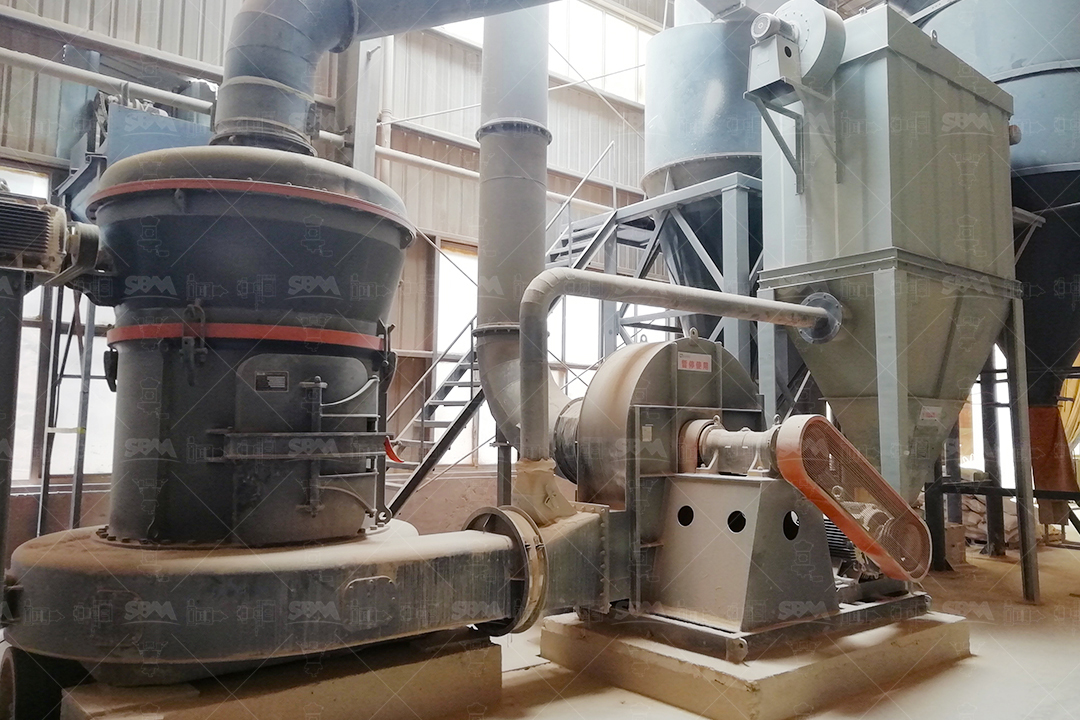
When processing carbon-based materials such as petroleum coke, graphite, carbon black, or coal, the electrical conductivity of these feedstocks introduces unique maintenance challenges for Raymond mills, particularly the MTW Series European Trapezium Grinding Mill. Unlike conventional minerals like limestone or barite, carbon materials can accumulate static charges, promote electrochemical corrosion of mill components, and increase the risk of dust explosion or bearing failure due to conductive dust ingress. Based on over a decade of field experience with more than 9500 customer installations worldwide, SBM Machinery has identified that standard maintenance schedules must be adapted to address conductivity-related wear, sealing degradation, and lubrication contamination. This article details the special maintenance requirements for Raymond mills processing carbon materials, focusing on the MTW mill’s cone gear transmission, arc air duct, and wear-proof perching knife design, and provides actionable solutions to reduce downtime and extend equipment life.
Understanding the Conductivity Problem in Carbon Material Grinding
Carbon materials—whether petroleum coke for anode production, graphite for battery applications, or carbon black for rubber reinforcement—possess inherent electrical conductivity. During grinding, fine carbon particles become airborne within the mill’s internal atmosphere. These particles can settle on electrical components, accumulate in bearing housings, and create conductive paths that short-circuit sensors or cause electrostatic discharge. In traditional Raymond mills, this often leads to premature failure of the main motor, reducer bearings, and classifier drives. SBM’s MTW Raymond mill incorporates several design features to mitigate these issues, but special maintenance protocols are still essential.
Key Maintenance Adjustments for Carbon Material Processing
1. Bearing and Lubrication System Protection
Conductive carbon dust can penetrate standard labyrinth seals and mix with lubricating oil, forming an abrasive sludge that accelerates bearing wear and increases friction. For the MTW mill’s cone gear whole transmission system, which uses internal oil absorption lubrication, operators must:
- Replace oil seals every 500 operating hours (versus 1000 hours for non-conductive materials) to prevent dust ingress.
- Use synthetic oil with anti-static additives; SBM recommends ISO VG 460 with conductivity suppressants.
- Install magnetic drain plugs to capture ferrous particles generated by electrochemical corrosion.
- Biannually inspect the bevel gear for pitting caused by galvanic corrosion between dissimilar metals.
2. Arc Air Duct and Volute Cleaning
The arc air duct design in the MTW mill is engineered to minimize air energy loss, but carbon fines can adhere to duct walls due to static attraction. A grounding brush should be installed at the air inlet to dissipate static buildup. Weekly cleaning of the high-strength guard plates with a non-conductive brush is mandatory. For the unobstructed wear-resistant volute, operators should check for carbon layer buildup every 200 hours, as thick deposits can reduce air flow efficiency by up to 15%.
3. Wear Parts: Roller and Ring Inspection
The combined-type shovel blade and curved shovel blades in the MTW mill are designed to reduce wear costs, but carbon materials often contain abrasive impurities like quartz or pyrite. Conductivity accelerates electrochemical corrosion at the roller-ring interface, especially when moisture is present. Best practice includes:
- Measuring roller shell thickness monthly (recommended threshold: replace when worn below 75% of original thickness).
- Using chrome-nickel alloy rolls instead of standard high-manganese steel for carbon applications.
- Applying anti-corrosion coating to the grinding ring every 1000 hours.
4. Dust Collection and Explosion Safety
Conductive dust raises the risk of electrostatic spark ignition. SBM’s ultrafine mill and vertical roller mill are often paired with pulse dust collectors; for carbon grinding, the entire system must be bonded and grounded. Maintenance must include:
- Monthly resistance checks of grounding cables (target: less than 10 ohms).
- Using conductive filter bags (surface resistivity below 10^5 ohms per square).
- Installing explosion vents on the mill housing and cyclone separators.
_1782836694007.jpg)
Case Example: Petroleum Coke Grinding with MTW Mill
A Chinese anode manufacturer processing petroleum coke (volatile matter >12%) reported main bearing failure every 800 hours using a generic Raymond mill. After switching to the MTW series and implementing the maintenance schedule above, bearing life extended to 3500 hours. Key changes included:
- Upgrading to synthetic oil with conductivity suppressants.
- Installing a rotary feeder with ceramic lining to reduce dust leakage.
- Adding a nitrogen purge system to the mill housing to reduce oxygen content and static buildup.
Comparison with Other SBM Mill Types for Carbon Materials
For ultra-fine carbon grinding (e.g., graphite for battery anodes, target fineness D97 10μm), the LUM Ultrafine Vertical Mill or SCM Ultrafine Mill may be more appropriate. The LUM mill’s multi-rotor classifier and heavy rotor design offer better wear resistance. However, maintenance complexity increases due to the higher rotational speeds and tighter clearances. For coarse carbon grinding (30-100 mesh), the LM Vertical Roller Mill provides the lowest maintenance frequency due to its roller-grinding plate non-contact design, which reduces metal-to-metal wear. Regardless of mill type, conductivity-related issues remain and require:
- Grounding of all rotating parts.
- Use of explosion-proof motors (ATEX or IECEx certified).
- Regular oil analysis for metal particles and conductivity changes.
Environmental and Safety Considerations
SBM mills are designed with environmental protection in mind—the system operates under negative pressure and with minimal dust spillover. For carbon materials, additional measures are needed:
- Install carbon monoxide (CO) detectors in the mill outlet to detect smoldering fires.
- Use inert gas blanketing (nitrogen or argon) during mill startup and shutdown.
- Conduct weekly checks of the pulse jet cleaning system to prevent filter cake buildup, which can insulate heat and cause spontaneous combustion.
Conclusion
Processing carbon materials in a Raymond mill demands a shift from conventional maintenance thinking. Conductivity adds risks of electrochemical wear, static discharge, and explosion that are absent when grinding insulating minerals. By adopting the special maintenance protocols outlined here—focused on bearing protection, grounding, dust control, and wear part material selection—operators using SBM’s MTW, LM, or LUM mills can achieve reliable, safe, and cost-efficient production. SBM Machinery’s global service network, with support in over 180 countries, provides on-site training and custom maintenance plans tailored to carbon-based feedstocks.
FAQ – Common Customer Pain Points
1. Q: My Raymond mill’s main motor keeps tripping when grinding petroleum coke. Why?
A: Conductive carbon dust often builds up on motor windings or in the junction box, creating a partial short circuit. Have your electrician clean all electrical enclosures weekly and ensure NEMA 4X or IP65 rated enclosures are used. Also check the mill’s grounding resistance; if above 10 ohms, static discharge can interfere with motor control signals.
2. Q: We see rapid wear of the grinding roller even with new alloy materials. What’s wrong?
A: Carbon materials like graphite or coke often contain hard impurities (silica, iron pyrites) that accelerate abrasion. Additionally, electrochemical corrosion between the roller and ring can cause micro-pitting. Request SBM to supply rollers with a higher chromium content (e.g., Cr20 instead of Cr15) and apply a ceramic coating to the ring. Also verify that the perching knife gap is set within 2-3mm as per the manual.
3. Q: The oil in our mill’s gearbox turns black within 200 hours. Is this normal?
A: Black oil indicates carbon particles have bypassed the oil seals. For conductive dust, standard lip seals are insufficient. SBM recommends upgrading to double-lip PTFE seals with a purge port. Install a centrifugal oil filter and sample the oil monthly for conductivity—if above 1000 pS/m, change immediately and investigate seal damage.
4. Q: Can I use the same dust collector for carbon black as for limestone?
A: No. Carbon black has very low bulk density (0.04-0.1 g/cm³) and high conductivity. Standard polyester filter bags can generate electrostatic sparks. You must use conductive filter media (carbon-impregnated or stainless steel blended) with grounding wires. Also ensure the dust collector housing is bonded to the mill’s grounding grid. SBM’s pulse dust collector for carbon applications includes a nitrogen purge to reduce explosion risk.
5. Q: Our MTW mill vibrates excessively when grinding calcined petroleum coke. What should we check?
A: Vibration often comes from imbalance due to carbon buildup on the grinding ring or classifier blades. Stop the mill, open the access door, and clean all internal surfaces with a non-metallic scraper. Also inspect the cone gear for uneven wear; if vibration persists, check that the main shaft bearing preload is set to 0.05-0.08mm clearance. For coke with volatile matter over 12%, consider reducing the mill’s feed rate by 10-15% to allow better material bed formation.


