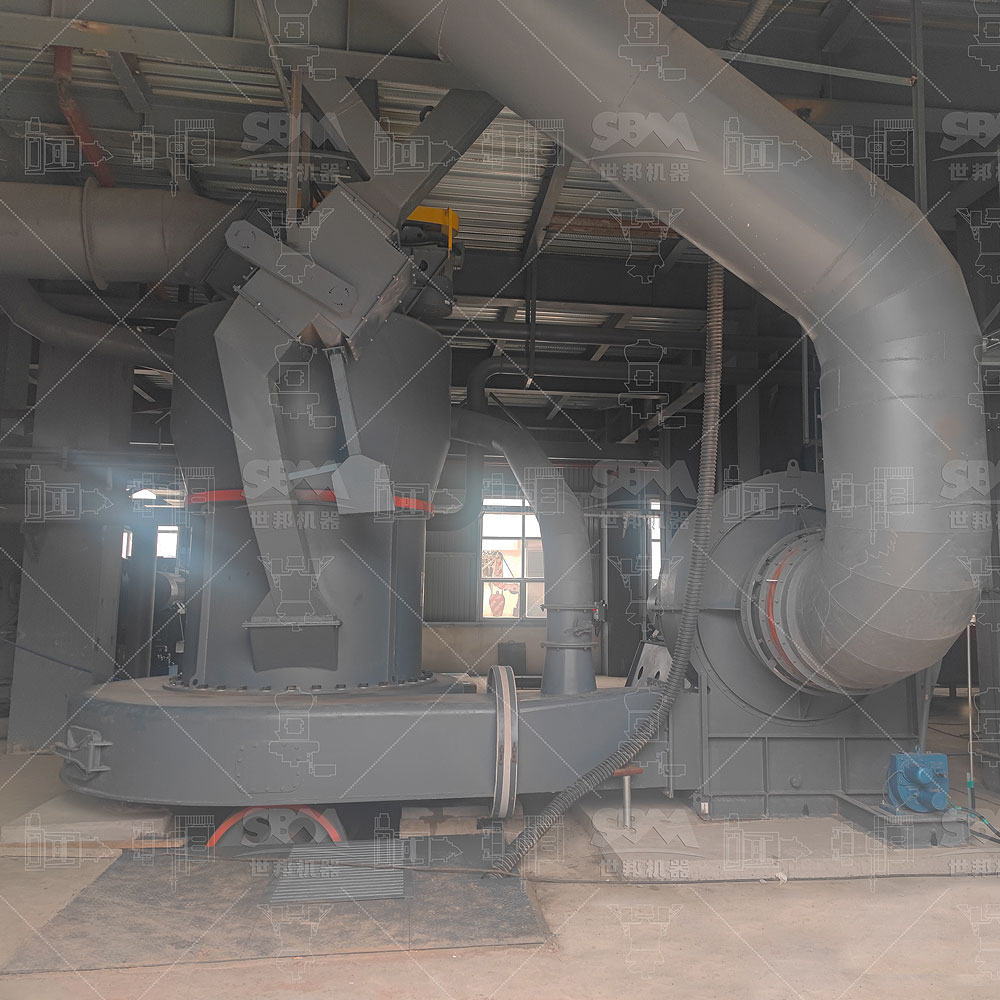
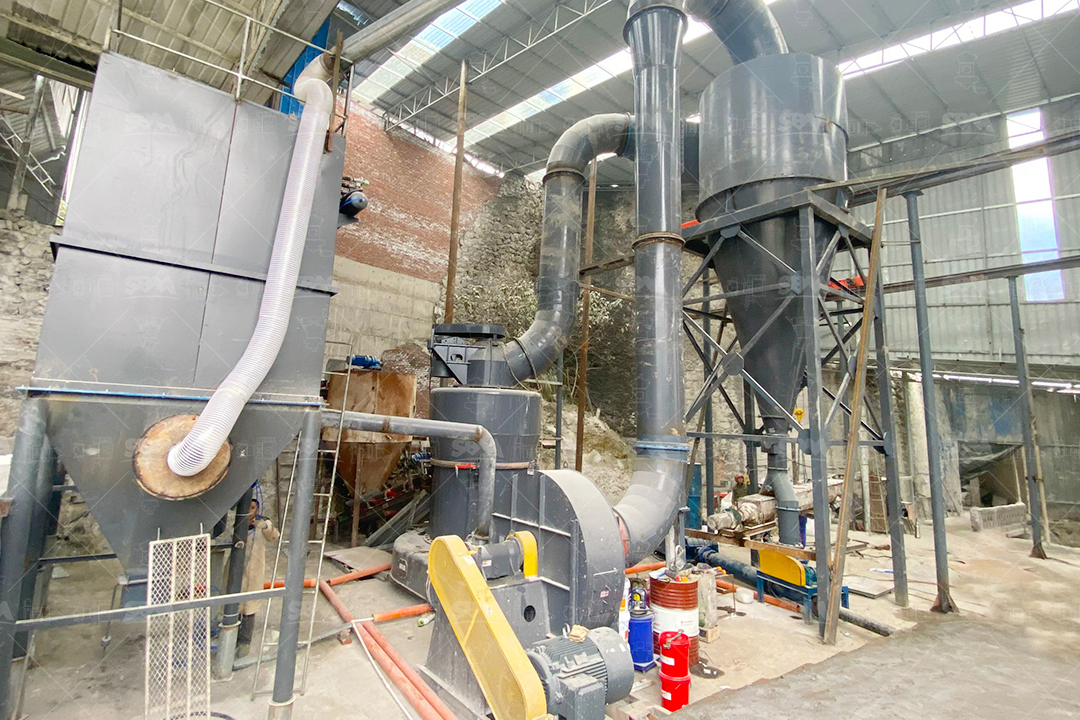
Talc: raymond mill ensures fine grinding for powder quality
2025-03-21
For talc powder processors, achieving consistent fineness and high purity is a constant battle against equipment wear, energy inefficiency, and variable output. The MTW Series European Trapezium Grinding Mill (MTW Raymond Mill) from Shanghai SBM Machinery Equipment Co., Ltd. (SBM Machinery) addresses these challenges head-on. Developed from over 9,500 customer insights and years of R&D, this mill combines a cone gear whole transmission, an arc air duct, and a unique wear-proof perching knife design to deliver a stable 30–400 mesh output at 3–40 tph. It effectively reduces operating costs while ensuring the fine, uniform powder quality demanded by industries from plastics to construction. Below, we explore how this mill directly tackles the real-world pain points of talc grinding operators.
---
Why Talc Grinding Poses Unique Challenges
Talc, a soft mineral with a Mohs hardness of 1, is notoriously abrasive at the microscopic level. Its lamellar structure causes it to smear and clog conventional grinding chambers, leading to frequent downtime for cleaning and part replacement. Many operators find that traditional Raymond mills suffer from:
- High wear rates on rollers and rings, forcing costly replacements every few weeks.
- Inconsistent particle size distribution, especially at finer meshes above 200.
- High energy consumption due to inefficient air flow and transmission losses.
- Dust and noise pollution that complicates environmental compliance.
SBM’s MTW Raymond Mill was engineered specifically to overcome these obstacles, making it a preferred choice for talc powder processors in over 180 countries.
---
Key Technical Advantages for Talc Processing
1. Unique Wear-Proof Perching Knife Design
The combined-type shovel blade reduces the cost of wearing parts significantly. During maintenance, only the blade needs to be replaced, not the entire assembly. The curved shovel blades also change the feeding angle, distributing material more evenly across the roller and ring. This design prolongs the service life of the grinding components—an essential feature for talc, where abrasion is the primary cost driver. Operators report longer intervals between roller and ring changes, directly lowering operating costs.
2. Arc Air Duct Design
Air energy loss is a hidden enemy in grinding. The circular duct in the MTW mill minimizes turbulence and maintains consistent transport velocity. A high-strength guard plate protects the air duct’s working face from talc’s abrasive dust. This ensures efficient powder classification and reduces the load on downstream dust collectors, saving both energy and maintenance time.
3. Cone Gear Whole Transmission
Traditional mills use separate gear systems that waste power and occupy valuable floor space. The bevel gear integral transmission in the MTW mill achieves higher transmission efficiency, saves space, and lowers investment costs. For a talc plant looking to maximize output per square meter, this is a clear advantage.
4. Volute Design
The unobstructed, wear-resistant volute improves the efficiency of wind-driven material flow inside the mill. Talc fines move smoothly from the grinding zone to the classifier, reducing internal recirculation and improving overall yield. The wear-resistant lining also cuts material maintenance costs, as fewer repairs to the volute chamber are needed.
---
Real-World Impact: A Case in Point
Consider a talc processor in Southeast Asia producing 400-mesh powder for the paint industry. Before switching to the MTW Raymond Mill, they faced frequent shutdowns every 10 days to replace worn rings. After installation, their maintenance interval extended to over 45 days. The mill’s arc air duct also slashed their fan power consumption by 18%, while the cone gear transmission allowed them to downsize the motor without sacrificing throughput. The result: a 15% improvement in overall equipment effectiveness (OEE) and consistent particle size distribution (D97 ≤ 45 µm).
---
Comparison with Other SBM Offerings for Talc
While the MTW Raymond Mill excels for medium-fineness talc grinding (30–400 mesh), SBM also provides other solutions for different niches:
- LM Vertical Roller Mill (3–400 tph): Ideal for large-scale talc processing where drying is needed. The LM mill integrates drying, grinding, and powder selection in one unit, with 30–40% lower energy consumption than ball mills. Its automatic control system reduces labor costs and ensures stable operation.
- SCM Ultrafine Mill (325–4000 mesh): For superfine talc used in cosmetics or masterbatch, the SCM achieves D97 ≤ 5 µm with energy consumption 30% lower than jet mills. It uses a vertical turbine classifier for precise cutting and no spillover of coarse particles.
- LUM Ultrafine Vertical Mill (325–4000 mesh, 10–70 tph): Combines Taiwan grinding roller technology and German powder separation for medium-to-high-end talc applications like plastic masterbatch and artificial stone. Its multi-rotor classifier ensures customized fineness without low-grade material.
- Ball Mill (0.2–0.074 mm): A mature technology for common powder, but with higher wear and energy consumption. SBM’s optimized ball mill uses new materials to reduce spare part costs, but it remains less efficient than roller mills for fine talc.
---
Addressing Common Customer Pain Points
Below we answer five frequently asked questions from talc mill operators:
FAQ
Q1: My talc mill produces too many coarse particles above 400 mesh. How can I improve classification accuracy?
The MTW Raymond Mill’s arc air duct and high-efficiency classifier can be fine-tuned via frequency control to cut at a sharper size. For even finer control, consider the SCM Ultrafine Mill’s vertical turbine classifier, which eliminates coarse powder spillover.
Q2: Our roller and ring wear out after just two months of grinding talc. Can SBM’s mill reduce this?
Yes. The MTW’s combined shovel blade only requires replacing the blade tip, not the whole assembly. The curved shovel design also changes the feeding angle to even out wear. Additionally, SBM’s patented wear-proof materials extend roller/ring life by 3–5 times compared to traditional Raymond mills.
Q3: We need to process talc with moisture up to 8%. What mill can handle that?
The LM Vertical Roller Mill integrates a drying function. Its hot air flow can dry and grind simultaneously, handling feed moisture up to 15% without pre-drying. The MTW mill is ideal for dry talc (moisture below 5%).
Q4: How can I reduce dust and noise to meet stricter environmental regulations?
Both the MTW Raymond Mill and LM Vertical Mill operate under negative pressure with a fully sealed system. The MTW’s optimized soundproofing room and muffler reduce noise below 85 dB. For ultrafine lines, the SCM mill uses a double powder collection method (cyclone + pulse dust collector) that achieves emission levels far below international standards.
Q5: Is there a compact mill for limited floor space?
The MTW Raymond Mill’s cone gear transmission saves floor area compared to traditional gearboxes. For extreme space constraints, the LM Vertical Roller Mill has a compact layout that occupies about 50% of the space of a ball mill system and can be installed outdoors.
---
Conclusion
For talc powder producers, the path to high-quality output and low operating costs runs through intelligent equipment design. SBM’s MTW Raymond Mill, backed by over 180 countries of field experience, directly confronts the industry’s toughest challenges: wear, energy waste, and inconsistent fineness. Whether you need standard 200-mesh talc for fillers or superfine 1250-mesh for premium applications, the MTW—or one of SBM’s complementary mills—offers a proven, cost-effective solution. Investing in the right mill today ensures your talc powder meets tomorrow’s market standards.
---