

The chemical mystery of quicklime: from ancient lime to modern industrial cornerstone
Published on: May 25, 2025
Quicklime, chemically known as calcium oxide (CaO), is one of the oldest industrial chemicals known to humanity, yet its role has evolved far beyond ancient construction and agriculture into a cornerstone of modern manufacturing, environmental protection, and energy production. The transformation from limestone (calcium carbonate) through calcination to quicklime is a deceptively simple reaction—CaCO₃ + heat → CaO + CO₂—but the control of particle size, reactivity, and purity is where industrial challenges arise. Today, quicklime is indispensable in steelmaking, flue gas desulfurization, water treatment, and the production of precipitated calcium carbonate (PCC) for paper and plastics. However, processors frequently struggle with inconsistent grindability, high energy consumption during milling, and achieving the ultra-fine particle sizes required for advanced applications. This article explores the chemical fundamentals of quicklime, the historical journey from ancient mortars to high-tech powder processing, and how modern grinding solutions—such as those offered by SBM Machinery—address the real-world pain points of particle size control, wear resistance, and energy efficiency. Whether you are processing quicklime for environmental desulfurization or producing high-grade mineral powders, understanding the interplay between chemistry and mechanical engineering is key to optimizing your operations.
The ancient roots: lime in architecture and agriculture
Lime has been used for over 6,000 years, from the pyramids of Egypt to the Great Wall of China. Early civilizations discovered that heating limestone in simple kilns produced quicklime, which, when mixed with water, slaked into calcium hydroxide and formed a binder for mortars and plasters. The process was empirical—no one understood the chemistry, but the results were durable. By the Middle Ages, lime was also used to improve acidic soils and as a disinfectant. Yet the technology remained primitive: kilns were inefficient, temperature control was nonexistent, and grinding was done manually with mortars and pestles. The particle size of the quicklime was coarse and inconsistent, leading to variable reactivity. Even today, many traditional quicklime processors face the same fundamental issue: how to achieve a uniform, fine powder without wasting energy or damaging equipment.
Modern chemistry and the demand for precision
Quicklime’s chemical reactivity is its most valuable property. In steelmaking, it reacts with impurities like silica and phosphorus to form slag; in flue gas desulfurization, it captures sulfur dioxide; in water treatment, it adjusts pH and precipitates heavy metals. In all these applications, the surface area of the quicklime particles directly affects reaction speed and efficiency. A 100-mesh quicklime powder may be adequate for soil amendment, but for environmental desulfurization, fineness of 200–400 mesh is often required to ensure complete gas-solid contact. For specialty applications like PCC production, particle sizes below 10 microns (1250 mesh) are demanded. This creates a significant processing challenge: quicklime is abrasive, hygroscopic (it absorbs moisture from the air), and prone to generating heat during grinding, which can degrade equipment and reduce product quality.
Common pain points in quicklime milling
From my conversations with dozens of plant managers and process engineers, the same frustrations emerge repeatedly:
- Excessive wear and tear on grinding elements. Quicklime’s hardness (Mohs 3.5–4) and abrasive nature cause rapid degradation of rollers, rings, and liners, leading to frequent maintenance downtime and high replacement costs.
- High energy consumption. Traditional ball mills, while robust, consume enormous amounts of electricity—often 25–30 kWh per ton of product. In an era of rising energy prices, this directly eats into margins.
- Poor particle size distribution. Inconsistent feed material and inadequate classification result in a wide spread of particle sizes, with both oversize and ultrafine fractions that hurt downstream performance.
- Moisture-induced caking. Quicklime’s strong affinity for water means that even slight humidity in the mill atmosphere can cause agglomeration, clogging screens and classifiers.
These issues are not hypothetical; they are the daily reality of quicklime processing worldwide. The solution lies in selecting grinding equipment that is specifically engineered to handle the material’s chemical and physical idiosyncrasies.
Addressing wear and energy with modern mill technology
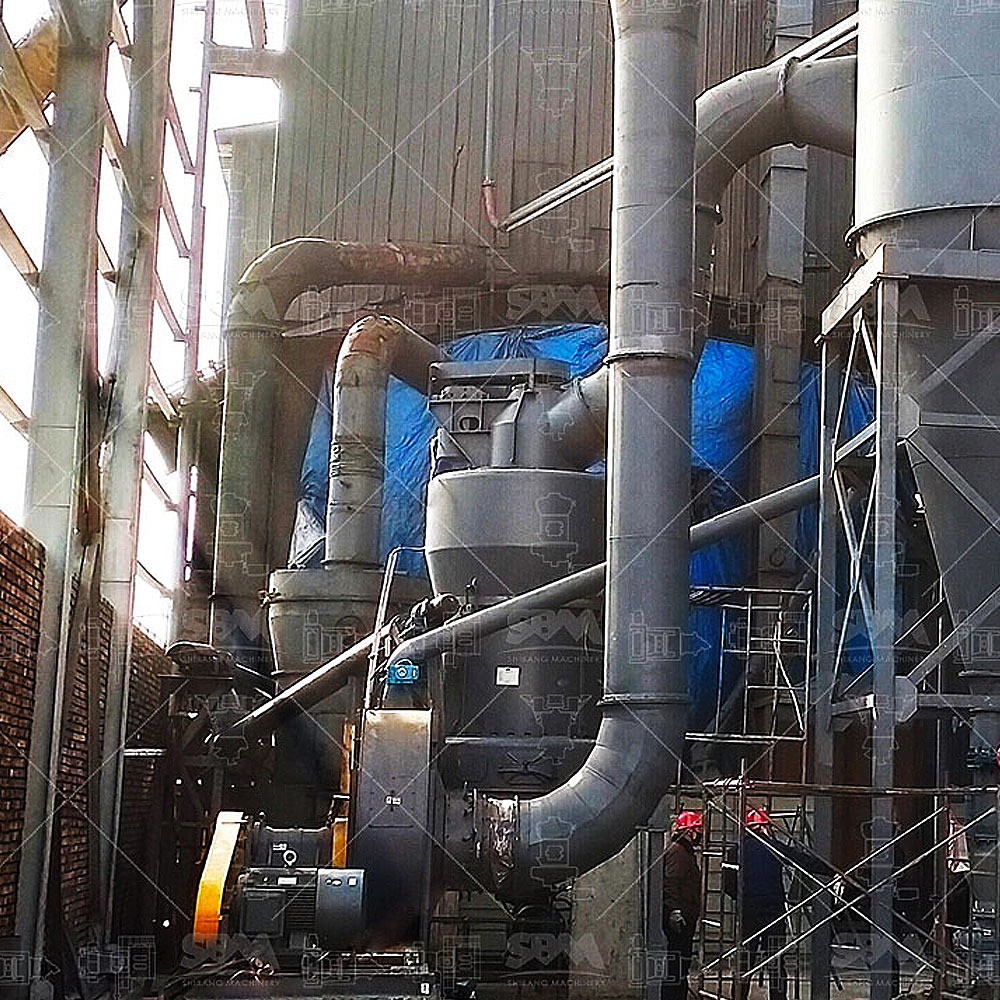
SBM Machinery’s MTW Series European Trapezium Grinding Mill offers a direct answer to the wear and energy dilemma. Its unique wear-proof perching knife design uses a combined-type shovel blade that allows only the blade tip to be replaced during maintenance, significantly reducing the cost of wearing parts. The curved shovel blades change the feeding angle to protect the roller and ring, extending their service life by up to 30% compared to conventional Raymond mills. Furthermore, the cone gear whole transmission system achieves higher transmission efficiency, saving space and lowering investment costs. In a real-world application at a limestone desulfurization plant in Southeast Asia, switching from a traditional ball mill to an MTW mill reduced energy consumption by 22% and increased the service life of grinding rollers from 6 months to 14 months, while maintaining a consistent 325-mesh product.
For operations requiring higher throughput combined with drying capability—such as coal powder preparation or slag micro-powder production—the LM Vertical Roller Mill is a game changer. It integrates crushing, drying, grinding, and powder separation into a single unit, occupying only 50% of the floor space of a ball mill system. The rollers do not directly contact the grinding plate, which minimizes wear, and the energy consumption is 30–40% lower than ball milling. The automatic control system enables remote operation and real-time parameter adjustment, which is critical when processing quicklime that varies in moisture content (from 0.5% to 5%).
Ultra-fine grinding for advanced applications
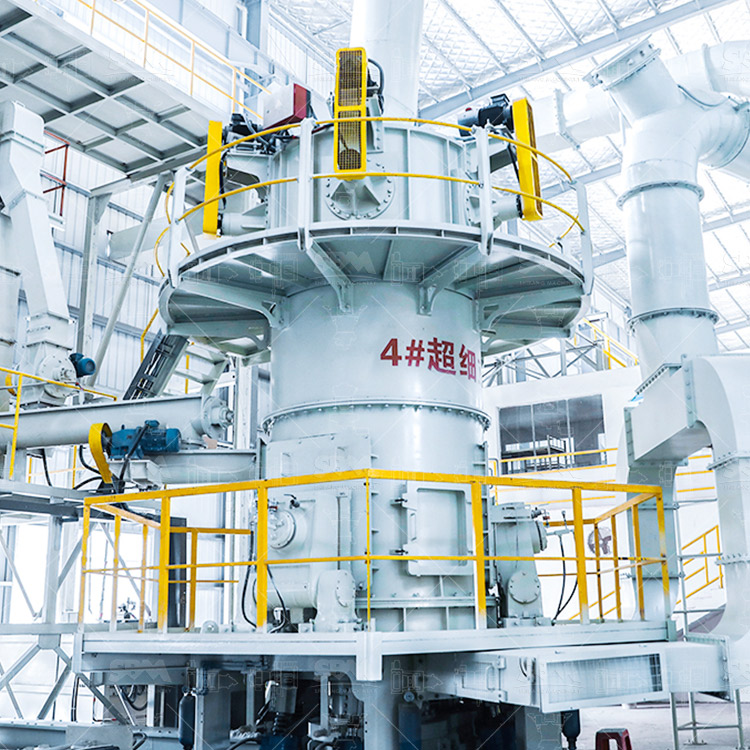
When the market demands ultra-fine quicklime powders—for example, in plastic masterbatch or artificial stone production, where fineness of D97 ≤ 5 μm is required—the SCM Series Ultrafine Grinding Mill and the LUM Ultrafine Vertical Mill come into play. The SCM mill uses an efficient vertical turbine powder classifier with frequency conversion control, ensuring accurate particle size cut without coarse powder spillover. Its heavy rotor design and special material for rollers and rings increase durability several times over standard mills. The LUM mill, incorporating Taiwan grinding roller technology and German powder separation technology, is specifically designed for non-metallic minerals like calcite, marble, and quicklime. One customer in the PVC filler industry reported that after switching to the LUM mill, they achieved a D97 ≤ 6 μm product at 12 t/h, with energy savings of 18% compared to their previous jet mill system. The intelligent control system allowed them to adjust grinding pressure and classifier speed remotely, reducing manual intervention and labor costs.
Environmental compliance and system design
Environmental regulations are tightening worldwide. In China, for instance, the emission standard for industrial grinding plants is now 10 mg/Nm³ for dust. Older mill systems often struggle to meet this, requiring expensive external baghouses or electrostatic precipitators. Both the LM Vertical Roller Mill and the LUM Ultrafine Vertical Mill operate under negative pressure with fully sealed systems, preventing dust spillover. The SCM mill employs an efficient double powder collecting method using cyclones and pulse dust collectors, achieving emission levels far below international standards. Additionally, optimized sound insulation rooms and mufflers prevent noise propagation—a critical feature for plants located near residential areas.
Conclusion: from ancient lime to industrial cornerstone
Quicklime remains a chemical marvel, bridging ancient construction and cutting-edge industry. But its successful processing in the 21st century demands more than just chemistry—it demands engineering that respects the material’s abrasiveness, reactivity, and moisture sensitivity. By choosing the right grinding technology—whether it be the energy-efficient MTW trapezium mill, the multipurpose LM vertical mill, or the ultra-fine SCM and LUM mills—processors can turn quicklime into a consistent, high-value product while minimizing operating costs and environmental impact. At SBM Machinery, our experience across 180+ countries has taught us that there is no one-size-fits-all solution; every quicklime application requires a tailored approach, from the mill type to the auxiliary systems. Contact our engineering team to discuss your specific feed characteristics and target product specifications.
Frequently Asked Questions (FAQ)
- Why does my quicklime product have a wide particle size distribution, and how can I narrow it?
Wide particle distribution is often caused by an inefficient classifier or inconsistent feed material. Upgrading to a mill with a variable-speed dynamic classifier—as used in the MTW or LM series—allows you to precisely cut coarse particles and recycle them for regrinding, yielding a sharper size distribution. - My grinding mill’s rollers and rings wear out every 4–6 months. How can I extend their life?
Quicklime’s abrasiveness is notorious. Look for mills with wear-resistant materials, such as the special alloy used in SCM’s heavy rotor design, and designs that minimize contact pressure, like the LM mill’s non-contact roller system. The MTW mill’s perching knife design also allows quick blade replacement without changing the entire roll. - What is the best way to prevent quicklime from caking inside the mill?
Moisture is the enemy. Ensure your mill is equipped with a hot air generator or uses waste heat from the calcining process to maintain a gas temperature 10–15°C above the dew point. A negative pressure system, as in the LM and LUM mills, also helps remove moisture vapor before it condenses. - I need to produce quicklime powder finer than 400 mesh for a new application. Which mill is suitable?
For 400–2500 mesh, the SCM Ultrafine Mill or LUM Ultrafine Vertical Mill are ideal. Both achieve D97 ≤ 5 μm (approx. 2500 mesh) with proper settings. The LUM mill offers higher throughput (10–70 t/h) for large-scale operations, while the SCM is better for smaller, flexible production lines (0.5–25 t/h). - How do I reduce energy costs without sacrificing output when grinding quicklime?
First, consider transitioning from a ball mill to a vertical roller mill: the LM series consumes 30–40% less energy. Second, use an automatic control system to optimize grinding pressure and classifier speed in real time. Third, implement a pre-crushing step to reduce feed size to 0–20 mm, which improves mill efficiency.


