

Raymond mill work process for bauxite
Published: October 26, 2023
Bauxite, the primary ore for aluminum production, requires precise grinding to liberate alumina from impurities. The Raymond mill work process for bauxite involves a systematic sequence of crushing, feeding, grinding, classifying, and collecting, designed to achieve consistent fineness and high throughput while minimizing energy consumption and wear. This article explores how modern Raymond mills, particularly the MTW European Trapezium Grinding Mill, LM Vertical Roller Mill, SCM Ultrafine Mill, LUM Ultrafine Vertical Mill, and optimized Ball Mill from Shanghai SBM Machinery Equipment Co., Ltd., handle bauxite processing. Key advantages include arc air duct designs that reduce air energy loss, cone gear whole transmissions for higher efficiency, and intelligent control systems that lower operating costs. By integrating drying, grinding, and powder selection in a single system, these mills address common customer pain points such as high wear rates, inconsistent product fineness, and excessive downtime. With over 180 countries served, SBM's grinding solutions are trusted for bauxite powder preparation, offering capacities from 0.5 to 400 tph and output sizes from 30 to 4000 mesh, depending on the model. This guide details the work process, technical benefits, and answers frequent client concerns.
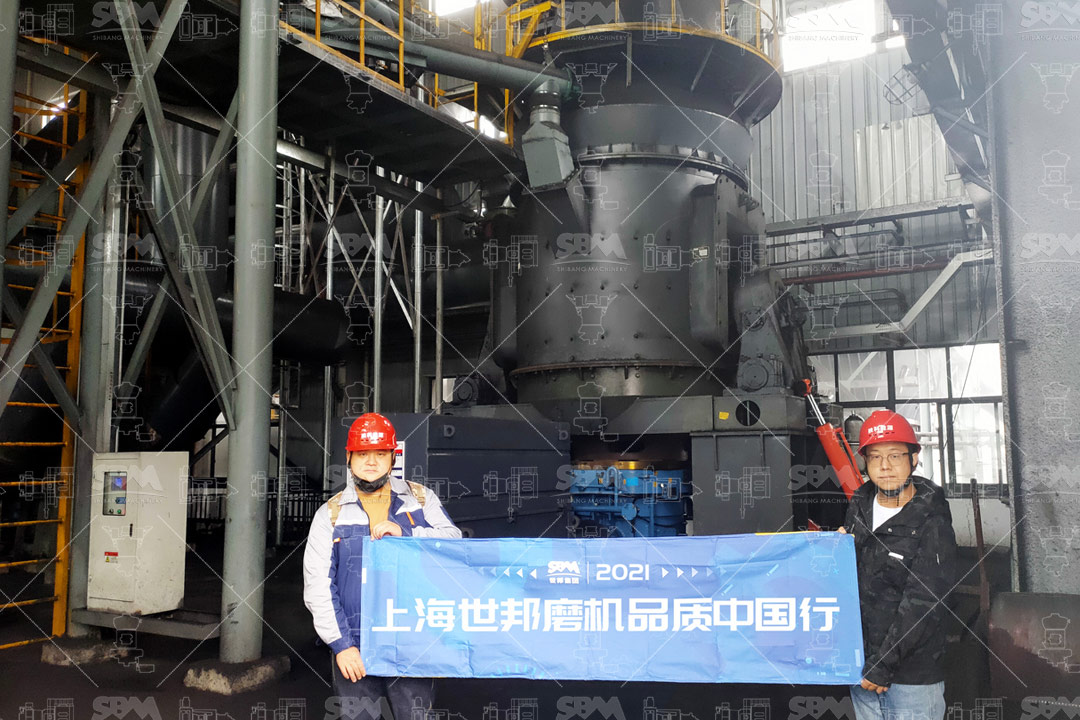
1. Overview of the Raymond Mill Work Process for Bauxite
The Raymond mill work process for bauxite begins with primary crushing of raw bauxite ore to a manageable size (0-50 mm for most models). The crushed material is then conveyed to the mill's feeder, which regulates the flow into the grinding chamber. Inside, large rollers or grinding rings rotate against a stationary surface, applying compressive and shear forces to break down the bauxite particles. A stream of hot air or gas lifts the ground material to a classifier, where oversize particles are returned for regrinding, while fine powders pass through to a collection cyclone or bag filter. The entire system operates under negative pressure to prevent dust leakage, ensuring environmental compliance. For bauxite, which often contains moisture and hard aluminous minerals, the choice of mill is critical. SBM's MTW Raymond Mill, for instance, uses a cone gear whole transmission that saves space and lowers investment costs, while its curved shovel blades change the feeding angle to prolong roller and ring life. Meanwhile, the LM Vertical Roller Mill integrates drying and grinding, ideal for bauxite with up to 10% moisture content.
2. Detailed Steps in the Raymond Mill Work Process for Bauxite
2.1 Feed Preparation and Crushing
Raw bauxite, typically with a Mohs hardness of 2.5-3.5, is first crushed to less than 50 mm using jaw crushers or hammer crushers. This step reduces energy consumption in the mill and protects internal components from oversized lumps. SBM's design recommendations emphasize a pre-crushing stage to optimize throughput and minimize wear on grinding elements.
2.2 Feeding and Grinding
The crushed bauxite enters the mill via a vibrating feeder or rotary valve. In an MTW Raymond Mill, the material falls onto the grinding table and is flung outward by centrifugal force into the path of grinding rollers. The combined-type shovel blade, a unique wear-proof design, ensures uniform distribution. The rollers exert adjustable pressure, typically 10-20 MPa, to break bauxite particles. For ultrafine requirements, SCM Ultrafine Mill uses a heavy rotor design with special alloy rollers and rings, achieving durability several times higher than conventional mills. Grinding temperature is controlled via hot air (up to 350°C) to remove moisture, critical for bauxite that often contains free water.
2.3 Classification and Collection
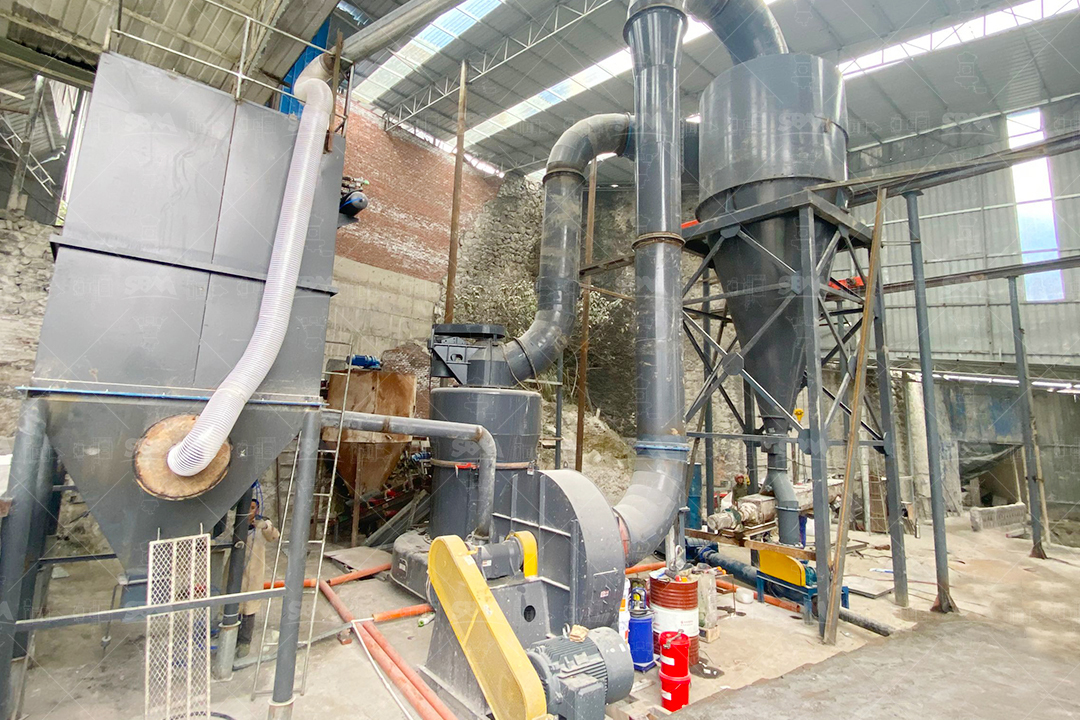
The ground bauxite powder is swept upward by the air stream to a dynamic classifier, which uses a rotor with adjustable speed to separate particles by size. Oversize particles fall back for regrinding, while fine powder (30-400 mesh for standard Raymond mills, up to 2500 mesh for ultrafine models) enters a cyclone collector or pulse dust collector. The LUM Ultrafine Vertical Mill features multi-rotor powder classifiers for precise cutting sizes, with no low-grade material in the final product. The clean air is recycled through the system, minimizing heat loss and dust emissions.
3. Key Technical Advantages for Bauxite Processing
SBM's Raymond mills are engineered to overcome common bauxite grinding challenges. The arc air duct design ensures minimal air energy loss, boosting transportation efficiency by up to 15%. The volute structure in MTW models improves wind-driven transmission, reducing maintenance costs. For high-moisture bauxite, the LM Vertical Roller Mill's integrated drying function eliminates the need for separate dryers, cutting capital expenses. The intelligent control system in LM and LUM mills enables automatic pressure adjustment, remote operation, and real-time fineness monitoring, reducing labor costs. The Ball Mill, optimized with new wear-resistant materials, addresses metal ball wear and high energy consumption, offering 30-40% lower energy use compared to traditional ball mills.
4. Comparing Raymond Mill Models for Bauxite
- MTW European Trapezium Mill: Best for medium-capacity bauxite grinding (3-40 tph), output 30-400 mesh. Ideal for environmental desulfurization limestone and bauxite powder preparation.
- LM Vertical Roller Mill: Handles large capacities (3-400 tph) with low energy consumption (30-40% less than ball mills). Suitable for high-moisture bauxite up to 15% moisture.
- SCM Ultrafine Mill: For fine to ultra-fine bauxite powder (325-2500 mesh), capacity 0.5-25 tph. Used in high-value applications like refractories and ceramics.
- LUM Ultrafine Vertical Mill: Combines ultrafine grinding with high capacity (10-70 tph), output 325-4000 mesh. Ideal for plastic master batch and non-metallic mineral processing.
- Ball Mill: Traditional choice for bauxite grinding (0.2-0.074 mm), capacity 3-65 tph. Optimized for low spare part costs and reliable operation.
5. Common Customer Pain Points and Solutions
Clients processing bauxite often report high wear on rollers and rings due to bauxite's abrasive nature. SBM addresses this with special alloy materials and curved shovel blade designs that extend service life. Energy costs are another concern; the LM mill's 30-40% energy savings directly lower operating expenses. Inconsistent product fineness is solved by PLC-controlled classifiers in SCM and LUM models, ensuring D97≤5µm stability. Dust pollution is mitigated through negative pressure sealing and pulse dust collectors, meeting strict environmental standards. Finally, downtime for maintenance is reduced by the cone gear whole transmission and easily replaceable blade tips in MTW mills.
Frequently Asked Questions (FAQ)
1. How does moisture in bauxite affect the Raymond mill work process?
High moisture (above 10%) can cause material buildup and reduced grinding efficiency. The LM Vertical Roller Mill integrates a drying system using hot air up to 350°C, which evaporates moisture during grinding, preventing blockages and maintaining throughput.
2. What is the typical fineness achievable for bauxite with SBM mills?
Standard Raymond mills (MTW) achieve 30-400 mesh; SCM Ultrafine Mill reaches 325-2500 mesh; LUM Ultrafine Vertical Mill extends to 325-4000 mesh. Fineness is adjustable via variable frequency drives on the classifier.
3. How can I reduce wear on grinding rollers when processing bauxite?
Use mills with special alloy rollers and rings, such as in SCM or LUM models. The MTW's curved shovel blade and combined-type design allow only blade replacement, reducing wear part costs. Regular inspection of feed size (0-50 mm) also minimizes impact damage.
4. What capacity ranges are available for bauxite grinding?
SBM offers capacities from 0.5 t/h (SCM Ultrafine Mill) up to 400 t/h (LM Vertical Roller Mill). The Ball Mill provides 3-65 t/h for coarser outputs. Choose based on production scale and desired fineness.
5. Is the Raymond mill work process for bauxite environmentally friendly?
Yes. Modern SBM mills operate under negative pressure with sealed systems, preventing dust spillover. Pulse dust collectors and sound insulation reduce emissions and noise to meet international environmental standards, as verified in over 180 countries.


