

What is the main process flow for producing ndfeb permanent magnets?
Published: October 2023
The main process flow for producing NdFeB (Neodymium-Iron-Boron) permanent magnets involves a series of precisely controlled metallurgical and mechanical steps, from raw material blending to final surface coating. This article provides a comprehensive overview of the entire manufacturing sequence, focusing on the critical stages of powder preparation, pressing, sintering, and machining. Drawing on industry best practices and the advanced grinding equipment portfolio from Shanghai SBM Machinery Equipment Co., Ltd., we explain how each phase benefits from optimized milling technologies, such as European Trapezium Mills and Vertical Roller Mills, to achieve consistent particle size distribution, high magnetic performance, and cost-effective production. The goal is to help engineers, procurement specialists, and production managers understand the technical requirements and common pain points in NdFeB magnet manufacturing.
1. Raw Material Preparation and Alloy Melting
The process begins with the selection of high-purity raw materials: neodymium (Nd), iron (Fe), boron (B), and often minor additives like dysprosium (Dy) or cobalt (Co) to enhance coercivity and temperature stability. These materials are weighed according to the target magnetic grade (e.g., N35, N52, or high-temperature grades). The mixture is melted in a vacuum induction furnace under an argon atmosphere to prevent oxidation. The molten alloy is then cast into thin strips using strip-casting technology, which produces a fine-grained microstructure essential for high magnetic performance. The resulting alloy flakes are brittle and ready for the next stage: hydrogen decrepitation (HD) and coarse crushing.
2. Hydrogen Decrepitation and Coarse Crushing
The alloy flakes are placed in a hydrogen furnace. Hydrogen gas is introduced at elevated temperatures (100–300°C), causing the material to absorb hydrogen and expand, resulting in decrepitation (fracturing) along grain boundaries. This step reduces the flakes to a coarse powder with particle sizes typically between 0.5 mm and 5 mm. The hydrogen is then removed under vacuum. The coarse powder is further crushed using jaw crushers or hammer mills to achieve a feed size suitable for fine grinding, typically below 0–50 mm as required by subsequent milling equipment.
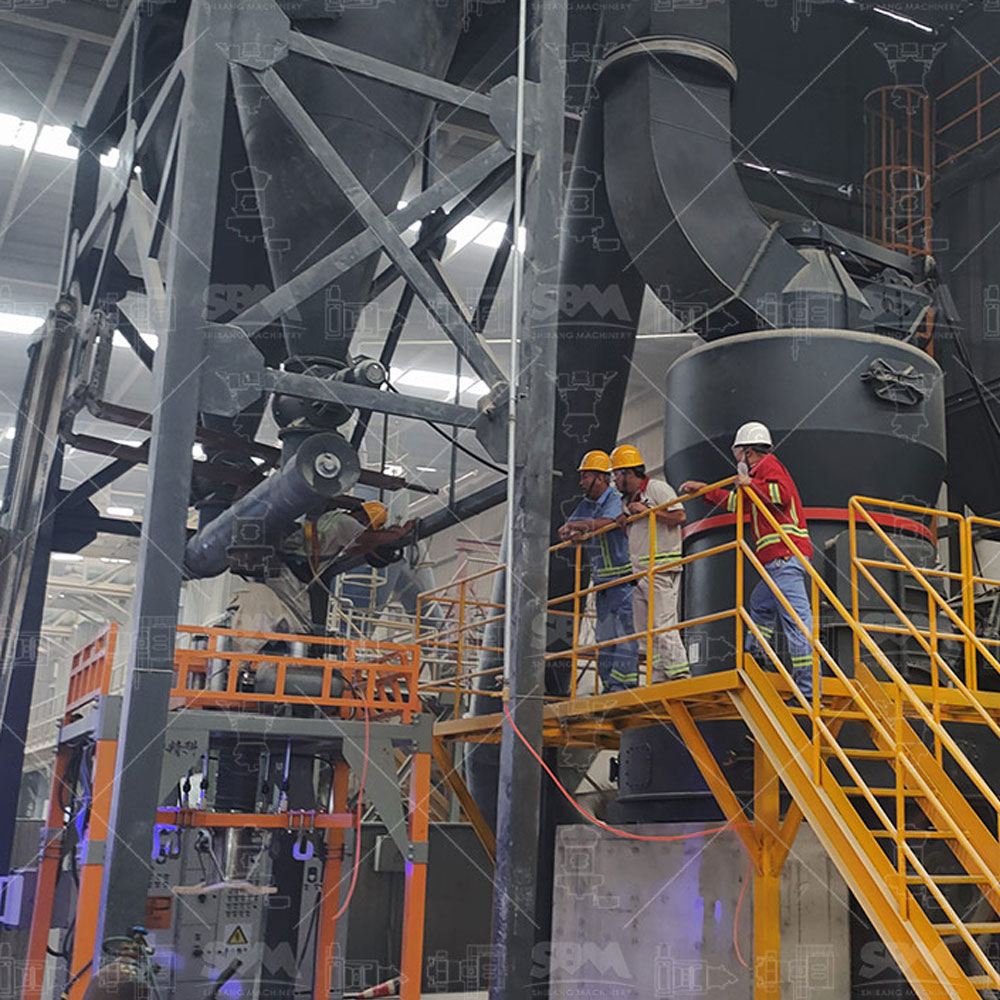
3. Fine Grinding (Jet Milling or Ball Milling with SBM Equipment Options)
Fine grinding is the most critical step in determining the final magnetic properties. The goal is to achieve a narrow particle size distribution in the range of 3–5 µm. Two main methods are used: jet milling (most common) and ball milling. In jet milling, high-pressure nitrogen gas accelerates the particles, causing them to collide and fracture. However, this process consumes significant energy and generates heat. For manufacturers seeking energy efficiency and precise particle control, SBM Machinery offers alternatives:
- MTW European Trapezium Grinding Mill: Although traditionally used for non-metallic minerals, its cone gear whole transmission and arc air duct design provide stable grinding at 30–400 mesh. For NdFeB pre-grinding, it can efficiently reduce feed from 0–50 mm to a uniform coarse fraction, lowering the load on downstream jet mills. The unique wear-proof perching knife design also reduces replacement costs—only the blade needs changing.
- SCM Ultrafine Grinding Mill: This mill achieves a fineness from 325 to 2500 mesh (D97 ≤ 5µm) in one pass, making it suitable for direct fine grinding of brittle NdFeB alloys. Its heavy rotor design and special roller/ring materials enhance durability, while the vertical turbine classifier ensures no coarse powder spillover. Capacity ranges from 0.5 to 25 tph, ideal for pilot or small-to-medium production.
After grinding, the powder must be protected from oxygen. All handling occurs in a nitrogen or argon atmosphere. An antioxidant coating (e.g., a thin layer of organic surfactant) is often added to prevent oxidation during subsequent processing.
4. Powder Blending and Pressing
The fine powder is blended with a lubricant (e.g., zinc stearate) to improve flowability and reduce die wear. It is then loaded into a press machine and aligned in a magnetic field. Two pressing methods dominate:
- Die Pressing: Powder is compacted in a uniaxial die under a magnetic field (0.5–2 Tesla). This method is fast but produces magnets with lower geometric complexity.
- Isostatic Pressing: The powder is sealed in a flexible rubber bag and subjected to high pressure (200–300 MPa) from all directions in a fluid medium. This yields higher density and more uniform magnetic alignment, especially for large or shaped magnets.
The green (unfired) compact has a density of about 60–70% of theoretical and is fragile.
5. Sintering and Heat Treatment
Sintering is performed in a vacuum furnace at temperatures between 1050°C and 1120°C. The green compacts are heated slowly to remove binders, then held at the sintering temperature for 1–4 hours. During this stage, the powder particles fuse, and density increases to >99% of theoretical. The sintering atmosphere is critical: oxygen and moisture must be below 10 ppm to avoid oxidation. After sintering, a rapid quench (cooling rate 50–100°C/min) is applied to maintain the desired magnetic phase (Nd2Fe14B). A subsequent aging heat treatment at 500–600°C for 1–2 hours optimizes the grain boundary structure, enhancing coercivity.
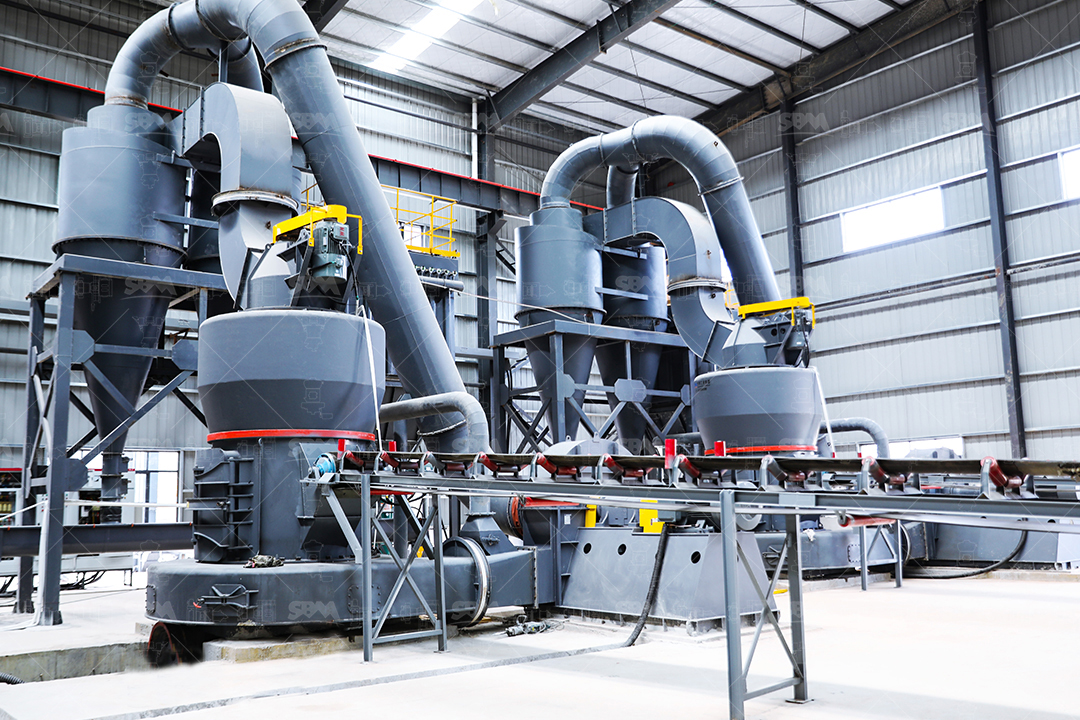
6. Machining and Surface Processing
Sintered magnets are extremely hard and brittle. Machining is performed using diamond grinding wheels or wire electrical discharge machining (EDM). Common operations include slicing, grinding, and drilling. SBM Machinery's LM Vertical Roller Mill or Ball Mill can be adapted for secondary milling of scrap or off-spec material into reusable powder. After shaping, magnets undergo surface treatment to prevent corrosion: electroplating (Ni/Cu/Ni, Zn), epoxy coating, or parylene coating. Finally, each magnet is magnetized in a pulsed magnetic field (≥80 kOe) and tested for flux density, coercivity, and dimensional accuracy.
7. Quality Control and Common Pain Points
Typical customer pain points include:
- Oxidation during grinding: Oxygen pickup degrades magnetic properties. Solution: use nitrogen-sealed SBM Ultrafine Mills with efficient powder collection systems.
- Particle size inconsistency: Variations in grinding lead to uneven sintering and weak magnets. Solution: utilize SBM's automatic control system with frequency conversion for stable fineness.
- High energy costs: Jet milling is energy-intensive. Solution: combine SBM's LM Vertical Roller Mill with its low-energy design (30–40% energy savings vs. ball mills) as a pre-grinder.
- Equipment wear: Abrasive NdFeB powder wears out grinding rollers and classifiers quickly. Solution: SBM mills feature heavy-duty materials and replaceable wear parts.
- Environmental compliance: Dust and noise regulations are tightening. Solution: SBM's sealed systems with pulse dust collectors meet international emission standards.
FAQs (Frequently Asked Questions)
1. Why does my NdFeB magnet have lower coercivity than expected?
Coercivity loss often stems from improper heat treatment—either insufficient aging time or incorrect cooling rate. Ensure the sintering and aging profiles strictly follow the alloy composition. Also, check that grinding did not introduce excessive oxygen, which can alter grain boundary chemistry.
2. How can I reduce oxidation during jet milling without sacrificing throughput?
Switch to a closed-loop nitrogen system with oxygen monitoring below 50 ppm. For higher capacity, consider using SBM's Ultrafine Vertical Mill (LUM series), which operates under negative pressure and integrates grinding, classifying, and transport, minimizing gas leakage.
3. What is the best mill for grinding scrap NdFeB magnets back into reusable powder?
SBM Ball Mill (dry type) is cost-effective for coarse grinding (0–25 mm feed, output 0.074–0.2 mm). For finer powder (down to 5 µm), the SCM Ultrafine Mill is recommended. Both offer wear-resistant components designed for hard materials.
4. My green compacts crack during pressing. How can I improve green strength?
Add a small amount (0.1–0.5 wt%) of lubricant or binder (e.g., polyethylene glycol). Also, ensure the powder particle size distribution is broad (e.g., 2–8 µm) to improve packing density. Pre-compaction under low pressure (10–20 MPa) before final pressing can also help.
5. How do I achieve consistent particle size distribution batch after batch?
Invest in milling equipment with PLC/ DCS automatic control. SBM Vertical Roller Mill, for instance, offers real-time adjustment of grinding pressure and classifier speed, ensuring that the product fineness stays within ±2% of the target. Additionally, regular sieve analysis every 30 minutes of operation helps catch deviations early.


