

Barite: vertical roller mill boosts resource efficiency
2025-04-02
In the global mineral processing industry, barite—a critical industrial mineral used primarily in oil and gas drilling fluids, radiation shielding, and chemical applications—demands grinding solutions that deliver consistent fineness, high throughput, and low energy consumption. Traditional grinding technologies often struggle with barite's inherent hardness and abrasiveness, leading to frequent wear part replacements, high operating costs, and unstable product quality. The LM Vertical Roller Mill, engineered by Shanghai SBM Machinery Equipment Co., Ltd., directly addresses these pain points by integrating crushing, drying, grinding, powder separating, and transportation into a single, compact system. This advanced vertical roller mill not only reduces comprehensive investment by approximately 50% compared to conventional ball milling systems but also achieves 30% to 40% lower energy consumption. Its proven design—where rollers never directly contact the grinding plate—dramatically extends the service life of wear components, making it the preferred solution for barite processors in over 180 countries who seek to maximize resource efficiency while minimizing downtime and operational costs.
Barite (barium sulfate, BaSO₄) is notoriously dense and abrasive. Clients processing barite from 0 to 50 mm feed sizes into finished products ranging from 30 to 400 mesh (for drilling-grade or industrial fillers) frequently face four key challenges: high wear rates on grinding elements, excessive energy bills, inconsistent fineness due to classifier inefficiency, and large plant footprints that inflate initial investment. The LM Vertical Roller Mill delivers a direct remedy to each. Its grinding rollers and grinding plate are manufactured from high-quality alloy steel, carefully heat-treated to withstand the intense friction of barite. Because the rollers operate without direct metal-to-metal contact under normal conditions, the wear life of both roller tires and liners is significantly prolonged. Operators report that maintenance intervals stretch dramatically, slashing the cost and frequency of spare parts replacement—one of the most common headaches in barite grinding.
Energy efficiency is another critical concern. Barite grinding has traditionally been associated with ball mills that may consume up to 30 kWh per ton or more. The LM vertical roller mill, however, employs a unique grinding mechanism where material is crushed and ground between the rotating grinding table and the hydraulically loaded rollers. This direct grinding action requires less energy to achieve equivalent or better fineness. The mill's built-in hot gas generator can also dry moist barite feed simultaneously, eliminating the need for separate drying equipment. For a typical barite processing plant running 24/7, the annual energy savings can be substantial—translating directly into improved profit margins and a lower carbon footprint. The automatic control system, equipped with expert logic, allows remote or local switching to optimize grinding pressure, table speed, and classifier speed in real time. This ensures that even when feed moisture or hardness fluctuates, the mill maintains stable operation with consistent product quality.
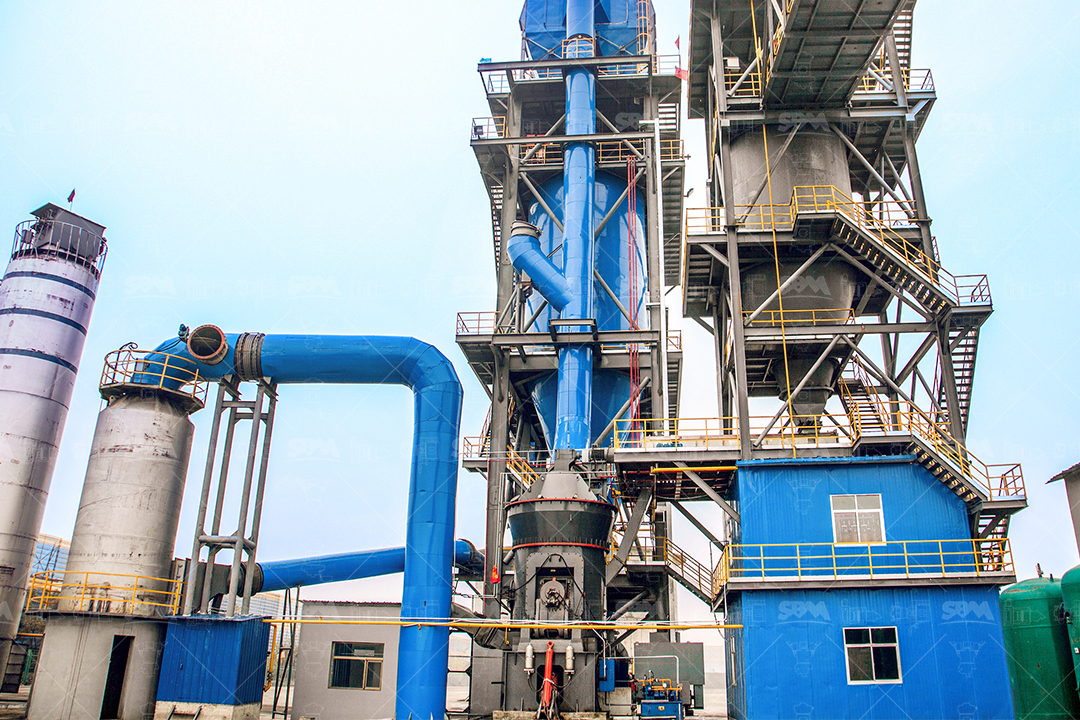
Environmental compliance is becoming non-negotiable in barite processing. Dust emissions, noise pollution, and fine powder leakage—especially when grinding to 400 mesh or finer—are persistent problems with older equipment. The LM Vertical Roller Mill operates under negative pressure with a fully sealed system, preventing any dust spillover to the surrounding environment. The enclosed grinding chamber and low-vibration design keep noise levels far below those of traditional mills. Combined with an efficient bag filter or pulse dust collector, the entire system meets stringent national and international emission standards (e.g., <50 mg/Nm³). This allows barite processors to operate in densely populated or regulated regions without facing penalties or community complaints. Moreover, the mill's ability to be arranged outdoors, thanks to its weatherproof design, further reduces the civil engineering costs and construction timeline.
In terms of operational flexibility, barite grinding often requires two distinct tiers of fineness: coarse grades (around 200 mesh) for drilling mud weight additives and ultra-fine grades (down to 2500 mesh) for high-value applications like plastics, coatings, and medical radiation shielding. The LM Vertical Roller Mill can handle the coarser range easily with its standard classifier; but for customers needing superfine barite powder (D97 ≤ 10 μm or finer), SBM offers the LUM Ultrafine Vertical Mill as a complementary solution. The LUM mill integrates Taiwan grinding roller technology and German classifier expertise to produce finished products from 325 to 4000 mesh with precisely adjustable particle size distribution. Its multi-rotor classifier ensures no coarse powder contamination, and the PLC/DCS automatic control maintains stable grinding pressure for consistent quality. This two-pronged approach—LM for bulk, energy-efficient coarse grinding; LUM for high-value ultrafine—lets customers capture both volume and margin from diverse barite markets.
Clients also ask about after-sales support and system integration. SBM Machinery provides end-to-end service, from site evaluation and flowsheet design through installation, commissioning, and training. With over 180 countries of deployment, local service networks and spare parts warehouses are typically accessible. The vertical roller mill's modular design and standardized components mean that most maintenance does not require specialized tooling; the combined-type shovel blade (where only the blade itself is replaced) and easy-access grinding roller swing-out mechanisms greatly reduce labor time. For barite processors who have suffered from prolonged mill downtime due to hard-to-source parts, this reliability is a major competitive advantage.
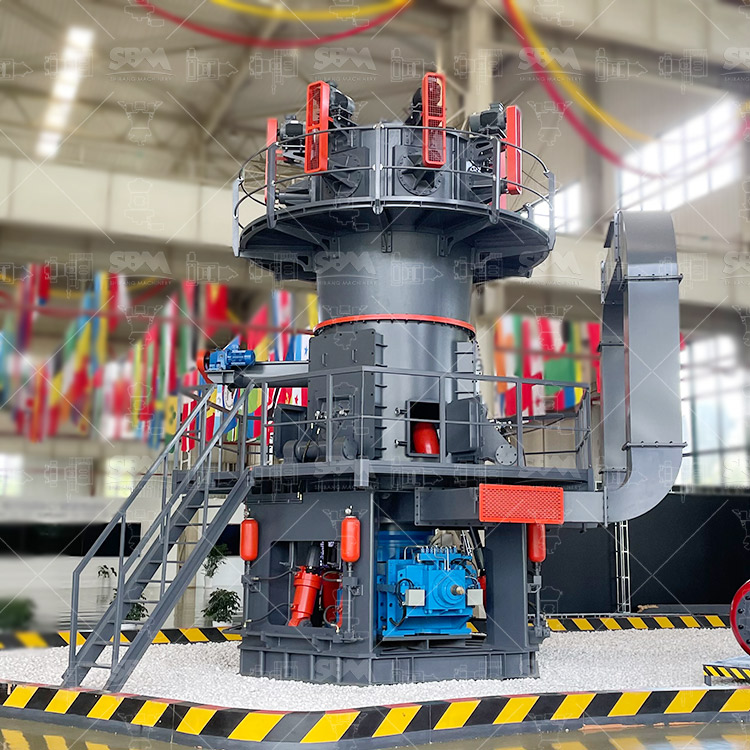
Ultimately, barite resource efficiency is not just about the machine—it's about total cost of ownership. By combining low energy consumption, reduced wear rates, automatic operation, and environmental protection in one robust package, the LM Vertical Roller Mill (and its ultrafine companion LUM) transforms barite processing from a traditional high-cost, high-waste operation into a modern, sustainable, and profitable enterprise. Whether the goal is to produce 3 tons per hour of coarse barite for local drilling mud suppliers or 70 tons per hour of ultrafine powder for global export, SBM's grinding technology delivers consistent results with minimal environmental burden.
Frequently Asked Questions (FAQ)
1. Why does my barite grinding mill wear out so quickly, and how does the vertical roller mill solve this?
Barite is extremely abrasive (Mohs hardness 3–3.5). Traditional ball mills and Raymond mills cause metal-to-metal contact between grinding media and liners. The LM Vertical Roller Mill uses a principle where grinding rollers press material against a rotating table without direct contact between roller and table under normal load. The rollers and liners are made of high-alloy wear-resistant steel. This design extends wear part life by 2–3 times compared to conventional mills, reducing downtime and replacement costs.
2. My barite powder fineness fluctuates; how do I get consistent 200–400 mesh day after day?
Inconsistent feed moisture and hardness are the main culprits. The LM mill is equipped with an expert automatic control system that dynamically adjusts grinding pressure, table speed, and classifier rotor speed to maintain stable product fineness. The integrated classifier (static or dynamic) provides precise separation, and the system can be programmed to respond to online particle size analyzers for closed-loop control.
3. Can I use the same mill for both coarse barite (200 mesh) and ultrafine barite (1250 mesh)?
The LM Vertical Roller Mill is optimized for 30–400 mesh output. For ultrafine barite (325–4000 mesh), we recommend the LUM Ultrafine Vertical Mill, which uses a multi-rotor classifier and specialized grinding curve to achieve D97 ≤ 5 μm without oversize particles. Many clients install the LM for mainstream production and the LUM for premium ultrafine grades. Both mills share common spare parts and control platforms for easier maintenance.
4. How do I reduce dust and noise to comply with local environmental regulations?
The LM mill is designed as a fully sealed system operating under negative pressure. Combined with a high-efficiency pulse dust collector, emissions are typically below 20 mg/Nm³. The mill's vibration is minimal due to mass-balanced rotating parts and hydraulic damping, keeping noise below 85 dB(A) at 1 meter. Optional soundproof enclosures and mufflers can further reduce noise for sensitive locations.
5. I have limited space and budget—can the vertical roller mill still work for me?
Yes. The LM Vertical Roller Mill has a footprint only 50% of a comparable ball mill system. It can be installed outdoors with a simple canopy, further reducing civil engineering costs. The integrated design eliminates separate crusher, dryer, classifier, and conveyor systems. For starting small, capacities from 3 t/h (LM series) are available, with modular expansion possible later. SBM's engineering team can help you design a compact layout that fits your existing plant footprint.


