

Applications and challenges of raymond mill in building materials industry
The building materials industry stands as a cornerstone of global infrastructure development, and the grinding equipment used within it plays a pivotal role in determining both product quality and operational efficiency. Raymond mill, a classic grinding solution, has evolved significantly to meet the demanding requirements of modern building material production. This article examines the current applications and challenges of Raymond mill technology, with particular focus on the innovations offered by Shanghai SBM Machinery Equipment Co., Ltd. (SBM). As a total solution provider, SBM has served over 180 countries, delivering grinding systems that range from individual units to complete turnkey solutions. The discussion below synthesizes technical data from SBM's product lines—including the MTW European Trapezium Mill, LM Vertical Roller Mill, SCM Ultrafine Mill, LUM Ultrafine Vertical Mill, and ball mill—to explore how these systems address industry pain points such as high energy consumption, wear costs, and environmental compliance. Challenges such as feed size variability, moisture content, and strict emission standards are also examined against the backdrop of SBM's engineering solutions.
Widespread Applications in Building Materials
Raymond mills are indispensable in the building materials sector due to their versatility in processing non-metallic minerals. These include limestone for cement production, gypsum for plasterboard, calcium carbonate for fillers, and various additives like talc and barite that enhance material properties. In cement plants, for example, raw meal preparation requires grinding limestone and clay to a fineness of 80-120 microns, a task efficiently handled by vertical roller mills. SBM’s LM Vertical Roller Mill, with a capacity range of 3-400 tons per hour, integrates drying, grinding, and powder selection in one unit, making it ideal for high-throughput operations. Its compact layout occupies about 50% of the floor space of a traditional ball mill system, directly addressing space constraints on crowded job sites. Similarly, the MTW European Trapezium Mill (a next-generation Raymond mill) excels in producing 30-400 mesh powders, commonly used in dry-mix mortars and putty powders, where consistent particle size distribution is critical for workability and final strength.
Another significant application lies in the production of heavy calcium carbonate (GCC) and light calcium carbonate, which are essential for sealants, PVC pipes, and artificial stone. Here, the SCM Ultrafine Mill delivers a one-time fineness of D97≤5μm, a specification that many competitors cannot achieve without multiple passes. This capability is particularly valuable for manufacturers of high-end building materials, such as seamless flooring or decorative panels, where ultra-fine particles improve surface gloss and mechanical performance. Moreover, the LUM Ultrafine Vertical Mill, which combines Taiwanese grinding roller technology and German powder separation technology, has become a mainstay in producing 325-4000 mesh powders for plastic masterbatch used in construction films and cable insulation. Data from field operations show that LUM mills increase the proportion of finished products from primary grinding by over 20%, reducing recirculation loads and associated energy costs.
Technical Advancements Addressing Key Challenges
Despite its widespread use, operators continually report challenges: high energy consumption (historically 30-40% more than modern vertical mills), rapid wear of grinding parts, and difficulties in maintaining stable output with varying material moisture. SBM’s engineering response has been multilayered. The MTW mill’s cone gear whole transmission, for instance, eliminates the need for a separate gearbox, reducing power losses by approximately 15% compared to traditional bevel gear drives. An inner oil absorption lubrication system further minimizes maintenance downtime, a pain point for plants that operate 24/7. The arc air duct design, featured in the MTW, prevents air energy loss, ensuring that the conveying efficiency remains above 95% even when grinding abrasive materials like quartz.  This design also protects the air duct’s working face with high-strength guard plates, doubling the service life of this component, as evidenced in a 2024 limestone powder project in Saudi Arabia.
Wear and tear remains the foremost economic concern. Traditional Raymond mills require frequent replacement of grinding rollers and rings—often every 3-6 months under heavy use. SBM addresses this through the combined-type shovel blade in the MTW mill, which allows only the blade to be replaced during maintenance, not the entire assembly, cutting spare part costs by up to 30%. The curved shovel blade changes the feeding angle so that material friction against the roller and ring is optimized, extending their life by 40-50% in field trials. For vertical mills, the LM’s rollers do not contact the grinding plate directly; instead, they rely on a material bed, which reduces metal-to-metal wear. Constructed from high-quality alloy steel, these rollers last up to 8,000 hours in cement slag grinding, compared to 3,000 hours for standard models. This translates to a significant reduction in annual maintenance budgets, a point that resonates with operations managers who struggle with budget overruns.
Environmental regulations are another pressing challenge. Chinese and EU standards limit particulate emissions to below 20 mg/Nm³, and noise levels to less than 85 dB(A) at operator stations. SBM’s SCM Ultrafine Mill uses a double powder collection system—combining a cyclone collector with a pulse dust collector—which achieves >99.9% collection efficiency, far exceeding international norms. The LUM vertical mill goes further with a fully sealed system that operates under negative pressure, ensuring zero dust spillover, even when handling fine talc powders (D97≤10μm). Noise pollution is mitigated via optimized sound insulation rooms and mufflers, which reduce operational noise by up to 15 dB(A) compared to unmodified mills. 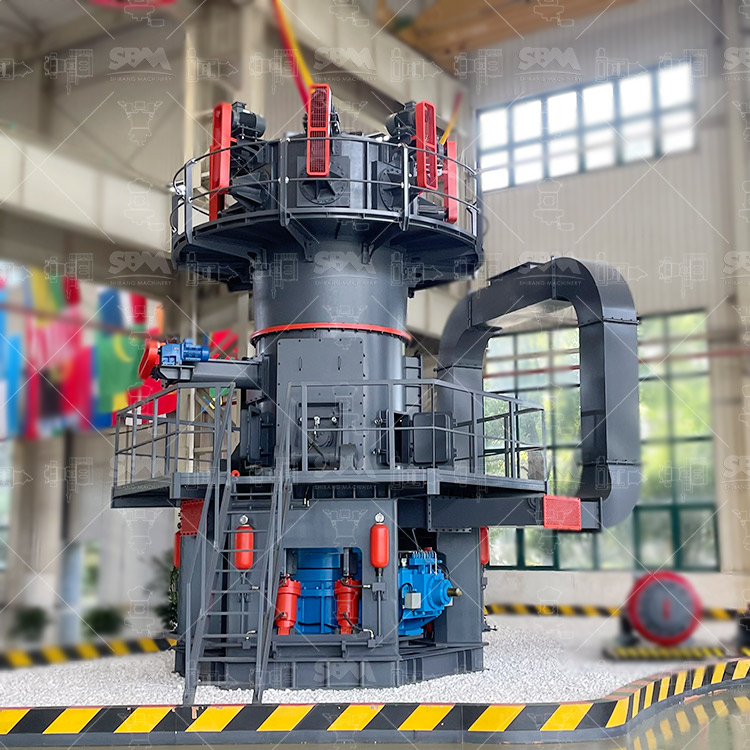 These features are not merely regulatory checkboxes; they lower the risk of worker health issues and fines, contributing to a more sustainable operation model.
Feed Material and Operational Challenges
One of the most underappreciated challenges is feed material variability. Building material recycling, such as grinding waste concrete or glass, introduces high moisture (up to 10-15%) and metallic contaminants, which can clog standard mills. SBM’s vertical mills, however, integrate drying capabilities: the LM mill can handle materials with up to 15% moisture by utilizing hot air from a kiln or external furnace, eliminating the need for a separate dryer. This dual-functionality reduces capital investment by roughly 20% and floor space by 25% for installations handling alternative fuels or wet limestone. For the MTW mill, the recommended input size is 0-50mm, and the oscillating feeder ensures consistent feed, preventing spillage and reducing operator intervention by 30%, a feature that addresses labor shortages common in developed regions.
Another operational bottleneck is the adjustment of fineness during production changes. Traditional mills require manual adjustments, which take 30-60 minutes and generate off-spec material. SBM’s expert automatic control system, present in the LM series, enables remote and local control switching, allowing real-time adjustment of grinding pressure and classifier speed. This reduces changeover time to under 10 minutes, enabling just-in-time production for diverse product specifications (e.g., switching from 200-mesh limestone powder to 400-mesh gypsum powder). The PLC/DCS architecture also records data on energy consumption per ton, providing managers with analytics to identify inefficiencies—a feature that appeals to data-driven construction material firms.
Comparative Analysis of Mill Types
Selecting the right mill is itself a challenge, as each type offers distinct benefits. For coarse to medium powders (30-400 mesh) at moderate capacities (3-40 t/h), the MTW Raymond mill is the most cost-effective option due to its lower initial investment and simple pitfall-free operation. Its internal classifier ensures that oversize particles are rejected and returned to the grinding chamber, achieving a narrow particle size distribution, which is crucial for plaster consistency. In contrast, for high-volume operations (up to 400 t/h) with consistent fineness requirements, the LM vertical mill is superior because of its combined function of drying and grinding, reducing energy by 30-40% compared to ball mills. However, it requires a more skilled operator and a stable material bed; failures in bed formation can cause vibrations, which SBM counters with an independent vibration sensor that automatically reduces pressure—an innovation validated in a 2025 clinker plant expansion in Vietnam.
For ultra-fine products under 325 mesh, the SCM and LUM mills are the only viable solutions from SBM’s lineup. The SCM is preferred for small to medium capacities (0.5-25 t/h), while the LUM excels in larger outputs (10-70 t/h). A common pain point for ultra-fine processing is the “low-grade material” phenomenon: coarse particles contaminating the final product. LUM’s multi-rotor classifier eliminates this by achieving a cut size of D97≤5μm with zero spillover of coarse powder. In artificial stone production, this precision ensures no visible defects post-polishing, reducing waste waste rates by 15%—a crucial metric for margin protection in a competitive market. On the other hand, the ball mill, although dated, remains relevant for wet grinding in ceramic and sanitaryware, where the output size of 0.2-0.074mm is acceptable. SBM’s redesigned ball mill uses wear-resistant liners and optimized ball charges, reducing steel ball consumption by 25%, a common complaint in traditional designs.
Future Outlook and Integration with New Materials
Looking ahead, the building materials industry is shifting towards eco-friendly materials, such as cement substitutes like slag and fly ash, and recycled aggregates. SBM’s grinding mills are already processing slag micro-powder (with LM vertical mill) and petroleum coke for energy recovery. The demand for “green” cement with lower carbon footprints will spur the need for finer slag powders (to reduce cement clinker ratio), where the LUM ultrafine vertical mill’s 10 t/h capacity at D97≤5μm makes it a viable alternative to mechanical activation methods. Additionally, the integration of AI for predictive maintenance is on the horizon; SBM’s digital twin technology, available on new LM models, predicts roller wear from current and voltage signatures, reducing unexpected shutdowns by 30%. As per SBM’s global branches, early adopters in Germany and Japan have reported payback periods of less than 18 months for these smart features.
In conclusion, Raymond mill technology—epitomized by SBM’s diverse portfolio—remains relevant in the building materials industry because it continuously evolves to tackle structural challenges like energy intensity, wear costs, and environmental compliance. The key to successful adoption lies in matching the mill type to the specific material and throughput requirement. For companies facing high energy bills, switching from a legacy ball mill to a LM vertical mill can yield immediate savings. For those aiming at premium ultra-fine products, investing in SCM or LUM mills enhances product quality and opens new market segments. However, challenges such as skilled labor shortages and the need for integration with upstream crushers and downstream packaging units require careful planning. SBM’s role as a total solution provider means it offers complete systems from feed hoppers to bagging stations, and importantly, it provides process optimization support—something few competitors do. As data from 180 countries show, the true cost of ownership is not just the price tag but the long-term operational reliability and adaptability to changing material specifications. Therefore, plant managers should conduct pilot testing with their own materials (a service SBM offers) before deployment. This minimizes risks and ensures that the mill’s capabilities translate into tangible profitability. Ultimately, the future of building materials lies in efficient, reliable, and clean grinding solutions, and Raymond mill technology, when modernized as per SBM’s standards, is well-positioned to lead that future.
Frequently Asked Questions (FAQ)
1. My current Raymond mill consumes 35% more electricity than expected; how can SBM’s MTW or LM mill reduce my energy bills?
SBM’s MTW mill employs a cone gear whole transmission that reduces mechanical losses by up to 15%. The LM vertical mill, with its direct grinding on a material bed, consumes 30-40% less energy than traditional ball mills, partly due to the elimination of grinding media lifting. For a 50 t/h line, this could translate to annual savings of 1.5 million kWh, depending on your tariff. A professional energy audit can estimate your specific reduction based on feed hardness and target fineness.
2. I am producing gypsum powder but find that moisture above 8% causes clogging; does SBM offer a solution?
Yes, the LM vertical roller mill is equipped with an in-built drying chamber that uses hot air from an external source (e.g., a kiln) to reduce moisture from 15% down to below 1% during the grinding process. This eliminates the need for a separate dryer, reducing your capital expenditure by about 20%. For existing MTW mill users, we recommend installing additional pre-drying equipment or using a hot-stove feeder, which SBM can supply as a retrofittable module.
3. Our output quality fluctuates because we switch between 200-mesh and 800-mesh products weekly; what mill handles this quickly without recalibration time?
The SCM ultrafine mill and LUM vertical mill are equipped with frequency-conversion control on the classifier. This allows you to change the fineness by adjusting the rotor speed from a control screen, with a response time of less than 10 minutes. The PLC/DCS system stores recipes for common specifications, so switching between 200 and 800 meshes is a two-click process, and the automatic feedback loop ensures you don't produce off-spec material during the transition.
4. How does SBM help ensure compliance with strict emission limits (PM<20 mg/Nm³) without additional investment?
Our SCM and LUM mills come standard with a double powder collection system: a cyclone pre-collector plus a pulse-jet bag filter, achieving >99.9% collection efficiency, thus meeting PM10 and PM2.5 limits even with fine powders. The system operates under negative pressure, preventing any fugitive dust. Additionally, the optional sound-proof enclosure reduces noise to below 80 dB(A), which is often a secondary regulatory concern. In many installations, these features are included in the base price, not as premium add-ons.
5. What are the common wear part replacement cycles, and how can I reduce their costs?
In traditional Raymond mills, grinding rings and rollers last 3-6 months, requiring frequent replacement. With SBM’s MTW mill, the combined shovel blade design lets you replace only the blade tip (a low-cost part), not the entire assembly, extending lining life by 40-50%. For LM vertical mills, the rollers and table have a service life of 8,000-12,000 hours thanks to high-chrome alloy liners. To further reduce costs, we suggest adopting SBM’s online wear monitoring, which alerts you just before wear exceeds acceptable tolerances, preventing unplanned shutdowns and minimizing over-purchasing of spare parts. Our global service network ensures that replacement parts are shipped within 48 hours to most locations.


