

Secrets revealed: how to choose the right raymond mill model and specification
Published on: October 26, 2023
Selecting the correct Raymond mill model and specification is not merely a purchasing decision—it is a strategic investment that determines your entire powder processing operation's efficiency, profitability, and long-term competitiveness. The wrong choice leads to a cascade of problems: lower throughput than promised, excessive energy bills, frequent downtime, high wear-part replacement costs, and finished product quality that fails to meet your customers' increasingly strict specifications. Over the past two decades, SBM Machinery has served more than 180 countries and regions, providing grinding solutions from individual units to complete turnkey systems. Through this global experience, we have identified the critical factors that separate a successful mill selection from a costly mistake. This article reveals the methodology for choosing the right Raymond mill model, grounded in real-world performance data, technical principles, and the practical needs of industries such as power generation, building materials, mining, metallurgy, chemicals, and non-metallic minerals. We will break down the selection process into four core pillars: material characteristics, target fineness and capacity, operational cost structure, and future-proofing your plant. By the end, you will have a clear, step-by-step framework to confidently match your application to the optimal SBM Raymond mill model—whether that is the MTW European Trapezium Mill, the LM Vertical Roller Mill, the SCM Ultrafine Mill, the LUM Ultrafine Vertical Mill, or the Ball Mill.
Understanding Your Material: The Foundation of Mill Selection
Before even opening a catalog or comparing specification tables, you must thoroughly analyze your feed material. The physical and chemical properties of the raw ore or mineral dictate the mechanical stresses the mill will experience and directly influence which grinding mechanism is appropriate.
Hardness and Abrasiveness: The Mohs hardness scale is your first reference. For softer materials like talc (hardness 1), limestone (3), or calcite (3), a Raymond mill with medium-to-high grinding pressure is sufficient. For harder materials like feldspar (6-6.5) or quartz (7), you need a mill designed with wear-resistant components and a grinding mechanism that minimizes direct metal-to-metal contact. SBM's MTW European Trapezium Mill features a unique wear-proof perching knife design and curved shovel blades that change the feeding angle, significantly prolonging roller and ring service life even with moderately abrasive materials. For highly abrasive feeds, the LM Vertical Roller Mill's design, where the roller does not contact the grinding plate directly and both are made of high-quality alloys, reduces wear rates by up to 30-40% compared to traditional ball mills.
Moisture Content: If your material has a surface moisture above 5%, you need a mill with integrated drying capability. The LM Vertical Roller Mill integrates drying, grinding, and powder selection within a single system. It can handle feed moisture up to 15-20% by introducing hot gas into the mill housing, eliminating the need for a separate pre-drying step. In contrast, a standard Raymond mill (like the MTW) requires pre-dried feed to avoid clogging and reduced throughput. Ignoring moisture content is one of the most common pitfalls leading to underperforming installations.
Feed Size Distribution: The maximum input size dictates the mill's inlet design and whether pre-crushing is required. For instance, SBM's MTW mill accepts up to 50mm feed, while the SCM Ultrafine Mill accepts up to 20mm. If your crusher produces a wide size distribution, you may need a mill with a more robust inlet throat or an integrated feeder that regulates material flow. Never assume your existing crusher output is suitable—always compare the actual P80 (80% passing size) to the mill's specified maximum input size.
Defining Target Fineness and Capacity: The Non-Negotiable Specifications
Your product's market value is directly tied to its fineness and consistency. Different downstream applications demand vastly different particle size distributions, and choosing a mill that can achieve the required D97 (the particle size at which 97% of the product passes) is critical.
Fineness Ranges:
- For coarse powders (30-400 mesh, i.e., 595-38 microns), the MTW European Trapezium Mill is the workhorse. It offers an output size of 30-400 mesh with capacity of 3-40 tph. Its cone gear whole transmission and arc air duct design ensure efficient airflow, which is crucial for stable classification at the coarser end.
- For medium-to-fine powders (80-400 mesh) with high capacity demands, the LM Vertical Roller Mill shines. With an output size of 30-400 mesh but a capacity range of 3-400 tph, it is the only viable option for large-scale cement, slag, and coal powder preparation. Its automatic control system maintains product fineness even as feed conditions vary.
- For fine and ultrafine powders (325-4000 mesh, or 44-3.5 microns), the SCM Ultrafine Mill (capacity 0.5-25 tph) and the LUM Ultrafine Vertical Mill (capacity 10-70 tph) take over. The SCM series uses a multi-rotor powder classifier with frequency-conversion control, achieving a one-time fineness of D97≤5μm. The LUM mill integrates Taiwan's grinding roller technology and Germany's powder separating technology, making it ideal for plastic masterbatch, PVC, artificial stone, and other high-end applications where consistency is non-negotiable.
Capacity Planning: It is a common error to select a mill based on average capacity requirements, ignoring the peak demand periods. The chosen mill must deliver the required tonnage even when the feed becomes slightly harder or finer. As a rule of thumb, add a 10-15% safety factor to your nominal capacity requirement. For example, if you need 20 tph of ground calcium carbonate (GCC) at 325 mesh, the MTW mill in the appropriate configuration can meet that, but if your future demand grows to 30 tph, the LM vertical mill may be the more strategic choice from day one. Capacity is not just about the mill itself—it's about the entire system's ability to handle surge volumes.
_1787588533041.jpg)
Operational Cost Analysis: Beyond the Initial Price Tag
The true cost of a grinding mill is not the purchase price—it is the total cost of ownership (TCO) over the equipment's lifecycle. This includes energy consumption, wear parts, maintenance labor, and downtime costs. Understanding where each mill technology excels can save you hundreds of thousands of dollars annually.
Energy Efficiency: The grinding process is energy-intensive. The LM Vertical Roller Mill stands out with 30-40% lower energy consumption than a traditional ball mill system. This is achieved by the grinding rollers directly compacting the material bed, rather than relying on impact and attrition. The MTW mill, with its bevel gear whole transmission, achieves higher transmission efficiency and lower energy losses compared to older gearbox designs. For ultrafine grinding, the SCM mill uses a heavy rotor design and optimized air classifier to minimize energy waste, while the LUM mill's PLC control system precisely adjusts grinding pressure and disc speed to operate at the most efficient curve.
Wear Parts and Maintenance: Wear parts are a recurring cost that many buyers underestimate. In a traditional Raymond mill, the shovel blade and grinding ring need frequent replacement. SBM's MTW mill uses a combined-type shovel blade where only the blade is replaced, not the entire holder, reducing spare parts cost. The LUM mill's grinding rollers and lining plates are designed based on ultrafine pulverization principles, which makes it easier to form a material bed—this self-layering effect reduces metal-to-metal wear. The LM mill's rollers and grinding plates are also made of high-quality materials, offering 2-3 times longer service life than standard components. When comparing mills, ask for specific wear life data under your feed material's conditions, not just catalog figures. Also, consider the ease of maintenance access. For instance, the MTW mill's arc air duct design includes a high-strength guard plate that protects the air duct's working face, reducing maintenance frequency. The SCM mill's grinding chamber has no bearing screws, which ensures stable, vibration-free operation after balance treatment, thereby extending the lifespan of internal components.
Automation and Labor: Modern mills like the LM and LUM come with intelligent control systems—expert automatic control for the LM, PLC/DCS automatic control for the LUM. These systems allow remote monitoring, automatic adjustment of grinding pressure and classifier speed, and even predictive maintenance alerts. This reduces the need for constant manual supervision, lowering labor costs and minimizing human error. For a plant operating three shifts, this can mean a reduction of one or two operators per shift, plus fewer quality control failures.
System Integration and Environmental Compliance: The Overlooked Essentials
A Raymond mill does not operate in isolation. It is part of a grinding system consisting of feeding equipment, a classifier, a dust collector, a fan, and piping. Choosing a mill that simplifies system integration can significantly reduce your civil engineering and equipment costs.
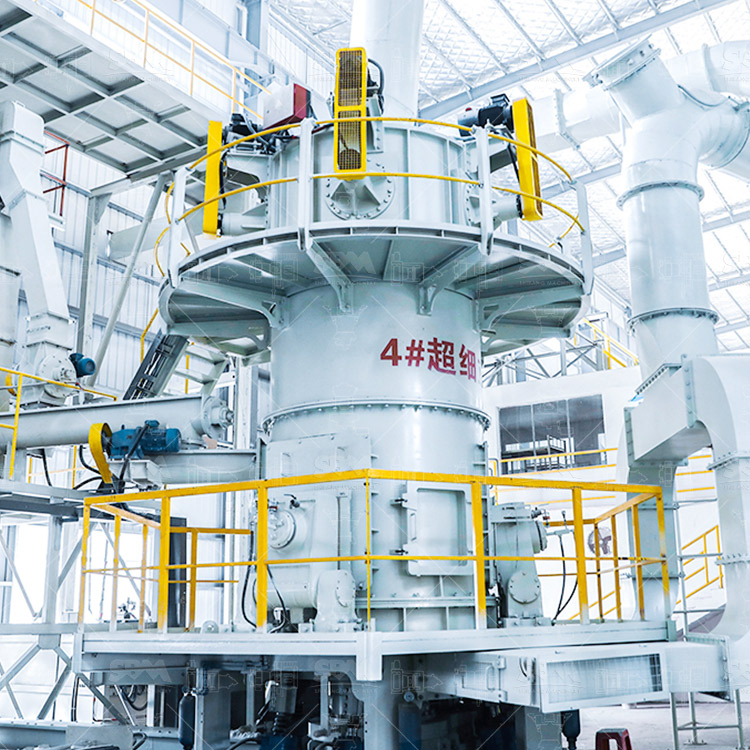
Floor Space and Layout: The LM Vertical Roller Mill integrates crushing, drying, grinding, powder separating, and transportation into one unit, requiring about 50% of the floor area of a traditional ball mill system. It can even be arranged outdoors, further saving building costs. The MTW mill, while not as integrated, offers a more compact footprint than older Raymond mills due to its volute design, which improves wind-driven transmission efficiency and reduces material accumulation. If you are retrofitting an existing plant, consider the available space and whether the mill's footprint matches your layout.
Environmental Protection: Regulatory pressure is increasing worldwide. All SBM mills are designed to meet strict environmental standards. The LM mill operates under negative pressure for the entire system, preventing dust spillage. The SCM mill uses an efficient double powder collecting method combining a powder collector and pulse dust collector, achieving dust collection efficiency far above international standards. The LUM mill features an optimized sound insulation room and muffler to control noise, along with a fully sealed system to prevent powder escape. When evaluating mills, inquire about the specific emission guarantees (in mg/Nm³ of particulate matter) and noise levels (in dB(A))—these metrics directly affect your licensing and community relations.
Case-Clarity: Matching the Application to the Model
To illustrate the selection process, consider three common scenarios:
Scenario A: Environmental Desulfurization Limestone Powder – Your power plant requires 20 tph of limestone powder at 250 mesh (approx. 58 microns). The material is soft (hardness 3), with feed size <30mm and moisture <2%. The MTW European Trapezium Mill (capacity 3-40 tph at this fineness) is an excellent fit. Its wear-proof shovel and arc air duct ensure reliable operation, while its lower capital cost compared to a vertical mill makes it the economic choice for this capacity level.
Scenario B: Large-Scale Coal Powder Preparation – Your cement plant needs 150 tph of coal powder at 200 mesh. This massive scale demands the LM Vertical Roller Mill (capacity up to 400 tph). The LM's drying capability is crucial because coal often contains surface moisture. Its automatic control system maintains stable fineness even with variable coal quality. Despite a higher initial investment, the LM's 30-40% energy savings will pay back the difference within 18-24 months.
Scenario C: Ultrafine Calcite for Plastic Masterbatch – You need 15 tph of calcite powder with a D97 of 10 microns (approx. 1250 mesh). This is the domain of the LUM Ultrafine Vertical Mill (capacity 10-70 tph at 325-4000 mesh). Its advanced multi-rotor classifier ensures a sharp particle size distribution, which is vital for consistent plastic masterbatch quality. The PLC-controlled grinding pressure guarantees repeatable results. While the SCM mill can also achieve this fineness, its maximum capacity (25 tph) is lower, so for sustained 15 tph output, the LUM provides a better safety margin.
Scenario D: General GCC with Flexible Fineness – You are a toll grinder dealing with various customers needing from 100 mesh to 600 mesh, with capacities varying from 5 to 30 tph. The MTW mill's output size range (30-400 mesh) covers the lower end, but for the 600 mesh (approx. 23 microns), you need the SCM ultrafine mill. Alternatively, if you expect to grow, the LUM mill can handle the entire range (325-4000 mesh) with capacities up to 70 tph, offering the most flexibility for a changing market.
Future-Proofing and Scalability: Making an Investment, Not a Purchase
Your market will evolve—fineness demands will increase, production quotas will rise, and new product lines will emerge. Choosing a mill that can adapt is critical. Consider the following:
- Adjustability: Can the mill's fineness be adjusted without replacing major components? The SCM mill's frequency-conversion control allows fine-tuning of the classifier speed. The LUM mill's PLC system adjusts grinding pressure and disc speed over a wide range. The MTW mill's output is adjustable within its 30-400 mesh range, but if you need to go finer, the classifier may need upgrading.
- Economic Scalability: The LM vertical mill can be designed with a larger installed power from the outset, allowing you to increase throughput by optimizing the separator and airflow without replacing the entire mill. This modular approach is more economical than buying a second mill later.
- Multi-Material Capability: If you plan to process different minerals—say, limestone now and barite later—you need a mill that can handle both without extensive reconfiguration. The MTW mill is well-suited for many non-metallic minerals, but barite (specific gravity 4.2) requires special attention to the grinding ring design to avoid excessive wear. The LUM mill, with its material bed formation principle, is particularly forgiving with different ore densities.
Conclusion: The Right Selection Framework
Choosing the right Raymond mill model and specification is a structured decision that progresses through four stages: understanding your material's properties (hardness, moisture, feed size), defining your product's fineness and capacity requirements with a safety margin, conducting a total cost of ownership analysis (energy, wear, labor, and automation), and ensuring system integration and environmental compliance. Finally, evaluate your future growth trajectory to select a mill that can evolve with your business. By following this framework, you will not only avoid the common pitfalls of oversizing or undersizing, but you will also gain a competitive edge through lower operating costs, consistent product quality, and the reliability that comes from partnering with a manufacturer that has over 9500 customer-driven improvement proposals in its development history. At SBM, we do not just sell grinding equipment—we engineer total solutions that help our customers achieve their production goals from the first day to the last.
Frequently Asked Questions (FAQ)
1. How do I know if my raw material requires a vertical roller mill or a traditional Raymond mill?
The key differentiator is moisture content and required capacity. If your feed moisture is above 5% or you need more than 40 tph, a vertical roller mill like the LM is your best option due to its integrated drying and high-capacity design. For drier materials with capacities below 40 tph, the MTW European Trapezium mill is a cost-effective alternative.
2. What is the biggest source of wear in a Raymond mill and how can I mitigate it?
Grinding ring and roller wear are the biggest sources, especially with high-silica materials. Aggravating factors are high grinding pressure and poor material bed formation. Mitigate by choosing a mill with wear-resistant alloys (like the LM's special steel rollers) or using a curved shovel blade design (like the MTW mill) that reduces friction. Also, maintain consistent feed moisture and size to keep the bed stable.
3. Can I achieve a D97 of 5 microns with a standard Raymond mill? If not, what is the alternative?
Standard Raymond mills are not designed for ultrafine grinding below 325 mesh. To achieve D97≤5μm, you need an SCM Ultrafine Mill or LUM Ultrafine Vertical Mill. These mills have specialized classifier technology and optimized grinding curves to produce ultrafine particles with consistent distribution.
4. How much energy can I realistically save by switching from a ball mill to a vertical roller mill?
Our data from installations across cement and mineral sectors shows a 30-40% reduction in specific energy consumption (kWh per ton) when using the LM Vertical Roller Mill instead of a ball mill. For ultrafine applications, the LUM mill offers similar savings compared to jet mills, plus 30% higher capacity.
5. How do I ensure my mill operates safely with flammable materials like petroleum coke?
Safety is critical. The LM Vertical Roller Mill can be equipped with an inert gas system (e.g., nitrogen injection) and a CO2/explosion suppression system. You must also close off the system's oxygen content and install rapid-acting valves to cut off material flow in case of a temperature spike. Always consult with SBM engineers for a custom safety configuration based on your material's specific combustibility.


