

Technical comparison: pros and cons of raymond mill vs. ball mill in calcium carbonate processing
Published on: October 26, 2023
When it comes to calcium carbonate (GCC) processing, the choice between a Raymond mill and a ball mill is a critical decision that directly impacts production efficiency, product quality, and operational costs. Raymond mills, particularly modern European trapezium versions like the MTW series, excel in medium-fine grinding (30-400 mesh) with lower energy consumption and a smaller footprint. Ball mills, on the other hand, are a mature technology known for their robustness and ability to handle large capacities, but they suffer from higher energy usage and significant wear of grinding media. This article provides a detailed technical comparison of both systems, analyzing their respective strengths and weaknesses in the context of GCC production, supported by our company's extensive experience supplying grinding solutions to over 180 countries. We'll also address common customer pain points such as high power bills, frequent downtime, and inconsistent particle size distribution, offering practical insights to help you select the optimal equipment for your specific requirements.
Introduction to Both Technologies
In the field of calcium carbonate powder processing, two dominant technologies have emerged: the Raymond mill (including its modern derivatives like the MTW European Trapezium Mill) and the conventional ball mill. Both are capable of producing GCC powder, but they operate on fundamentally different principles and yield different economic outcomes. Our company, SBM Machinery, has spent years analyzing these differences through direct customer feedback across thousands of installations. We have observed that while ball mills historically dominated large-scale operations, the newer generation of Raymond mills—with their cone gear transmission, arc air ducts, and combined shovel blades—are now challenging that dominance in many applications.
The choice is rarely simple. It involves trade-offs between capital investment, operational energy costs, maintenance frequency, product fineness, and footprint. Let us break down each technology's technical characteristics, supported by real-world data from our product line, to give you a transparent view of what to expect.
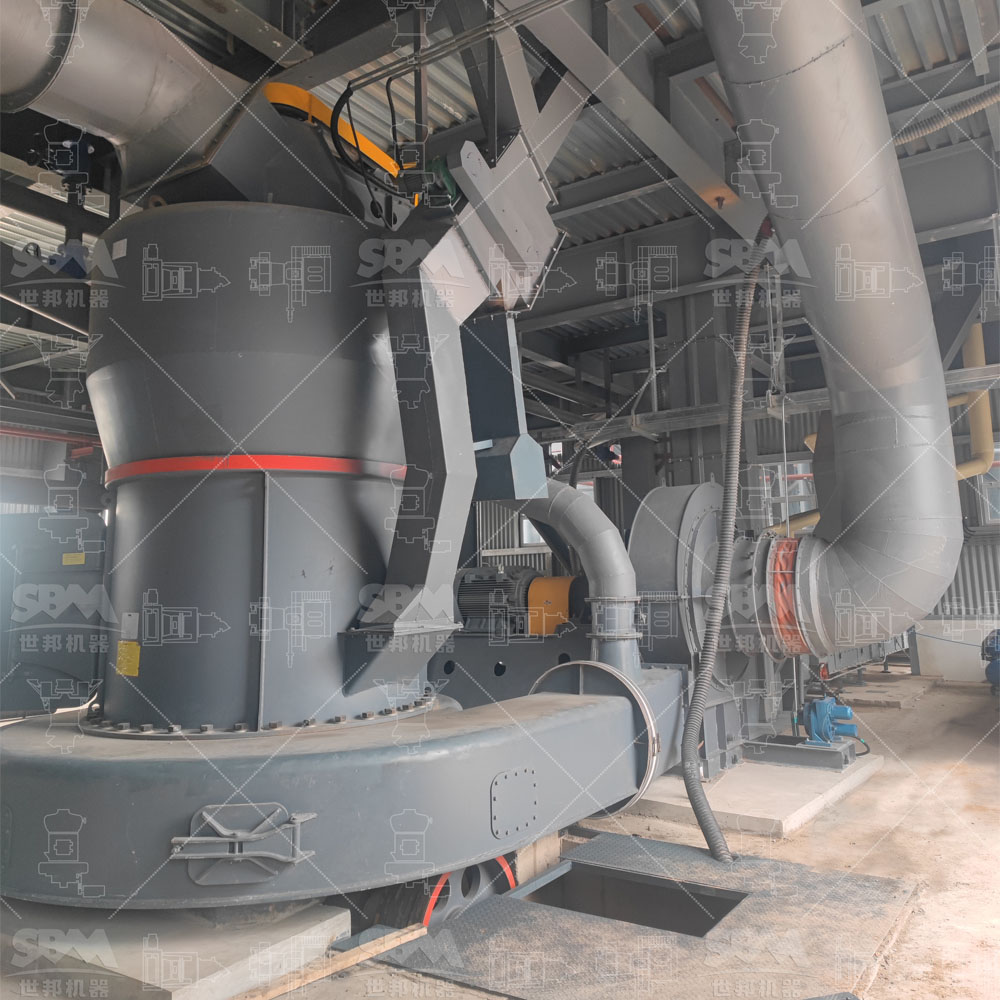
Raymond Mill (MTW Series) – Technical Advantages and Limitations
Our MTW series Raymond mill represents the state-of-the-art in pendulum roller mill design. It is specifically engineered to overcome the shortcomings of traditional Raymond mills, offering an input size of 0-50mm and an output fineness range of 30-400 mesh (roughly 500-38 microns), with a capacity of 3-40 tph depending on the model and material hardness.
Pros of Raymond Mill:
1. Energy Efficiency: The bevel gear integral transmission (cone gear whole transmission) minimizes energy loss, resulting in significantly lower power consumption per ton of product compared to a ball mill. On average, our customers report 30-40% energy savings when switching from a ball mill to an MTW Raymond mill.
2. Lower Wear Costs: The unique perching knife (shovel blade) design allows for replacement of only the blade tip, not the entire arm. Combined with curved shovel blades that extend the life of the grinding roller and ring, the cost of wear parts is substantially reduced. This is a major advantage over ball mills, where the entire charge of grinding media (steel balls) must be periodically replenished.
3. Compact Footprint: The integrated design of the classifier, grinding chamber, and air duct requires about 50% less floor space than a ball mill system of similar capacity. This can translate into lower civil engineering and installation costs.
4. Fine Adjustability: The air classifier allows for precise control of the product fineness, and the output can be adjusted between 80 and 400 mesh without stopping the machine, offering flexibility to meet varying customer specifications.
5. Quiet Operation: The internal oil absorption lubrication system and balanced design reduce vibration and noise levels, creating a better working environment.
Cons of Raymond Mill:
1. Capacity Limits: While modern MTW mills can reach 40 tph, this is still lower than the maximum capacity of large ball mills, which can exceed 65 tph for single units. For very high-tonnage operations (e.g., >100 tph), multiple Raymond mills are needed, which can offset some of the cost advantages.
2. Constituent Material Hardness: Although appropriate for GCC (Mohs hardness ~3), Raymond mills are not suitable for grinding materials harder than Mohs 7. Calcium carbonate is fine, but if you plan to process other ores like quartz or feldspar, you will need a separate machine.
3. Moisture Content: Raymond mills are sensitive to high moisture content (above 8-10%). Material with high moisture can cause clogging and reduced throughput. For damp GCC, a dryer must be added, which increases the system cost.
Ball Mill – Technical Advantages and Limitations
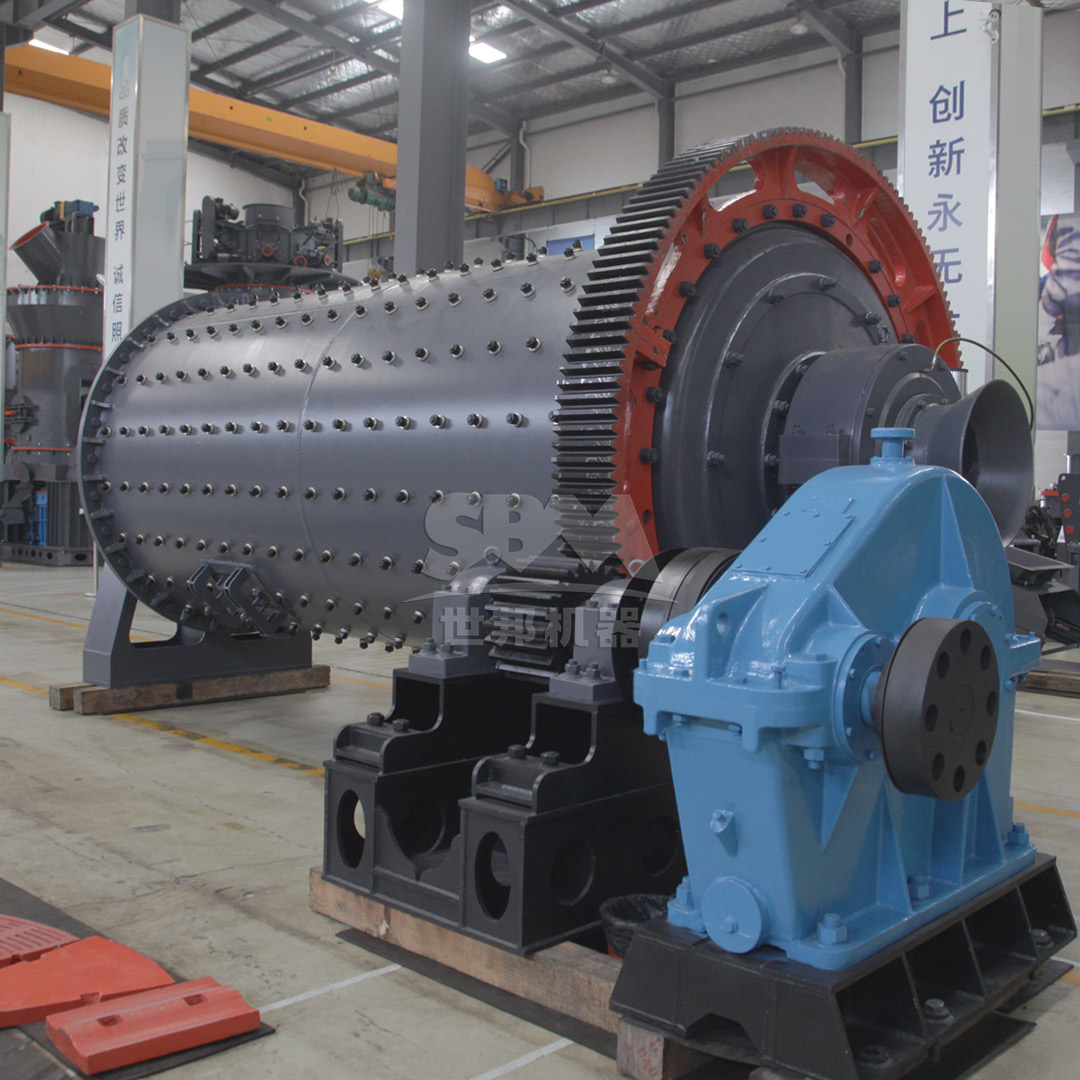
The ball mill remains a classic workhorse in the mineral processing industry. Our company offers both dry and wet ball mills, with input sizes up to 25mm and output fineness ranging from 0.2mm (200 microns) down to 74 microns (200 mesh), with capacities up to 65 tph for large-scale plants. While the technology is mature, we have incorporated significant innovations to address historical issues of high wear and energy consumption.
Pros of Ball Mill:
1. High Capacity Potential: For projects requiring very large throughput (over 50 tph), a single ball mill can be more practical and often less expensive than installing two or three Raymond mills. This is especially true for wet grinding operations, which can handle higher tonnage.
2. Robustness and Reliability: Ball mills are extremely robust and can operate continuously for long periods with minimal downtime if maintained properly. The design has been refined over decades, making it a low-risk option.
3. Ability to Grind Hard Materials: Ball mills can handle materials with higher hardness than Raymond mills, including feldspar and even some metallic ores. This makes them more versatile for multi-mineral processing plants.
4. Wet Grinding Capability: For slurry or suspension applications (like in paper coating or paint industries), the wet ball mill is the standard choice. It can produce a fine slurry directly, eliminating a separate milling and dispersion step.
5. Wide Fineness Range: Ball mills can produce both coarse (100 mesh) and relatively fine (200 mesh) products, and with a high-efficiency classifier, they can achieve D97 of less than 45 microns.
Cons of Ball Mill:
1. High Energy Consumption: This is the most frequently cited drawback. The attrition and impact of the heavy steel balls require substantial energy. Counterintuitively, the energy efficiency is only about 15-25% of the total power consumed; the rest is lost as heat and noise. In contrast, our MTW Raymond mill converts about 40% of its energy into grinding work.
2. High Wear of Media and Liners: The metal balls and internal liners wear down over time, requiring periodic replacement. This not only adds a significant recurring cost but also introduces downtime. While we have improved liner materials, the continuous replacement of grinding media is a major pain point for operators.
3. Larger Floor Space: A ball mill system (including the rotating drum, discharge system, and often a separate classifier) takes up roughly double the floor space of a Raymond mill. This often necessitates larger buildings and higher civil engineering costs.
4. Excessive Heat and Noise: Ball mills generate considerable heat, which can degrade temperature-sensitive materials. They are also significantly noisier, often requiring soundproofing measures to meet workplace safety regulations.
5. Limited Drying Capability: Unlike a vertical roller mill or a high-moisture Raymond system, a ball mill does not have an integrated drying function. If you have moist raw materials, you need a separate drying system, which adds to the investment.
Head-to-Head Comparison: Key Decision Factors
1. Energy Cost
When your plant runs 24/7, energy is the largest variable cost. Our data from customers producing GCC in mines across Southeast Asia and South America shows that a Raymond mill (MTW) consumes, on average, 30-40% less kWh per ton of powder than a ball mill, achieving the same fineness of 200 mesh. For a 10 tph plant operating for 6,000 hours annually, this can translate to saving over 1.5 million kWh per year. This alone often justifies a slightly higher initial investment.
2. Wear and Maintenance
In a ball mill, the grinding media (steel balls) and the liners are consumables. For a 10 tph ball mill, you may need to replace the media every 3,000-5,000 hours of operation, costing thousands of dollars in that cycle. Raymond mills, with their combined shovel blade and quality wear parts, typically extend the service life of the roller and ring by 2-3 times compared to older models, and replacing just the blade tip is an inexpensive, fast operation. Customers frequently tell us that maintenance labor and cost in a Raymond mill system is about 50% lower than in a ball mill.
3. Fineness and Adjustment
For 100-200 mesh common powders, both are acceptable. However, if you need to produce 400 mesh (D97) or higher, Raymond mills—especially our SCM ultrafine models—have a distinct edge in operational simplicity. A ball mill producing 400 mesh requires precise classification and often recirculation of oversize material, reducing effective throughput. The MTW Raymond mill can be adjusted via the classifier speed to achieve 325-400 mesh with a single pass, with better particle size distribution (PSD) consistency, which is crucial for plastic or rubber fillers.
4. Plant Layout and Environmental Compliance
With growing environmental regulations, dust leakage and noise are major concerns. Ball mills, while used with a dust collector, tend to generate more fugitive dust during loading and media addition. They also produce high frequency noise in excess of 90 dB, requiring enclosures. Raymond mills operate under negative pressure and have a sealed body, resulting in almost zero dust emission and a lower noise level (below 85 dB). Also, the foot print of the Raymond mill is about half, which minimizes the land and construction cost--a key factor for expanding plants in crowded industrial zones.
5. Scalability and Future Needs
If you anticipate only producing 100-200 mesh GCC at minimal cost and are not concerned about energy, a wet ball mill could be attractive (if you are also doing mineral dressing). But for dry powder, the future market is trending towards higher fineness (i.e., 400 mesh) and harder additives. A Raymond mill is more adaptable to these changes by simply adjusting the classifier and grinding pressure. It gives you the freedom to fine-tune production parameters, while a ball mill is somewhat limited to its design parameters for efficient operation.
Conclusion and Strategic Recommendation
In summary, the selection between a Raymond mill and a ball mill hinges on three critical factors: your required capacity (above vs. below 20 tph), your primary energy cost concern, and your target output fineness. For calcium carbonate processing where the target is 80-400 mesh and the capacity requirement is up to 40 tph, the modern Raymond mill (MTW series) is the superior technical and economic choice—offering lower energy consumption, lower wear, and a smaller footprint. For large-scale operations exceeding 50 tph, especially when producing only coarse powder (200 mesh) or when a wet process is required, a ball mill, due to its raw capacity and robustness, might still be justified despite higher operational costs, provided your energy costs are low and you can manage the wear. However, considering the global push towards energy efficiency and selective fine grinding, our recommendation is to evaluate a Raymond mill for all new GCC projects under 40 tph. As a solution provider, we can design a complete system, including analytical equipment and automation, to help you capture the full benefits of either technology. We encourage you to consult with our engineers to conduct a site-specific cost-benefit analysis using your raw material conditions.
Frequently Asked Questions (FAQs)
Q1: Why is my current ball mill consuming so much electricity, and can a Raymond mill fundamentally solve this?
A: Ball mills inherently waste around 70-80% of input energy as heat and noise due to the collision of heavy steel balls. A Raymond mill (like our MTW) uses a grinding roller that directly contacts the material bed, significantly reducing unnecessary impact. Our customers consistently measure a 30-40% reduction in specific power consumption (kWh/t) after switching to Raymond mills, directly lowering your variable costs.
Q2: I need to process 40 tph of GCC to 200 mesh. Can a single Raymond mill handle this, or do I need a ball mill?
A: Our MTW series at its largest model can process up to 40 tph depending on feed size and moisture (typically up to 4% moisture). Yes, a single unit can handle that capacity. In most cases, it will also produce a sharper particle size distribution, which is a value-add for the downstream plastic industry. We would recommend testing with our field engineers to confirm with your actual feedstock.
Q3: My material has 10% moisture. Which mill is more forgiving?
A: For high moisture (>10%) materials, both traditional Raymond and ball mills face challenges with sticking and clogging. However, a vertical roller mill (like our LUM series) or a ball mill combined with a pre-drying system works best. If you still prefer a Raymond mill, we can add a hot air drying system within the mill body, but it's limited. Ball mills cannot handle high moisture at all without a separate rotary dryer.
Q4: How often do I need to replace the wear parts in a Raymond mill compared to a ball mill?
A: For a Raymond mill, the main wear parts (grinding roller and ring) typically last for approximately 5,000-10,000 hours when processing limestone. With the combined shovel blade design in our MTW series, only the blade tip needs replacing, which is a minor expense. In contrast, a ball mill requires adding or replacing grinding media continuously (typically 100-200g per ton of powder) and relining the shell every 2-3 years, which involves 3-5 days of downtime. Over a 5-year period, Raymond mill maintenance costs are 40-50% lower.
Q5: My client demands a fineness of D97=10μm (1250 mesh). Can a Raymond mill or ball mill achieve that?
A: Neither a standard Raymond mill nor a ball mill is designed for ultra-fine grinding. For that specific requirement, you would need our SCM Ultrafine Mill or LUM Ultrafine Vertical Mill, which are specialized for 325-2500 mesh output. Ball mills are ineffective below 45 microns. Raymond mills (MTW) are best from 30-400 mesh. For ultra-fine GCC, we strongly recommend using a vertical ultrafine mill to ensure proper product performance and avoid heavy recirculation loads. Let's discuss your specific target D97 value, and we can provide the technically correct equipment.


