

Which mills are commonly used for coal powder?
Published: February 19, 2026
Selecting the right mill for coal powder preparation is a critical decision that directly impacts operational efficiency, product quality, and total cost of ownership. In modern coal processing—whether for power generation, industrial boilers, chemical feedstocks, or metallurgical applications—the most commonly employed mills are vertical roller mills (VRMs), European trapezium mills (Raymond-type), and ultra-fine grinding mills. Each technology offers distinct advantages: VRMs excel in large-scale integrated systems with drying and high capacity (up to 400 tph), while trapezium mills are preferred for medium-capacity operations with excellent wear life due to their cone gear transmission and arc air duct design. Ultra-fine mills (both SCM series and LUM vertical type) are chosen when coal powder fineness beyond 325 mesh is required, such as for specialized combustion or gasification processes. Ball mills, though older, still serve in rugged, simple installations. The choice hinges on feed size, required fineness (commonly 30–400 mesh for standard coal, up to 2500 mesh for ultra-fine), capacity (from 0.5 tph to 400 tph), moisture content, and the integration of drying requirements. This article systematically reviews each mill type—drawing on engineering parameters and real-world installation data—to help you make an informed decision that balances performance, energy savings, and long-term reliability.
1. Vertical Roller Mill (LM Series) – The Workhorse for Large-Scale Coal Powder Plants
When you walk into a modern coal-fired power plant or a large steel mill’s pulverized coal injection system, the most common sight is a vertical roller mill (VRM). Our LM Vertical Roller Mill is specifically designed to address low output and high energy consumption issues found in conventional mills. It integrates drying, grinding, and powder selection in a single unit—a truly compact solution that can be installed outdoors, saving about 50% of the floor space compared to a ball mill system.
Why it dominates coal powder:
- High capacity range: 3–400 tph, making it the only choice for base-load power stations.
- Drying capability: Handles feed moisture up to 15–20% using hot gases from the kiln or furnace—essential for raw coal with high surface moisture.
- Low wear and energy: The grinding roller never touches the grinding plate directly, and both components are made from high-quality alloy steel. This yields 30–40% lower energy consumption than ball mills and significantly longer service life for wear parts.
- Automatic control: Our expert control system allows remote switching, minimizing manual intervention and labor costs.
For a typical coal powder preparation system with an output size of 200 mesh (74 microns) and capacity above 20 tph, the LM vertical mill is the most cost-effective option. The negative pressure operation ensures zero dust spillage, meeting strict environmental standards—a major pain point for plants under regulatory scrutiny.
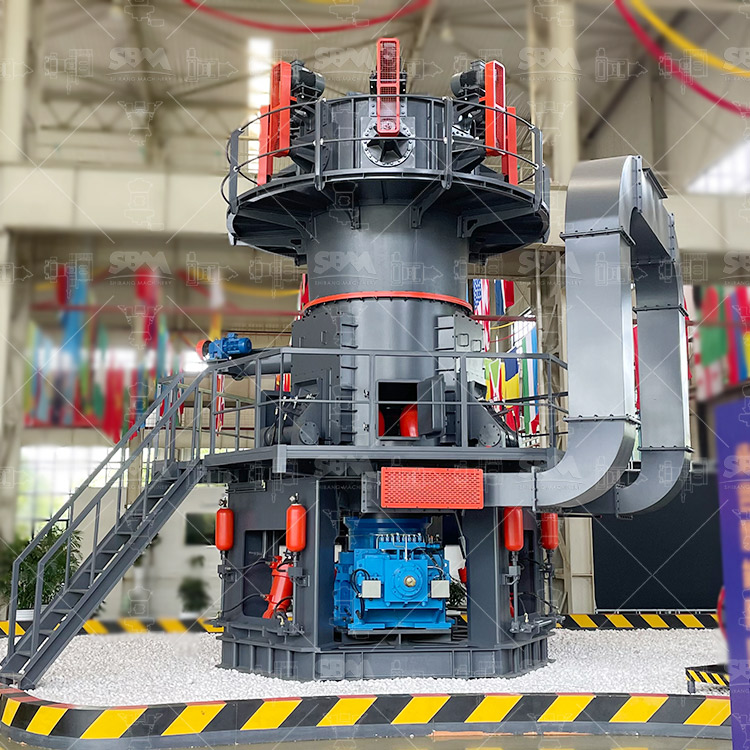
Key technical parameters (LM Vertical Roller Mill):
- Input size: 0–50 mm
- Output size: 30–400 mesh (adjustable via classifier speed)
- Capacity: 3–400 tph
A practical pain point we often hear: “Our coal has high moisture (12–15%), and we need to dry and grind simultaneously before injection into the burner.” The LM mill’s integrated drying circuit, combined with the hot air from the preheater, solves this without additional drying equipment. Another common complaint is the difficulty of maintaining consistent fineness when coal hardness varies. The VRM’s hydraulic pressure system adjusts automatically, maintaining D80 fineness within ±5% variation.
2. European Trapezium Mill (MTW Series) – The Versatile Medium-Capacity Performer
For industrial boilers, cement plants, or chemical processing where capacity is moderate (3–40 tph) and fineness typically ranges from 80 to 400 mesh, the MTW European Trapezium Mill (often called MTW Raymond Mill) remains a preferred choice. This mill was developed by integrating feedback from over 9,500 customers, and our engineers specifically focused on structural improvements to eliminate weaknesses of traditional Raymond mills.
What sets MTW apart for coal powder?
- Cone gear whole transmission: Replaces the old pinion-gear system, achieving higher transmission efficiency and saving installation space. This directly lowers the investment cost per ton of capacity.
- Arc air duct design: Prevents airflow energy loss, ensuring stable pneumatic conveying of coal powder. High-strength guard plates protect the duct face from abrasive coal particles.
- Wear-proof curved shovel blade: The combined-type blade only requires replacement of the blade tip, not the entire shovel, reducing maintenance part costs. The curved blade changes the feeding angle, extending the service life of the grinding roller and ring by up to 30%.
- Volute design: The unobstructed volute chamber improves the wind-driven transmission efficiency, which reduces the energy consumed for material lifting.
The MTW mill is especially valued in coal powder preparation for ceramic and glass industries, where a uniform particle size distribution (PSD) is crucial for product quality. A frequent customer pain point in this segment is: “We need low operating costs, but the grinding ring wears out too fast on our local coal with high silica content.” The MTW’s unique combination of high-chromium alloy rollers and the curved shovel design extends ring life by 40% compared to conventional Raymond mills, reducing downtime and maintenance budget.
Key technical parameters (MTW European Trapezium Mill):
- Input size: 0–50 mm
- Output size: 30–400 mesh (D97)
- Capacity: 3–40 tph
3. Ultra-fine Mills (SCM Series & LUM Vertical) – For Specialized Fine Coal Powder Applications
Not all coal powder is used for combustion. In the production of activated carbon, carbon black, or coal-water slurry fuel, fineness requirements can reach 325–2500 mesh (D97≤5 micron). For these demanding applications, our SCM Ultra-fine Grinding Mill and LUM Ultra-fine Vertical Mill are the go-to solutions.
SCM Ultra-fine Mill: This mill was developed because general Raymond mills could not meet the growing demand for finer powders. It delivers a disposable fineness of D97≤5 microns, ranking at the leading level globally. The key advantages for coal applications include:
- Capacity double that of jet mills with 30% lower energy consumption.
- Frequency-conversion control allows quick adjustment of fineness without stopping the machine.
- The high-efficiency vertical turbine classifier provides precise cut size with no coarse powder spillover—solving the problem of inconsistent product quality.
- Special roller and ring material (tungsten carbide or ceramic reinforced) lasts several times longer than standard materials when grinding abrasive anthracite.
LUM Ultra-fine Vertical Mill: For higher capacities (10–70 tph) in ultra-fine coal or petroleum coke grinding, the LUM mill integrates our years of vertical mill expertise with Taiwan’s grinding roller technology and Germany’s powder separation technology. It is designed for medium-to-high-end processing industries. A unique design feature is the grinding curve of the roller shell and lining plate, which facilitates material bed formation, improving grinding efficiency by 15% and increasing the proportion of primary finished products. The multi-rotor classifier ensures no low-grade fines are returned—eliminating the pain point of re-grinding losses.
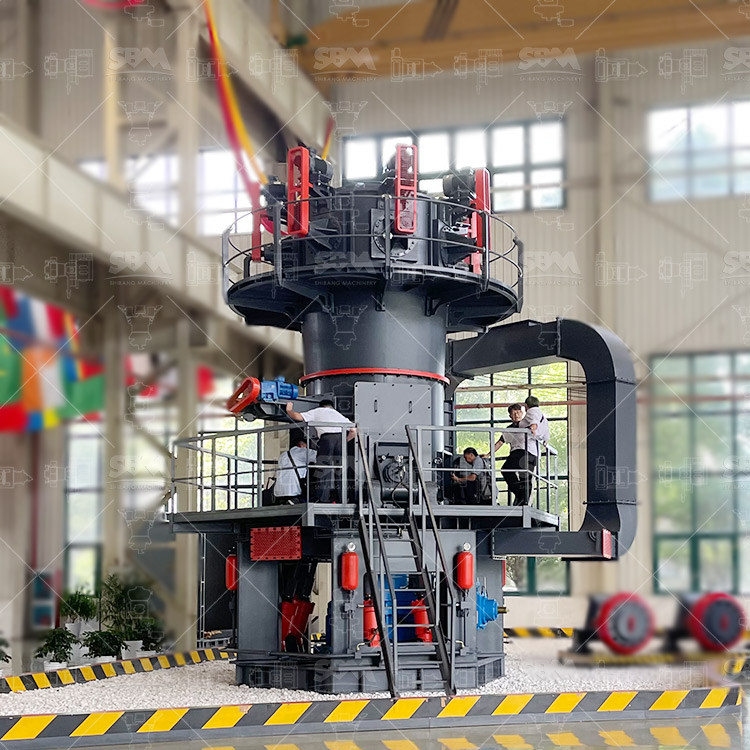
In coal powder preparation for chemical feedstocks (e.g., for gasification or pyrolysis), customers often face the challenge of “we need very narrow PSD, but conventional mills produce too many fine particles below 2 microns which choke the downstream filter.” The LUM’s PLC-controlled classifier speed can be tuned to maintain a PSD of D50 around 8 microns with minimal sub-2-micron fraction, achieving a customization that many air-classifier retrofits cannot match.
Key technical parameters (LUM & SCM):
- SCM input size: 0–20 mm; output: 325–4000 mesh; capacity: 0.5–25 tph
- LUM input size: 0–20 mm; output: 325–4000 mesh; capacity: 10–70 tph
4. Ball Mill – The Traditional Reliable Option (With Modern Improvements)
Despite newer technologies, ball mills still appear in many coal powder plants, especially in wet grinding for coal-water slurry or where simple maintenance is a priority. Our ball mill has been optimized over decades of use—we improved the structure design and adopted new high-wear-resistant liners, reducing spare part costs by 20%. For coal powder preparation, the dry ball mill operates with a closed-circuit classifier to produce stable fineness (0.074–0.2 mm). However, it is inherently higher in energy consumption (30–40% more than a VRM) and requires more floor space. Today, we recommend it only for specific niches like small-scale units (3–10 tph) or for grinding coal together with other additives in a single step. For most new projects, the LM or MTW mill is a more rational long-term investment.
Decision Framework – How to Choose the Best Mill for Your Coal Powder Project
Based on our experience across 180+ countries and thousands of coal processing installations, we suggest this practical guide:
- If capacity > 15 tph and moisture > 8%: Choose an LM vertical roller mill. It handles drying and grinding simultaneously and offers the lowest total cost per ton.
- If capacity is 3–15 tph and fineness is between 100–300 mesh: Choose the MTW European Trapezium Mill. It offers a moderate investment and low maintenance, ideal for industrial boiler systems.
- If final fineness > 400 mesh or D97<10 micron: Choose the LUM ultra-fine vertical mill (for high capacity) or the SCM ultra-fine mill (for lower capacity). These are non-negotiable for ultra-fine coal powder applications.
- If you have high silica/ash content coal: Prioritize the MTW or LUM because of their special wear-resistant materials and curved grinding geometry that reduces ring/roller wear.
- If you are on a tight budget and have skilled maintenance staff: The optimized ball mill is still a viable option, but we caution about its high energy costs over a 10-year lifecycle.
All our mills come with intelligent control systems, meeting ISO and local environmental standards. As a total solution provider, we also supply complete grinding systems including feeders, classifiers, dust collectors, and conveying equipment—ensuring a seamless integration from raw coal bin to final powder storage.
We hope this article clarifies the mill selection process. If you have a specific coal analysis (proximate/ultimate) and capacity requirement, our engineering team can provide a free technical proposal. Contact us today through the website or your local SBM representative.
FAQ – Common Customer Pain Points
1. “My coal has 15% moisture. Do I need a separate dryer before the mill?”
Not necessarily. The LM vertical roller mill and MTW trapezium mill (with hot air generator) can utilize the gas stream from your kiln or a dedicated hot air furnace to dry coal in-situ. For coal with up to 20% surface moisture, an LM mill with a higher gas inlet temperature (up to 450°C) will achieve a final product moisture under 1% without a separate rotary dryer. We often configure the system with a pre-crushing step to 0-50mm, eliminating the need for external drying.
2. “Why is my grinding roller wearing out every 6 months, even though I use a ball mill?”
This is common with abrasive coals (silica content >10%). The MTW’s curved shovel blade and high-chromium roller can extend service life by 50% compared to traditional Raymond mill rollers. For LM or LUM vertical mills, the roller shell is quenched to HRC 55-60, and the grinding plate uses segmented liners with 30% chrome alloy—these typically last 12,000–15,000 hours of operation. But the most cost-effective solution is to pre-screen the coal to remove hard stones and use a magnetic separator before the mill, which we can include in your system design.
3. “I need very fine powder (D97=10 microns) but my current mill cannot achieve it consistently. What is the right solution?”
For consistent sub-15-micron coal powder, the SCM ultra-fine mill (0.5-25 tph) or the LUM vertical ultra-fine mill (10-70 tph) is specifically designed for this. The SCM uses a vertical turbine classifier with frequency control, and the LUM uses a multi-rotor classifier. Both achieve D97≤5 microns with a very tight PSD. The key is to maintain a stable feed rate and adjust the classifier speed—our automatic control system does this in real-time, ensuring that you avoid off-spec production. We also recommend online particle size analysis integration for closed-loop control.
4. “The coal powder ignites in the mill during operation. How do I ensure safety?”
Safely handling pulverized coal is a serious concern. Our LM vertical mill and MTW mill are equipped with the following safety features: (a) The grinding chamber is sealed and operated at a negative pressure, which minimizes oxygen infiltration. (b) We install CO and O2 monitoring probes in the mill outlet, and the system will automatically inert with nitrogen or steam if CO levels reach 0.5%. (c) The mill’s temperature is controlled below the ignition point (typically 70-80°C for coal powder). For ultra-fine mills, we add an explosion vent panel on the cyclone. In addition, our process design includes an inert gas cleaning step after shutdown. We strongly recommend that every coal powder plant follows the NFPA 8503 standard, and we provide full system design documentation to certify compliance.
5. “I have a limited budget. Can I use a cheaper mill and still meet my coal fineness specification?”
We understand the pressure on CAPEX. However, our experience across 180+ countries shows that the total cost of ownership (TCO) over 10 years is a better metric than initial purchase price. A ball mill might cost 30% less upfront than an LM vertical mill, but its energy consumption is 30-40% higher (which on a 20 tph unit means an extra $250,000 per year in electricity at typical rates). Furthermore, the ball mill requires more frequent liners and media replacement and occupies twice the floor space, increasing civil construction costs. Over a 5-year period, the LM mill has a lower TCO by almost 20%. For medium capacities, the MTW trapezium mill offers the best balance of moderate investment (25% lower than LM) and efficient operation. We also offer a modular setup where you can start with the MTW and add an LM later for capacity expansion—something many clients choose to do.
For any further questions, do not hesitate to reach out via sbm-mill.com, or contact your regional sales engineer. We offer free grindability tests on your coal sample and a complete system simulation to guarantee your performance requirements.


