

Challenges and optimization of raymond mill in environmental protection and energy saving
Published on: March 12, 2025
As global industries face mounting pressure to reduce carbon footprints and comply with stricter environmental regulations, the grinding equipment sector stands at a critical crossroads. Traditional Raymond mills, while reliable and widely used, have long been criticized for their high energy consumption, dust emission challenges, and inefficiencies in large-scale production. Addressing these pain points requires a fundamental rethinking of mill design—from transmission systems and air duct geometry to dust collection and automated control. Drawing on decades of R&D and feedback from over 9,500 customers, Shanghai SBM Machinery Equipment Co., Ltd. has engineered a new generation of grinding solutions that directly tackle the environmental and energy-saving challenges of Raymond mill technology. This article explores the key obstacles facing conventional mills and presents optimization strategies embedded in modern equipment like the MTW European Trapezium Mill, LM Vertical Roller Mill, and SCM Ultrafine Mill, which together offer a roadmap for cleaner, more efficient powder processing.
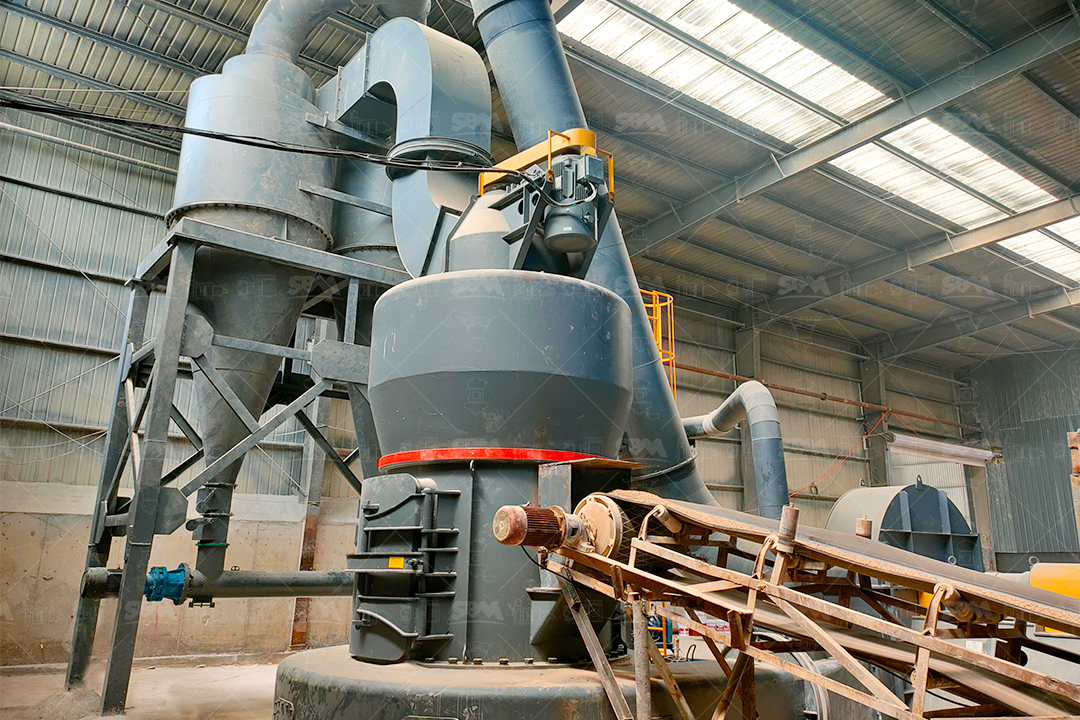
Understanding the Environmental and Energy Challenges of Traditional Raymond Mills
Raymond mills have been a staple in mineral processing for decades, particularly in the preparation of limestone powder for desulfurization, coal powder, and non-metallic mineral fillers. However, their traditional design carries several inherent drawbacks that conflict with today's sustainability goals. The most frequently cited issues include:
- High energy consumption per ton of product: Conventional mills often rely on inefficient transmission systems and suffer from air energy loss through poorly designed ducts. The grinding zone frequently experiences excessive friction and heat, leading to wasted power.
- Dust spillover and fugitive emissions: Many older mills operate under positive pressure or lack fully sealed systems, allowing fine powder to escape into the workplace and atmosphere. This not only violates environmental standards but also endangers worker health.
- Noise pollution: Mechanical vibration and inadequate sound insulation contribute to high decibel levels, making compliance with occupational noise regulations difficult.
- Wear and maintenance costs: Rapid wear of rollers, rings, and shovel blades forces frequent shutdowns, increasing both downtime and the consumption of spare parts—indirectly raising the overall energy and resource footprint.
- Limited automation: Manual control of grinding pressure, classifier speed, and airflow leads to inconsistent product quality and higher labor costs, often resulting in inefficient energy use.
These challenges are not isolated; they compound one another. For instance, inefficient grinding leads to longer residence time, which in turn increases energy draw and dust generation. Therefore, optimization must be holistic rather than piecemeal.
Optimization Strategies in Modern Grinding Equipment
SBM Machinery has systematically addressed each of these pain points through patented technologies and intelligent design. The MTW Series European Trapezium Mill (MTW Raymond Mill), for example, represents a direct upgrade from traditional Raymond mills, while the LM Vertical Roller Mill and SCM Ultrafine Mill offer alternative pathways for different fineness and capacity requirements. Below are the key optimization vectors.
1. Transmission Efficiency and Energy Savings
Traditional Raymond mills use belt or single-stage gear transmission, which often results in energy loss and limited torque. The MTW mill introduces a cone gear whole transmission system. This bevel gear integral transmission achieves higher transmission efficiency, saves space, and lowers investment costs. By minimizing mechanical losses, the mill requires less motor power to achieve the same output—directly reducing electricity consumption per ton.
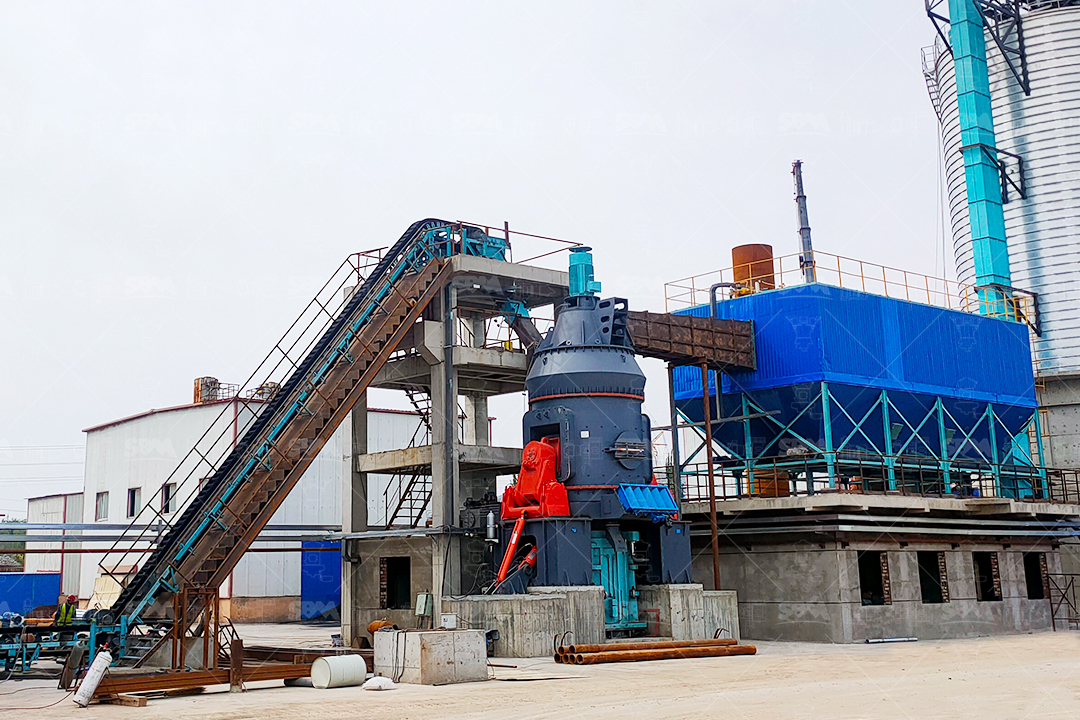
Similarly, the LM Vertical Roller Mill employs a vertical transmission design where grinding rollers directly grind materials on the grinding plate. This eliminates the need for an auxiliary separator drive and reduces energy consumption by 30% to 40% compared to ball-milling systems. For industries where power costs constitute a major operational expense, such reductions translate into both financial and environmental gains.
2. Dust Control and Sealed Operation
Environmental protection in grinding is largely a battle against fugitive dust. The LM Vertical Roller Mill operates under full negative pressure, with the entire system sealed. This prevents dust spillover, and the emission meets national standards. The SCM Ultrafine Mill takes this further with an efficient double powder collecting method—combining powder collectors and pulse dust collectors. This achieves dust collection far higher than international standards, even when processing materials down to D97 ≤ 5 μm.
For the MTW mill, the integration of an arc air duct and optimized volute design reduces internal turbulence and prevents material accumulation. The result is less dust generated at the source, while the sealed body ensures that any fine particles remain within the system. These features are especially critical for processing toxic or hazardous materials, such as petroleum coke or certain chemical powders.
3. Noise Reduction and Vibration Control
Noise is often overlooked in energy-saving discussions, yet it represents wasted acoustic energy and a significant occupational hazard. Traditional mills vibrate heavily, especially when the grinding ring or rollers are worn unevenly. The LM Vertical Roller Mill is designed for stable operation with little vibration, resulting in fairly low noise. The SCM Ultrafine Mill features an optimized sound insulation room and muffler that effectively prevent the spread of equipment noise.
Moreover, the heavy rotor design and tight test method in the SCM mill—where the grinding chamber has no bearing screw—allows for stable, vibration-free operation after balance treatment. Reduced vibration not only lowers noise but also extends the life of bearings and structural components, cutting down on maintenance-related energy and material consumption.
4. Wear Reduction and Material Efficiency
Wear parts are a hidden environmental cost: producing, shipping, and replacing them consumes energy and resources. The MTW mill addresses this with a unique wear-proof perching knife design. The combined-type shovel blade reduces the cost of wearing parts, with only the blade needing replacement during maintenance. The curved shovel blades change the feeding angle and prolong the service life of the roller and ring, up to reducing operating costs.
In the SCM Ultrafine Mill, the roller and ring are made of special material, so durability can be several times higher than conventional parts. The LUM Ultrafine Vertical Mill goes further by uniquely designing the grinding curves of the roller shell and lining plate based on ultrafine pulverization principles. This makes it easier to form a material bed, improving grinding efficiency and increasing the proportion of finished products from the primary grinding—meaning less recirculation and lower energy per ton.
5. Intelligent Automation for Optimized Energy Use
Manual adjustment of a Raymond mill is often reactive: operators wait for quality deviations before changing parameters. Modern mills flip this paradigm. The LM Vertical Roller Mill is equipped with an expert automatic control system, enabling free switching between remote and local control. This achieves easy operation and saves labor costs, but more importantly, it maintains the mill consistently at its optimal operating point.
The LUM Ultrafine Vertical Mill uses a PLC/DCS automatic control system for pressure adjustment of the grinding roller. This ensures accurate control of grinding pressure, high efficiency, and stable operation. Frequency-conversion speed regulation allows the mill to be used for materials with different grindability without wasting energy on over-grinding. The SCM mill offers automatic feedback with fast and stable conversion of finished products, plus intelligent control that directly saves labor costs.
Case-Specific Optimizations: From Desulfurization to New Energy Materials
The challenges and solutions vary by application. In environmental desulfurization limestone powder preparation, the priority is high throughput with consistent fineness (typically 250–325 mesh) and minimal dust. Here, the MTW mill's arc air duct and volute design shine, ensuring efficient material transport and low internal resistance. The LM mill's drying function is also valuable when limestone contains moisture.
For coal powder preparation in power plants, safety and energy efficiency are paramount. The LM Vertical Roller Mill's negative pressure operation and low vibration reduce the risk of coal dust explosions, while its 30–40% energy savings compared to ball mills directly lower auxiliary power consumption.
In heavy calcium carbonate (GCC) processing and slag micro-powder production, the focus shifts to high fineness and high capacity. The LUM Ultrafine Vertical Mill, with its multi-rotor powder classifier and PLC control, delivers customized fineness with no low-grade material. For new energy materials such as graphite or lithium battery cathode powders, the SCM Ultrafine Mill's ability to reach D97 ≤ 5 μm with double dust collection is a decisive advantage.
Even the traditional ball mill has been optimized. SBM improved the structure design and adopted new materials, obviously reducing the cost of spare parts. While ball mills still consume more energy than vertical mills, they remain relevant for certain mineral dressing applications where wet grinding is required.
Conclusion: A Roadmap for Sustainable Grinding
The challenges of Raymond mill in environmental protection and energy saving are not insurmountable. They require a shift from isolated fixes to integrated design. By adopting cone gear transmission, arc air ducts, negative pressure sealing, pulse dust collection, intelligent control, and wear-resistant materials, modern mills can achieve dramatic reductions in energy use and emissions. SBM Machinery's portfolio—spanning the MTW European Trapezium Mill, LM Vertical Roller Mill, SCM Ultrafine Mill, and LUM Ultrafine Vertical Mill—demonstrates that environmental compliance and operational profitability can go hand in hand. For industries processing limestone, coal, petroleum coke, slag, or new energy materials, the choice of mill technology is no longer just about output; it is about the long-term viability of the operation in a carbon-constrained world.
Frequently Asked Questions
Q1: My current Raymond mill emits visible dust. Can I retrofit it to meet environmental standards without buying a whole new mill?
A: While some partial retrofits (e.g., adding pulse filters or sealing points) can reduce dust, they often do not address the root causes such as positive pressure operation or inefficient air duct design. In most cases, replacing the mill with a modern negative-pressure design like the LM Vertical Roller Mill or MTW European Trapezium Mill delivers full compliance and lower energy bills, with payback often within 12–18 months.
Q2: How much energy can I actually save by switching from a traditional Raymond mill to a vertical roller mill?
A: Energy savings depend on material, fineness, and capacity. For typical limestone or coal grinding, the LM Vertical Roller Mill consumes 30% to 40% less energy than a ball-milling system of comparable output. Compared to an older Raymond mill, savings can be even higher—often 25% to 35%—because vertical mills eliminate the need for separate drying and classification equipment.
Q3: My product requires very fine powder (D97 ≤ 10 μm). Can a Raymond-type mill achieve this without excessive energy consumption?
A: Traditional Raymond mills struggle below 400 mesh and become very inefficient at ultrafine sizes. For D97 ≤ 10 μm, you should consider the SCM Ultrafine Mill or LUM Ultrafine Vertical Mill. The SCM mill can reach D97 ≤ 5 μm with a capacity more than twice that of jet mills and 30% lower energy consumption. The LUM mill offers higher capacity (up to 70 tph) for similar fineness.
Q4: What about maintenance costs? Do environmentally optimized mills require more frequent part replacements?
A: The opposite is true. Modern designs use wear-resistant materials and innovative geometries that extend part life. For example, the MTW mill's combined-type shovel blade only requires replacing the blade, not the entire assembly. The SCM mill's roller and ring are made of special material with several times higher durability. Less wear means fewer shutdowns, lower spare parts consumption, and reduced total cost of ownership.
Q5: I operate in a region with strict noise regulations. Can your mills operate below 85 dB?
A: Yes. The LM Vertical Roller Mill operates with little vibration and low noise, often below 85 dB at one meter from the mill body. The SCM Ultrafine Mill includes an optimized sound insulation room and muffler that further reduce noise. For particularly sensitive areas, additional enclosures can be provided. Noise reduction is a standard design consideration in all SBM grinding equipment.


