

Amazing properties of bentonite — nature's "universal clay"
Published: May 16, 2025
Bentonite is one of those remarkable natural materials that quietly powers a surprising number of industries. Formed from volcanic ash altered over millions of years, this "universal clay" is prized for its swelling capacity, adsorption power, thixotropic behavior, and cation exchange ability. From drilling muds and foundry sands to pet litter, cosmetics, and environmental remediation, bentonite's unique properties make it indispensable. For powder processors, the key to unlocking its full potential lies in selecting the right grinding technology—whether that's a European trapezium mill for general fine grinding, a vertical roller mill for high-capacity drying and grinding, or an ultrafine mill for specialty applications requiring exceptional fineness. This article explores bentonite's most valuable properties, how they translate into industrial performance, and how advanced milling systems help manufacturers achieve consistent, high-quality bentonite products.
What Makes Bentonite So Special?
Bentonite is essentially a clay dominated by montmorillonite, a smectite mineral with a layered structure. Its properties arise from the ability of water molecules and ions to enter between these layers, causing the clay to swell dramatically. Depending on the exchangeable cation, bentonite is classified as sodium bentonite (high swelling) or calcium bentonite (lower swelling, higher adsorption). These fundamental differences determine its suitability for applications ranging from sealing boreholes to clarifying wine.
Key Properties and Their Industrial Impact
1. Swelling and Water Absorption
Sodium bentonite can absorb several times its weight in water and swell to many times its dry volume. This property is critical in drilling fluids, where it provides viscosity and wall-building characteristics; in waterproofing and civil engineering, where it forms impermeable barriers; and in personal care products, where it acts as a rheology modifier. To preserve swelling capacity, processing must avoid excessive heat that could irreversibly dehydrate the clay. Advanced grinding systems with integrated drying and precise temperature control help maintain these properties.
2. Thixotropy and Rheology
Bentonite dispersions are thixotropic: they flow when agitated but gel when left to rest. This behavior is invaluable in paints, drilling muds, and greases. For formulators, consistent rheology starts with consistent particle size and activation. Mills that deliver narrow particle size distributions and minimal over-grinding—such as our SCM series ultrafine mill with frequency-controlled classification—enable predictable thixotropic behavior batch after batch.
3. Adsorption and Binding
The high surface area and negative charge of bentonite make it an excellent adsorbent. It binds proteins, oils, and heavy metals, which is why it's used in wine and juice clarification, oil bleaching, and environmental remediation. In foundry applications, bentonite binds sand grains to form strong molds. The adsorption capacity is strongly influenced by fineness and surface area, making ultrafine grinding a key enabler for high-performance adsorbents.
4. Cation Exchange Capacity (CEC)
Montmorillonite has a high CEC, allowing it to exchange cations and modify its surface chemistry. This is exploited in specialized applications such as catalysis, wastewater treatment, and the production of organoclays. Processors can tailor bentonite performance by activating it with sodium carbonate or organic surfactants; consistent grinding ensures uniform activation and reaction.
5. Plasticity and Bonding Strength
In ceramics, foundry molds, and iron ore pelletizing, bentonite's plasticity and green strength are essential. Fine, consistent particles improve bonding efficiency, reducing binder consumption and improving product quality. Our MTW European Trapezium Mill, with its curved shovel blades and arc air duct, delivers efficient grinding and classification for these demanding applications.
6. Thermal and Chemical Stability
Bentonite retains useful properties after moderate heating and is stable in many chemical environments. This makes it suitable for high-temperature drilling fluids and as a catalyst support. Drying and grinding systems that avoid overheating—such as vertical roller mills with integrated drying—help preserve these characteristics.
_1793463500692.jpg)
Processing Bentonite: Matching Technology to Properties
Bentonite processing typically involves drying, crushing, grinding, and classification. The target fineness depends on the end use: drilling-grade bentonite often requires 200–325 mesh; foundry and pelletizing grades may need finer sizes; specialty adsorbents and organoclays can require ultrafine grinding down to D97 ≤ 5 μm. Energy consumption, wear parts, and product consistency are major cost drivers.
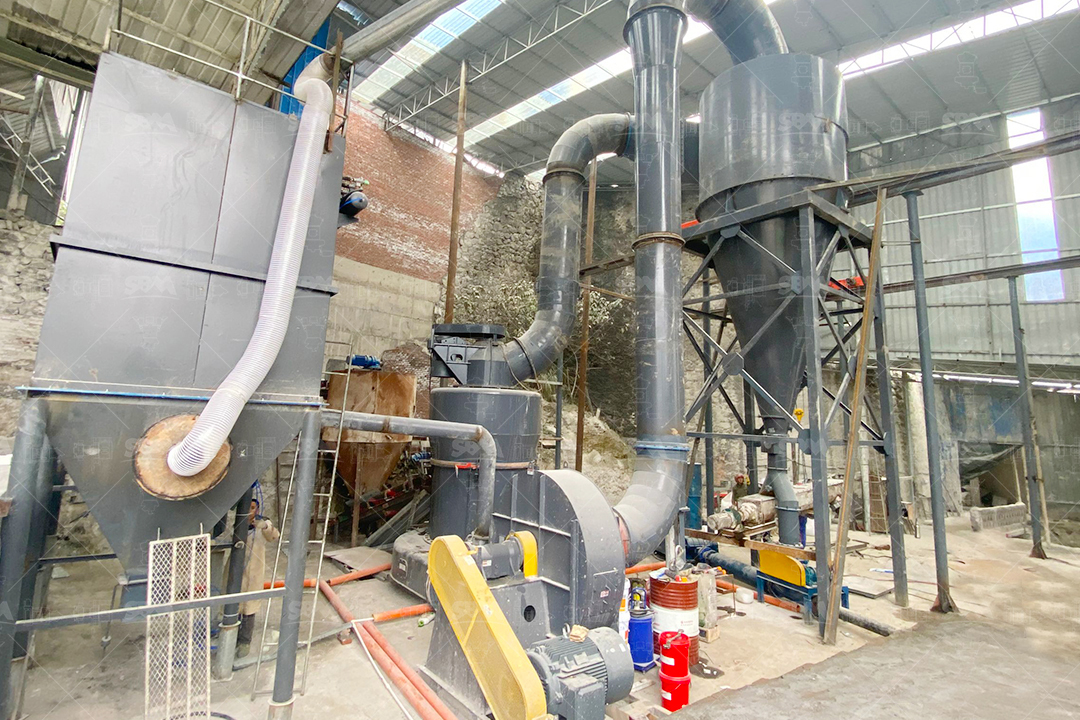
For general bentonite grinding, the MTW European Trapezium Mill offers a robust solution with capacities from 3 to 40 tph and output sizes from 30 to 400 mesh. Its bevel gear integral transmission and internal oil lubrication reduce maintenance, while the arc air duct minimizes energy loss. When high capacity and drying are needed, the LM Vertical Roller Mill integrates crushing, drying, grinding, and classification in one compact system. With capacities up to 400 tph and energy consumption 30–40% lower than ball mills, it is ideal for large-scale bentonite processing. For ultrafine grades, the SCM series ultrafine mill achieves 325–2500 mesh with precise cut points, while the LUM ultrafine vertical mill combines advanced multi-rotor classification with PLC control for consistent, high-quality ultrafine products.
For traditional applications where ball milling is preferred, our optimized ball mills feature improved structure and new materials to reduce wear and energy costs. Wet ball mills are widely used in mineral dressing, while dry ball mills suit common powder production.
Quality Control and Consistency
Bentonite performance is notoriously variable depending on source and processing. Customers often struggle with batch-to-batch inconsistency, excessive wear, and dust control. Modern grinding systems address these pain points through automated control, stable operation, and effective dust collection. For example, the SCM ultrafine mill uses frequency conversion and an efficient vertical turbine classifier to ensure precise fineness, while the LM vertical roller mill's expert control system enables remote and local control for easy operation. Environmental compliance is another concern: our mills are designed with sealed systems, negative pressure operation, and pulse dust collectors to meet stringent emission standards.
Frequently Asked Questions (FAQ)
Q1: What grinding mill is best for producing drilling-grade bentonite?
A: For drilling-grade bentonite (typically 200–325 mesh), the MTW European Trapezium Mill is an excellent choice. It offers reliable capacity from 3 to 40 tph, precise classification, and low maintenance costs. If you need simultaneous drying and higher capacity, the LM Vertical Roller Mill is a better fit, as it integrates drying and grinding and can handle up to 400 tph with lower energy consumption.
Q2: How can I prevent excessive wear when grinding bentonite?
A: Bentonite's abrasive nature can wear mill components. Choose mills with wear-resistant materials and designs that minimize contact. The MTW mill's combined-type shovel blade allows replacement of only the blade, reducing costs. The LM vertical roller mill's rollers do not directly contact the grinding plate, extending service life. For ultrafine grinding, the SCM mill uses special materials for roller and ring, offering several times higher durability.
Q3: Can your mills handle high-moisture bentonite?
A: Yes. The LM Vertical Roller Mill and LUM Ultrafine Vertical Mill are particularly suitable for materials with moderate moisture because they integrate drying with grinding. Hot gas can be introduced to dry the material while grinding, ensuring stable operation and consistent product quality. For very high moisture, pre-drying may still be necessary.
Q4: How do you ensure consistent fineness and quality?
A: Consistency comes from precise classification and automated control. Our SCM ultrafine mill features frequency-controlled classification and an efficient turbine classifier for accurate cut points. The LUM mill uses PLC/DCS automatic control for grinding pressure, disc speed, and classifier speed, ensuring stable operation. The LM mill's expert control system allows remote monitoring and easy adjustment. Additionally, our mills are designed to minimize over-grinding and ensure narrow particle size distributions.
Q5: What about dust and environmental compliance?
A: Environmental protection is built into our designs. The LM vertical roller mill operates under negative pressure with a fully sealed system, preventing dust spillover. The SCM mill uses efficient pulse dust collectors and sound insulation to meet international standards. The LUM mill also features a sealed system and low-noise operation. All systems are designed to meet national emission standards, helping customers maintain a clean and compliant workplace.


