

Challenges and solutions for grinding clay minerals with raymond mill
Published on: 2025-04-08
Grinding clay minerals with a Raymond mill presents unique challenges due to the material's inherent properties—moisture content, stickiness, abrasiveness, and variability in hardness and fineness requirements. This article summarizes the key pain points encountered in clay processing and offers practical, equipment-based solutions drawn from advanced grinding technologies. It covers issues such as material buildup, wear on grinding components, inconsistent product fineness, high energy consumption, and environmental dust control. By examining the design features of modern Raymond mills—including wear-resistant shovel blades, optimized air ducts, integrated drying and classifying systems, and intelligent control—processors can overcome these obstacles and achieve efficient, stable, and cost-effective clay powder production. The following sections detail each challenge and the corresponding technical solutions, ending with five frequently asked questions from customers.
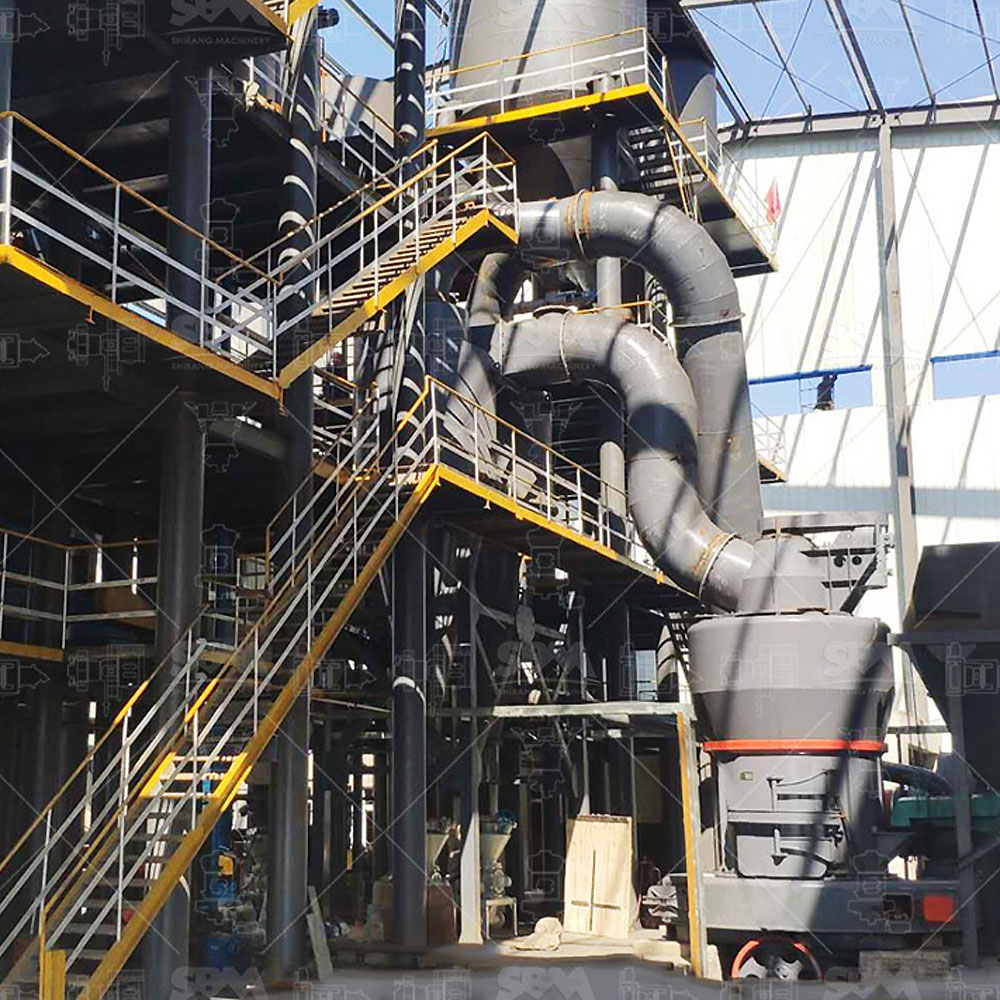
Understanding Clay Mineral Characteristics and Their Impact on Grinding
Clay minerals—such as kaolin, bentonite, montmorillonite, and illite—are layered silicates with high moisture retention, plasticity, and tendency to agglomerate. When fed into a Raymond mill, these properties create several operational difficulties. First, high surface moisture (often 10–20%) causes material to stick to the grinding chamber walls, shovel blades, and classifier, reducing grinding efficiency and causing blockages. Second, clay's soft but abrasive nature leads to accelerated wear on rollers and rings, especially when quartz or sand impurities are present. Third, the required fineness for clay products varies widely—from 200 mesh for ceramic fillers to 1250 mesh or finer for paper coating and pharmaceuticals—placing demands on the mill's classification precision. Finally, clay dust is highly dispersive and poses environmental and health risks if not properly contained. Addressing these challenges requires a Raymond mill design that goes beyond conventional configurations.
Challenge 1: Material Buildup and Blockages
Buildup is perhaps the most common complaint when grinding clay with a standard Raymond mill. Wet clay sticks to the grinding chamber, the shovel blades, and the air duct, leading to reduced throughput and frequent manual cleaning. The root causes are inadequate drying during grinding and poor airflow dynamics. Traditional Raymond mills rely on a separate dryer or pre-drying step, which adds cost and complexity. The solution lies in integrating drying with grinding and optimizing the air path. Modern European trapezium mills (MTW series) feature an arc-shaped air duct that avoids dead zones where material accumulates. The volute design ensures smooth, unobstructed airflow, preventing clay from settling. Additionally, the mill can be equipped with a hot air generator to introduce controlled heat directly into the grinding chamber, reducing moisture to below 1% while grinding. This integrated approach eliminates the need for separate drying, reduces buildup, and maintains continuous operation. For very sticky clays, a vertical roller mill (LM series) offers even better performance because its grinding rollers and table create a material bed that is less prone to sticking, and the strong upward airflow immediately carries fine particles away from the grinding zone.
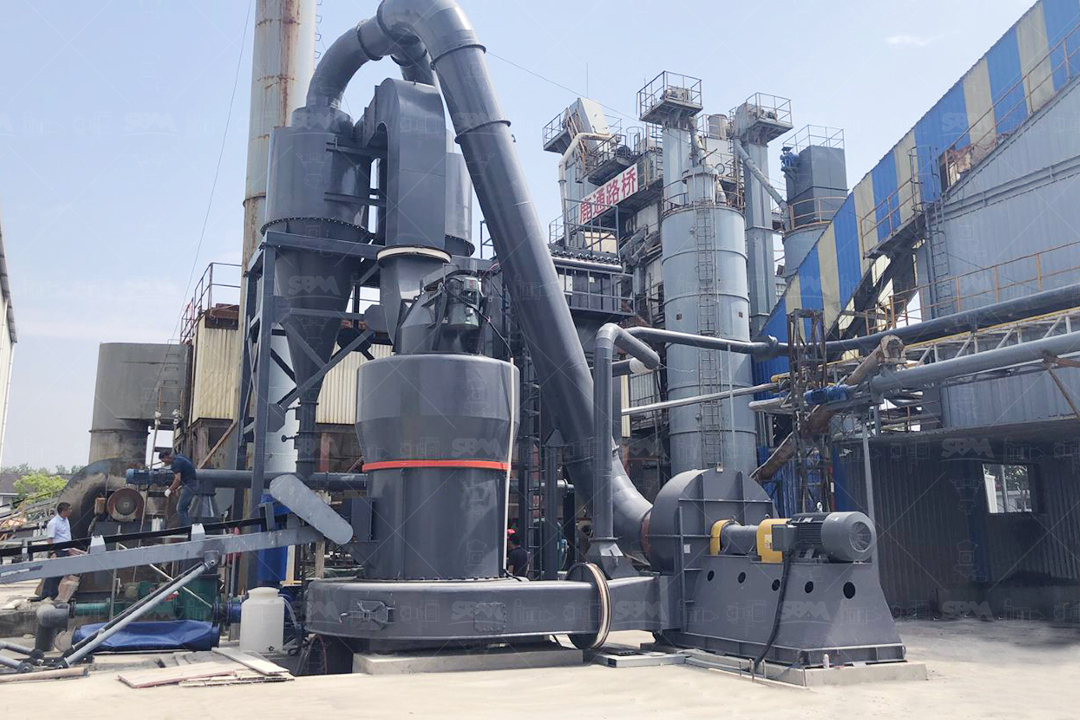
Challenge 2: Excessive Wear on Grinding Components
Clay's abrasiveness, though lower than that of quartz or feldspar, still causes wear on rollers, rings, and shovel blades—especially when the clay contains hard impurities like silica sand. Premature wear increases maintenance costs and downtime, and it also affects product fineness as worn components lose their grinding efficiency. The solution involves both material selection and innovative design. The MTW Raymond mill uses a combined-type shovel blade with a curved profile that changes the feeding angle, reducing direct impact and extending the service life of rollers and rings. Only the blade needs replacement during maintenance, lowering spare parts costs. The grinding rollers and rings are made of high-chrome or high-manganese alloys, offering several times the wear life of standard materials. For ultrafine grinding, the SCM series ultrafine mill employs a heavy rotor design and special wear-resistant materials for the roller and ring, achieving durability several times higher than conventional mills. Moreover, the grinding chamber has no bearing screws, eliminating a common wear point and ensuring stable operation without vibration. In vertical roller mills, the roller does not contact the grinding plate directly; a material bed forms between them, reducing metal-to-metal wear and extending component life.
Challenge 3: Achieving Consistent Fineness and High Yield
Clay product specifications demand precise control over particle size distribution. For example, kaolin for paper coating requires 90% passing 2 microns, while ceramic-grade clay may need 200 mesh with minimal oversize. Traditional Raymond mills struggle with precise classification, often producing excessive coarse particles or requiring repeated passes. The solution is advanced classifier technology. The MTW mill's cone gear whole transmission and optimized air duct improve material transport, but for high-precision classification, the SCM ultrafine mill features an efficient vertical turbine powder classifier that achieves accurate cutting size with no coarse powder spillover. Its frequency-conversion control allows convenient adjustment of fineness, with one-time finished products reaching D97 ≤ 5 μm. For large-scale production, the LUM ultrafine vertical mill adopts a multi-rotor powder classifier principle, enabling customized fineness with no low-grade material. The PLC control system manages grinding pressure, disc speed, and classifier speed to maintain consistent product quality. Additionally, the vertical roller mill's integrated powder selection ensures that only properly sized particles exit the mill, reducing the need for external classification and improving overall yield.
Challenge 4: High Energy Consumption and Operating Costs
Energy is a major cost component in clay grinding. Traditional ball mills and older Raymond mills consume 30–40% more energy than modern vertical mills for the same output. Clay's softness might suggest lower energy requirements, but its stickiness and moisture often force mills to run at reduced capacity, increasing specific energy consumption. The solution is to adopt equipment with higher grinding efficiency and optimized airflow. The LM vertical roller mill grinds material directly on the grinding plate with rollers, achieving 30–40% lower energy consumption than ball-milling systems. Its compact layout and outdoor installation capability reduce civil construction costs. The MTW mill's bevel gear integral transmission achieves higher transmission efficiency and saves space, lowering investment costs. The SCM ultrafine mill's high-efficiency classifier and low-energy grinding chamber design result in capacity more than twice that of jet mills while consuming 30% less energy. Furthermore, automatic control systems—such as the expert automatic control system on the LM mill and the PLC/DCS system on the LUM mill—optimize grinding parameters in real time, avoiding energy waste from manual adjustments. By selecting the right mill type and configuration for the specific clay and fineness target, processors can significantly reduce kWh per ton.
Challenge 5: Dust Control and Environmental Compliance
Clay dust is fine, light, and easily airborne, posing respiratory hazards and environmental compliance risks. Traditional mills often leak dust from joints, feeders, and product collection points, leading to fines and worker health issues. The solution is a fully sealed system operating under negative pressure, combined with high-efficiency dust collection. The MTW mill's sealed grinding chamber and optimized air duct minimize dust escape. The SCM ultrafine mill uses an efficient double powder collecting method—combining cyclone collectors and pulse dust collectors—to achieve dust collection far exceeding international standards. Its optimized sound insulation room and muffler also reduce noise. The LUM ultrafine vertical mill's special structural design ensures small vibration and low noise, and the whole equipment is well sealed with negative pressure operation, preventing powder and dust from flowing out. For all mills, proper system design—including airtight feeders, flexible connections, and bag filters—is essential. Modern Raymond mills can be equipped with online dust monitoring and automatic pulse cleaning, ensuring continuous compliance and a cleaner workplace.
Selecting the Right Mill for Your Clay Application
No single mill design solves every clay grinding challenge. The choice depends on clay type, moisture, required fineness, capacity, and budget. For general clay grinding to 80–400 mesh with moderate moisture, the MTW European trapezium mill offers a good balance of wear resistance, drying integration, and cost efficiency. For high-capacity production (up to 400 tph) and finer products, the LM vertical roller mill provides low operating costs and advanced automation. For ultrafine clay products (325–2500 mesh), the SCM ultrafine mill delivers high fineness and precise classification, while the LUM ultrafine vertical mill suits larger-scale ultrafine production with intelligent control. Ball mills remain an option for very hard or abrasive clays where contamination from metal wear is acceptable, but they are generally less efficient for clay. In all cases, incorporating wear-resistant components, optimized airflow, integrated drying, and intelligent control ensures that the mill performs reliably and economically over its service life.
Frequently Asked Questions
1. Why does my Raymond mill keep blocking when grinding wet clay?
Blockages usually stem from high moisture content causing clay to stick to the grinding chamber and air duct. Standard Raymond mills lack integrated drying and have dead zones in the airflow. We recommend a mill with an arc air duct and volute design (such as the MTW series) that prevents material accumulation, combined with a hot air generator to reduce moisture during grinding. Alternatively, a vertical roller mill creates a material bed that is less prone to sticking and provides stronger airflow to carry fines away.
2. How can I reduce wear on rollers and rings when grinding abrasive clay?
Wear is inevitable but can be minimized. Choose mills with wear-resistant shovel blades and high-chrome alloy rolls. The MTW mill's combined-type shovel blade with curved profile reduces impact and extends roller/ring life. For ultrafine grinding, the SCM mill's heavy rotor and special materials offer several times the durability of standard components. Regular maintenance and using the correct blade angle also help. In vertical mills, the material bed grinding principle reduces metal-to-metal contact, further lowering wear.
3. What fineness can I achieve with a Raymond mill on clay, and how consistent is it?
Traditional Raymond mills typically achieve 80–400 mesh, but consistency varies. Modern configurations with high-efficiency classifiers—such as the vertical turbine classifier in the SCM ultrafine mill—can reach 325–2500 mesh with precise control, and one-time fineness down to D97 ≤ 5 μm. For consistent product quality, look for mills with frequency-conversion control and PLC automation that continuously adjust classifier speed and grinding pressure. The LUM vertical mill's multi-rotor classifier ensures no coarse particles escape, providing uniform product.
4. Is it possible to grind clay without a separate drying step?
Yes, if the mill is designed for integrated drying. The MTW mill can be equipped with a hot air inlet to dry clay while grinding. Vertical roller mills (LM and LUM series) are particularly effective because the strong airflow and material bed allow simultaneous drying and grinding, handling moisture up to 10–15% depending on the material. This eliminates the need for a separate dryer, saving capital and energy costs. However, very high moisture (above 20%) may still require pre-drying or blending with dry material.
5. How do I control dust and noise to meet environmental regulations?
Select a mill with a fully sealed system and negative pressure operation. The SCM mill's double powder collection (cyclone + pulse dust collector) exceeds international standards, and its sound insulation room reduces noise. The LUM mill's sealed design and low-vibration operation prevent dust escape. Ensure all connections, feeders, and product outlets are airtight, and install bag filters with automatic pulse cleaning. Regular maintenance of seals and filters is essential. Modern control systems can monitor pressure differentials and alert operators to dust leaks, ensuring continuous compliance.


