

Type analysis and technical principles of calcium powder grinding equipment
Published on: May 20, 2025
Calcium powder, derived primarily from limestone, calcite, marble, and dolomite, is a fundamental material across industries ranging from construction and chemicals to plastics and environmental desulfurization. The efficiency and quality of calcium powder production hinge directly on the selection and performance of grinding equipment. This article provides a comprehensive type analysis and technical principles of modern calcium powder grinding equipment, drawing on the extensive expertise of Shanghai SBM Machinery Equipment Co., Ltd., a total solution provider for grinding systems with equipment deployed in over 180 countries. We examine the technical advantages and working principles of European trapezium mills, vertical roller mills, ultrafine mills, ultrafine vertical mills, and ball mills, highlighting how each type addresses specific customer pain points such as low output, high energy consumption, maintenance costs, and environmental compliance. By understanding the distinct technical features and application scenarios of each mill type, producers can optimize their calcium powder processing lines for maximum efficiency and product quality.
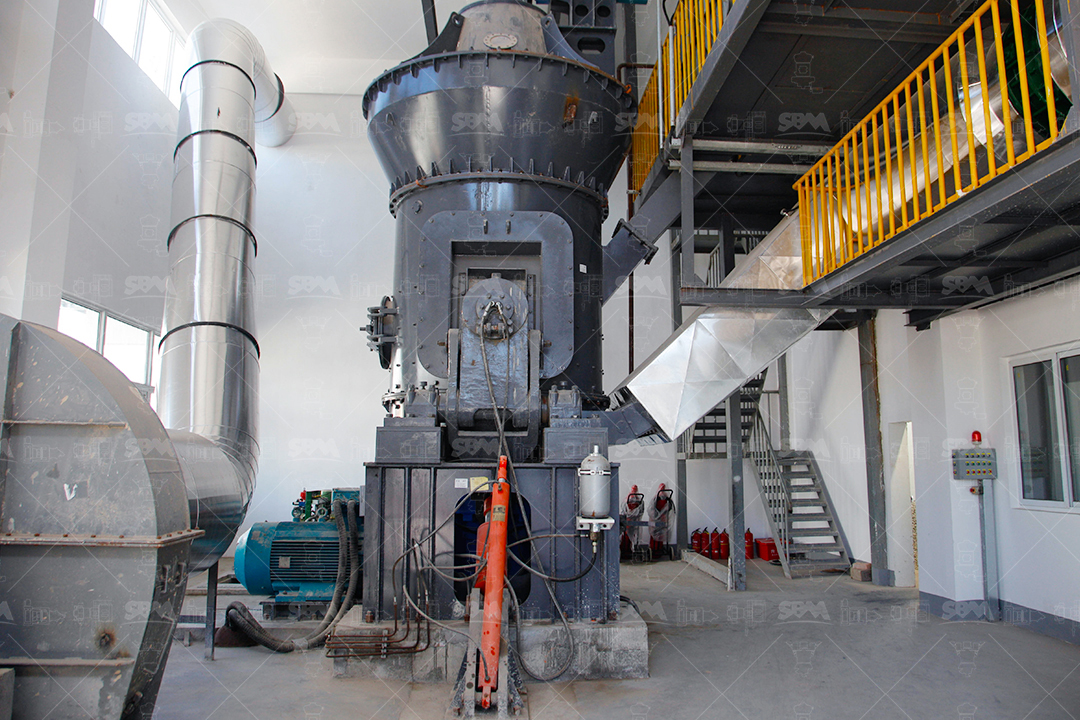
Type Analysis of Calcium Powder Grinding Equipment
The diversity of calcium powder applications—from coarse fillers in construction to ultrafine powders in plastics and coatings—demands a range of grinding technologies. Each equipment type is engineered to address specific fineness requirements, capacity scales, and operational constraints.
European Trapezium Mill (MTW Series)
The MTW Series European Trapezium Grinding Mill represents a significant advancement over traditional Raymond mills. Developed through long-term R&D experience and the integration of proposals from more than 9,500 customers, this mill incorporates multiple international advanced technologies and autonomous patent technologies. It is particularly suited for calcium powder production with input sizes up to 50 mm and output fineness ranging from 30 to 400 mesh, with capacities from 3 to 40 tph.
The technical principles of the MTW mill center on several innovative design features. The cone gear whole transmission system achieves higher transmission efficiency while saving space and lowering investment costs. The inner oil absorption lubrication system ensures reliable operation of transmission components. The arc air duct design—a circular duct that avoids air energy loss—maintains high transportation efficiency, while the high-strength guard plate protects the working face of the air duct. The unique wear-proof perching knife design features a combined-type shovel blade that reduces the cost of wearing parts; only the blade needs replacement during maintenance, and the curved shovel blades change the feeding angle to prolong the service life of the roller and ring. The volute design further improves wind-driven transmission efficiency and reduces material maintenance costs.
LM Vertical Roller Mill
The LM Vertical Roller Mill was developed as a solution to the technical issues of low output and high energy consumption prevalent in ordinary grinding equipment. By analyzing and researching the strengths and weaknesses of both foreign and domestic products, SBM engineered a new type of pulverizing equipment that integrates drying, pulverizing, and powder selection functions. It has become the mainstream equipment in the pulverizing industry, with input sizes up to 50 mm, output fineness from 30 to 400 mesh, and capacities ranging from 3 to 400 tph.
The technical principles of the LM mill emphasize comprehensive efficiency. The equipment integrates crushing, drying, grinding, powder separating, and transportation functions, featuring a simple system and compact layout with floor space about 50% of that of a ball-milling system; it can be arranged outdoors, greatly reducing investment costs. Low operating costs are achieved through less wear—the roller does not contact the grinding plate directly, and both are made of high-quality materials—and high efficiency, with the grinding rollers directly grinding materials on the grinding plate, resulting in energy consumption 30% to 40% lower than ball-milling systems. An expert automatic control system enables free switching between remote and local control, saving labor costs. The equipment operates stably with little vibration and low noise; the system is wholly sealed and works under negative pressure, free of dust spillover, with emissions meeting national standards.
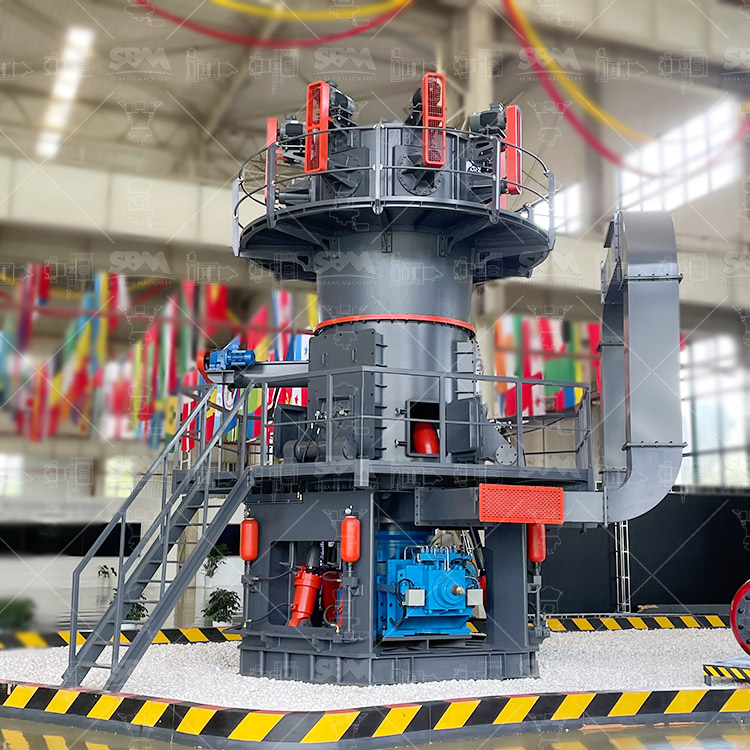
SCM Ultrafine Mill
As social economy develops rapidly, client requirements for pulverizing fineness have increasingly improved, and general Raymond mills have become unable to meet market demands. The SCM series ultrafine grinding mill was developed to address this gap, with powder fineness adjustable from 325 to 2,500 meshes and disposable fineness reaching D97≤5 μm—a leading level in the trade, with partial highest fineness reaching 2,500 meshes as verified by repeated experiments at a geoscientific research institute. Input sizes are up to 20 mm, with capacities from 0.5 to 25 tph.
The technical principles of the SCM mill focus on high output and low energy consumption. The mill features high efficiency and low energy consumption, with capacity more than twice that of jet mills while energy consumption is lower by 30%. Automatic feedback enables fast and stable conversion of finished products, and intelligent control saves labor costs directly. High fineness is achieved through frequency-conversion control, convenient for adjustment, with one-time finished products D97≤5 μm. The efficient vertical turbine powder classifier achieves high efficiency, accurate cutting size, and no spillover of coarse powder. The heavy rotor design and tight test method—with roller and ring made of special material—ensure durability several times higher, and the grinding chamber has no bearing screw, able to work stably free of vibration after balance treatment. Environmental protection is ensured by the efficient double powder collecting method of powder collectors and pulse dust collectors, achieving dust collection far higher than international standards, while the optimized sound insulation room and muffler effectively prevent equipment noise spread.
LUM Ultrafine Vertical Mill
The LUM ultrafine vertical mill integrates powder grinding, separation, and transportation as a new type of ultrafine grinding equipment. Designed by SBM based on years of mill production experience and vertical mill technology, it introduces Taiwan's grinding roller technology and Germany's powder separating technology. It is a professional medium and high-end processing equipment for plastic master batch, PVC, artificial stone, electric cable, non-woven fabrics, and other industries, mainly used for ultrafine grinding of calcite, marble, limestone, talc, dolomite, barite, kaolin, wollastonite, gypsum, feldspar, pyrophyllite, and other non-metallic mineral ores. Input sizes are up to 20 mm, output fineness from 325 to 4,000 mesh, with capacities from 10 to 70 tph.
The technical principles of the LUM mill emphasize high efficiency and high-quality finished products. The grinding curves of the roller shell and lining plate are uniquely designed based on the ultrafine pulverization principle, making it easier to form a material bed, improving grinding efficiency, and increasing the proportion of finished products from primary grinding. Advanced separation technology and energy efficiency are achieved through the principle of multi-rotor powder classifiers, so finished product fineness can be customized within a selected range with no low-grade material in existence. A PLC control system manages major parameters like grinding pressure, rotating speed of the grinding disc, and speed of the classifier. The intelligentized control system with PLC/DCS automatic control ensures accurate control of grinding pressure, high efficiency, and stable operation; remote control and frequency-conversion speed regulation enable simple operation and material flexibility. Environmentally friendly design features special structural design and operating principle ensuring small vibration and low noise, with the whole equipment well sealed and the system operating under negative pressure to prevent powder and dust outflow, meeting national environmental protection requirements.
Ball Mill
Ball mills have been used in many industries for a long time, and the technology is quite mature. However, investors have expressed that metal balls are easy to wear out and energy consumption is quite high. SBM optimized the design by improving the structure and adopting new materials, which obviously reduced the cost of spare parts. Various types of ball mill are produced to meet different requirements; for example, dry ball mill is mainly for producing common powder, while wet ball mill is widely used in mineral dressing. Input sizes are up to 25 mm, with output sizes from 0.2 to 0.074 mm and capacities from 3 to 65 tph.
Addressing Customer Pain Points Through Technical Principles
The technical principles embedded in modern calcium powder grinding equipment directly address the most common customer pain points. Low output and high energy consumption—longstanding issues in the industry—are mitigated by the LM vertical roller mill's direct grinding on the grinding plate and the SCM ultrafine mill's capacity more than twice that of jet mills with 30% lower energy consumption. Maintenance costs and wear-part replacement are addressed by the MTW mill's combined-type shovel blade design and the SCM mill's heavy rotor design with special materials. Environmental compliance and dust control are ensured across all equipment types through sealed systems, negative pressure operation, pulse dust collectors, and sound insulation. Labor costs are reduced through automatic control systems in the LM, SCM, and LUM mills. Space constraints are resolved by the LM mill's compact layout requiring only about 50% of the floor space of ball-milling systems and its suitability for outdoor arrangement. Fineness limitations are overcome by the SCM and LUM mills achieving D97≤5 μm and up to 4,000 mesh, meeting the most demanding ultrafine applications.
Frequently Asked Questions
1. What is the maximum fineness I can achieve for calcium powder, and which equipment should I choose? Maximum fineness depends on your application. For standard 30–400 mesh production, the MTW European trapezium mill or LM vertical roller mill is suitable. For ultrafine requirements up to 2,500–4,000 mesh (D97≤5 μm), the SCM ultrafine mill or LUM ultrafine vertical mill should be selected. Our team can recommend the optimal configuration based on your target product specification.
2. My current grinding equipment consumes too much energy and has low output. Can your equipment really reduce operating costs? Yes. The LM vertical roller mill consumes 30%–40% less energy than ball-milling systems, and the SCM ultrafine mill offers more than twice the capacity of jet mills with 30% lower energy consumption. These efficiency gains directly translate to reduced operating costs and higher profitability.
3. How do you address the wear of grinding parts and the associated maintenance costs? We employ several design solutions: the MTW mill's combined-type shovel blade allows replacement of only the blade, reducing wearing-part costs; the SCM mill's roller and ring are made of special material for durability several times higher; and the LM mill's roller does not contact the grinding plate directly, with both made of high-quality materials for longer service life and less wear.
4. Will the grinding equipment meet environmental regulations regarding dust and noise? Absolutely. All our mills are designed for environmental compliance. The LM mill operates under negative pressure with a wholly sealed system, free of dust spillover. The SCM mill uses efficient double powder collecting with pulse dust collectors and optimized sound insulation. The LUM mill is well sealed and operates under negative pressure with low noise and small vibration. Emissions meet national standards.
5. Can the equipment be installed in a limited space, and is automatic operation possible? The LM vertical roller mill features a compact layout occupying about 50% of the floor space of a ball-milling system and can be arranged outdoors. Automatic control systems are available across the LM, SCM, and LUM mills, enabling remote and local control switching, PLC/DCS pressure adjustment, and frequency-conversion speed regulation, significantly reducing labor requirements and simplifying operation.


