

Types of mineral grinding equipment
Published: October 26, 2023
Mineral grinding represents a critical stage in numerous industrial processes, transforming raw materials into fine powders essential for everything from construction to advanced materials. Shanghai SBM Machinery Equipment Co., Ltd. (SBM Machinery) stands as a total solution provider, offering a comprehensive portfolio of grinding equipment engineered to address the diverse and evolving needs of the global powder processing industry. From power generation and building materials to mining, metallurgy, and new energy materials, our solutions are designed to enhance efficiency, reduce operational costs, and meet stringent environmental standards. This article delves into the core technologies and distinct advantages of SBM's key grinding mill series, providing a clear guide to selecting the optimal equipment for specific application requirements.
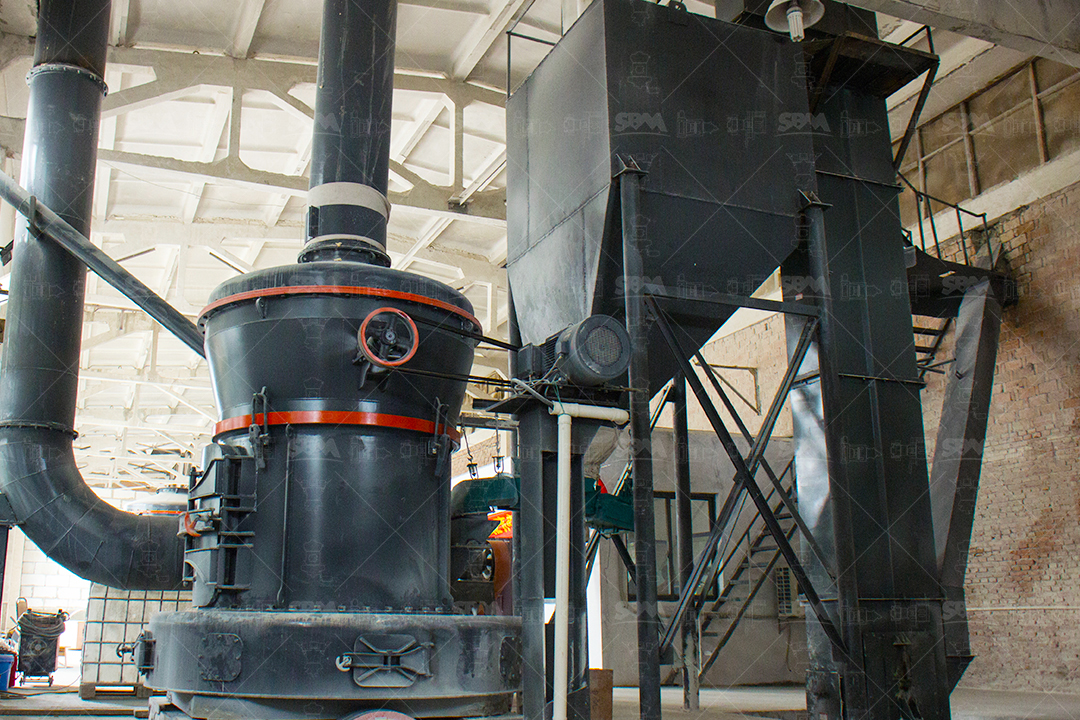
MTW Series European Trapezium Grinding Mill
The MTW Series European Trapezium Grinding Mill, often referred to as the MTW Raymond Mill, is a testament to SBM's commitment to innovation through research and customer feedback. Developed from the analysis of traditional mills and incorporating suggestions from over 9500 clients, this mill embodies international advanced technology. It is engineered for processing materials with an input size of up to 50mm, producing outputs ranging from 30 to 400 mesh, with capacities between 3 and 40 tons per hour (tph).
Its technical superiority is anchored in several patented features. The unique wear-proof perching knife design utilizes a combined-type shovel blade. This design not only reduces the cost of wearing parts by allowing for the replacement of only the blade but also features curved surfaces that optimize the feeding angle, significantly prolonging the service life of the grinding roller and ring. This directly translates to lower long-term operating costs. Furthermore, the arc air duct design minimizes air energy loss, ensuring efficient material transportation, while the high-strength guard plate protects the duct's working face. A cornerstone of its design is the Cone Gear Whole Transmission system, which delivers higher transmission efficiency in a more compact space, reducing initial investment costs. The unobstructed, wear-resistant volute further enhances wind-driven transmission efficiency within the mill, contributing to a robust and low-maintenance operation.
LM Vertical Roller Mill
Designed to overcome the challenges of low output and high energy consumption prevalent in conventional grinding systems, the LM Vertical Roller Mill is a high-efficiency pulverizing equipment integrated with drying capabilities. It is a versatile solution widely applied in cement, chemical, coal, and electric power industries, handling input sizes of 0-50mm and producing powders from 30 to 400 mesh. Its capacity is notably broad, ranging from 3 to 400 tph, making it suitable for large-scale production lines.
The LM Vertical Roller Mill offers significant investment and operational advantages. Its integrated design, which combines crushing, drying, grinding, powder separation, and transportation into a single unit, results in a simple system with a compact layout. The footprint is approximately 50% of that of a traditional ball-milling system, and the ability to be installed outdoors further reduces civil engineering costs. Operationally, it excels in low wear and high efficiency. The rollers do not directly contact the grinding plate, and both are constructed from high-quality, durable materials, leading to an extended service life. The direct grinding action on the plate consumes 30% to 40% less energy than ball-milling systems. The mill is also equipped with an expert automatic control system, enabling seamless remote or local operation, which saves on labor costs. From an environmental standpoint, its stable operation ensures low noise, and the fully sealed system operating under negative pressure prevents dust spillover, ensuring emissions comply with national standards.
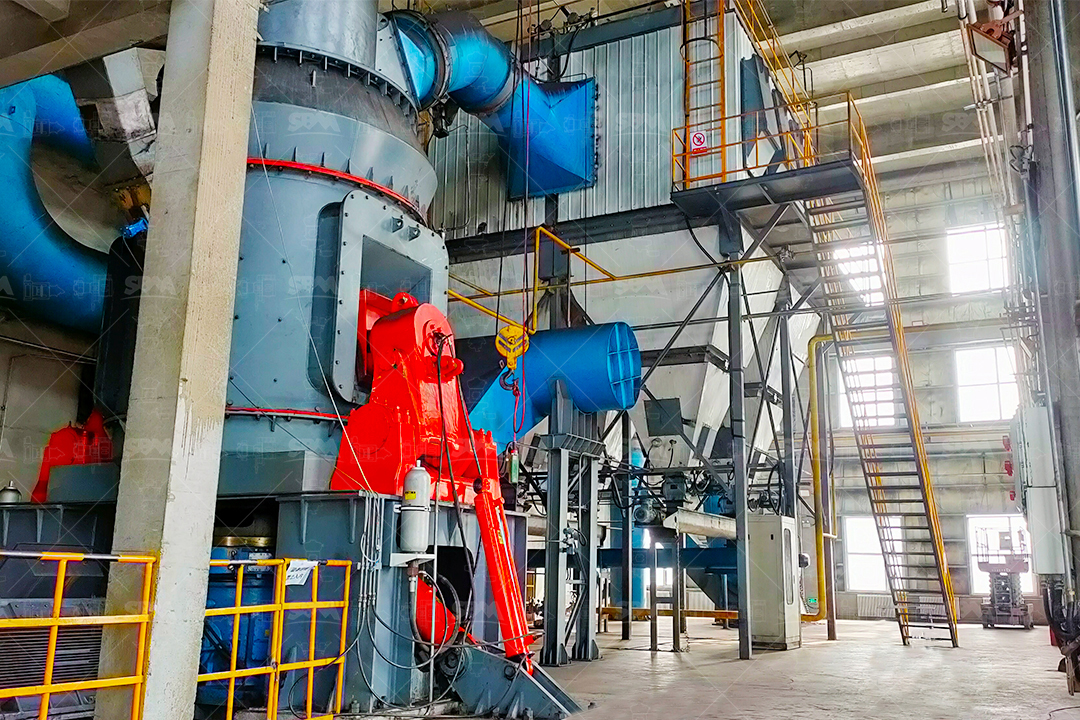
SCM Series Ultrafine Mill and LUM Ultrafine Vertical Mill
For applications demanding exceptionally fine powders, SBM offers two advanced solutions: the SCM Series Ultrafine Mill and the LUM Ultrafine Vertical Mill. The SCM mill was developed in response to market demands that surpass the capabilities of general Raymond mills. It can adjust fineness between 325 and 4000 mesh, with a disposable fineness reaching D97≤5μm, a leading standard in the industry. Its key advantages include high output and low energy consumption, boasting a capacity more than double that of jet mills while reducing energy use by 30%. Intelligent control systems provide automatic feedback for stable product conversion. The heavy rotor design and special materials for rollers and rings ensure exceptional durability, while efficient powder collection and noise reduction technologies make it an environmentally sound choice.
The LUM Ultrafine Vertical Mill represents the next generation of ultrafine grinding, integrating powder grinding, separation, and transportation. It leverages advanced grinding roller technology from Taiwan and German powder separating technology. Ideal for medium and high-end processing in industries like plastic masterbatch, PVC, and non-woven fabrics, it processes materials like calcite, talc, and barite. Its input size is 0-20mm, with an output range of 325-4000 mesh and a capacity of 10-70 tph. The uniquely designed grinding curves of the roller and lining plate facilitate the easy formation of a material bed, enhancing grinding efficiency and the yield of finished product from the first pass. The multi-rotor powder classifier allows for highly precise fineness customization. Like the LM series, it features an intelligentized PLC/DCS control system for stable operation and is designed for minimal vibration, low noise, and a dust-free, environmentally friendly operation.
Optimized Ball Mill
While ball mill technology is mature, traditional models often face issues with high grinding media wear and energy consumption. SBM's optimized Ball Mill addresses these pain points directly through improved structural design and the use of new, more durable materials, significantly reducing the cost of spare parts. It processes an input size of 0-25mm to a fineness of 0.2-0.074mm (approximately 75-200 mesh), with capacities from 3 to 65 tph. SBM produces various types, including dry ball mills for common powder production and wet ball mills, which are extensively used in mineral dressing plants, providing a reliable and upgraded solution for this foundational grinding technology.
Frequently Asked Questions (FAQ)
1. What is the primary factor in choosing between a Vertical Roller Mill and a Trapezium Mill for my application?
The choice often depends on the required capacity and the need for integrated drying. The LM Vertical Roller Mill, with its capacity of up to 400 tph and built-in drying function, is ideal for large-scale, moist raw materials. The MTW Trapezium Mill, with a cap of 40 tph, is a highly efficient and cost-effective solution for medium-scale operations where drying is not a primary concern.
2. How does SBM equipment address the common industry pain point of high energy consumption?
Our mills are specifically engineered for energy efficiency. The LM Vertical Roller Mill consumes 30-40% less energy than a ball mill, and the SCM Ultrafine Mill uses 30% less energy than comparable jet mills. Features like the Cone Gear Whole Transmission in the MTW Mill also maximize transmission efficiency, directly reducing power costs.
3. We struggle with rapid wear of grinding parts, leading to high maintenance costs and downtime. How are SBM mills different?
We combat wear through specialized material science and innovative design. The MTW Mill's perching knife and curved shovel blade design, the LM Mill's non-contact roller/plate system, and the special materials used in the rollers and rings of our ultrafine mills are all designed to extend service life dramatically, reducing the frequency and cost of part replacements.
4. Is it difficult to control the fineness of the final product, especially for ultrafine grades?
Not with SBM's advanced control systems. Our ultrafine mills (SCM and LUM) feature advanced powder classifiers and frequency-conversion control, allowing for precise and easy adjustment of fineness. The LUM Mill's multi-rotor classifier, for instance, ensures a sharp particle size cut and allows fineness to be customized within a wide range without producing low-grade material.
5. Our project has strict environmental and noise regulations. Can SBM equipment comply?
Absolutely. Environmental protection is a core design principle. All our mills feature fully sealed systems that operate under negative pressure, entirely preventing dust spillover. Furthermore, optimized sound insulation rooms, mufflers, and low-vibration designs ensure that noise levels are kept to a minimum, well within national and international standards.


