

Selecting suitable desulfurization equipment
Published on: October 26, 2023
Selecting the optimal desulfurization equipment is critical for power plants and industrial facilities aiming to meet environmental regulations while maintaining operational efficiency. The choice directly impacts system performance, energy consumption, and long-term operating costs. Shanghai SBM Machinery offers a comprehensive portfolio of grinding solutions specifically engineered for limestone powder preparation in flue gas desulfurization (FGD) systems. With over 180 countries served worldwide, our equipment has proven effective in balancing production capacity, fineness requirements, and environmental compliance. This article examines key technical considerations and presents SBM's specialized mills—including the MTW European Trapezium Mill, LM Vertical Roller Mill, and various ultrafine grinding solutions—to help operators make informed decisions for their specific desulfurization applications.
The foundation of effective wet flue gas desulfurization lies in producing high-quality limestone slurry with precise particle size distribution. Finely ground limestone increases the surface area available for chemical reaction with sulfur dioxide, dramatically improving absorption efficiency. This is where the selection of grinding equipment becomes paramount. Equipment that delivers consistent particle size while minimizing energy consumption and maintenance requirements provides significant advantages in both operational performance and cost management over the system lifecycle.
_1763137099710.jpg)
MTW European Trapezium Mill for Standard Desulfurization Applications
For many desulfurization systems requiring limestone powder in the 30-400 mesh range, the MTW European Trapezium Mill represents an optimal balance of performance and reliability. Developed through analysis of traditional mills and incorporating feedback from thousands of customers, this mill incorporates several patented technologies that address common pain points in grinding operations. The cone gear whole transmission system ensures higher mechanical efficiency with reduced energy loss compared to conventional drives, while the inner oil absorption lubrication system minimizes maintenance requirements.
The unique curved shovel blade design deserves particular attention for desulfurization applications. This innovation changes the feeding angle to create a more efficient material bed between the grinding roller and ring, significantly extending component service life. Since only the blade requires replacement during maintenance—not the entire assembly—operators benefit from reduced spare parts inventory and shorter downtime. The arc air duct design further enhances efficiency by minimizing air energy loss during material transport, ensuring consistent throughput even with varying limestone characteristics.
With capacity ranging from 3-40tph and the ability to handle input sizes up to 50mm, the MTW Series fits well within the requirements of small to medium-scale desulfurization systems. The mill's multiple international advanced technologies make it particularly suitable for operations seeking to upgrade from older Raymond mill systems without completely reengineering their material handling infrastructure.
LM Vertical Roller Mill for Large-Scale Desulfurization Projects
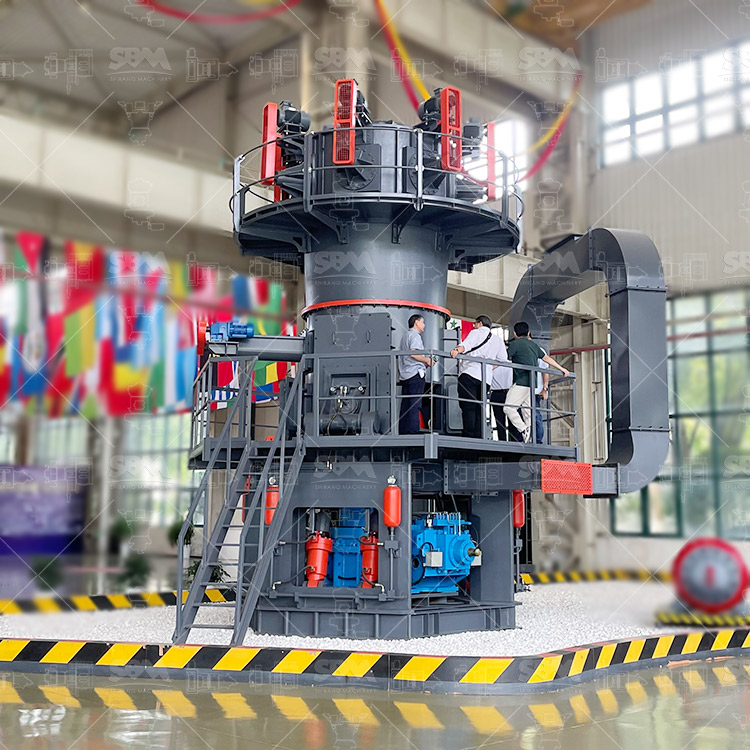
For power plants and industrial facilities requiring higher capacity limestone preparation, the LM Vertical Roller Mill offers compelling advantages. With throughput capabilities reaching 400tph, this integrated system combines crushing, drying, grinding, and separation processes in a single compact unit. The vertical design significantly reduces floor space requirements—approximately 50% less than traditional ball mill systems—making it ideal for facilities with spatial constraints or those looking to expand desulfurization capacity within existing infrastructure.
Energy efficiency represents a critical consideration in desulfurization operations, where grinding can account for a substantial portion of auxiliary power consumption. The LM Vertical Roller Mill addresses this concern directly, consuming 30-40% less energy than ball milling systems. This efficiency stems from the direct grinding principle where rollers compress materials against the grinding table, minimizing energy losses associated with impact and friction in conventional systems. The reduced wear characteristics further enhance operational economy, as the rollers and table liners manufactured from specialized materials demonstrate exceptional durability even with abrasive limestone feed.
The integrated expert automatic control system provides another layer of optimization for desulfurization applications. By maintaining consistent grinding pressure and classifier speed regardless of feed variations, the system ensures uniform product quality essential for stable FGD operation. Remote monitoring and control capabilities allow operators to adjust parameters from central control rooms, reducing labor requirements while maintaining precise oversight of the grinding process.
Ultrafine Grinding Solutions for Advanced Desulfurization Technologies
As desulfurization technologies evolve toward higher efficiency systems, some applications benefit from ultrafine limestone powders with fineness reaching 2500 mesh or higher. For these demanding requirements, SBM offers both the SCM Ultrafine Mill and LUM Ultrafine Vertical Mill. The SCM series achieves remarkable fineness up to D97≤5μm through specialized grinding geometry and advanced classification systems. The high-efficiency vertical turbine powder classifier ensures precise particle size cuts without coarse powder contamination, critical for maximizing reaction kinetics in advanced absorber designs.
The LUM Ultrafine Vertical Mill builds upon vertical mill principles while incorporating German powder separation technology and specialized grinding curves. The unique design of roller shells and lining plates facilitates stable material bed formation even with ultrafine grinding, improving efficiency and increasing the proportion of finished product from primary grinding stages. This mill particularly suits operations requiring customized fineness distributions without low-grade material fractions.
Both ultrafine solutions incorporate sophisticated environmental controls beyond basic grinding functions. The efficient double powder collection system combining cyclone separators and pulse dust collectors achieves filtration efficiency far exceeding international standards. Optimized sound insulation and muffler designs further address noise concerns, making these mills suitable for installation in environmentally sensitive locations or near residential areas.
Technical Comparison and Selection Guidelines
Choosing between these technologies requires careful analysis of specific operational requirements. For standard desulfurization applications producing powder in the 200-400 mesh range, the MTW European Trapezium Mill typically offers the most straightforward operation and maintenance profile. Its design specifically addresses the limitations of traditional grinding mills while maintaining compatibility with existing system layouts.
Operations prioritizing energy efficiency and space utilization for medium to high capacity requirements will find the LM Vertical Roller Mill particularly advantageous. The integrated drying capability proves valuable when processing limestone with higher moisture content, eliminating the need for separate drying equipment. The automatic control system further enhances operational stability, reducing the skill level required for consistent operation.
When ultrafine powders are necessary for advanced desulfurization processes or when dealing with particularly reactive limestone varieties, the SCM or LUM series provide the necessary fineness control. The choice between these depends largely on production scale—the SCM series handles capacities up to 25tph, while the LUM series extends this range to 70tph for ultrafine applications.
Conclusion
Selecting desulfurization equipment represents a long-term commitment that significantly impacts environmental compliance, operational costs, and system reliability. Shanghai SBM Machinery's diverse grinding portfolio ensures that operators can match technology to their specific requirements rather than compromising with one-size-fits-all solutions. From the robust MTW European Trapezium Mill to the high-efficiency LM Vertical Roller Mill and specialized ultrafine grinding options, each technology brings distinct advantages for different operational contexts. With global experience across diverse applications, SBM provides not just equipment but comprehensive technical support to optimize desulfurization performance throughout the equipment lifecycle.
Frequently Asked Questions
1. How do I determine the appropriate fineness for limestone powder in my desulfurization system?
The optimal fineness depends on your specific FGD technology and limestone reactivity. Generally, 200-325 mesh suits most conventional wet scrubbers, while advanced systems may benefit from finer powders. Our technical team can analyze your system parameters to recommend the ideal fineness range.
2. What maintenance requirements should I anticipate for grinding equipment in continuous desulfurization operation?
Maintenance intervals vary by technology. The MTW Mill requires periodic replacement of wear parts like grinding blades, while Vertical Roller Mills need roller and table liner inspections. All SBM mills feature designs that minimize maintenance frequency and simplify replacement procedures.
3. How does equipment selection impact overall desulfurization system efficiency?
Grinding equipment affects multiple efficiency factors: finer, consistent powder improves SO2 absorption; energy-efficient mills reduce operating costs; reliable operation minimizes downtime. Proper selection balances these factors for optimal lifetime system performance.
4. Can your equipment handle variations in limestone quality and moisture content?
Yes, our mills are engineered for material variations. The LM Vertical Roller Mill includes integrated drying for high-moisture materials, while all mills feature adjustable parameters to accommodate different limestone characteristics without sacrificing product quality.
5. What technical support is available after equipment installation?
SBM provides comprehensive support including operational training, preventive maintenance planning, spare parts supply, and remote monitoring assistance. Our global service network ensures prompt response to technical inquiries throughout the equipment lifecycle.


