

Talc vertical mill production process
Published: October 26, 2023
The production of talc powder, a critical mineral in industries ranging from plastics to cosmetics, demands precision grinding technology that balances efficiency, product quality, and operational costs. Shanghai SBM Machinery Equipment Co., Ltd. addresses these demands through advanced vertical roller mills specifically engineered for talc processing. These mills integrate crushing, drying, grinding, and classification into a single system, leveraging innovations like intelligent PLC controls, negative-pressure operation for dust-free environments, and optimized grinding curves for higher yield. With outputs adjustable between 325–4000 mesh and capacities spanning 10–70 tph, SBM’s vertical mills ensure consistent fineness (e.g., D97 ≤ 5µm) while reducing energy consumption by 30–40% compared to conventional systems. This article explores the technical nuances of talc vertical milling, highlighting how SBM’s solutions overcome industry pain points like wear resistance, particle distribution control, and environmental compliance.
The talc vertical mill production process begins with raw material preparation, where talc ore with an input size of 0–20mm is fed into the mill. Inside the grinding chamber, rollers press against a rotating table, leveraging centrifugal force to crush and grind the material. A key advantage of SBM’s vertical mills, such as the LUM Ultrafine Vertical Mill, is their integration of German powder-separation technology and Taiwanese roller designs. This allows for precise control over particle size distribution while forming a stable material bed—critical for achieving uniform fineness in talc powder. The process is further enhanced by an automated grinding pressure system, which adjusts in real-time to maintain optimal efficiency without manual intervention.
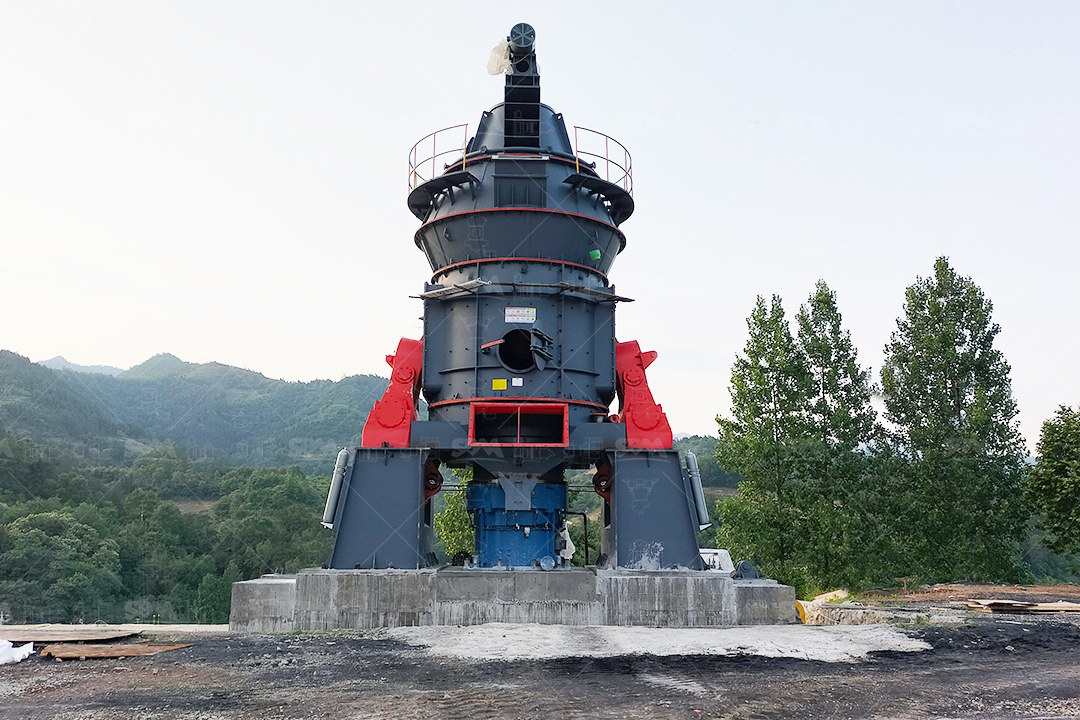
One of the standout features of SBM’s vertical mills is their energy-efficient operation. Traditional ball mills often suffer from high energy consumption due to friction and heat loss, but vertical mills reduce this by 30–40% through optimized grinding mechanics and internal airflow designs. For instance, the arc air duct in SBM’s MTW Series European Trapezium Mill minimizes air resistance, ensuring smooth material transport without energy waste. Additionally, the use of high-quality materials for rollers and grinding plates extends their service life, directly lowering operating costs. In talc processing, where prolonged operations are common, this durability translates to fewer shutdowns for maintenance and higher overall productivity.
Environmental considerations are integral to modern talc production, and SBM’s vertical mills excel in this regard. The fully sealed system operates under negative pressure, preventing dust leakage and ensuring workplace safety. Coupled with pulse dust collectors and noise-reduction technologies, these mills meet stringent international emission standards. Moreover, the compact layout of vertical mills reduces their footprint by 50% compared to ball mill systems, allowing for outdoor installation and further minimizing infrastructure costs. This makes SBM’s solutions ideal for facilities with space constraints or those aiming to scale production sustainably.
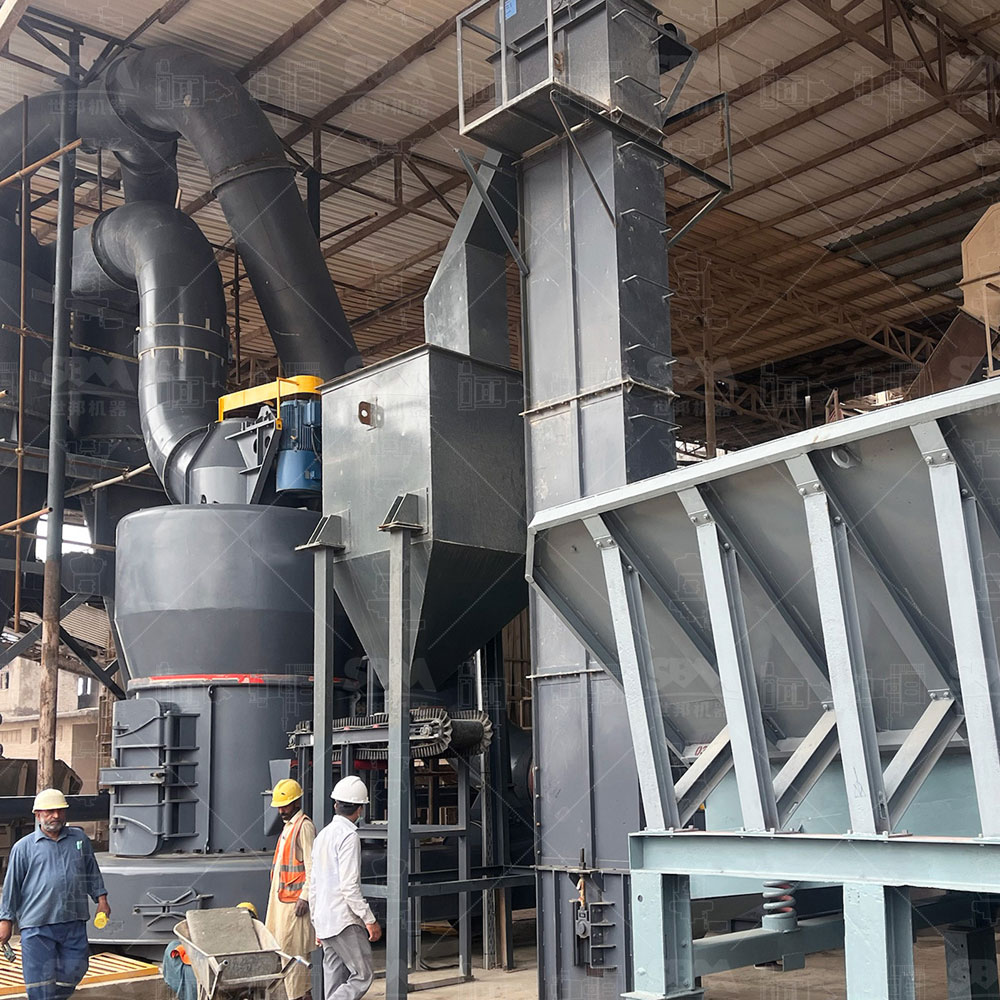
Finally, the role of intelligent control systems cannot be overstated. SBM’s vertical mills incorporate PLC/DCS automation for remote monitoring and adjustment of critical parameters like grinding pressure, classifier speed, and feed rate. This not only stabilizes output quality but also reduces labor dependency. For talc producers, this means consistent product fineness—whether for coarse-grade talc in ceramics or ultrafine talc in pharmaceuticals—with minimal operational hurdles. As industries increasingly prioritize reproducibility and efficiency, SBM’s technology offers a future-proof pathway to upgrading talc processing lines.
Frequently Asked Questions (FAQs)
1. How does the vertical mill handle variations in talc ore hardness?
SBM’s vertical mills feature adaptive grinding pressure control and robust roller materials to accommodate hardness fluctuations without compromising output consistency.
2. What measures are in place to reduce wear on grinding components?
Curved shovel blades, high-chromium rollers, and inner oil absorption lubrication systems collectively extend component lifespan by reducing direct friction and abrasion.
3. Can the mill achieve both coarse and ultrafine talc powder in one system?
Yes, with adjustable classifier speeds and grinding parameters, the same mill can produce talc powder from 325 mesh to 4000 mesh, eliminating the need for multiple machines.
4. How does the system ensure dust-free operation?
Negative-pressure sealing and integrated pulse dust collectors prevent talc dust escape, aligning with OSHA and international environmental standards.
5. Is remote operation supported for the grinding process?
Absolutely. The PLC-based control system enables full remote monitoring and adjustment of operational parameters, reducing on-site labor requirements.


