

Applications of processed limestone
Published: October 26, 2023
Processed limestone stands as one of the most versatile and indispensable materials across global industries, serving critical functions in construction, environmental protection, energy production, and advanced manufacturing. From building the foundations of our cities to enabling cleaner air through flue gas desulfurization, the applications of finely ground limestone powder are both diverse and essential. The efficiency and quality of this processing—determined by the grinding equipment used—directly impact operational costs, product performance, and environmental compliance. This article explores the key industrial applications of processed limestone and examines how advanced grinding technologies from SBM Machinery are engineered to address common production challenges while delivering superior product quality and sustainable operation.
Environmental Applications: Flue Gas Desulfurization
One of the most significant environmental applications of processed limestone is in flue gas desulfurization (FGD) systems at power plants and industrial facilities. Here, finely ground limestone powder reacts with sulfur dioxide emissions, effectively removing these harmful compounds before they enter the atmosphere. The efficiency of this chemical process depends critically on the particle size and reactivity of the limestone powder.
SBM's MTW Series European Trapezium Grinding Mill has become the preferred solution for FGD limestone preparation due to its precise particle size control and energy-efficient operation. The mill's advanced cone gear transmission system and inner oil absorption lubrication ensure stable, continuous operation—a crucial requirement for power plants that cannot afford unexpected downtime. The unique curved shovel blade design extends component life significantly, reducing maintenance frequency and costs while maintaining consistent output quality between 30-400 mesh, perfectly suited for FGD applications.
_1763655483888.jpg)
Construction and Building Materials
In the construction sector, processed limestone serves as a fundamental component in cement production, concrete mixtures, asphalt, and various building products. The fineness and particle distribution of limestone powder directly influence the strength, durability, and workability of these materials. Traditional ball mills have long been used in this industry, but they often struggle with high energy consumption and rapid wear of grinding media.
SBM's optimized Ball Mill solutions address these pain points through improved structural designs and advanced materials that significantly reduce wear part costs. For modern construction applications requiring higher fineness and uniformity, the LUM Ultrafine Vertical Mill offers exceptional performance with output ranging from 325-4000 mesh. Its intelligent control system automatically adjusts grinding pressure and classifier speed to maintain consistent product quality, even with variations in raw material characteristics.
Advanced Manufacturing and Specialty Applications
Beyond traditional uses, processed limestone finds applications in increasingly sophisticated manufacturing processes. The plastics industry utilizes ultra-fine calcium carbonate as a filler in masterbatch production, while the paper industry depends on it for coating and filling applications. In these precision applications, particle size distribution and purity are paramount.
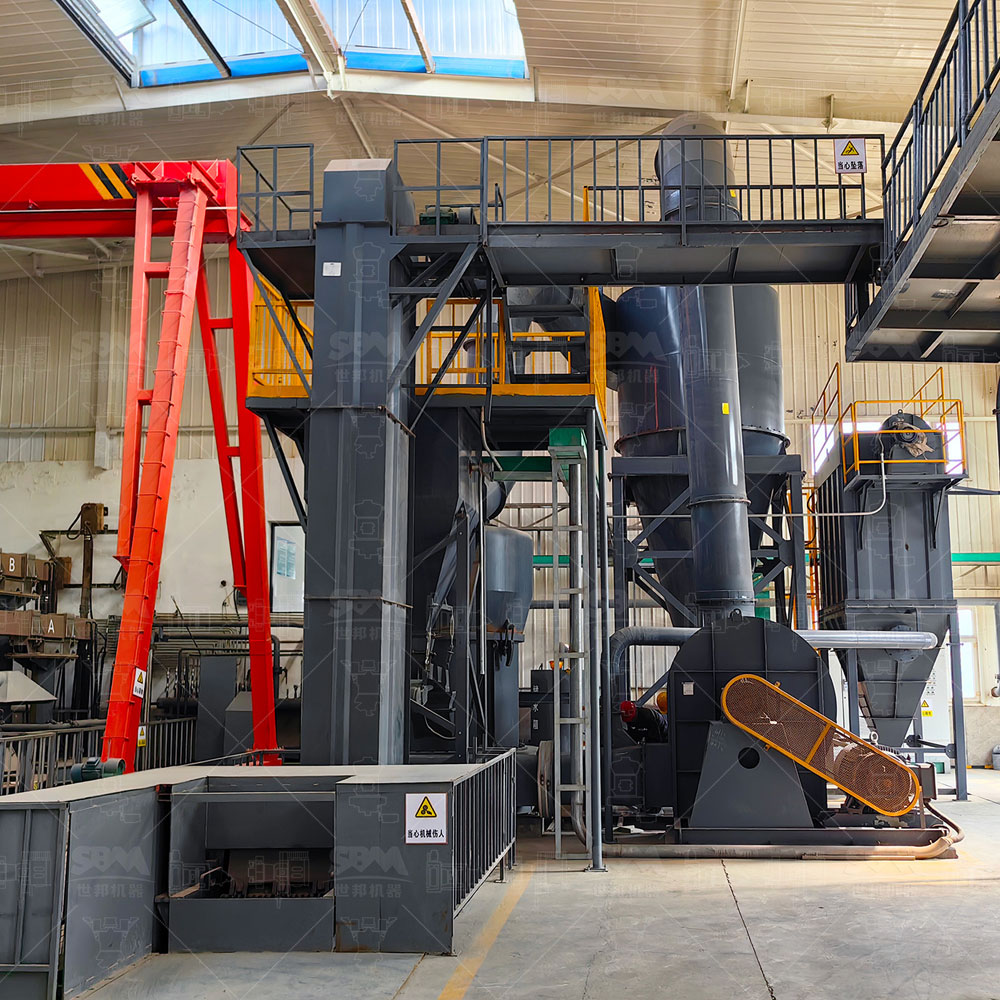
SBM's SCM Ultrafine Mill and LUM Ultrafine Vertical Mill are specifically engineered for these demanding applications. The SCM series achieves fineness up to 2500 mesh through its heavy rotor design and efficient turbine powder classifier, ensuring no coarse powder spillover. The LUM series integrates German powder separating technology with Taiwan's grinding roller expertise, delivering precisely controlled particle distributions that meet the strict specifications of premium plastic and PVC products.
Addressing Operational Challenges Through Advanced Engineering
Across all these applications, several common challenges persist: energy consumption, maintenance costs, environmental compliance, and product consistency. SBM's grinding equipment incorporates specific technological innovations to address each of these concerns.
The Vertical Roller Mill (LM Series) demonstrates how integrated system design can overcome multiple challenges simultaneously. By combining crushing, drying, grinding, and separation functions in a single compact unit, it reduces floor space requirements by approximately 50% compared to traditional ball mill systems. The automatic expert control system enables remote operation and optimizes energy usage, typically achieving 30-40% lower energy consumption than conventional systems.
Environmental considerations are addressed through comprehensive sealing and negative pressure operation that prevents dust emissions, while advanced sound insulation technology maintains noise levels well within regulatory requirements. These features make SBM equipment suitable for installation in urban and environmentally sensitive areas where emissions and noise restrictions are stringent.
Future Trends and Technological Evolution
The future of limestone processing continues to evolve toward greater efficiency, finer particle sizes, and smarter operation. The integration of IoT capabilities and predictive maintenance features in newer grinding systems represents the next frontier in operational optimization. As industries demand more specialized limestone products with specific surface area, particle shape, and chemical characteristics, grinding technology must continue advancing to meet these precise requirements.
SBM's ongoing research and development focuses on these emerging needs, with particular emphasis on energy efficiency improvements and broader application ranges. The company's global experience serving over 180 countries provides invaluable insight into diverse operational requirements and environmental standards, informing continuous product enhancement and innovation.
Frequently Asked Questions
What is the typical energy consumption for processing limestone to 325 mesh?
Energy requirements vary by equipment type and material characteristics, but modern vertical roller mills typically consume 30-40% less energy than traditional ball milling systems for equivalent output. Specific consumption depends on material hardness, moisture content, and desired production capacity.
How often do grinding components need replacement?
Component lifespan varies significantly based on material abrasiveness and operating conditions. SBM's specialized wear-resistant materials and optimized designs can extend service life by 2-3 times compared to conventional components, with some applications achieving over 10,000 hours of operation between replacements.
Can your equipment handle moist limestone without pre-drying?
Yes, several SBM mill series integrate drying capabilities that can handle materials with moisture content up to certain percentages. The Vertical Roller Mill and European Trapezium Mill both feature integrated drying systems that eliminate the need for separate drying equipment in many applications.
What particle size distribution can be achieved for plastic filler applications?
For premium plastic and masterbatch applications, SBM's ultrafine mills can produce powders with D97 ≤ 5μm and adjustable distributions between 325-4000 mesh. The efficient classifier systems ensure tight particle distribution without coarse fraction contamination.
How does your equipment ensure environmental compliance?
All SBM grinding systems feature comprehensive sealing, negative pressure operation, and advanced dust collection technology that typically exceeds international emission standards. Additional noise reduction packages are available for installations in noise-sensitive areas.


