

Price of white carbon black superfine mills
Published on: October 26, 2023
The pursuit of optimal particle size, consistent quality, and operational efficiency in white carbon black (fumed silica) processing presents significant challenges for producers. Selecting the appropriate superfine grinding technology is not merely a procurement decision but a strategic investment impacting product performance, energy footprint, and long-term profitability. This article explores the critical technological considerations beyond initial cost, focusing on advanced milling solutions engineered to address the specific demands of ultra-fine, high-purity white carbon black production. We will analyze how modern mill designs—from advanced vertical roller mills to specialized ultrafine systems—tackle common industry pain points such as product contamination, inconsistent fineness, high energy consumption, and maintenance complexity, ultimately delivering superior total value over the equipment lifecycle.
White carbon black, prized for its reinforcing, thickening, and rheological properties, requires meticulous processing to achieve the desired surface area and particle size distribution (PSD). Traditional grinding approaches often fall short, leading to agglomeration, broad PSD, or metallic contamination from wear parts. The core challenge lies in applying sufficient energy for size reduction while maintaining precise thermal control and minimizing impurity introduction.
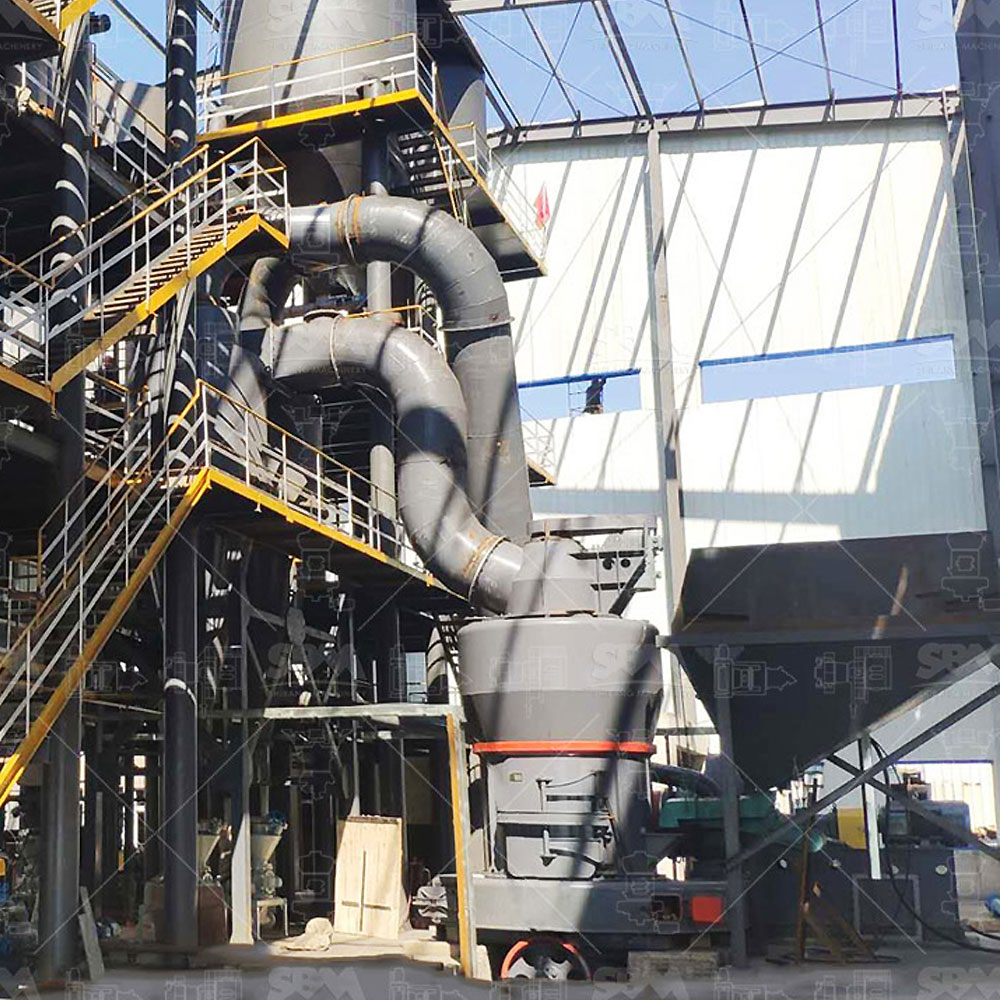 Modern engineering addresses these challenges through integrated system design. For instance, the LUM Ultrafine Vertical Roller Mill incorporates principles specifically for ultrafine pulverization. Its uniquely designed grinding curves promote stable material bed formation, enhancing grinding efficiency and increasing the yield of in-spec product from the first pass. This is crucial for white carbon black, where over-grinding can damage particle structure and under-grinding fails to unlock functional properties. The adoption of multi-rotor powder classifiers allows for precise fineness customization within a range up to 4000 mesh, ensuring no low-grade, coarse material contaminates the final product stream.
Operational cost, dominated by energy and wear part consumption, is a paramount concern. Advanced mills leverage several technologies to mitigate this. The cone gear whole transmission system, as seen in the MTW European Trapezium Mill, provides higher mechanical efficiency in a compact footprint, reducing energy loss. More significantly, vertical roller mills like the LM and LUM series integrate drying, grinding, and classification into a single unit. This compact design not only slashes footprint by up to 50% compared to ball mill systems but also translates to dramatically lower specific energy consumption—often 30% to 40% less. For heat-sensitive materials, the integrated drying function is invaluable, preventing moisture-related clumping without requiring a separate dryer.
Wear and maintenance present another major pain point. Metallic contamination from grinding media is unacceptable in high-grade white carbon black. Solutions include the use of special, highly durable materials for rollers and grinding rings, extending service life by multiples. Innovative designs like the combined-type shovel blade isolate wear to easily replaceable components, drastically cutting maintenance time and spare parts inventory costs. Furthermore, designs that prevent direct metal-to-metal contact between major grinding elements, coupled with inner oil absorption lubrication systems, ensure consistent performance and product purity over extended periods.
_1764692432537.jpg) Stability and control are non-negotiable for consistent product quality. Today's high-end mills are equipped with expert automatic control systems (PLC/DCS). These systems enable precise, automated control over critical parameters like grinding pressure, classifier speed, and feed rate. The result is stable operation with minimal vibration, fast and stable product fineness conversion, and the ability to switch recipes seamlessly. Remote monitoring and control capabilities further reduce labor costs and enhance operational safety. This level of automation ensures the mill responds dynamically to feed variations, maintaining tight PSD specifications batch after batch.
Stability and control are non-negotiable for consistent product quality. Today's high-end mills are equipped with expert automatic control systems (PLC/DCS). These systems enable precise, automated control over critical parameters like grinding pressure, classifier speed, and feed rate. The result is stable operation with minimal vibration, fast and stable product fineness conversion, and the ability to switch recipes seamlessly. Remote monitoring and control capabilities further reduce labor costs and enhance operational safety. This level of automation ensures the mill responds dynamically to feed variations, maintaining tight PSD specifications batch after batch.
Finally, environmental and safety standards are increasingly stringent. Modern superfine mills are designed as fully sealed systems operating under negative pressure, entirely containing dust and preventing spillage. Efficient powder collection systems, combining cyclone and pulse jet bag filters, achieve collection efficiencies far exceeding international standards. Additionally, optimized sound insulation and muffler designs effectively contain operational noise, protecting workers and complying with community regulations.
In conclusion, evaluating milling solutions for white carbon black must extend far beyond the price tag. The true cost is embedded in energy efficiency, yield, maintenance downtime, product consistency, and environmental compliance. Investing in technology that offers intelligent control, superior wear resistance, integrated processing, and guaranteed fineness control represents a strategic move toward sustainable, high-margin production. By focusing on total lifecycle value and partnering with providers offering complete grinding system expertise, producers can transform a critical processing challenge into a competitive advantage.
Frequently Asked Questions (FAQs)
- How can I prevent metallic contamination of my high-purity white carbon black during grinding?
Advanced mills utilize special alloy grinding rollers and rings, designs that minimize direct metal contact, and inner lubrication systems. Features like the combined-type shovel blade also localize wear to specific, easily replaceable non-critical parts, preventing systemic contamination. - Our current mill struggles with inconsistent fineness and broad particle size distribution. What solutions exist?
Precision is achieved through advanced classification technology. Mills equipped with high-efficiency vertical turbine or multi-rotor powder classifiers allow exact fineness cuts (e.g., D97 ≤5µm). Coupled with PLC-controlled grinding parameters, they ensure a narrow, consistent PSD and eliminate coarse powder spillover. - Energy costs are crippling our operation. Are there mills designed specifically for lower consumption?
Yes. Modern vertical roller mills integrate multiple processes, reducing systemic energy loss. Their grinding principle—directly grinding material on a plate with rollers—is inherently more efficient than tumbling ball mills, typically offering 30-40% lower energy consumption for the same output. - We need to adjust fineness for different product grades frequently. Is this a complex process?
Not with contemporary systems. Intelligent mills feature frequency-conversion control for classifier rotors and PLC systems that store recipes. Fineness adjustment can often be done quickly via the control panel or remotely, enabling flexible production with minimal downtime. - Maintenance downtime and spare parts costs are too high. How can this be improved?
Look for designs emphasizing durability and easy maintenance. Key features include ultra-wear-resistant materials for major parts, modular wear components (like shovel blades) that can be replaced individually, and accessible lubrication systems. These designs extend service intervals and simplify repairs, slashing long-term operating costs.


