

Price of a limestone raymond mill
Published on: October 26, 2023
Selecting the right limestone grinding mill is a critical investment decision that extends far beyond the initial purchase price. The true cost encompasses long-term operational efficiency, maintenance demands, energy consumption, and the ability to produce a consistent, high-quality powder that meets specific application requirements. For professionals in power generation desulfurization, construction materials, heavy calcium carbonate (GCC) production, and non-metallic mineral processing, the choice of equipment directly impacts profitability and product competitiveness. This article explores the key technological and performance factors that define the value proposition of modern limestone grinding solutions, helping you make an informed decision based on total cost of ownership and return on investment.
The evolution of Raymond mill technology has moved far beyond traditional designs. Modern iterations, such as the MTW Series European Trapezium Grinding Mill, incorporate decades of R&D and direct feedback from thousands of global installations. A primary consideration is the design of wear parts, which historically constituted a significant portion of long-term operating costs. Advanced mills now feature innovations like a combined-type shovel blade. This design allows for the replacement of only the blade segment during maintenance, drastically reducing downtime and spare parts inventory costs. Furthermore, the curved geometry of these blades optimizes the feeding angle, promoting a more stable grinding bed and significantly extending the service life of the grinding roller and ring.
_1764832975818.jpg)
Energy efficiency is another paramount factor influencing the operational economics of a limestone grinding plant. Traditional systems often suffer from significant energy losses in air handling. Contemporary designs address this with optimized air flow management. The implementation of an arc air duct, for instance, creates a smooth, circular pathway for air and material. This minimizes turbulence and resistance, ensuring efficient transportation of fine powder to the collection system without unnecessary power draw on the fan. Complementing this, advanced transmission systems like integral cone gear drives offer higher mechanical efficiency in a more compact footprint, contributing directly to lower energy consumption per ton of processed limestone.
For projects demanding higher capacity or integrated processing, Vertical Roller Mills (VRM) present a compelling value argument. Their core advantage lies in system integration. A single VRM unit consolidates the functions of drying, grinding, classification, and conveyance. This leads to a remarkably compact plant layout, potentially reducing the required floor space by up to 50% compared to a traditional ball mill system. The grinding principle itself—where rollers press on a rotating table—is inherently more energy-efficient, often reducing specific power consumption by 30% to 40%. The non-contact design between roller and table under normal operation, coupled with high-quality material selection, results in exceptionally low wear rates, translating to years of reliable service with minimal intervention.
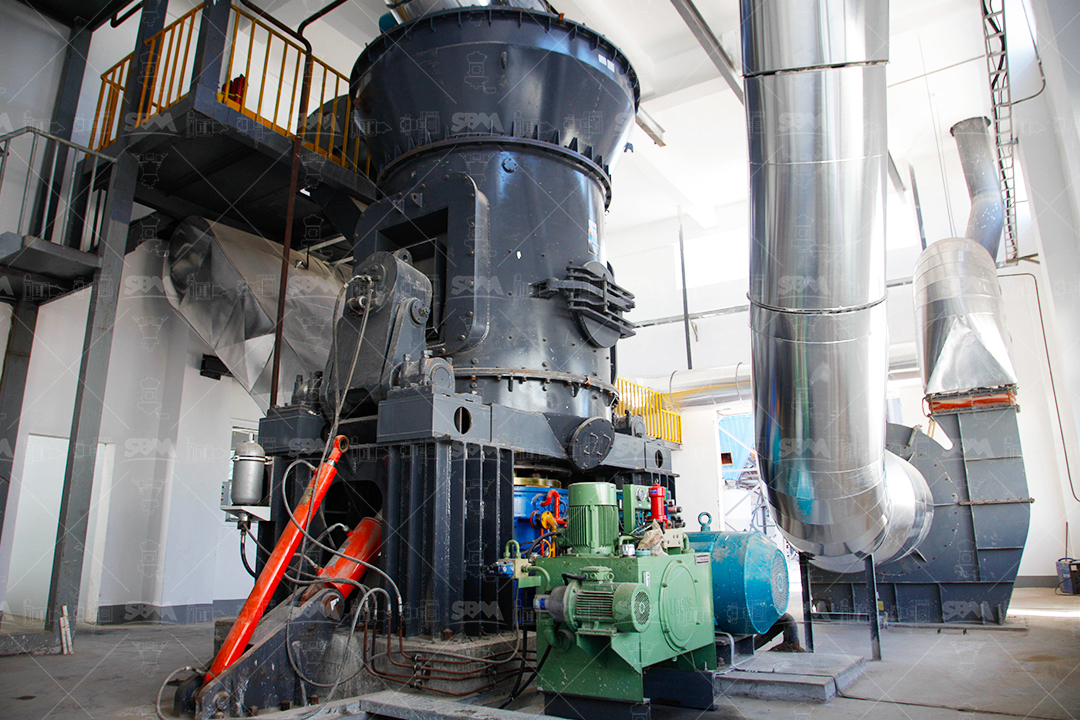
When the application calls for ultra-fine limestone powders (325 mesh and beyond), specialized ultrafine grinding mills enter the equation. Here, precision and stability are key. Technologies like high-efficiency turbo classifiers ensure precise particle size cuts, eliminating coarse particle spillover and guaranteeing product uniformity. Intelligent control systems that automatically adjust grinding pressure and classifier speed in response to feed variations are no longer luxuries but necessities for maintaining product specification and maximizing yield. Environmental compliance is seamlessly integrated into modern mill design through fully sealed systems operating under negative pressure, coupled with high-efficiency baghouse or pulse dust collectors, ensuring a clean, dust-free operation that meets stringent international standards.
Ultimately, the "price" of a limestone Raymond mill is best understood as the total investment required to achieve your specific production goals reliably and sustainably. It is the sum of capital expenditure, energy costs over its lifespan, maintenance and wear part expenses, and the value derived from consistent product quality and high system availability. By focusing on technological merits that address these core operational cost centers—such as wear-resistant designs, integrated systems, intelligent automation, and proven energy-saving principles—investors can select a grinding solution that delivers superior long-term value and a stronger competitive edge in the global powder processing market.
Frequently Asked Questions (FAQs)
1. What are the main operational cost drivers for a limestone grinding mill, and how can they be minimized?
The primary costs are energy consumption and wear part replacement. Selecting a mill with high grinding efficiency (e.g., VRM technology), optimized air flow design, and advanced wear protection features (like replaceable shovel tips and special alloy rollers) directly minimizes these ongoing expenses, lowering the total cost of ownership.
2. We need to produce both coarse (100 mesh) and very fine (800 mesh) limestone powder. Can one mill handle this wide range?
While traditional Raymond mills have a typical range up to 400 mesh, modern vertical roller mills and specialized ultrafine mills offer much broader flexibility. Key is selecting a model with a robust and adjustable classifier system. Advanced mills with frequency-converter controlled classifiers can efficiently produce powders from 30 to over 4000 mesh, allowing for product changes with simple operational adjustments.
3. How significant is plant footprint and infrastructure requirement in the total project cost?
It is often a major, overlooked cost. Integrated mill designs that combine drying, grinding, and separation into a single, compact unit can reduce floor space by up to 50% and simplify auxiliary systems (like conveyors). This drastically reduces civil engineering costs and allows for outdoor installation, offering substantial savings in overall project investment.
4. Our primary concern is consistent product fineness and quality. How do modern mills ensure stability?
Consistency is achieved through intelligent automation and precise mechanical design. Expert automatic control systems (PLC/DCS) continuously monitor and adjust key parameters like grinding pressure, feed rate, and classifier speed in real-time. This maintains a stable grinding condition despite variations in feed material, ensuring the output fineness (e.g., D97) remains within a tight specification.
5. Meeting environmental regulations is non-negotiable. What features should we look for to ensure dust-free and low-noise operation?
Look for a wholly sealed grinding system that operates under negative internal pressure, which prevents dust leakage at source. This should be paired with high-efficiency dust collection technology, such as a pulse-jet baghouse. For noise, optimized gear drive designs, sound insulation enclosures, and integrated mufflers are critical to reducing operational noise to levels compliant with workplace and community standards.


