

Price of widely-used superfine mills
Published: October 26, 2023
In the competitive landscape of industrial powder processing, selecting the right superfine grinding mill is a critical capital decision that extends far beyond the initial purchase price. True cost encompasses long-term operational efficiency, maintenance demands, energy consumption, and final product quality. Shanghai SBM Machinery, as a global total solution provider with equipment deployed in over 180 countries, engineers its mills—from the advanced MTW European Trapezium Mill to the high-precision LUM Ultrafine Vertical Mill—with a core philosophy: maximizing lifetime value by systematically reducing total cost of ownership. This article delves into the technological innovations and design principles that define modern, cost-effective superfine grinding, providing a framework for evaluating equipment based on long-term performance and return on investment.
The evolution of superfine milling technology has been driven by the industry's dual demands for finer particle sizes and lower operational expenses. Traditional mills often become cost centers due to high wear part replacement frequency, excessive energy use, and significant downtime. Modern solutions address these pain points through integrated system design and proprietary technologies. For instance, the wear profile of grinding components is a major contributor to ongoing costs. SBM's approach, as seen in its MTW Series European Trapezium Mill, incorporates a unique combined-type shovel blade design. This innovation allows for the replacement of only the blade segment during maintenance, not the entire assembly, drastically reducing spare parts inventory and downtime costs. Furthermore, the use of special materials for rollers and rings extends service life by multiples compared to conventional options.
_1764865520938.jpg)
Energy consumption represents the single largest operational expense in continuous grinding processes. Here, the design philosophy shifts from mere power application to intelligent energy utilization. Vertical roller mills, like SBM's LM and LUM series, exemplify this principle. By integrating crushing, drying, grinding, and classification into a single, compact unit, they eliminate the need for multiple conveyors and external drying systems, reducing overall plant power draw. The direct grinding principle—where rollers press on a grinding plate—is inherently more efficient than the tumbling action of ball mills, typically achieving 30% to 40% lower energy consumption for the same output. Advanced systems enhance this further with expert automatic control systems that optimize grinding pressure and classifier speed in real-time, ensuring the mill operates only at the necessary power level for the target fineness.
For applications demanding ultra-fine powders (reaching 2500 mesh and beyond), specialized equipment like the SCM Ultrafine Mill and LUM Ultrafine Vertical Mill bring additional value through precision and stability. The core challenge in ultrafine grinding is maintaining consistent fineness without energy spikes or production bottlenecks. These mills employ high-efficiency vertical turbine classifiers and multi-rotor separation technology to ensure precise particle cut points, eliminating the need for re-processing and minimizing waste of raw material. The intelligent control systems provide automatic feedback, allowing for fast and stable product grade changes—a crucial feature for producers serving multiple market segments with one production line.
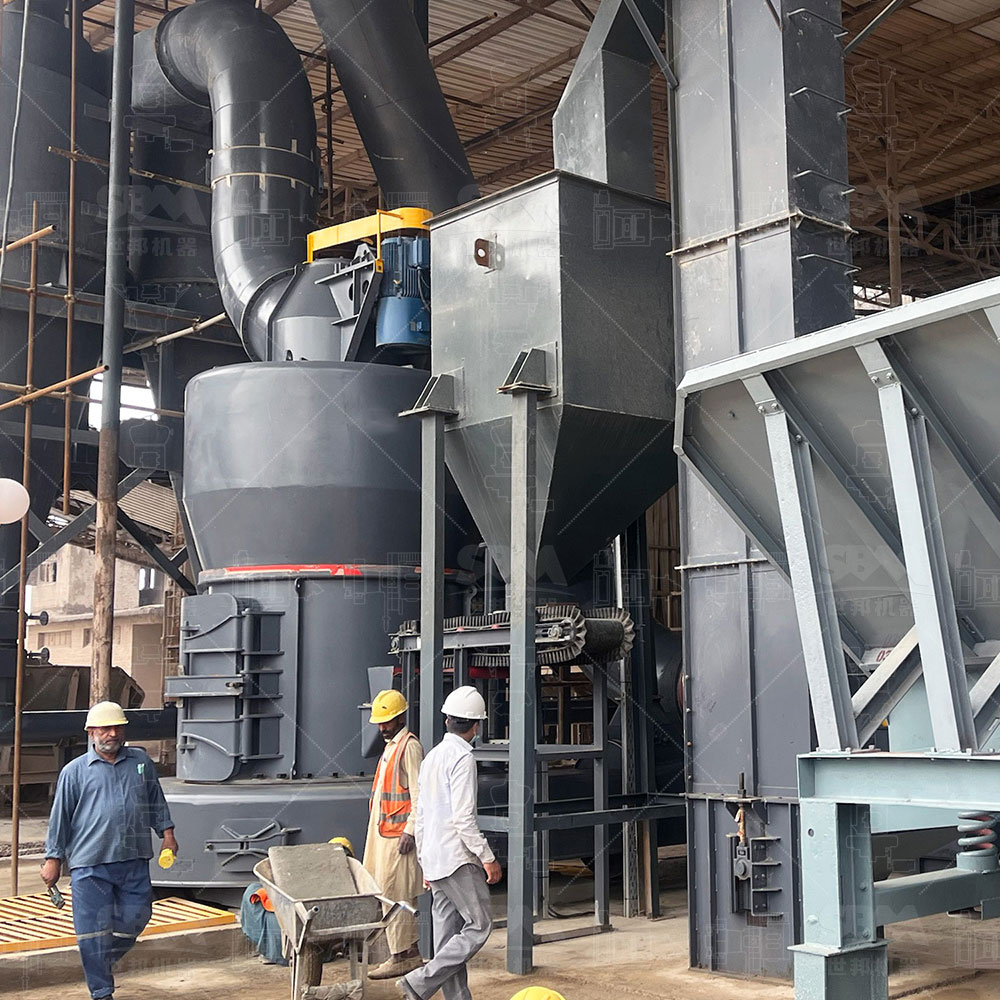
Beyond mechanical and electrical efficiency, the environmental and operational footprint of a mill directly impacts its cost profile. Modern standards require dust-free, low-noise operation, which, if not built into the original design, leads to expensive retrofits. Contemporary mills are designed as sealed systems operating under negative pressure, entirely preventing dust spillage and protecting worker health. Arc air duct designs ensure smooth airflow with minimal resistance, reducing the load on ancillary fans. Furthermore, integrated sound insulation and mufflers keep noise pollution well below regulatory limits, avoiding potential fines and facilitating easier permitting for plant expansion. This holistic design—where environmental protection is integral—future-proofs the investment against increasingly stringent regulations.
Ultimately, the "price" of a superfine mill is best understood as the sum of its capital expenditure and its decade-long operational expenditure. A lower-priced, less efficient unit can quickly become more expensive due to energy bills, frequent part changes, and unplanned stoppages. Investing in a technologically advanced system from an experienced provider like SBM Machinery translates into predictable operating costs, higher uptime, superior product quality commanding better market prices, and compliance that avoids regulatory headaches. The key is to analyze the total grinding solution—its design intelligence, material science, automation level, and system integration—rather than focusing on the invoice figure alone.
Frequently Asked Questions (FAQs)
Q1: Our current mill requires constant monitoring and manual adjustment to maintain product fineness. Is there a solution to reduce labor costs and improve consistency?
A: Yes. Modern mills like the LM Vertical Roller Mill and LUM Ultrafine Vertical Mill are equipped with expert automatic control systems (PLC/DCS). These systems continuously monitor and automatically adjust key parameters such as grinding pressure, feed rate, and classifier speed, ensuring stable output quality with minimal manual intervention, thereby saving significant labor costs.
Q2: We experience rapid wear of grinding rollers and rings, leading to high spare parts costs and frequent downtime. How can this be mitigated?
A: This is a common pain point. Solutions include mills with unique wear-resistant designs and materials. For example, the MTW Mill's curved shovel blade design prolongs the life of the roller and ring. Similarly, vertical roller mills are designed so the roller does not directly contact the grinding plate, and both are made from special, durable alloys, reducing wear and extending service cycles dramatically.
Q3: Energy bills for our grinding operation are unsustainable. What mill technologies offer genuine energy savings?
A: Vertical Roller Mill technology is specifically engineered for high efficiency, typically consuming 30-40% less energy than traditional ball mill systems for the same output. This is achieved through integrated drying/grinding, direct grinding principles, and efficient drive systems like the cone gear whole transmission found in the MTW Mill, which minimizes power loss.
Q4: We need to produce multiple product grades (different fineness) but changeovers are slow and result in a lot of off-spec material.
A: Advanced mills with intelligent, frequency-conversion controlled classifiers solve this issue. The LUM Ultrafine Vertical Mill, for instance, allows quick and stable adjustment of finished product fineness through its multi-rotor classifier and PLC system. This enables fast changeovers with minimal transition material, enhancing flexibility and reducing waste.
Q5: Dust emission and noise levels from our plant are becoming a compliance issue. Can new milling equipment help?
A> Absolutely. Next-generation mills are designed as fully sealed systems operating under negative pressure, ensuring no dust spillage. They also incorporate structural designs for low vibration, along with sound insulation rooms and mufflers (as in the SCM Ultrafine Mill), effectively reducing noise. This built-in environmental protection ensures compliance with strict national and international standards.


