

Price & process of apatite mills
Published on: October 26, 2023
Selecting and operating the optimal grinding mill for apatite processing is a critical decision that directly impacts operational efficiency, product quality, and long-term profitability. This article provides a detailed analysis of the milling process for apatite—a key source of phosphorous—and explores advanced equipment solutions designed to address common industry challenges such as high energy consumption, excessive wear, inconsistent fineness, and environmental compliance. By understanding the technical nuances of different mill types, from vertical roller mills to ultrafine grinding systems, processors can streamline their operations, reduce total cost of ownership, and achieve superior product specifications for fertilizers, chemicals, and industrial applications.
The journey of apatite from raw ore to a marketable powder involves several precise stages, beginning with primary crushing to reduce the feedstock to a manageable size, typically below 50mm. The pre-crushed material is then conveyed to the grinding circuit, which forms the heart of the process. Here, the selection of milling technology becomes paramount. Traditional ball mills, while robust, often struggle with efficiency and wear in hard mineral applications like apatite. Modern solutions, however, integrate drying, grinding, classification, and conveying into a single, cohesive system. For instance, an advanced vertical roller mill can simultaneously dry moist feedstocks using waste heat and grind the material between rollers and a stationary table, significantly reducing the number of auxiliary components and floor space requirements. This integrated approach not only simplifies the process flow but also enhances control over the final product's particle size distribution—a critical factor for downstream chemical reactivity in fertilizer production.
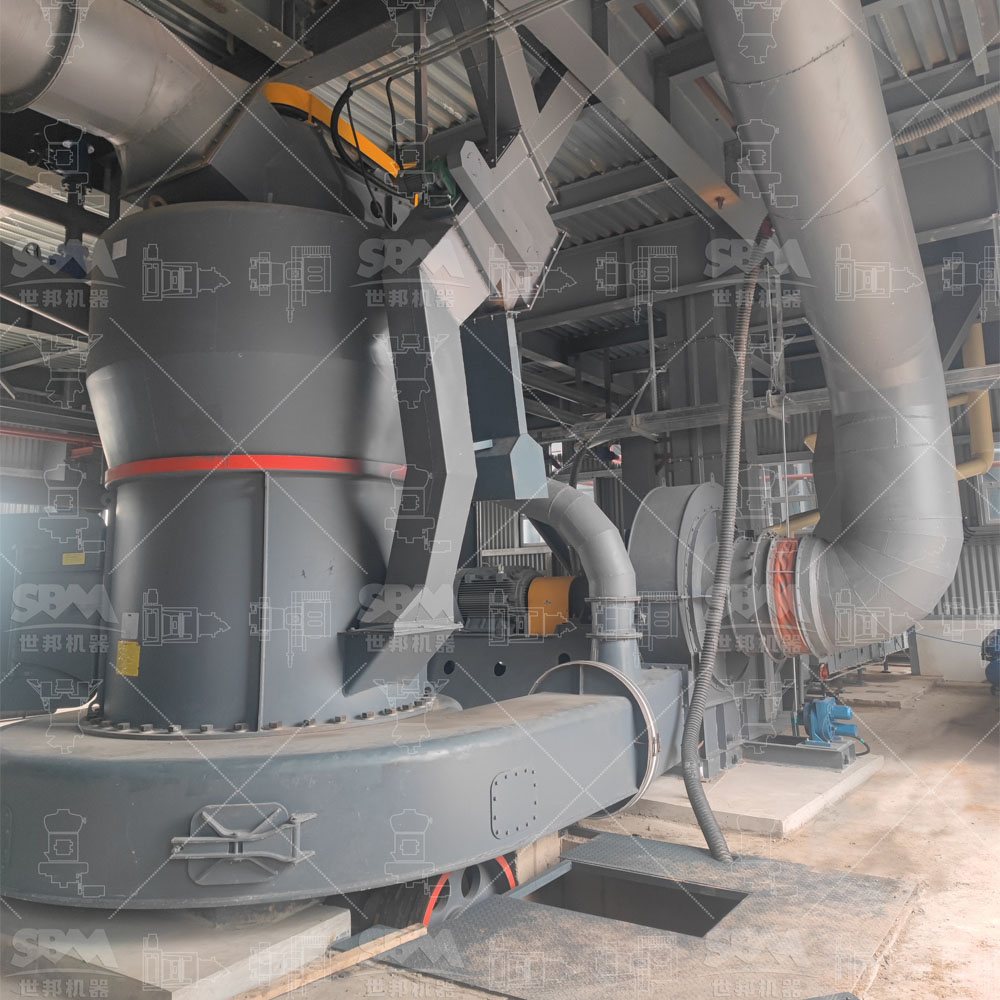 A key consideration in apatite milling is achieving the target fineness, which can range from coarse granules for direct application to ultrafine powders for specialized industrial uses. This is where classifier technology plays a decisive role. High-efficiency, multi-rotor classifiers integrated into mills like the ultrafine vertical mill allow for real-time, precise adjustment of the cut point. This ensures that only particles meeting the specified fineness (e.g., D97 ≤ 5µm) exit the grinding chamber, while oversize material is recirculated for further size reduction. This closed-loop system prevents energy waste on already-fine material and guarantees a consistent, high-quality product batch after batch. Furthermore, intelligent control systems automate this entire process, monitoring parameters such as grinding pressure, classifier speed, and feed rate to maintain optimal performance with minimal manual intervention, directly addressing the pain point of operational complexity and high labor costs.
Operational costs in apatite processing are heavily influenced by wear part longevity and energy consumption. Apatite's abrasive nature can rapidly degrade grinding components in poorly designed mills. Leading equipment addresses this through innovative material science and mechanical design. Features like combined-type, wear-proof shovel blades that can be replaced individually, special alloy rollers and rings with durability several times higher than standard parts, and grinding mechanisms where rollers do not directly contact the plate (as in vertical roller mills) dramatically extend service intervals. Concurrently, structural advancements such as cone gear whole transmission and arc air duct designs minimize mechanical and pneumatic energy losses. When combined with grinding principles that apply pressure directly to the material bed rather than relying on impact alone, these technologies can reduce specific energy consumption by 30% to 40% compared to conventional ball milling systems, offering a compelling answer to the perennial challenge of high power costs.
Finally, no modern apatite processing plant can overlook environmental and safety standards. Dust emission and noise pollution are significant concerns. State-of-the-art mills are engineered as fully sealed systems operating under negative pressure, ensuring that no powder escapes during operation. This is complemented by high-efficiency dust collection systems, such as a combination of powder collectors and pulse jet bag filters, which far exceed international emission standards. Additionally, optimized sound insulation rooms and mufflers are integrated to contain equipment noise, protecting workers and minimizing the facility's environmental footprint. This holistic design philosophy ensures that productivity gains are not achieved at the expense of regulatory compliance or community relations.
_1764951590650.jpg) In conclusion, the process of milling apatite has evolved from a simple, energy-intensive operation to a sophisticated, integrated, and intelligent production line. The core of this evolution lies in selecting equipment that offers not just grinding capability, but a total system solution—encompassing drying, classification, automation, and environmental protection. By partnering with a provider with global experience across over 180 countries, processors gain access to this engineered synergy, transforming the challenging processing of apatite into a reliable, efficient, and sustainable competitive advantage.
In conclusion, the process of milling apatite has evolved from a simple, energy-intensive operation to a sophisticated, integrated, and intelligent production line. The core of this evolution lies in selecting equipment that offers not just grinding capability, but a total system solution—encompassing drying, classification, automation, and environmental protection. By partnering with a provider with global experience across over 180 countries, processors gain access to this engineered synergy, transforming the challenging processing of apatite into a reliable, efficient, and sustainable competitive advantage.
Frequently Asked Questions (FAQs)
Q1: Our current mill for apatite suffers from rapid wear of grinding parts, leading to frequent downtime and high maintenance costs. How can this be mitigated?
A1: This is a common challenge due to apatite's abrasiveness. Solutions include mills with specially designed wear parts, such as combined-type shovel blades where only the blade needs replacement, and the use of special alloy materials for rollers and rings that offer several times the service life of conventional materials. Designs that minimize direct metal-to-metal contact, like in vertical roller mills, also significantly reduce wear rates.
Q2: We need to produce very fine apatite powder (e.g., over 1250 mesh) but our existing equipment cannot achieve consistent fineness or the output is too low. What are our options?
A2: For ultrafine apatite applications, dedicated ultrafine grinding mills are required. These mills integrate advanced, multi-rotor classifier technology that allows precise fineness control up to 4000 mesh, with one-time finished product achieving D97≤5µm. They are engineered for high output and stable product conversion, specifically to meet such demanding specifications.
Q3: Energy consumption is our biggest operational cost. Are there milling solutions specifically designed for higher energy efficiency?
A3: Absolutely. Modern vertical roller mills and European-style trapezium mills are designed with energy efficiency as a core principle. Through integrated functions (drying, grinding, separation), efficient transmission systems like cone gear drives, and grinding mechanics that consume 30-40% less energy than traditional ball mills, they directly target and reduce specific energy consumption per ton of product.
Q4: Our plant space is limited. Can a complete grinding system be compact?
A4: Yes. Integrated mill systems, particularly vertical roller mills, have a significantly smaller footprint—often about 50% of an equivalent ball mill system. Their design consolidates multiple process steps into a single unit, allowing for outdoor installation and a much more compact plant layout, which reduces civil engineering costs.
Q5: How can we ensure our apatite milling process meets strict environmental regulations on dust and noise?
A5: Leading grinding systems are designed as fully sealed, negative-pressure operations, inherently preventing dust spillage. They are paired with high-efficiency dust collection systems that exceed international standards. For noise, integrated design features like optimized sound insulation chambers and mufflers effectively contain equipment noise, ensuring compliance with environmental and workplace safety regulations.


