

Price of new model grinding mills
Published on: October 26, 2023
The evolution of grinding technology is driven by the relentless pursuit of higher efficiency, lower operational costs, and superior product quality. For industries ranging from power generation and cement production to advanced materials and non-metallic minerals, the selection of a grinding mill is a critical capital decision with long-term implications for productivity and profitability. Modern grinding solutions must address core client pain points: excessive energy consumption, high wear part replacement costs, complex maintenance routines, inconsistent product fineness, and stringent environmental compliance. This article explores the technological advancements embodied in the latest generation of grinding equipment, designed not merely as incremental upgrades but as holistic systems engineered to transform these operational challenges into competitive advantages.
The grinding process is the heart of many industrial operations, yet traditional equipment often becomes a bottleneck. Legacy systems, particularly older ball mill designs, are frequently characterized by significant energy waste—with a substantial portion of power consumed not in productive grinding but in overcoming mechanical friction and heat generation. Furthermore, the frequent downtime required for replacing worn grinding media and liners leads to unpredictable production schedules and escalating maintenance budgets. Environmental regulations add another layer of complexity, demanding near-zero dust emissions and lower noise levels, which many conventional mills struggle to achieve without costly auxiliary systems.
In response to these universal challenges, the latest engineering philosophy focuses on integrated system design. A prime example is the modern Vertical Roller Mill (VRM). This technology represents a paradigm shift by consolidating multiple functions—drying, grinding, classifying, and conveying—into a single, compact unit. Its core advantage lies in its direct grinding principle: rollers press onto a rotating grinding table, applying pressure to the material bed. This method is inherently more energy-efficient than the impact and attrition of tumbling balls, typically reducing specific energy consumption by 30% to 40%. The system's sealed, negative-pressure operation inherently controls dust, while its compact footprint can reduce plant layout space by approximately 50% compared to a traditional ball mill circuit.
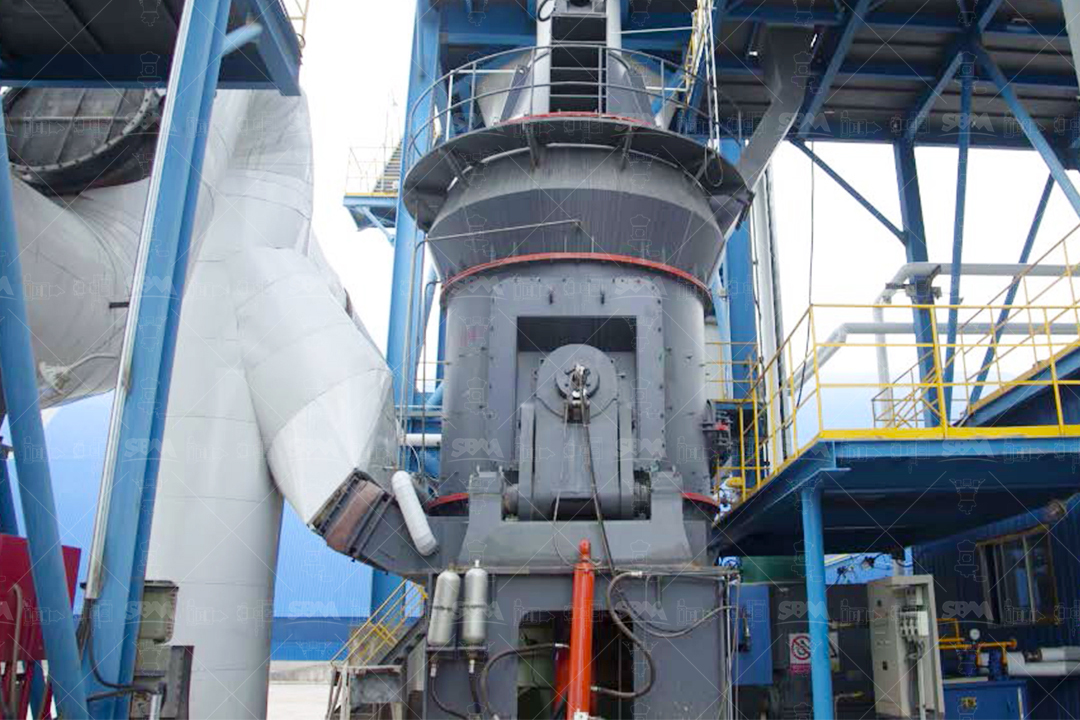
For applications demanding ultra-fine powders, the technological leap is even more pronounced. The SCM Series Ultrafine Mill and LUM Ultrafine Vertical Mill are engineered to achieve fineness levels up to 4000 mesh, a range far beyond the capability of standard Raymond mills. Key to their performance is advanced classification technology. High-efficiency turbo classifiers ensure precise particle size cuts, eliminating coarse powder spillover and guaranteeing consistent product quality. These mills incorporate intelligent control systems that automatically adjust key parameters like grinding pressure and classifier speed, ensuring stable operation and direct savings on labor costs. Their environmental credentials are robust, featuring efficient pulse dust collectors and sound insulation designs that keep noise and emissions well within international standards.
Even established technologies like the trapezium mill have been re-engineered for the modern era. The MTW Series European Trapezium Grinding Mill incorporates patent-pending innovations such as a cone gear whole transmission system. This design enhances mechanical efficiency, reduces energy loss, and minimizes the spatial requirements for the drive assembly. Another critical feature is the arc air flue design, which optimizes airflow within the mill to reduce resistance and improve material conveying efficiency, directly lowering the power draw of the system's fan. For maintenance teams, the combined-type shovel blade is a breakthrough; only the worn blade itself needs replacement, not the entire carrier, drastically reducing spare part costs and downtime.
The common thread across all these new models is the strategic application of smart technology. Automated control systems are no longer an optional extra but a standard feature. These PLC/DCS-based systems enable remote monitoring and operation, allowing for precise control over the grinding process. They facilitate expert system functions like automatic start-up sequencing, real-time adjustment based on feed rate and hardness, and predictive maintenance alerts. This level of automation translates directly into operational resilience—minimizing human error, optimizing throughput, and ensuring the mill operates consistently at its peak designed efficiency.

Ultimately, the "price" of a new model grinding mill must be evaluated through the lens of Total Cost of Ownership (TCO). While the initial capital investment is a consideration, the defining value is unlocked over the equipment's lifecycle through relentless energy savings, dramatically reduced consumption of wear parts, minimal maintenance intervention, and guaranteed compliance that avoids regulatory penalties. The latest generation of mills from industry leaders is not just about grinding material finer; it's about grinding smarter—transforming raw mineral into profit with unprecedented efficiency and reliability.
Frequently Asked Questions (FAQs)
Q1: Our current ball mill consumes an enormous amount of electricity. Can new mills genuinely deliver significant energy savings?
A: Absolutely. Modern designs like Vertical Roller Mills and advanced trapezium mills are engineered for direct, efficient grinding with minimized mechanical loss. It is common to achieve a 30-40% reduction in specific energy consumption compared to traditional ball milling systems, leading to substantial cost savings over time.
Q2: We face frequent production stoppages due to the wear and replacement of grinding rollers and rings. How do new models address this?
A: New mills utilize special high-alloy materials for grinding components and innovative designs like curved shovel blades and optimized grinding curves. These features promote a material bed that cushions contact, reducing abrasive wear. Some models report a several-fold increase in component service life, drastically cutting downtime and spare parts costs.
Q3: Achieving consistent, high fineness (e.g., over 2500 mesh) is a major challenge. Are new ultrafine mills reliable for such demanding specifications?
A: Yes. Ultrafine vertical mills and SCM series mills integrate high-precision, multi-rotor powder classifiers. This technology allows for accurate particle size cuts and customization within a wide range (325-4000 mesh). The systems ensure stable product fineness with no coarse powder spillover, meeting strict quality requirements for advanced industries.
Q4: Environmental compliance is a growing concern. How do these mills manage dust and noise pollution?
A: Modern mills are designed as fully sealed systems operating under negative pressure, which prevents dust escape. They are equipped with high-efficiency bag filter and pulse dust collection systems. Furthermore, optimized mechanical designs, sound insulation chambers, and mufflers effectively control operational noise, ensuring compliance with stringent national and international environmental standards.
Q5: We have a limited plant footprint. Are these high-capacity systems feasible for space-constrained sites?
A: Integrated system design is a key advantage. Vertical Roller Mills, for instance, combine multiple processes into one unit, requiring about 50% of the floor space of a conventional ball mill system. Their compact and rational layout, with potential for outdoor installation, makes them an excellent solution for space optimization and plant expansion projects.


