

Optimal feed size for superfine mills
Published: October 26, 2023
In superfine grinding operations, achieving the optimal feed size is a critical determinant of mill efficiency, product quality, and operational cost. This parameter directly influences energy consumption, wear rates, throughput capacity, and the ability to reach target fineness. For equipment like vertical roller mills, ultrafine mills, and advanced trapezium mills, adhering to manufacturer-recommended feed size specifications is not merely a guideline but a fundamental requirement for unlocking the full technological potential of the machinery. This article explores the importance of optimal feed size, its impact on different mill types, and how modern engineering solutions from providers like SBM Machinery are designed to manage feed material effectively, ensuring stable operation and superior product outcomes in applications ranging from heavy calcium carbonate to new energy materials.
The significance of feed size begins with the first principle of comminution: the work required to reduce a particle is inversely related to its size. Feeding oversized material into a superfine mill forces the grinding elements to perform excessive work, leading to disproportionately high energy draw, accelerated wear of rollers, rings, and liners, and potential bottlenecks in material transport and classification within the mill. Conversely, feed material that is already excessively fine may bypass the optimal grinding zone, leading to inefficient utilization of grinding energy and possible issues with material bed formation in vertical roller mills. Therefore, identifying and maintaining the 'sweet spot' for feed size is paramount.
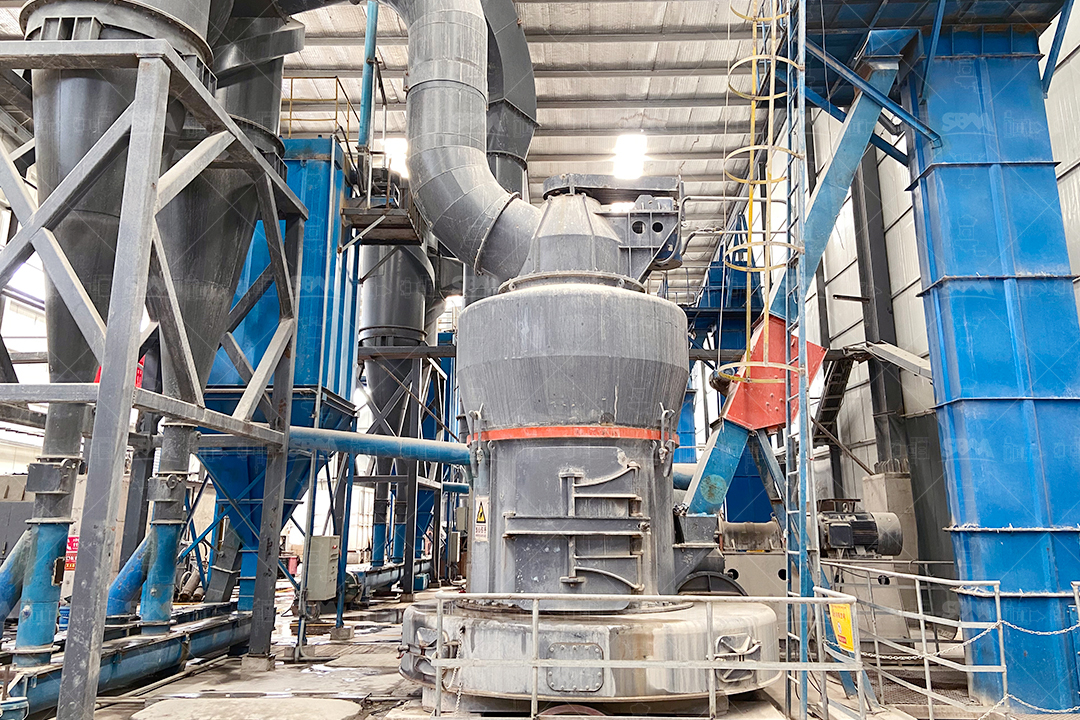 Different mill architectures have distinct optimal feed size ranges based on their grinding mechanisms. For instance, the MTW Series European Trapezium Grinding Mill, with its robust design and cone gear whole transmission, is engineered to handle a feed size of 0-50mm effectively. Its combined-type shovel blade is designed to lift and feed material of this caliber efficiently onto the grinding ring, optimizing the angle of entry to promote stable grinding and extend the service life of wear parts. Pushing beyond this limit risks overloading the shovel system and causing uneven roller wear.
Vertical roller mills, such as the LM Vertical Roller Mill and the LUM Ultrafine Vertical Mill, integrate multiple functions—drying, grinding, and separation. Their efficiency hinges on forming a stable, grindable material bed on the grinding plate. The recommended feed size of 0-50mm for the LM series and 0-20mm for the LUM series is calibrated to achieve this. Material within this range is easily gripped by the rollers and ground efficiently. The intelligent automatic control system in these mills can adjust grinding pressure and classifier speed in real-time, but its effectiveness is maximized when the feed size is consistent and within specification, ensuring smooth operation and low energy consumption—reportedly 30-40% lower than traditional ball milling systems.
For ultra-fine applications demanding products from 325 to 4000 mesh, the SCM Ultrafine Mill and LUM Ultrafine Vertical Mill require a finer initial feed, typically 0-20mm. This precondition is crucial because the grinding elements (rollers, rings) and the high-efficiency turbine classifiers in these mills operate at extreme precision. Oversized feed can damage the delicate grinding surfaces, unbalance the rotor, and overwhelm the classifier, leading to coarse powder spillover and an inability to achieve the target fineness of D97≤5μm. The heavy rotor design and tight manufacturing tolerances in these mills perform best with properly prepared feed, ensuring high output, low energy consumption, and stable, vibration-free operation.
_1765092094835.jpg) A common challenge arises when raw material from crushers or other pre-processing stages exhibits excessive variation or is consistently out of spec. This is a frequent customer pain point that leads to chronic underperformance. The solution often lies in viewing the grinding mill not as an isolated unit but as part of a total system. Expertise in the entire mineral processing workflow allows for the recommendation of integrated pre-crushing or screening solutions to ensure the mill consistently receives optimal feed. This systems approach prevents the superfine mill from becoming a bottleneck and protects the investment in advanced grinding technology.
A common challenge arises when raw material from crushers or other pre-processing stages exhibits excessive variation or is consistently out of spec. This is a frequent customer pain point that leads to chronic underperformance. The solution often lies in viewing the grinding mill not as an isolated unit but as part of a total system. Expertise in the entire mineral processing workflow allows for the recommendation of integrated pre-crushing or screening solutions to ensure the mill consistently receives optimal feed. This systems approach prevents the superfine mill from becoming a bottleneck and protects the investment in advanced grinding technology.
Furthermore, the optimal feed size is intrinsically linked to the desired product fineness and capacity. A mill configured for 4000-mesh output will have different feed size tolerances compared to one targeting 400-mesh powder. SBM's mills, with their advanced separation technologies like multi-rotor powder classifiers, allow for precise fineness customization. However, this precision is fully realized only when the feed size is controlled, enabling the classifier to make accurate cuts without being burdened by an overly wide range of input particle sizes.
In conclusion, the optimal feed size is a foundational operational parameter that dictates the economic and technical success of superfine grinding. It is a key factor in achieving the promised benefits of modern mills: high efficiency, low wear, stable operation, and exceptional product quality. By selecting equipment with clearly defined and appropriate feed size ranges for the application, and by ensuring upstream processes are designed to meet these specifications, operators can maximize productivity, minimize operating costs, and ensure their grinding operations meet the stringent demands of today's markets for non-metallic minerals, environmental desulfurization, and advanced materials.
Frequently Asked Questions (FAQs)
- What happens if we consistently feed material larger than the recommended size into our ultrafine mill?
Feeding oversized material forces the grinding rollers and rings to work harder, causing significantly accelerated wear, increased energy consumption, and potential blockages. It can also overwhelm the classifier, resulting in unstable operation, increased vibration, and failure to achieve the target product fineness, ultimately raising maintenance costs and reducing throughput. - Can the mill's automation system compensate for variations in feed size?
While advanced control systems (like PLC/DCS) can adjust grinding pressure and classifier speed to some degree, they cannot fully compensate for wildly inconsistent or out-of-spec feed size. Optimal automation performance and system stability are achieved when the feed size is consistently within the manufacturer's specified range. - We need to process a variety of materials with different hardness. Does the optimal feed size change?
Yes, material hardness is a critical factor. For harder materials, a slightly smaller initial feed size is often advisable to reduce stress on grinding components and maintain efficiency. It is essential to consult with grinding experts to adjust operational parameters, including feed size, for different material characteristics. - How can we ensure a consistent optimal feed size for our grinding plant?
Implementing a reliable pre-crushing and screening circuit before the superfine mill is the most effective method. This may involve jaw crushers, hammer mills, or pre-grinders configured to deliver a consistent top-size product. A total solution provider can design this integrated system to ensure your mill receives ideal feed. - Is a smaller feed size always better for grinding efficiency?
Not necessarily. While too large is detrimental, feed material that is already too fine may not form a proper grinding bed in vertical roller mills, leading to slippage and inefficient energy use. The goal is to target the manufacturer's recommended range, which balances efficient size reduction with stable mill mechanics and material flow.


