

Types of stone powder processing equipment
Published on: October 26, 2023
The selection of appropriate stone powder processing equipment is a critical decision that directly impacts operational efficiency, product quality, and long-term profitability. For industries ranging from construction and mining to chemicals and new energy materials, the right grinding solution must balance throughput, fineness, energy consumption, and system footprint. This article explores the core types of advanced grinding mills, detailing their operational principles, technical advantages, and ideal applications. By understanding the distinct capabilities of each machine—from high-capacity vertical roller mills to precision ultrafine grinders—operators can make informed choices that address common production pain points such as high wear costs, excessive energy use, and inconsistent particle size distribution, ultimately optimizing their entire powder processing workflow.
In the realm of mineral processing, one size does not fit all. The diversity of raw materials—from limestone and calcite to slag and petroleum coke—demands an equally diverse range of grinding technologies. Modern processing lines require equipment that is not only powerful and precise but also intelligent and environmentally compliant. The evolution from traditional ball mills to sophisticated, integrated systems represents a significant leap in addressing the core challenges of the industry: achieving higher output with lower operational costs and a reduced environmental footprint.
_1765437924683.jpg)
MTW Series European Trapezium Grinding Mill
Building upon decades of research and feedback from thousands of global installations, the MTW Series European Trapezium Grinding Mill represents a refined evolution of the classic Raymond mill. It is engineered for robust, medium-to-fine grinding applications where reliability and cost-effective operation are paramount. Its design philosophy centers on reducing lifetime operating expenses through innovative mechanical solutions.
Key technical differentiators include its cone gear whole transmission system, which enhances power transfer efficiency while saving space. The inner oil absorption lubrication system ensures smooth operation with minimal maintenance. A standout feature is the combined-type, curved shovel blade. This unique design allows for easy replacement of only the wear-prone blade section, drastically cutting down on spare parts costs and downtime. Furthermore, the arc air flue design minimizes pneumatic resistance and energy loss during powder conveying, improving overall system efficiency. This mill is exceptionally suited for environmental desulfurization limestone powder preparation, large-scale non-metallic mineral processing, and coal powder preparation, offering a stable output ranging from 30 to 400 mesh.
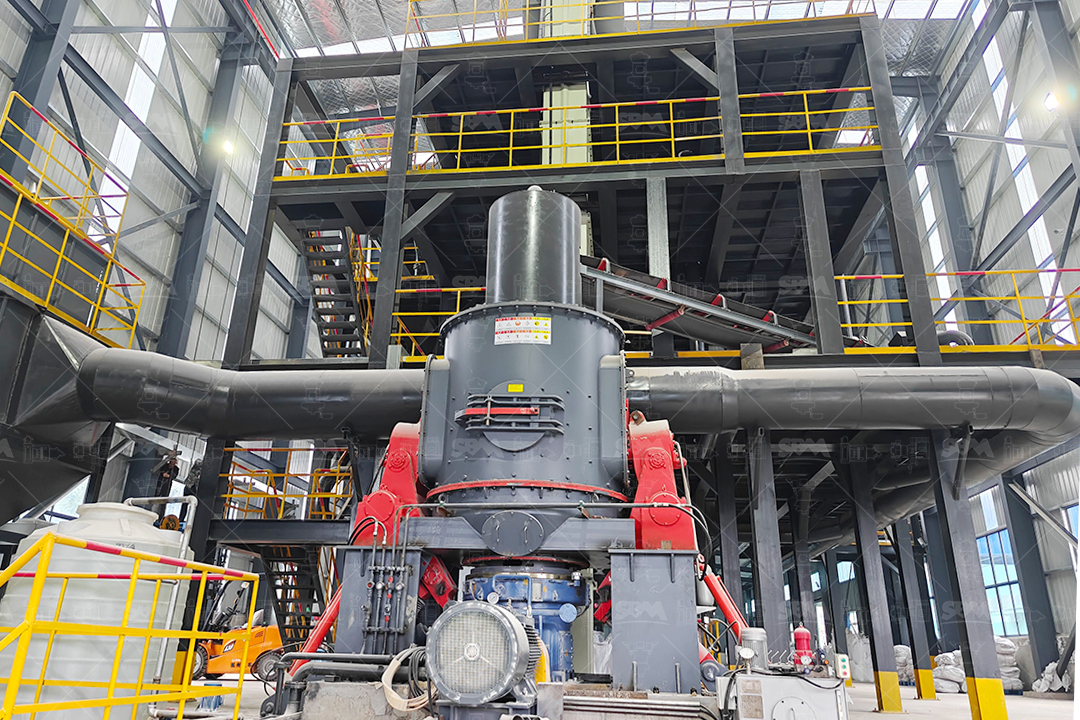
LM Vertical Roller Mill
When project constraints involve high capacity requirements within a limited space, the LM Vertical Roller Mill emerges as a transformative solution. It directly tackles the historical issues of low output and high energy consumption associated with conventional systems. By integrating the functions of crushing, drying, grinding, classification, and conveying into a single, cohesive unit, it simplifies the entire process flow.
The most compelling advantage is its significantly reduced footprint, approximately 50% smaller than a traditional ball mill circuit, allowing for outdoor installation and substantial civil work savings. Operating costs are lowered through two primary mechanisms: remarkably low wear due to the non-contact grinding principle between rollers and table, and high grinding efficiency that consumes 30-40% less energy than ball milling systems. An integrated expert automatic control system enables seamless remote operation and process optimization. Operating under negative pressure, the fully sealed system guarantees dust-free operation, meeting stringent environmental standards. With a capacity range extending up to 400 TPH, it is the mainstream choice for cement, chemical, and large-scale slag micro-powder production.
SCM Ultrafine Mill & LUM Ultrafine Vertical Mill
For applications demanding ultra-high fineness and superior product quality, such as advanced fillers, masterbatch, or functional materials, specialized ultrafine grinding equipment is essential. The SCM Ultrafine Mill is designed to produce powders in the range of 325 to 2500 mesh, achieving a primary classification fineness of D97≤5μm. It outperforms traditional jet mills in both output and energy efficiency, offering more than double the capacity while reducing energy consumption by approximately 30%. Its heavy-duty rotor design and special material rollers ensure extended durability and stable, vibration-free operation.
Taking ultrafine processing a step further, the LUM Ultrafine Vertical Mill incorporates advanced grinding roller and German powder separation technologies. Its core innovation lies in the specially designed grinding curve of the roller and liner, which promotes stable material bed formation for more efficient primary grinding. The multi-rotor powder classifier allows for precise, customizable fineness control from 325 to 4000 mesh, ensuring a consistently high-quality product with no coarse particle spillover. Like its larger LM sibling, it features intelligent PLC control for grinding pressure and classifier speed, ensuring stable operation and simple remote management. This mill is the professional choice for processing calcite, marble, talc, barite, and other non-metallic minerals into high-value-added products.
Optimized Ball Mill
While mature technology, the traditional ball mill often faces criticism for high media wear and energy intensity. Modern optimized ball mills address these pain points through structural refinements and the use of advanced wear-resistant materials. These improvements significantly lower the frequency and cost of spare part replacement. Available in both dry and wet process configurations, they remain a versatile and cost-effective solution for applications where producing powders in the 0.2-0.074mm (approximately 75-200 mesh) range is sufficient, such as in common mineral dressing operations or certain construction material preparations.
Conclusion
Navigating the landscape of stone powder processing equipment requires a clear understanding of both material characteristics and production goals. From the high-volume, integrated processing of the LM Vertical Roller Mill to the precision ultrafine grinding of the LUM series, each technology offers a targeted solution to specific industrial challenges. The common thread across SBM's portfolio is a focus on reducing total cost of ownership—through lower energy consumption, decreased wear part costs, automated operation, and environmentally sound design. By partnering with a total solution provider, producers can implement a grinding system that not only meets today's output targets but also remains adaptable and efficient for the demands of tomorrow.
Frequently Asked Questions (FAQ)
- We struggle with high energy bills from our grinding plant. Which equipment type typically offers the most significant energy savings?
Vertical Roller Mills (like the LM series) are specifically engineered for high grinding efficiency, often reducing energy consumption by 30-40% compared to traditional ball mill systems, due to their direct grinding principle and integrated design. - Our main pain point is the frequent downtime and high cost for replacing worn grinding parts. Is there a solution?
Yes. The MTW European Trapezium Mill features a unique combined-type shovel blade where only the blade tip needs replacement, slashing parts costs. Similarly, Vertical and Ultrafine Mills use wear-resistant materials and non-contact grinding designs to extend roller and liner life dramatically. - We need to produce very fine powder (over 2500 mesh) consistently. Is general grinding equipment sufficient?
For consistent ultra-fine results beyond 2500 mesh, general mills are not adequate. Purpose-built equipment like the SCM Ultrafine Mill or LUM Ultrafine Vertical Mill, with their advanced classification systems (e.g., multi-rotor classifiers), are necessary to achieve and maintain such high fineness without coarse powder contamination. - Dust emission control is a major concern for our factory's environmental compliance. How do these mills address this?
Modern mills, particularly the Vertical Roller and Ultrafine series, are designed as fully sealed systems that operate under negative pressure. This design inherently prevents dust spillage. They are often equipped with efficient pulse dust collectors, ensuring emissions easily meet national environmental standards. - We have limited factory space but need to increase capacity. Are there compact grinding system options?
Absolutely. The LM Vertical Roller Mill is an ideal choice as it integrates multiple processing steps into one unit, typically requiring about 50% of the floor space of a conventional ball mill system. Its compact layout often allows for outdoor installation, freeing up valuable indoor space.


