

Mills for 200 mesh barite
Published: October 26, 2023
Producing high-quality 200-mesh barite powder efficiently and consistently presents significant challenges for processors, including achieving precise particle size distribution, managing high energy consumption, and controlling operational costs. Shanghai SBM Machinery Equipment Co., Ltd. addresses these industry pain points with a portfolio of advanced grinding solutions engineered for non-metallic minerals like barite. This article explores the technical merits of SBM's MTW European Trapezium Mill, LM Vertical Roller Mill, and Ultrafine Vertical Mill for this specific application, detailing how their innovative designs in transmission, grinding geometry, and classification ensure optimal throughput, superior product quality, and enhanced operational sustainability for barite processing plants worldwide.
The journey to a perfect 200-mesh barite product begins with selecting the right mill technology. Barite, or baryte, is a dense mineral requiring efficient comminution to reach the desired fineness for its primary uses in oil and gas drilling fluids, paints, plastics, and coatings. A mill must not only achieve the target particle size but do so with minimal over-grinding (which wastes energy) and with consistent output quality. SBM's engineers have developed several mill series, each with distinct advantages, to meet the varied capacity and operational requirements of barite processors.
For many operations targeting the 200-mesh range with capacities up to 40 tph, the MTW Series European Trapezium Grinding Mill represents a robust and proven solution. Its evolution from traditional Raymond mill designs incorporates critical customer feedback, resulting in features that directly tackle common grinding headaches. The patented Cone Gear Whole Transmission system is a standout, eliminating traditional vulnerable components like reducers and couplings. This integrated design delivers higher transmission efficiency, reduces space requirements, and lowers long-term maintenance risks and costs—a direct answer to downtime concerns.
_1765556352127.jpg)
Furthermore, the MTW mill's unique wear-proof shovel blade design significantly impacts operating expenses. The curved, combined-type blades efficiently feed material onto the grinding ring while being easily replaceable at a low cost, sparing the more expensive roller assemblies from premature wear. Coupled with the arc air duct design that minimizes air flow resistance and energy loss, this mill ensures stable material conveyance and classification within the circuit, guaranteeing a consistent 200-mesh output with improved yield.
For larger-scale barite production demanding higher throughput, often exceeding 40 tph and up to 400 tph, the LM Vertical Roller Mill emerges as the technology of choice. Its core strength lies in integration and efficiency. By combining crushing, grinding, drying, classification, and conveying into a single, compact unit, it slashes the plant's footprint by approximately 50% compared to traditional ball mill systems. This integrated approach translates to smaller comprehensive investment in auxiliary equipment, foundation, and building structures.
The grinding principle of the LM mill, where rollers hydraulically press onto a rotating grinding table, is inherently more energy-efficient than impact or tumbling methods. The direct grinding on the bed of material leads to 30-40% lower energy consumption than ball mills for the same output—a critical factor given that power is often the single largest operational cost in grinding. Additionally, the non-contact design between rollers and table (separated by the material bed) and the use of high-quality wear materials result in exceptionally low wear rates, further reducing operating costs and enhancing availability.
When product specifications call for extremely tight control at 200 mesh or when processors aim to produce even finer barite powders for high-value applications, SBM's LUM Ultrafine Vertical Mill and SCM Ultrafine Mill offer advanced capabilities. While capable of reaching 2500 mesh, these mills excel in the 200-400 mesh range through precision engineering. The LUM mill, for instance, features specially designed grinding curves on its roller and liner to promote stable material bed formation, ensuring efficient primary grinding and a high yield of on-spec product from the first pass.
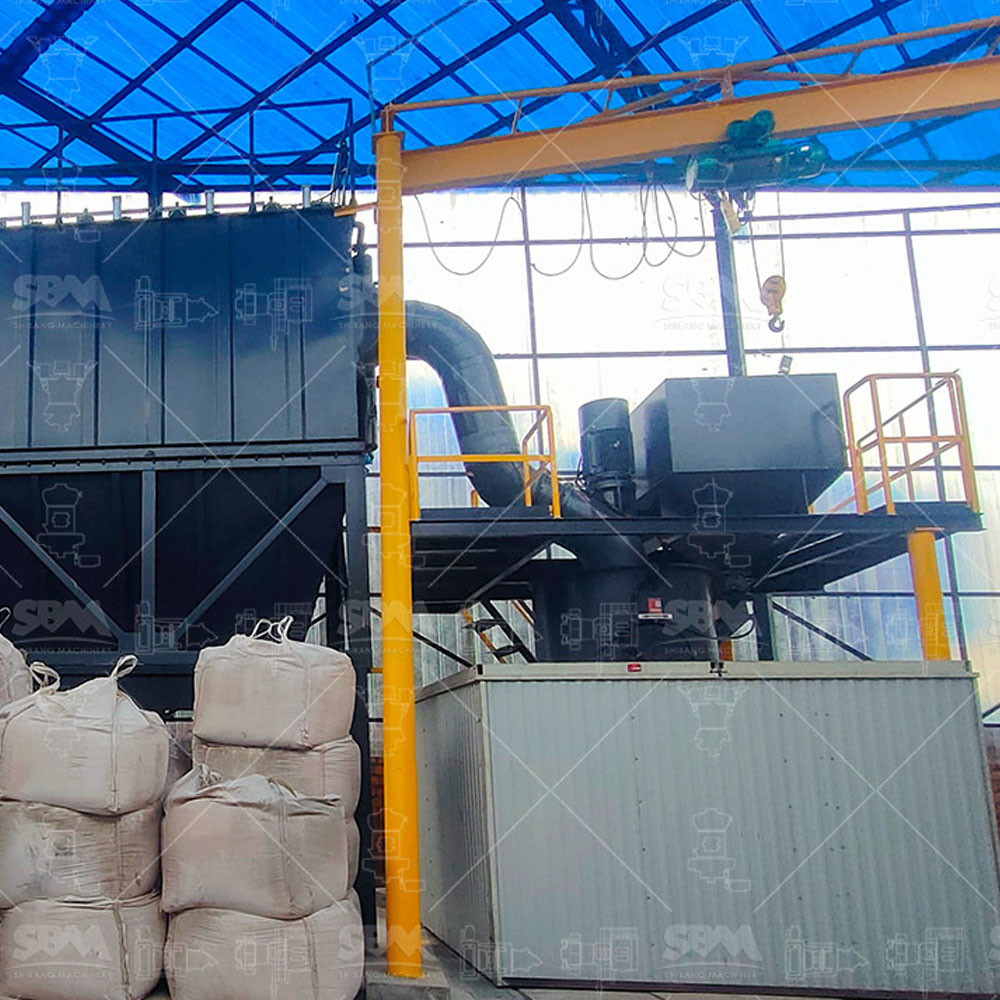
A key differentiator is the advanced multi-rotor powder classifier technology. This system allows for precise, stepless adjustment of the cut point, ensuring the final product contains no oversize or low-grade coarse particles. The integration of a PLC/DCS automatic control system enables remote monitoring and adjustment of critical parameters like grinding pressure and classifier speed, stabilizing fineness at 200 mesh despite variations in feed material. This level of automation directly addresses the pain point of manual intervention and product inconsistency.
Across all SBM mill series, environmental and operational stability are paramount. Fully sealed systems operating under negative pressure prevent barite dust escape, protecting worker health and meeting stringent environmental standards. Innovations like inner oil absorption lubrication, optimized sound insulation, and low-vibration designs contribute to cleaner, quieter, and more reliable plant operations. For over 180 countries, SBM's role as a total solution provider means supporting barite processors from system design and commissioning through to ongoing optimization, ensuring their investment delivers the precise 200-mesh product their markets demand, efficiently and profitably.
Frequently Asked Questions (FAQs)
- We often experience rapid wear of grinding parts when processing abrasive minerals like barite. How do SBM mills address this?
SBM mills incorporate several anti-wear strategies. The MTW series uses easily replaceable, curved shovel blades and hardened rollers/rings. The LM and LUM vertical mills utilize high-quality wear-resistant materials for rollers and tables and employ a grinding principle where the roller does not directly contact the table, significantly extending service life and reducing spare part costs. - Energy costs are crippling our operation. Can your mills genuinely reduce power consumption for 200-mesh barite production?
Yes, significantly. The LM Vertical Roller Mill is designed to be 30-40% more energy-efficient than a traditional ball mill system for the same output due to its direct bed-grinding principle. The MTW mill's efficient transmission and aerodynamic duct design also minimize energy losses. Lower kWh per ton is a core design objective across our portfolio. - Maintaining consistent 200-mesh fineness is challenging with fluctuating feed material. How is consistency ensured?
Advanced automatic control systems (PLC/DCS) in mills like the LUM and LM series continuously monitor and adjust key parameters such as grinding pressure, classifier speed, and feed rate in real-time. This intelligent feedback loop compensates for feed variations, stabilizing product fineness without constant manual adjustment. - Dust control in our barite grinding plant is a major environmental and housekeeping issue. Are your mills sealed?
Absolutely. All SBM grinding systems are designed as fully sealed circuits that operate under negative internal pressure. This means any leakage is inward, not outward, effectively containing barite dust. This is complemented by efficient bag filter or pulse dust collectors, ensuring emissions meet strict international standards. - We have limited plant space. Are these systems compact?
The integrated design of the LM and LUM Vertical Roller Mills is particularly space-saving. By combining multiple process steps into one unit, their footprint can be about 50% smaller than a conventional ball mill system with equivalent capacity. They can also be arranged outdoors, further saving on building costs.


