

Technical innovations in superfine mills
Published: October 26, 2023
The relentless pursuit of finer particle sizes, higher throughput, and lower operational costs has driven significant technological evolution in superfine grinding equipment. For industries ranging from power generation and construction materials to advanced chemicals and new energy materials, the efficiency of the milling process is a critical determinant of product quality and profitability. This article explores the core technical innovations embedded within modern superfine mills, examining how integrated system design, advanced material science, and intelligent control are solving long-standing industrial challenges. By focusing on key advancements in transmission systems, grinding mechanics, classification technology, and environmental integration, we will illustrate how next-generation mills are delivering unprecedented levels of performance, reliability, and sustainability, transforming raw materials into high-value powders with precision and efficiency.
The foundation of any high-performance grinding system lies in its mechanical design and transmission efficiency. Traditional mills often suffered from energy losses through inefficient gear systems and lubrication challenges. A pivotal innovation addressing this is the Cone Gear Whole Transmission system, as implemented in advanced trapezium mills. This integrated bevel gear design eliminates the need for a separate reducer and coupling, creating a direct, compact power transmission path. The result is a significant leap in transmission efficiency, often exceeding 96%, which directly translates to lower energy consumption per ton of processed material. This design not only saves valuable floor space—reducing the footprint of the entire grinding line—but also minimizes potential failure points, enhancing overall system reliability and reducing long-term investment in auxiliary components.
_1765696989202.jpg)
Parallel to transmission innovation is the revolution in grinding mechanics and wear management. The extreme abrasiveness of materials like slag, petroleum coke, or heavy calcium carbonate traditionally led to rapid wear of grinding components, causing frequent downtime and high spare parts costs. Modern mills combat this through multi-faceted approaches. One is the Unique Wear-Proof Perching Knife Design, featuring combined-type, curved shovel blades. This design optimizes the feeding angle, guiding material smoothly onto the grinding bed and reducing direct, abrasive impact on the roller and ring. Crucially, only the shovel blade tip requires replacement during maintenance, slashing the cost and time associated with wearing part renewal. Furthermore, the application of special alloy materials for rollers and rings, developed through extensive metallurgical research, extends service life by several multiples compared to conventional materials, dramatically lowering operating costs.
The quest for higher fineness, particularly in the sub-10-micron and even micron range, has been met by breakthroughs in classification and system integration. While traditional ball mills or Raymond mills struggled to efficiently produce and separate ultrafine powders, new-generation vertical roller mills and specialized ultrafine mills integrate high-efficiency turbine classifiers or multi-rotor powder selectors. These classifiers operate on advanced aerodynamic principles, enabling precise cut-point control and ensuring no coarse powder spillover into the final product. For instance, in ultrafine vertical mills, the integration of Germany-derived powder separating technology allows fineness to be steplessly adjusted from 325 to over 4000 mesh, with a one-time finished product achieving D97 ≤ 5µm. This precision eliminates the need for repeated grinding cycles, boosting yield and conserving energy.
System design philosophy has also shifted from assembling discrete units to creating cohesive, intelligent grinding circuits. The Vertical Roller Mill (VRM) epitomizes this trend by integrating crushing, drying, grinding, classification, and conveying into a single, compact unit. This holistic approach reduces the plant's spatial footprint by approximately 50% compared to a traditional ball mill system. The inherent efficiency of the VRM's grinding principle—where rollers press directly onto a rotating disc—consumes 30% to 40% less energy than ball milling systems. This integration is managed by an Expert Automatic Control System based on PLC/DCS platforms. This system enables remote monitoring and operation, automatically adjusting key parameters like grinding pressure, mill speed, and classifier rotation to maintain optimal conditions, ensuring stable product quality while minimizing labor intervention.
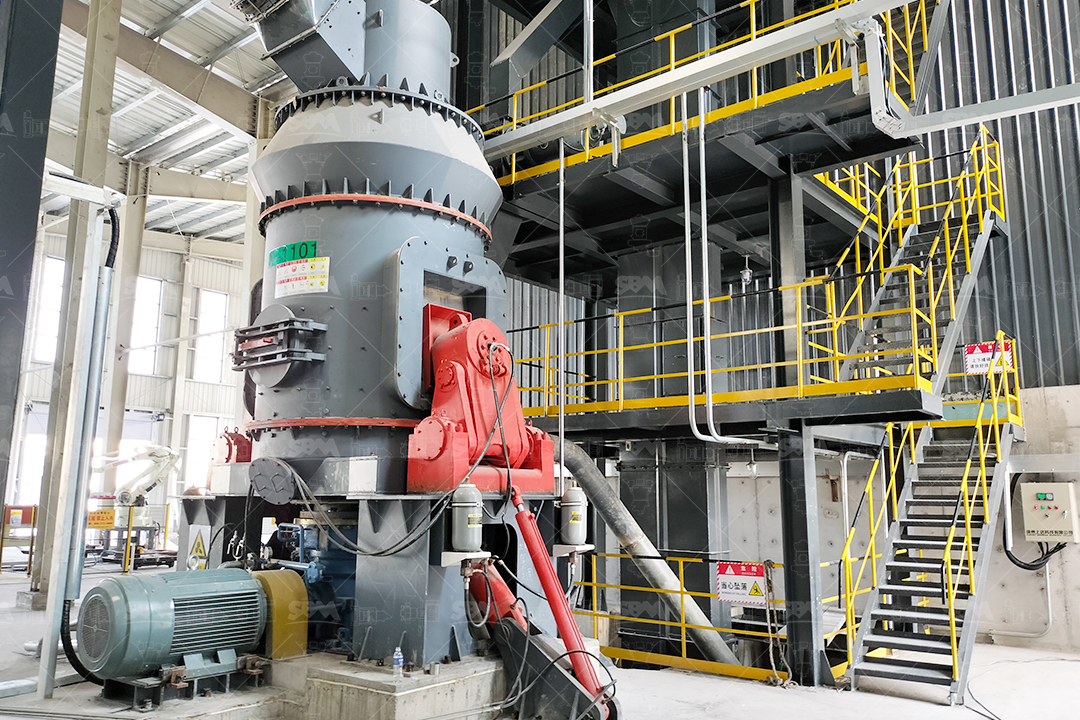
Finally, no discussion of modern technical innovation is complete without addressing environmental and operational sustainability. Contemporary superfine mills are engineered for minimal ecological impact. The Arc Air Duct and volute designs ensure smooth, low-resistance airflow within the mill, reducing the energy required by the induced draft fan. The entire grinding circuit is sealed and operates under negative pressure, completely containing dust and preventing any spillage. Coupled with high-efficiency pulse jet bag filters, dust emissions are maintained far below international standards. Furthermore, innovations in vibration damping, precision dynamic balancing, and the use of sound insulation chambers reduce operational noise to environmentally friendly levels, ensuring compliance with stringent workplace and community regulations.
In conclusion, the landscape of superfine grinding is being reshaped by deep technical innovations that address the core trifecta of industry demands: higher quality, lower cost, and sustainable operation. From the gearbox to the classifier, and from material science to digital control, each component has been re-engineered for synergy and performance. These advancements empower industries to process a vast array of materials—from desulfurization limestone and slag to battery-grade minerals—with unprecedented efficiency, paving the way for more advanced material applications across the global economy.
Frequently Asked Questions (FAQs)
Q1: Our current mill suffers from high energy consumption and frequent wearing part replacement. What solutions can address both issues simultaneously?
A: Modern mills like the MTW European Trapezium Mill and LM Vertical Roller Mill are designed to tackle these interconnected problems. Innovations such as the Cone Gear Whole Transmission drastically improve mechanical efficiency, reducing power draw. Simultaneously, specialized wear-resistant materials for rollers/rings and modular wear-part designs (like replaceable shovel blades) extend service life by multiples, slashing both energy and maintenance costs.
Q2: We need to produce powder consistently below 10 microns but struggle with low yield and unstable fineness. Is reliable ultrafine grinding achievable?
A: Yes. Equipment like the SCM Ultrafine Mill and LUM Ultrafine Vertical Mill are specifically engineered for this range. They integrate high-precision, frequency-controlled turbine classifiers that provide accurate particle size cuts. The stable material bed grinding principle and advanced separation technology ensure consistent D97 ≤ 5µm fineness with high single-pass yield, eliminating the instability of traditional methods.
Q3: Space in our plant is limited. Can a high-capacity grinding system have a compact layout?
A: Absolutely. Vertical Roller Mills are the ideal solution, integrating multiple functions (drying, grinding, separation) into one unit. Their vertical design and compact system footprint typically require about 50% less floor space than a conventional ball mill circuit of equivalent capacity, and they can even be installed outdoors.
Q4: Dust emission and noise are major concerns for our new project to meet environmental regulations. How are modern mills addressing this?
A: Contemporary mills are designed as fully sealed, negative-pressure systems. This design inherently prevents dust escape. When paired with efficient pulse dust collectors, emissions are controlled to exceed national standards. Furthermore, through balanced rotor design, vibration damping, and integrated sound insulation, operational noise is significantly reduced to compliant levels.
Q5: We want to reduce manual operation and improve process consistency. Do automated solutions exist for grinding mills?
A: Yes. Intelligent control is a standard feature in advanced mills. PLC/DCS-based expert systems allow for full remote control and automation. They continuously monitor and auto-adjust parameters like grinding pressure, feed rate, and classifier speed to maintain optimal conditions, ensuring consistent product quality, reducing labor costs, and enabling easy integration into plant-wide control networks.


