

Notes on gearboxes in ore mills
Published: October 26, 2023
Gearboxes are the critical, often underappreciated, heart of any grinding mill system in mineral processing. Their performance directly dictates operational uptime, energy efficiency, and total cost of ownership. This article explores the pivotal role of gearbox design and integration within modern ore milling circuits, drawing on practical engineering insights and the evolution of mill technology to address common industry challenges related to reliability, maintenance, and process optimization.
The transition from traditional grinding systems to advanced, integrated milling solutions has placed new demands on power transmission components. In a ball mill, for instance, the gearbox must handle high starting torque and continuous heavy loads, often in harsh, dusty environments. A failure here doesn't just stop a machine; it halts an entire production line. Modern designs, therefore, prioritize robust construction, advanced lubrication systems, and precise alignment features to extend service life. The integration of the gearbox with the mill's dynamic system is paramount—improper gearing can lead to vibration, premature wear on grinding media and liners, and inefficient power use, which directly erodes profitability.
_1765901983315.jpg)
This is where the design philosophy behind mills like the MTW Series European Trapezium Grinding Mill proves its merit. Its Cone Gear Whole Transmission system is a key innovation. By employing a bevel gear integral design, it achieves higher transmission efficiency compared to traditional worm gear configurations. This design saves significant space within the mill foundation, reduces energy losses through more direct power transfer, and inherently lowers long-term investment costs by minimizing component count and potential failure points. The synergy between the gearbox and the mill's internal dynamics—such as the arc air flue ensuring smooth material flow—creates a system where mechanical and process efficiencies reinforce each other.
For vertical roller mills (VRMs), like our LM Vertical Roller Mill, the gearbox role is even more specialized. It must provide smooth, precise torque to the grinding table that supports the bed of material. The advantages of a VRM—small comprehensive investment due to compact layout and low operating costs from efficient grinding—are fully dependent on a reliable gearbox. The lower energy consumption (30-40% less than ball mill systems) is only achievable with a transmission system that minimizes losses. Furthermore, the gearbox must work in harmony with the automatic control system, allowing for stable adjustments in grinding pressure and table speed without introducing disruptive mechanical shocks.
When pushing into the realm of ultrafine grinding with equipment like the SCM Ultrafine Mill or LUM Ultrafine Vertical Mill, precision and stability become non-negotiable. The gearbox and drive system must operate with exceptional smoothness to maintain the precise grinding gap control and classifier speeds needed to produce powders in the 325-4000 mesh range. Any vibration or speed fluctuation transmitted through the gearbox can adversely affect particle size distribution. The heavy rotor design and balanced construction of these mills are engineered to dampen vibrations, but this must be matched by a gearbox designed for high-speed, high-fidelity operation. The intelligentized control system in the LUM mill, which manages grinding pressure and classifier speed, relies on feedback loops that assume consistent, reliable mechanical response from the power transmission train.
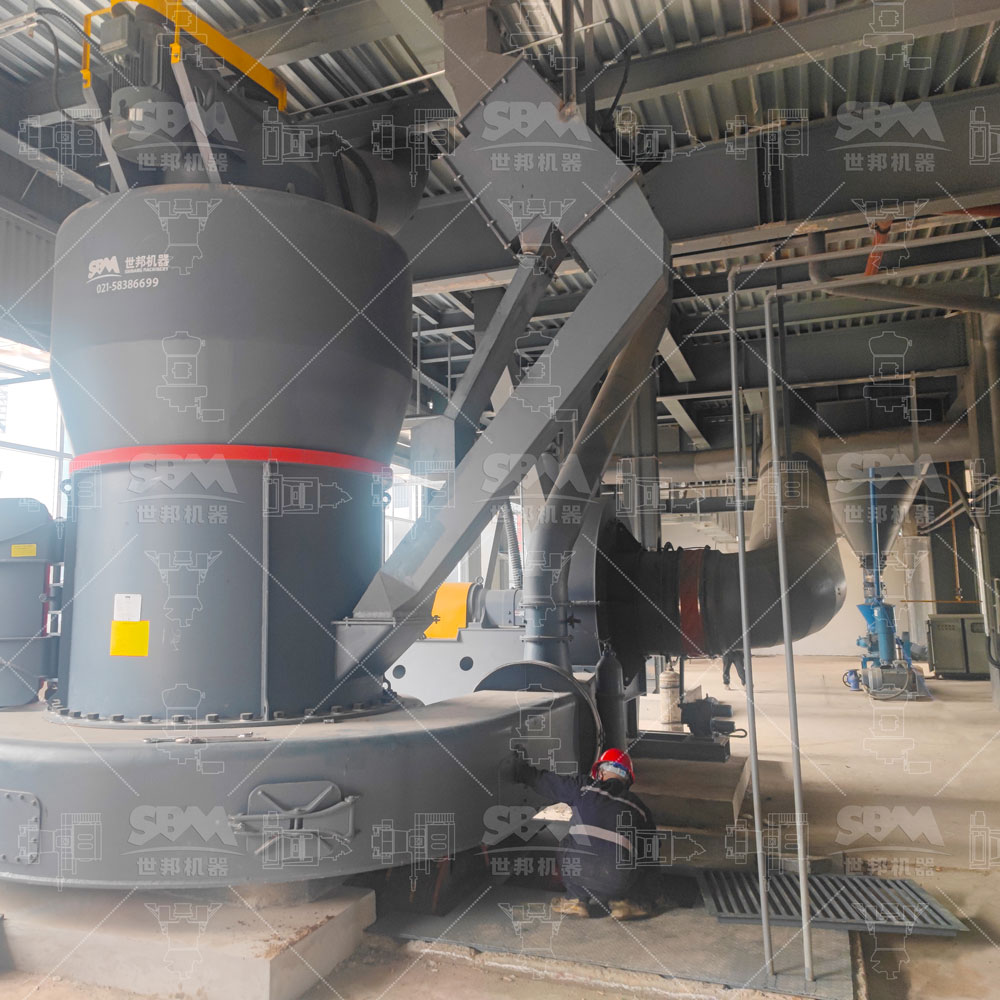
Ultimately, selecting a milling solution is not just about the grinder; it's about selecting an integrated mechanical system. A well-engineered gearbox, matched perfectly to the mill's operational parameters, is a primary defense against unplanned downtime. It transforms raw power into controlled, productive grinding action. For global operators across mining, cement, and non-metallic minerals, this engineering focus on the complete drive system—evident in technologies like inner oil absorption lubrication and volute design that protects internal components—provides the foundation for achieving target throughputs, product fineness, and sustainable operation across thousands of running hours.
Frequently Asked Questions (FAQs)
Q1: What are the most common signs of impending gearbox failure in an operating ore mill?
A: Key warning signs include a sustained increase in operating temperature, unusual noises (whining, knocking), visible oil leaks, increased vibration levels on the mill foundation, and metal particles found in the lubrication oil during routine analysis. Early detection through condition monitoring is critical.
Q2: How does gearbox design impact overall energy consumption in a grinding circuit?
A: Significantly. Inefficient gear designs (e.g., some traditional worm gears) can waste 5-15% of input power as heat and friction. Modern integral bevel gear drives, as used in our MTW Mill, achieve higher transmission efficiency (>96%), directly translating to lower kWh per ton of processed material.
Q3: We experience frequent vibration issues after mill relining. Could this be gearbox-related?
A> While often linked to mechanical imbalance from new liners or grinding media, it can be exacerbated by gearbox issues. Misalignment between the motor, gearbox, and mill pinion caused during reassembly is a common culprit. Always follow precise laser alignment procedures after major maintenance.
Q4: Is remote monitoring of gearbox health possible, and what parameters are most important?
A: Yes. Integrated with the mill's expert control system, key parameters include bearing temperature (via RTD sensors), oil temperature and pressure, vibration spectra, and load current. Trend analysis of this data allows for predictive maintenance, preventing catastrophic failures.
Q5: For ultrafine grinding applications, why is gearbox stability so critical for product quality?
A: Ultrafine mills operate at very precise clearances and high classifier speeds. Any torsional vibration or speed inconsistency from the drive train can cause fluctuations in grinding force and classification, leading to a broader, less consistent particle size distribution (PSD) and product rejects.


