

Significance of grinding aids
Published on: October 26, 2023
Grinding aids are specialized chemical additives designed to optimize the comminution process in industrial milling operations. Their significance extends far beyond simple cost reduction, impacting energy consumption, equipment longevity, product quality, and overall system efficiency. In modern powder processing industries—from cement and mining to advanced materials and environmental applications—the strategic use of grinding aids has become integral to achieving operational excellence and sustainability goals. This article explores the multifaceted role of grinding aids, examining their mechanisms, benefits, and synergy with advanced grinding equipment like those engineered by SBM Machinery, a global provider of total grinding solutions serving over 180 countries.
At its core, the grinding process is inherently energy-intensive and inefficient. A substantial portion of the input energy is dissipated as heat, noise, and vibration rather than being utilized for particle size reduction. Grinding aids function by modifying the physicochemical interactions at the particle and equipment interface. They typically work by reducing the surface energy of newly created particles, which minimizes agglomeration and re-agglomeration, a phenomenon known as "caking" or "coating" of grinding media and mill liners. This leads to a freer flow of material within the mill chamber, allowing for more effective impact and shear forces to be applied to the raw feed.
The primary benefits are profound. First and foremost is the dramatic reduction in specific energy consumption. By mitigating inter-particle adhesion and coating, the mill motor operates under less load, directly translating to lower kWh per ton of product. For large-scale operations running equipment like the LM Vertical Roller Mill or the MTW European Trapezium Mill, which already boast inherent efficiencies through designs like cone gear whole transmission and integrated drying, grinding aids can push energy savings even further, sometimes by an additional 5-15%. This synergy is crucial in industries like power generation desulfurization or large-scale GCC production, where throughput volumes are massive.
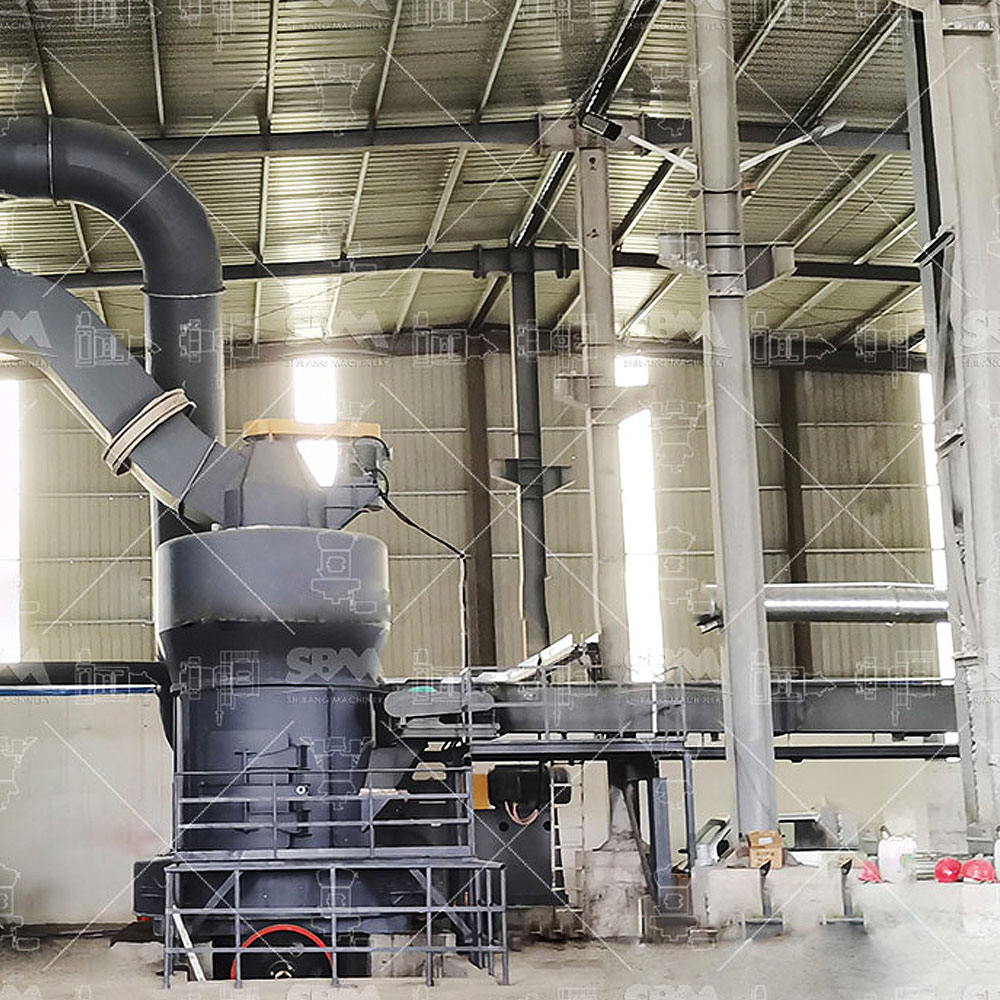
Secondly, grinding aids significantly enhance equipment durability and reduce maintenance costs. The constant friction between grinding media (balls, rollers) and the mill interior (liners, rings) leads to progressive wear. Additives act as a lubricant, forming a protective monolayer that reduces metal-to-metal and metal-to-material contact. This directly prolongs the service life of critical wear parts. Consider SBM's proprietary solutions: the unique wear-proof perching knife design in the MTW Mill or the special material rollers in the Ultrafine Mill. When paired with appropriate grinding aids, the intervals between part replacements can be extended considerably, lowering both spare part costs and downtime. This is especially valuable for hard-to-grind materials like petroleum coke or slag.
Product quality control is another critical arena. In fine and ultrafine grinding applications—where SBM's SCM Ultrafine Mill and LUM Ultrafine Vertical Mill excel, producing powders up to 4000 mesh—maintaining a consistent particle size distribution (PSD) is paramount. Grinding aids promote better dispersion of fine particles, preventing them from forming undesired agglomerates that can skew the PSD. This results in a more uniform, higher-quality final product with improved properties such as reactivity, brightness (in minerals like calcium carbonate), and flowability. The advanced separation technology in mills like the LUM series, which ensures no low-grade material exists in the finished product, works more effectively when the feed powder is well-dispersed.
Furthermore, grinding aids improve material handling and system throughput. By reducing the stickiness of the ground material, they enhance flow characteristics both inside the mill and in subsequent conveying and storage systems. This minimizes clogging in air ducts (like the arc air duct in the MTW Mill) and classifiers, leading to more stable operation and higher possible output rates. The automatic control systems in SBM's vertical and ultrafine mills, which manage grinding pressure and classifier speed, can operate more optimally when material flow is consistent and predictable.
_1765956307426.jpg)
The environmental impact cannot be overstated. Efficient grinding directly correlates with lower carbon emissions per ton of output. Grinding aids contribute to this goal by maximizing the efficiency of already eco-friendly designs. For instance, SBM's equipment, such as the Ball Mill with optimized structure or the LM Vertical Roller Mill operating under negative pressure with no dust spillover, achieves higher environmental standards when the grinding process itself is optimized. Less energy consumed means a smaller carbon footprint, and reduced wear means less frequent manufacturing and disposal of metal wear parts.
In conclusion, grinding aids are not merely an optional additive but a strategic tool for modern mineral processing and powder production. They unlock the full potential of advanced grinding machinery, turning good performance into exceptional performance. For operators leveraging SBM's portfolio—from high-capacity vertical roller mills to precision ultrafine grinders—integrating a well-chosen grinding aid program is a logical step toward achieving peak operational efficiency, superior product quality, and sustainable production economics. The future of grinding lies in the intelligent integration of mechanical innovation and process chemistry.
Frequently Asked Questions (FAQs)
Q1: We experience severe coating and buildup on our grinding rollers and mill liners, leading to frequent shutdowns for cleaning. Can grinding aids help?
A: Absolutely. This is a classic issue grinding aids are designed to address. They reduce the electrostatic attraction and van der Waals forces that cause fine particles to adhere to metal surfaces, significantly reducing buildup and stabilizing operation between maintenance cycles.
Q2: Our energy bills are skyrocketing, but we need to increase output. Will grinding aids allow us to mill more material with the same or less power?
A: Yes. By reducing inter-particle adhesion, the mill motor works against less resistance, effectively lowering the specific energy consumption (kWh/ton). This often allows for increased throughput at the same power draw or maintaining output at a reduced energy cost.
Q3: We produce high-value ultrafine powders, but our product consistency varies, sometimes with unwanted coarse particles. How can grinding aids improve quality?
A: Grinding aids promote better particle dispersion during milling, preventing fine particles from agglomerating. This leads to a more uniform feed for the integrated classifier (like the multi-rotor classifier in LUM mills), resulting in a sharper, more consistent particle size cut and higher product quality.
Q4: The wear rate of our grinding media and liners is unacceptable, driving high operating costs. Do grinding aids really extend part life?
A: They do. By providing a protective layer and reducing direct metal-to-abrasive material contact, grinding aids act as lubricants. This can markedly reduce the wear rate of critical components like rollers, rings, and balls, extending service life and lowering cost-per-ton for wear parts.
Q5: We are concerned about introducing chemicals into our process. Are grinding aids compatible with our downstream applications and environmental regulations?
A: Modern grinding aids are formulated with compatibility and safety in mind. They are used in very small dosages (typically 0.01%-0.1% of feed weight) and many are based on materials like glycols or organic acids that often burn off or integrate without issue in downstream processes like calcination. It's crucial to select an aid compatible with your final product use and to ensure it meets all relevant environmental and safety standards for your region.


