

Limestone mill production line equipment
Published on: October 26, 2023
In the dynamic world of mineral processing, the efficiency and reliability of a limestone grinding production line are paramount to operational success and profitability. Selecting the right equipment portfolio is not merely a purchase; it is a strategic investment that dictates product quality, energy consumption, maintenance costs, and environmental compliance. Shanghai SBM Machinery Equipment Co., Ltd., drawing from its global experience serving over 180 countries, offers a suite of advanced grinding technologies engineered to address the core challenges in limestone processing. From large-scale desulfurization projects requiring high-volume throughput to high-value specialty applications demanding ultra-fine powders, a tailored combination of mills—such as the high-capacity Vertical Roller Mill, the precision-engineered European Trapezium Mill, and the ultra-fine grinding specialists—can create a seamless, optimized production line that maximizes yield while minimizing total cost of ownership.
The journey of limestone from quarry to powder involves critical stages where equipment performance directly impacts the bottom line. Traditional systems often grapple with high energy intensity, excessive wear part consumption, inconsistent fineness control, and significant environmental footprint. A modern, integrated production line must overcome these hurdles through intelligent design and robust engineering. The cornerstone of such a system is the primary grinding unit, where raw, sized limestone is transformed. Here, the choice between a Vertical Roller Mill (VRM) and an advanced trapezium mill sets the tone for the entire operation.
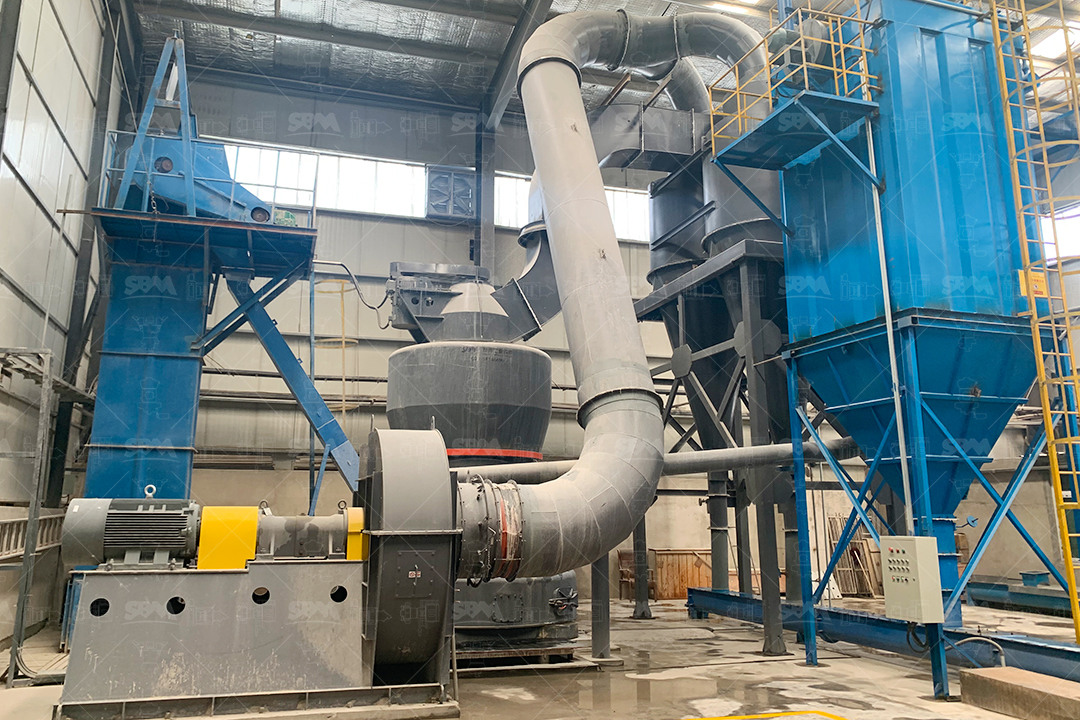
For operators prioritizing exceptional energy efficiency and massive throughput for projects like power plant desulfurization or heavy calcium carbonate (GCC) production, the LM Vertical Roller Mill stands out. Its integrated design consolidates drying, grinding, classification, and conveying into a single, compact unit. This not only reduces the plant's footprint by approximately 50% compared to traditional ball mill systems but also slashes energy consumption by 30-40%. The grinding principle, where rollers press directly onto a rotating table, minimizes metal-to-metal contact, leading to dramatically lower wear rates for consumables like rollers and liners. Furthermore, its fully sealed system operating under negative pressure ensures a dust-free environment, making it a model of clean production that easily meets stringent national emission standards.
When the application requires precise particle distribution and superior shape characteristics, the MTW Series European Trapezium Grinding Mill offers a compelling solution. Evolved from decades of Raymond mill technology and refined with feedback from thousands of installations, it incorporates patented innovations like the Cone Gear Whole Transmission for efficient, compact power delivery and the Arc Air Duct design for minimal pneumatic resistance. Its unique curved shovel blade and wear-proof design allow for easy replacement of only the blade segment, drastically cutting maintenance time and spare parts inventory costs. This mill is exceptionally versatile, reliably producing powders from 30 to 400 mesh, making it a workhorse for a wide spectrum of building material and industrial mineral applications.
The pursuit of ultra-fine and high-purity limestone powders, essential for advanced materials, plastics, paints, and coatings, demands specialized technology. This is where SBM's ultrafine grinding solutions take center stage. The SCM Series Ultrafine Mill is engineered for fineness ranging from 325 to 2500 mesh, capable of achieving a one-time fineness of D97 ≤ 5μm. Its high-efficiency turbine classifier ensures precise particle cut-points without coarse powder spillover. For even higher capacity in the ultrafine range, the LUM Ultrafine Vertical Mill integrates advanced grinding roller technology with a multi-rotor classifier system. It allows for the custom tailoring of product fineness with remarkable stability and energy efficiency, often outperforming jet mills in output while consuming significantly less energy. Both systems feature intelligent automatic controls that stabilize product quality and reduce labor dependency.
_1765988817969.jpg)
No discussion on grinding is complete without mentioning the Ball Mill, a technology mature yet continuously optimized. For certain wet grinding processes or specific granularity requirements, modern ball mills remain relevant. SBM's optimized designs focus on reducing the wear rate of grinding media and liners through improved material science and structural design, directly addressing the historical pain points of high consumption and cost. Whether configured for dry or wet processing, it can be an effective component within a broader circuit.
Ultimately, designing a limestone mill production line is a holistic exercise. It requires a deep understanding of the raw material characteristics, the desired product specifications, capacity targets, and site-specific constraints. As a total solution provider, SBM Machinery leverages its expertise across the entire mineral processing workflow to recommend not just individual machines, but a synchronized system. This system approach ensures optimal compatibility between crushers, mills, classifiers, dust collectors, and automated control systems, delivering a production asset that is productive, economical, sustainable, and built for the long term. The goal is to provide a line that not only processes limestone but does so in a way that processes value for the business.
Frequently Asked Questions (FAQs)
Q1: Our current limestone grinding line has very high energy costs. What is the most effective way to reduce power consumption?
A: The single biggest impact comes from selecting high-efficiency primary grinding equipment. Vertical Roller Mills (VRMs) like the LM series can reduce energy consumption by 30-40% compared to traditional ball mill systems due to their direct grinding principle and integrated drying capability. Ensuring your system has an expert automatic control system to optimize mill loading and classifier operation is also crucial for sustained efficiency.
Q2: We experience frequent downtime due to the wear and replacement of grinding rollers and rings. How can we improve this?
A: This is a common operational pain point. Solutions include opting for mills with superior wear-resistant technology. The MTW Mill's curved shovel blade and special material rollers extend service life, and its design allows for partial replacement, cutting costs. VRMs are also advantageous as the rollers do not directly contact the grinding plate, and both are made from high-quality, long-life materials, significantly reducing wear rates.
Q3: We need to produce very fine limestone powder (over 1000 mesh) but struggle with low yield and unstable quality. What equipment is suitable?
A: For consistent, high-yield production in the ultrafine range (325-4000 mesh), dedicated ultrafine mills are necessary. The SCM Ultrafine Mill or the higher-capacity LUM Ultrafine Vertical Mill are designed for this task. They feature advanced, high-precision turbine classifiers and stable grinding chambers that prevent vibration, ensuring a uniform, high-quality product with a high proportion of finished material from the first pass.
Q4: Dust control and environmental compliance are major concerns for our plant. How can the production line be designed to be cleaner?
A: Modern grinding systems are engineered for environmental protection. Key features to look for include wholly sealed mill housings that operate under negative pressure, preventing dust escape. Integrated systems with high-efficiency pulse jet bag filters or powder collectors, like those used in our ultrafine mills, ensure dust collection efficiency far exceeds international standards, guaranteeing compliance with strict emission regulations.
Q5: We have limited space for expanding our production line. Is a compact layout possible without sacrificing capacity?
A: Absolutely. Vertical Roller Mills are the ideal solution for space-constrained sites. Their integrated design (combining multiple functions in one unit) and compact vertical layout can reduce the floor space requirement by about 50% compared to a horizontal ball mill system of similar capacity. Furthermore, they can often be arranged outdoors, freeing up valuable indoor space for other operations.


