

Recommended dolomite mill manufacturers
Published on: October 26, 2023
Selecting the right grinding equipment for dolomite processing is a critical decision that impacts operational efficiency, product quality, and long-term profitability. For projects ranging from environmental desulfurization to the production of high-purity fillers and new energy materials, the choice of mill directly addresses core client pain points: high energy consumption, excessive wear part costs, inconsistent fineness, complex maintenance, and stringent environmental compliance. As a global total solution provider with decades of expertise, Shanghai SBM Machinery Equipment Co., Ltd. has engineered a portfolio of advanced grinding mills, each tailored to specific production scales and fineness requirements for dolomite and other non-metallic minerals. This article analyzes key mill technologies, focusing on their technical advantages in resolving common industry challenges, to guide professionals toward an informed investment.
The processing of dolomite—a calcium magnesium carbonate mineral—demands equipment capable of delivering precise particle size distribution, high throughput, and remarkable reliability. Traditional grinding methods often fall short, plagued by rapid component wear, significant power draws, and dust emission issues. Modern operations require a holistic approach where the mill is not just a standalone unit but an integrated system optimizing crushing, drying, grinding, classification, and collection. SBM's philosophy as a total solution provider embodies this integration, offering systems that enhance the entire workflow from raw feed to packaged powder. With equipment deployed in over 180 countries, their solutions are proven across diverse conditions, making them a benchmark in the global powder processing industry.
For large-scale dolomite powder production targeting fineness between 30-400 mesh, the MTW Series European Trapezium Grinding Mill represents a significant evolution from conventional Raymond mills. Its development incorporated feedback from thousands of global users, resulting in patented innovations that directly tackle operational costs. A primary pain point in trapezium mills is the frequent replacement of wearing parts. SBM's unique combined-type curved shovel blade design allows for the replacement of only the blade segment, not the entire assembly, drastically reducing spare part inventory and downtime costs. Furthermore, the curved design optimizes material feeding, reducing abrasive wear on the grinding roller and ring and extending their service life. The integral conical gear transmission system is another milestone, eliminating the need for a separate gearbox. This not only boosts transmission efficiency but also saves significant floor space and reduces initial installation complexity and cost. For material conveying within the mill, the arc air duct design minimizes turbulent air flow resistance, ensuring stable pneumatic transport of fine powder and improving overall system efficiency.
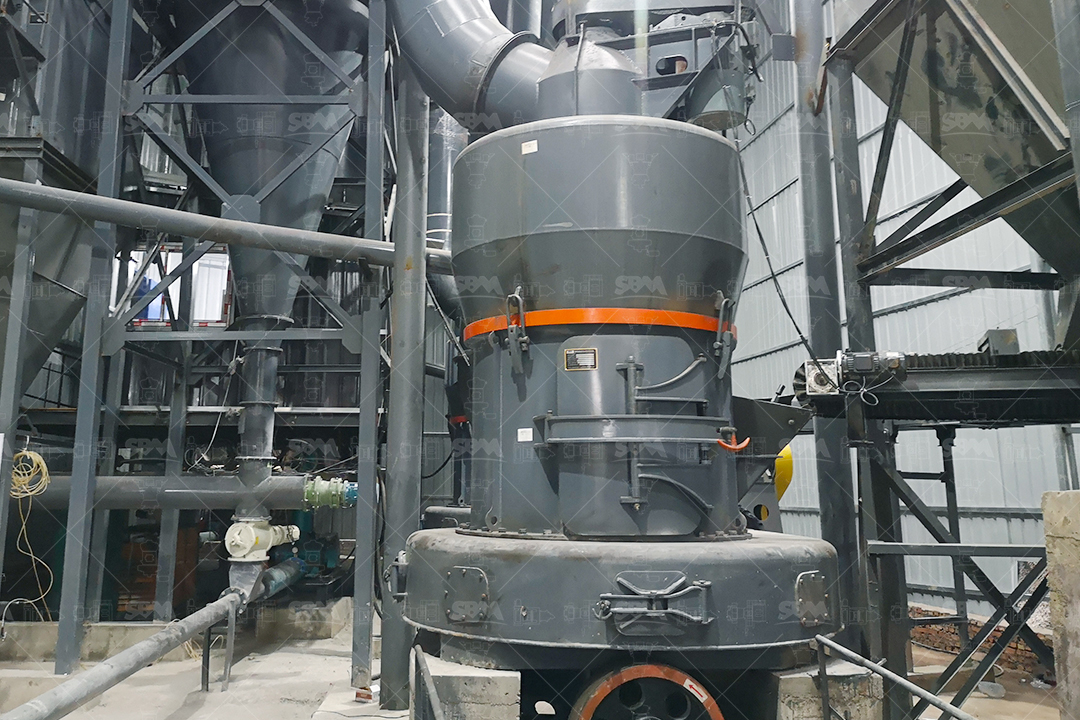
When project scope escalates to very high capacity requirements (up to 400 tph) and energy efficiency is paramount, the LM Vertical Roller Mill emerges as the dominant solution. Its core advantage lies in its integrated design, which consolidates multiple process steps into a single, compact unit. This dramatically reduces the plant footprint—by approximately 50% compared to a traditional ball mill system—and simplifies the entire process flow, lowering civil engineering and auxiliary equipment costs. The operating cost savings are even more compelling. The grinding principle involves rollers pressing on a rotating table, with direct grinding on the bed of material. This method is inherently more efficient than the impact and attrition in ball mills, typically reducing energy consumption by 30-40%. Wear is also minimized as the rollers do not directly contact the grinding plate; both components are crafted from special alloys for extended durability. For modern plants, the integrated expert automatic control system is indispensable, enabling remote monitoring, precise process parameter adjustment, and stable operation with minimal manual intervention, thereby addressing labor cost and consistency concerns.
For ultra-fine dolomite powders (325-4000 mesh) required in high-value applications like plastics, paints, and advanced ceramics, SBM's SCM Ultrafine Mill and LUM Ultrafine Vertical Mill offer specialized technologies. The SCM series is engineered for high output at astonishing fineness levels, achieving D97 ≤5µm in a single pass. Its efficiency is notable, offering over twice the capacity of some jet mills while consuming 30% less energy. The heavy-duty rotor and rigid construction ensure stable, vibration-free operation, which is crucial for maintaining consistent product quality. The LUM series, integrating advanced German separation technology, takes ultrafine vertical grinding to a new level. Its specially designed grinding curve promotes stable material bed formation, enhancing grinding efficiency and yield. The multi-rotor classifier allows precise, stepless adjustment of product fineness, ensuring a narrow particle size distribution without coarse particle contamination. Both mills feature sophisticated, sealed negative-pressure systems with high-efficiency dust collectors, making them exceptionally environmentally friendly and capable of meeting the strictest emission standards—a critical factor for today's regulated industries.
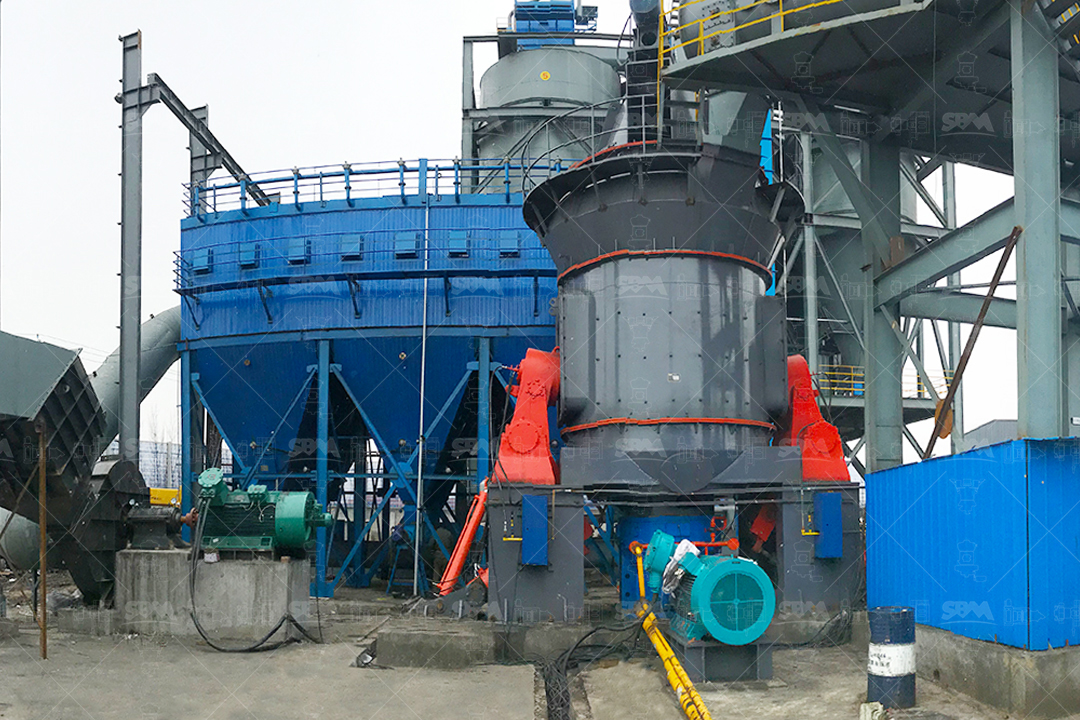
Even for well-established technologies like the Ball Mill, SBM has implemented targeted optimizations to address its historical drawbacks: high metal ball/liner wear and substantial energy use. Through improved structural design and the application of advanced wear-resistant materials, the operational cost associated with spare parts is significantly reduced. Offering both dry and wet process configurations, these robust mills remain a viable and reliable choice for certain dolomite grinding applications, particularly where versatility and a proven track record are valued.
In conclusion, the "best" dolomite mill does not exist in a vacuum; it is defined by the specific project parameters—desired capacity, target fineness, budget constraints, and site-specific challenges. Shanghai SBM Machinery's strength lies in its comprehensive portfolio and system-level approach, providing tailored solutions that directly solve the most persistent pain points in mineral processing: reducing energy and wear costs, ensuring product uniformity, simplifying operation, and guaranteeing environmental compliance. By partnering with an experienced provider that offers continuous technological innovation and global support, investors can secure not just a piece of equipment, but a foundation for long-term, profitable production.
Frequently Asked Questions (FAQs)
- What is the most significant factor affecting the long-term operating cost of a dolomite grinding mill?
The most impactful factors are energy consumption and the wear rate of grinding components (rollers, rings, liners). Selecting a mill with an efficient grinding principle (like vertical roller mills) and patented wear-resistant designs can reduce energy use by 30-40% and extend part life, dramatically lowering lifetime operating expenses. - How can we ensure consistent fineness of dolomite powder, especially for ultra-fine grades?
Consistency relies on a stable grinding environment and a high-precision classification system. Mills equipped with advanced, frequency-controlled turbine classifiers (like in SCM/LUM series) allow real-time, precise adjustment of cut points. An integrated automatic control system that stabilizes feed rate, grinding pressure, and classifier speed is crucial for maintaining uniform product quality. - Our plant space is limited. Can a high-capacity grinding system still be installed?
Yes. Vertical Roller Mills (like the LM series) are specifically designed with a compact, integrated layout. They combine multiple functions (drying, grinding, separation) in one unit, occupying up to 50% less space than traditional ball mill systems and can even be arranged outdoors, making them ideal for space-constrained sites. - Dust control is a major concern for our environmental and safety standards. How is this addressed?
Modern mills are designed as fully sealed systems operating under negative pressure. This means air is drawn into the mill, preventing dust from escaping. Coupled with high-efficiency pulse dust collectors or dual bag filter systems, they achieve dust emission levels that far exceed common national and international environmental standards. - We need to produce multiple fineness grades of dolomite powder. Does this require multiple mills or complex reconfiguration?
Not necessarily. Many advanced mills, particularly ultrafine vertical mills and European trapezium mills, feature easily adjustable classifiers. By simply adjusting the classifier speed (often via the control panel), you can produce different fineness grades from the same mill without mechanical disassembly, offering great production flexibility.


