

Mill types for 300-3000 mesh
Published: October 26, 2023
Selecting the optimal grinding mill for producing powders in the 300 to 3000 mesh range is a critical decision that directly impacts operational efficiency, product quality, and long-term profitability. This article provides a comprehensive overview of advanced mill technologies designed to meet these precise fineness requirements, addressing common industry challenges such as high energy consumption, excessive wear, inconsistent particle size distribution, and environmental compliance. We will explore the distinct capabilities and ideal applications of several mill types, from high-capacity vertical systems to specialized ultrafine solutions, empowering you to make an informed choice for your specific mineral processing needs.
For coarse to medium-fine grinding applications targeting outputs from 30 to 400 mesh, the MTW Series European Trapezium Grinding Mill represents a significant evolution of traditional Raymond mill technology. Its development incorporated feedback from thousands of global users, resulting in patented advancements like the cone gear whole transmission system for higher mechanical efficiency and reduced energy loss. A key innovation is its unique wear-proof combined shovel blade design, which allows for the replacement of only the blade segment rather than the entire assembly, drastically reducing maintenance downtime and spare parts costs. The arc air duct design further enhances internal airflow, minimizing pressure drop and ensuring efficient material transport to the classifier. This mill is exceptionally suited for high-volume production of desulfurization limestone powder, coal powder for injection, and non-metallic minerals where reliability and lower operating costs are paramount.
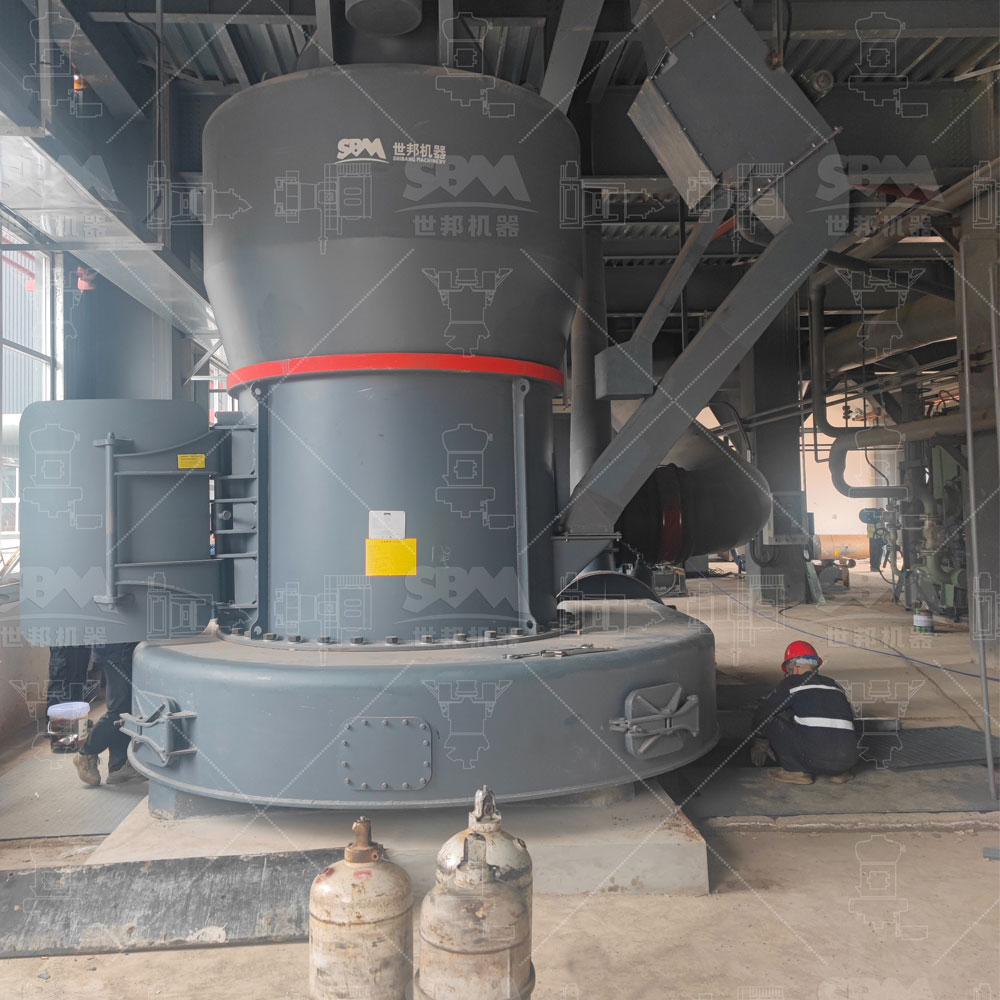
When project requirements demand higher capacity, integrated processing, and superior energy efficiency within the same fineness range (30-400 mesh), the LM Vertical Roller Mill emerges as the premier solution. Its core advantage lies in its integrated design, combining crushing, drying, grinding, and separation into a single, compact unit. This not only reduces the plant footprint by approximately 50% compared to traditional ball mill systems but also slashes thermal energy consumption by utilizing waste heat from kilns or other processes for drying. The grinding principle, where rollers press on a rotating table, is inherently more efficient than impact or tumbling methods, leading to energy savings of 30-40%. Furthermore, the non-contact design between rollers and table, coupled with high-quality wear materials, results in remarkably long service life and minimal metal contamination. For large-scale projects in cement, slag, or industrial mineral processing, the LM Vertical Roller Mill offers an unbeatable combination of low operating cost and high reliability.
Entering the realm of superfine and ultrafine powders (325-4000 mesh) presents a distinct set of technical hurdles, primarily concerning energy intensity, classification accuracy, and system stability. The SCM Series Ultrafine Mill is engineered specifically to overcome these challenges. Utilizing a similar grinding principle to the trapezium mill but with enhanced mechanical precision and a high-efficiency turbine classifier, it achieves a one-time fineness of D97 ≤ 5μm. Its heavy-duty rotor design and special material selection for rollers and rings withstand the rigorous demands of ultrafine grinding, offering durability several times greater than conventional components. A standout feature is its intelligent automatic control system, which provides real-time feedback and adjustment, ensuring consistent product quality while directly reducing labor costs. This mill is the ideal choice for producing high-value additives, advanced ceramics, and functional fillers where precise top-cut and narrow particle size distribution are non-negotiable.
_1766388350961.jpg)
For the most demanding high-capacity ultrafine applications, the LUM Ultrafine Vertical Roller Mill integrates the best of vertical grinding efficiency with cutting-edge powder separation technology. It inherits the space-saving and energy-efficient advantages of the LM vertical mill while incorporating specialized roller shell profiles and lining plate curves that promote stable material bed formation—a critical factor for efficient ultrafine comminution. Its multi-rotor powder classifier, based on advanced German technology, allows for precise customization of the final product's fineness across the 325-4000 mesh spectrum, effectively eliminating coarse particle spillover. The entire grinding pressure system is managed by a PLC/DCS automatic control system, ensuring stable operation and allowing for remote monitoring and adjustment. As a preferred solution for processing calcium carbonate, talc, barite, and other non-metallic minerals into high-grade products for plastics, paints, and coatings, the LUM series sets the benchmark for output quality and system intelligence.
While newer technologies often take the spotlight, the Ball Mill remains a versatile and robust workhorse for specific applications, particularly where wet grinding is required or for producing powders in the coarser range of the ultrafine spectrum (approximately 200-300 mesh equivalent). Modern optimizations have addressed historical pain points: improved liner and grinding media materials significantly reduce wear rates and contamination, while advanced drive systems enhance energy efficiency. Wet ball milling is indispensable in mineral dressing processes, offering excellent particle size reduction and mixing. For certain materials and product specifications, a well-optimized ball mill system can offer a cost-effective and reliable solution, demonstrating that the optimal technology choice is always application-dependent.
In conclusion, navigating the 300-3000 mesh landscape requires a clear understanding of your material characteristics, desired capacity, and total cost of ownership goals. From the high-volume efficiency of the LM Vertical Roller Mill to the precision ultrafine capabilities of the LUM and SCM series, the correct mill selection is the cornerstone of a profitable and sustainable grinding operation. Engaging with an expert provider who can offer a total solution—from equipment supply to process design—ensures that your investment delivers optimal performance for years to come.
Frequently Asked Questions (FAQ)
- Q: We struggle with high energy costs and rapid wear of grinding parts when producing 800-mesh powder. Which mill type is most suitable?
A: For consistent 800-mesh production, we recommend the SCM Ultrafine Mill or LUM Ultrafine Vertical Mill. Both are designed for energy efficiency in the fine grinding range. The SCM mill features special material rollers/rings for extended life, while the LUM mill's stable material bed grinding principle reduces abrasive wear. Their intelligent control systems also optimize energy use in real-time. - Q: Our project has limited space and requires integrated drying. What is the best option?
A: The LM Vertical Roller Mill is specifically designed for this scenario. It integrates drying, grinding, and separation in a single, compact unit with a footprint about 50% smaller than traditional ball mill circuits. It can effectively utilize waste heat for drying, making it ideal for slag, limestone, or clay applications where moisture is a concern. - Q: How can we ensure a stable and consistent product fineness, especially at the top end (e.g., 2500 mesh), without frequent manual adjustment?
A: Consistency at high fineness requires advanced classification and control. The LUM Ultrafine Vertical Mill, with its multi-rotor classifier and PLC/DCS automatic control system, allows for precise fineness customization and maintains it through automatic feedback loops that adjust grinding pressure and classifier speed, minimizing manual intervention. - Q: We need to meet strict environmental regulations regarding dust and noise. How do your mills address this?
A: Our mill designs prioritize environmental protection. The LM and LUM vertical mills operate under full negative pressure, preventing dust spillage. All our mills feature advanced pulse dust collectors with efficiency exceeding international standards. Additionally, optimized sound insulation rooms and mufflers are available to effectively control noise levels. - Q: For a new mineral processing plant, should we choose a system with multiple small mills or one large-capacity unit?
A: This depends on capacity, flexibility needs, and maintenance strategy. A single large LM Vertical Roller Mill (up to 400tph) offers lower capital cost per ton, simpler layout, and higher overall efficiency. However, multiple medium-sized units (like MTW or SCM mills) can provide operational flexibility, allowing you to run different products or maintain production during servicing. A detailed feasibility study with our engineers can determine the optimal configuration.


