

Sbm: calcium carbonate market potential
Published on: October 26, 2023
The global calcium carbonate market is experiencing robust growth, driven by escalating demand from sectors like plastics, paper, paints & coatings, and construction. This expansion presents a significant opportunity for producers, yet it is tightly coupled with the challenge of achieving efficient, high-quality powder production at scale. Success hinges on selecting grinding technology that balances ultra-fine particle size control, high throughput, energy efficiency, and operational reliability. Shanghai SBM Machinery, with its comprehensive portfolio of advanced grinding mills, positions itself as a strategic partner in this landscape. By offering tailored solutions from coarse grinding to ultra-fine processing, SBM enables producers to capitalize on market trends, overcome traditional production bottlenecks, and meet the stringent quality specifications required by downstream industries, thereby transforming raw mineral potential into profitable, sustainable enterprise.
The versatility of calcium carbonate (GCC and PCC) as a functional filler and additive is undisputed. However, transforming raw limestone into a valuable commodity requires precise comminution. The market's evolution demands not just powder, but powder with specific particle size distributions (PSD), high brightness, and low impurity levels. Traditional grinding methods often struggle with the trade-offs between fineness, capacity, and energy consumption. This is where technological innovation becomes a critical competitive differentiator. Producers seeking to supply premium-grade fillers for masterbatch or high-performance coatings, for instance, require equipment capable of delivering consistent sub-5-micron powders without prohibitive operational costs.
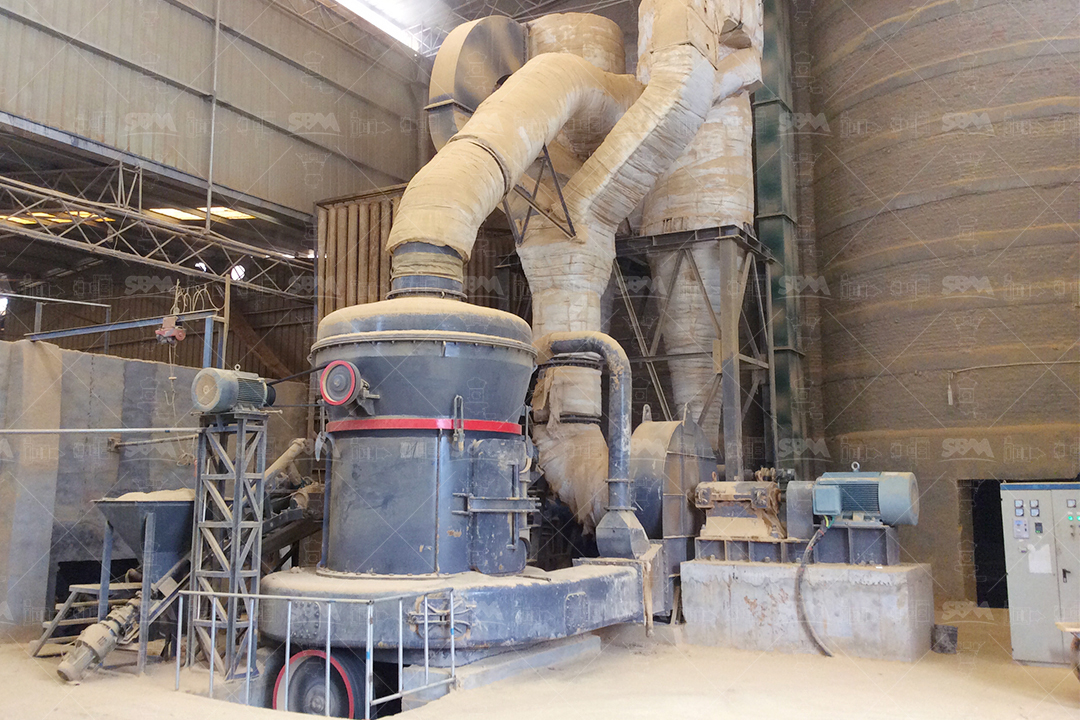 SBM's engineering philosophy addresses these core challenges head-on. Take the MTW Series European Trapezium Mill as an example. Its cone gear whole transmission and arc air duct design are not mere incremental improvements; they represent a systemic approach to enhancing mechanical efficiency and airflow dynamics. For high-volume production of calcium carbonate in the 30-400 mesh range, this translates to lower wear on grinding rollers and rings, reduced energy loss, and ultimately, a lower cost per ton. The unique, replaceable shovel blade design further minimizes maintenance downtime and spare parts inventory, directly tackling the operational pain point of frequent component replacement.
For projects demanding higher capacity and integrated processing, the LM Vertical Roller Mill offers a paradigm shift. By combining crushing, drying, grinding, and classification in a single, compact unit, it drastically reduces the plant's footprint and initial infrastructure investment. Its grinding principle—where rollers press on a rotating table—ensures significantly lower energy consumption compared to traditional ball mills, a major concern in an era of rising energy costs. The automatic control system allows for precise regulation of the grinding process, ensuring product consistency while optimizing labor deployment. This mill is particularly suited for large-scale GCC production where energy efficiency and system simplicity are paramount.
As market segments for ultra-fine and nano calcium carbonate expand, the technological bar rises exponentially. SBM's SCM Ultrafine Mill and LUM Ultrafine Vertical Mill are engineered for this frontier. The SCM series, capable of achieving fineness up to 4000 mesh, employs a heavy rotor design and specialized wear materials to maintain stability and longevity even at extreme fineness levels. Its high output relative to jet mills, coupled with 30% lower energy consumption, addresses the critical痛点 of high operating costs in the ultra-fine domain. The LUM series, integrating advanced German separation technology, takes this further. Its multi-rotor classifier allows for precise, customizable PSD cuts, ensuring no low-grade material dilutes the final product—a key quality requirement for high-value applications like artificial quartz or premium plastics.
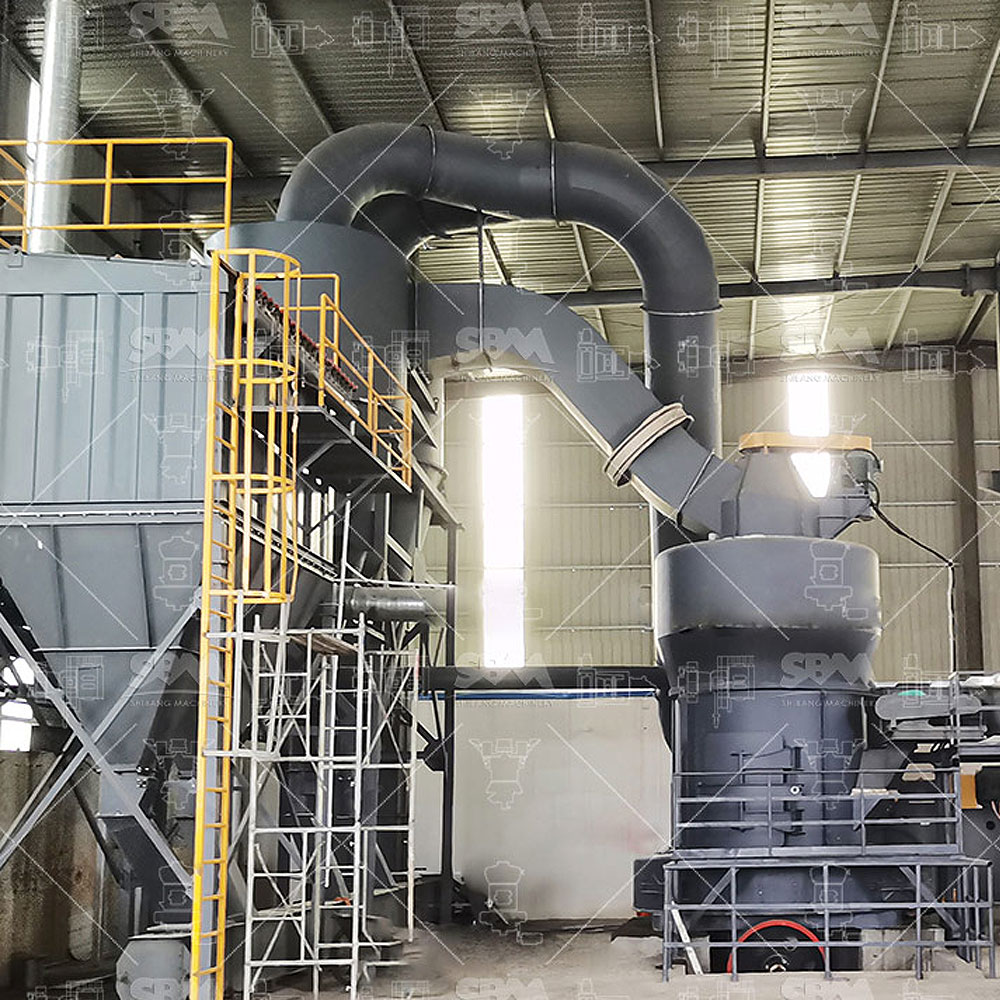 Beyond performance metrics, modern mineral processing must align with environmental and operational sustainability goals. Across its entire range, SBM emphasizes designs that lower noise pollution, contain dust through fully sealed negative-pressure systems, and minimize vibration. This not only ensures compliance with stringent international environmental standards but also creates a safer, more sustainable working environment and reduces the long-term costs associated with environmental management.
In conclusion, the potential in the calcium carbonate market is vast but accessible only to those equipped with the right tools. The challenge lies not in the availability of the mineral, but in the efficiency and sophistication of its transformation. Shanghai SBM Machinery provides a spectrum of grinding solutions—from the high-capacity LM Vertical Roller Mill to the precision-focused LUM Ultrafine Vertical Mill—that are specifically designed to convert market potential into tangible production success. By focusing on lowering total cost of ownership, ensuring product quality, and promoting sustainable operation, SBM's equipment serves as the foundational technology for producers aiming to lead, rather than just participate, in the evolving global calcium carbonate industry.
Frequently Asked Questions (FAQs)
Q1: We need to produce both coarse (200 mesh) and ultra-fine (2500 mesh) calcium carbonate. Do we need to invest in two completely separate grinding lines?
A: Not necessarily. SBM's advanced mills, particularly the LUM Ultrafine Vertical Mill, offer a wide adjustable range. With sophisticated classifier technology, a single mill can often be tuned to produce different fineness grades efficiently, though optimal configuration depends on your specific capacity requirements for each product. A system design consultation can determine the most cost-effective setup.
Q2: Energy consumption is our biggest operational cost. Which SBM solution is most effective for reducing power usage in large-scale GCC production?
A: The LM Vertical Roller Mill is specifically engineered for high energy efficiency in large-scale applications. Its grinding principle can reduce energy consumption by 30-40% compared to traditional ball mill systems, offering the most significant savings for high-tonnage production of ground calcium carbonate.
Q3: How does SBM equipment address the persistent issue of high wear and tear on grinding components, which leads to frequent downtime and high spare part costs?
A: Our mills incorporate multiple patented designs to combat wear. The MTW Mill features a unique, replaceable curved shovel blade and wear-resistant materials for rollers/rings. The Ultrafine Mills use special alloy materials for rollers and rings, increasing durability several-fold. These designs extend service life and simplify maintenance, directly reducing operating costs and downtime.
Q4: We are targeting applications requiring extremely consistent particle size distribution (PSD). Can your mills ensure this level of product uniformity?
A: Yes. Mills like the LUM Ultrafine Vertical Mill employ multi-rotor or high-efficiency turbine classifiers with PLC-controlled adjustment. This allows for precise "cut points" and efficient removal of coarse particles, ensuring a narrow, consistent PSD and preventing product contamination with off-spec material.
Q5: Our plant must adhere to strict environmental regulations regarding dust and noise. Are SBM grinding systems suitable for such environments?
A> Absolutely. A core design principle across all SBM mills is environmental protection. The systems are fully sealed and operate under negative pressure, preventing dust spillage. Integrated high-efficiency dust collectors and optimized sound insulation meet or exceed national and international environmental standards for emissions and noise.


