

Limestone desulfurization mills aid gypsum desulfurization
Published: October 26, 2023
In the critical arena of flue gas desulfurization (FGD), the efficiency and reliability of the entire system hinge on the initial stage: the preparation of high-quality limestone powder. This finely ground limestone is the primary reagent that reacts with sulfur dioxide (SO₂) in exhaust gases, ultimately producing commercial-grade gypsum. Shanghai SBM Machinery Equipment Co., Ltd., as a total solution provider for grinding equipment, offers a comprehensive portfolio of advanced mills engineered to transform this preparatory stage from a potential bottleneck into a cornerstone of operational excellence. By selecting the optimal grinding technology—from robust vertical roller mills for high-capacity needs to precision ultrafine mills for superior reactivity—plants can significantly enhance desulfurization rates, improve gypsum purity, and achieve substantial gains in overall system stability and cost-effectiveness.
The desulfurization process is a sophisticated chemical dance where consistency is king. The particle size distribution, fineness, and purity of the limestone powder directly influence its surface area and reactivity. Substandard powder leads to incomplete SO₂ absorption, higher reagent consumption, and potentially off-spec gypsum by-products that are difficult to sell. This is where the engineering prowess behind SBM's grinding solutions comes to the fore. Our equipment is designed to deliver not just raw grinding power, but predictable, controllable, and efficient powder production tailored to the exacting demands of modern FGD systems.
For large-scale power plants and industrial facilities requiring massive throughput, the LM Vertical Roller Mill stands as a technological pillar. Its integrated design—combining drying, grinding, classification, and conveying into a single, compact unit—offers a decisive advantage. The system operates under negative pressure, ensuring a dust-free environment—a critical consideration for plant cleanliness and worker safety. Notably, its grinding principle, where rollers compress material on a rotating table, results in energy savings of 30% to 40% compared to traditional ball mill systems. This dramatic reduction in operating costs, coupled with lower wear rates due to high-quality materials and non-direct contact designs, makes it a compelling choice for the heart of a desulfurization raw material preparation circuit.
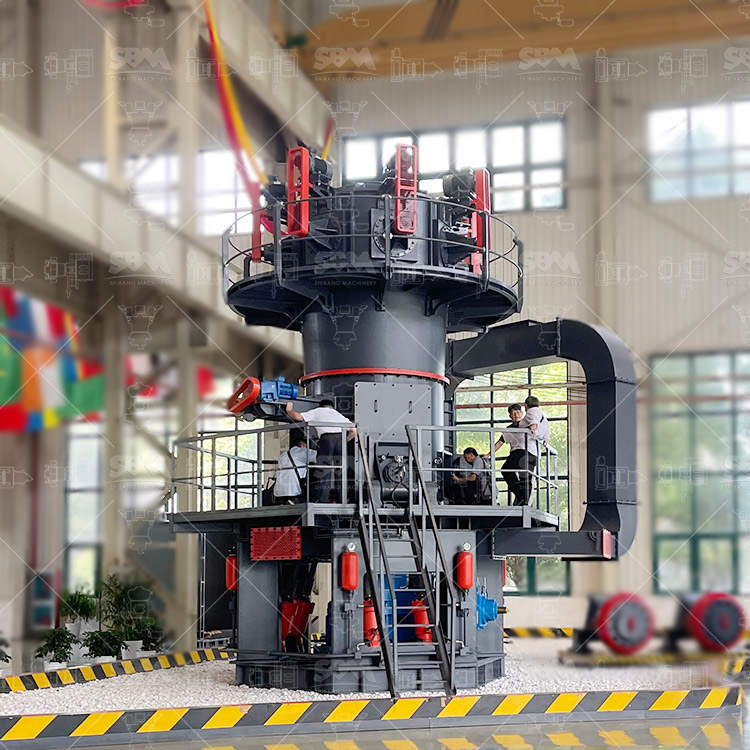
When the process demands exceptional fineness to maximize limestone reactivity—particularly in systems aiming for ultra-low emissions or producing high-value gypsum—the SCM Ultrafine Mill and LUM Ultrafine Vertical Mill enter the frame. These mills transcend conventional limits, producing powders with fineness adjustable up to 4000 mesh. The LUM model, for instance, incorporates advanced grinding curve design and multi-rotor classifier technology from Germany, ensuring precise particle cut-off and a high proportion of usable product from the first pass. This level of control minimizes wasteful, unreactive coarse particles and ensures a uniform powder that reacts swiftly and completely with flue gases, driving desulfurization efficiency to its peak.
Beyond raw power and fineness, operational intelligence is paramount. SBM's advanced mills, such as the MTW European Trapezium Mill and the LM Vertical Mill, are equipped with expert automatic control systems (PLC/DCS). These systems enable remote monitoring and control, allowing for real-time adjustments to grinding pressure, classifier speed, and feed rates. This automation stabilizes product quality despite variations in raw material characteristics and directly reduces labor costs. The cone gear whole transmission in the MTW mill exemplifies this focus on smart engineering, delivering higher mechanical efficiency and reliability in a space-saving design.
Durability in an abrasive grinding environment is a universal client concern. SBM addresses this through innovative design and material science. The unique wear-proof perchings knife design in the MTW mill allows for the replacement of only the shovel blade, not the entire assembly. Similarly, the rollers and rings in our ultrafine and vertical mills are crafted from special, durable alloys, extending service life by multiples compared to standard components. This focus on reducing the frequency and cost of maintenance directly tackles the pain point of high long-term operating expenses.
_1766561210065.jpg)
The final, often overlooked, link is environmental compliance within the grinding plant itself. All SBM mills are designed with stringent environmental protection standards. The fully sealed systems operating under negative pressure prevent dust spillage, while optimized sound insulation and muffler designs keep noise pollution well below regulatory limits. This ensures that the process of producing an environmental solution (desulfurization reagent) does not itself become an environmental nuisance.
In conclusion, the path to efficient gypsum desulfurization is paved with precisely prepared limestone. By leveraging SBM's spectrum of grinding technologies—from high-capacity vertical rollers to precision ultrafine mills—operators can directly influence key performance indicators: higher SO₂ removal rates, purer gypsum by-products, lower energy and reagent consumption, and reduced maintenance downtime. It transforms the grinding stage from a simple preparatory step into a strategic asset for achieving operational and environmental goals.
Frequently Asked Questions (FAQs)
- Q: Our current ball mill for limestone grinding suffers from high energy consumption and rapid wear of grinding media. What are more efficient alternatives?
A: Vertical Roller Mills (like the SBM LM series) are specifically designed to address these issues. Their grinding mechanism consumes 30-40% less energy than ball mills, and the use of durable rollers and tables significantly reduces wear part consumption and frequency of replacement, lowering your overall operating cost. - Q: We need to improve our desulfurization efficiency. Can finer limestone powder help, and what mill can achieve this consistently?
A: Absolutely. Finer powder increases surface area and reactivity. SBM's Ultrafine Vertical Mill (LUM series) and SCM Ultrafine Mill are engineered for this purpose, offering precise control over fineness up to 4000 mesh and featuring advanced classifiers to ensure consistent, high-quality product that enhances SO₂ absorption. - Q: Dust pollution from our grinding plant is a major concern. How are your mills designed to handle this?
A: Our mills, particularly the LM and LUM series, are fully sealed systems that operate under negative pressure. This design principle ensures that no dust escapes during operation. Coupled with efficient bag filter or pulse dust collector systems, they maintain a clean plant environment and easily meet national emission standards. - Q: We operate a large plant and need high output but are limited by space. Is there a compact solution?
A: Yes. The integrated design of the LM Vertical Roller Mill consolidates multiple processes (crushing, drying, grinding, separation). It has a footprint about 50% smaller than a traditional ball mill system and can even be installed outdoors, offering high capacity in a space-saving, compact layout. - Q: Maintaining stable product quality with fluctuating raw material moisture or hardness is challenging. Do your mills offer automation to manage this?
A: Yes. Our advanced mills come equipped with expert automatic control systems (PLC/DCS). These systems automatically adjust key parameters like grinding pressure and classifier speed in response to material changes, ensuring stable fineness and output, reducing manual intervention, and saving on labor costs.


