

Increased demand for desulfurization mills
Published: October 26, 2023
The global push for cleaner energy and stricter environmental regulations has catalyzed a significant surge in demand for high-performance desulfurization systems. At the heart of these systems lies the critical process of preparing finely ground limestone powder, a reagent essential for flue gas desulfurization (FGD) in power plants and industrial facilities. This growing demand places unprecedented pressure on grinding equipment, requiring solutions that deliver not only precise fineness and high capacity but also exceptional reliability, energy efficiency, and lower total operational costs. For over two decades, SBM Machinery has been at the forefront of this evolution, providing integrated grinding solutions that address the complex challenges of modern desulfurization projects across more than 180 countries. Our portfolio, from advanced vertical roller mills to high-capacity European trapezium mills, is engineered to transform raw limestone into the consistent, high-quality powder necessary for effective SO₂ capture, ensuring compliance and operational excellence.
The technical requirements for desulfurization limestone powder are stringent. The powder must achieve a specific fineness, typically ranging from 30 to 400 mesh, to maximize its reactive surface area and ensure efficient sulfur removal within the FGD scrubber. Inconsistent grind or inadequate throughput can directly compromise desulfurization efficiency, leading to non-compliance with emissions standards and potential operational penalties. Furthermore, the grinding process itself is energy-intensive, making energy consumption a primary concern for plant operators seeking to balance environmental mandates with economic viability.
Recognizing these dual challenges of performance and efficiency, SBM has developed the LM Vertical Roller Mill as a cornerstone solution for large-scale desulfurization projects. This mill integrates crushing, grinding, drying, and classification into a single, compact unit. Its design philosophy directly targets key industry pain points. The grinding rollers operate on a bed of material without direct metal-to-metal contact with the grinding plate, significantly reducing wear on consumable parts. Combined with high-quality materials, this leads to markedly longer service intervals and lower maintenance costs. More importantly, the vertical roller mill's grinding mechanism is inherently more energy-efficient than traditional ball mill systems, typically reducing power consumption by 30% to 40%—a critical advantage for continuous FGD operations.
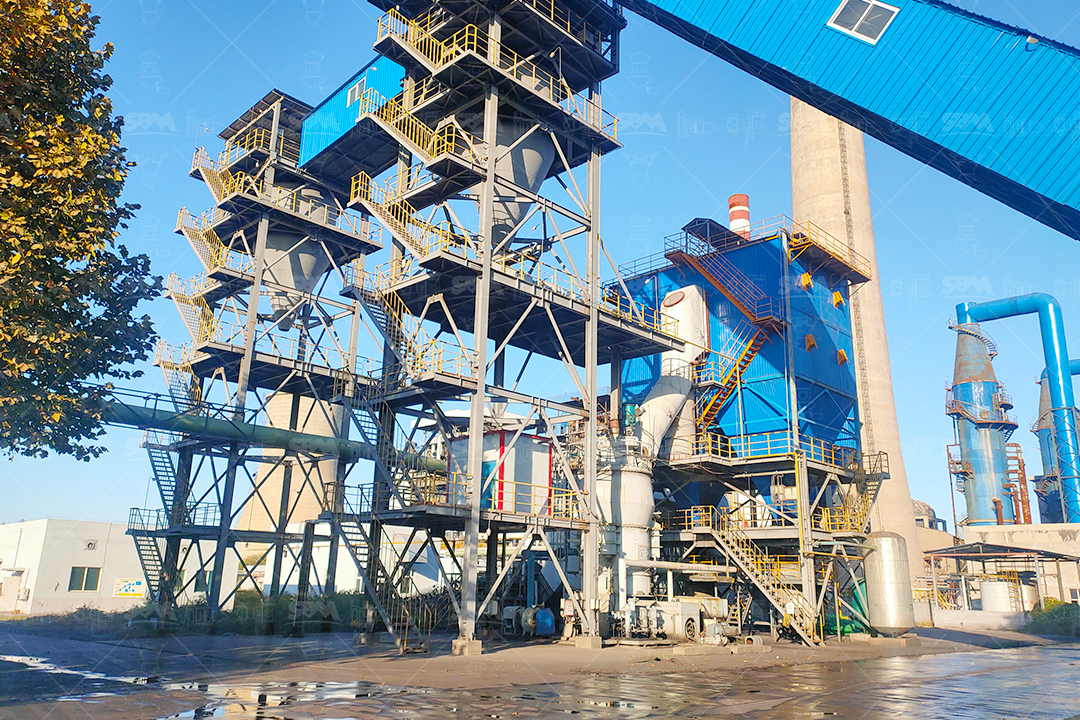
For projects requiring ultra-fine limestone powder to meet the most advanced FGD technologies or for applications where space is a constraint, the MTW Series European Trapezium Grinding Mill presents a robust alternative. This mill incorporates several patented innovations born from extensive R&D and customer feedback. Its cone gear whole transmission system ensures higher mechanical efficiency and smoother operation, while the unique curved shovel blade design optimizes material feeding and extends the lifespan of grinding components. The arc air duct design minimizes pneumatic resistance, ensuring efficient powder conveyance within the closed system. This mill is particularly adept at delivering stable, high-volume output within the precise fineness range required for reliable desulfurization.
Beyond the core grinding process, modern desulfurization operations demand intelligent control and environmental stewardship. SBM's advanced mills are equipped with automated control systems (PLC/DCS) that allow for remote monitoring and operation, enabling precise adjustment of grinding pressure, classifier speed, and other key parameters. This automation ensures consistent product quality, optimizes energy use, and reduces labor costs. From an environmental standpoint, the entire grinding system operates under negative pressure with comprehensive sealing, effectively preventing dust spillage. Integrated pulse dust collectors and sound insulation measures ensure that the operation not only produces the means for cleaner air but does so with minimal noise and dust pollution itself.
_1766647323504.jpg)
The journey from raw limestone to effective desulfurization reagent is a complex one, fraught with technical and economic hurdles. Equipment failure, high energy bills, inconsistent product quality, and frequent maintenance downtime are common pitfalls that can derail FGD system performance. SBM Machinery approaches these challenges not merely as a equipment supplier but as a total solution provider. Our expertise spans the entire mineral processing workflow, allowing us to recommend the optimal mill configuration—be it the high-capacity LM Vertical Mill, the precision-engineered MTW Trapezium Mill, or specialized ultrafine mills for niche applications—based on specific feedstock, capacity needs, and site conditions. This holistic approach, backed by a global service network, ensures that our clients' desulfurization grinding operations are not just compliant, but competitive, reliable, and sustainable for the long term.
Frequently Asked Questions (FAQs)
1. What is the primary challenge when selecting a mill for desulfurization limestone preparation?
The core challenge is balancing high throughput and precise fineness (typically 30-400 mesh) with low energy consumption and operational costs. Traditional mills often force a trade-off, but modern vertical roller and advanced trapezium mills are designed to achieve both efficiency and performance simultaneously.
2. How significant is wear part consumption in continuous desulfurization operations, and how can it be mitigated?
Wear part replacement is a major operational cost and source of downtime. Solutions like SBM's LM Vertical Mill use a grinding principle that minimizes direct contact between rollers and the table, while specialized material formulations for rollers and rings in our MTW Mill can extend service life by several times, drastically reducing cost-per-ton.
3. Can your grinding systems handle variations in limestone moisture content?
Yes. Integrated mills like the LM Vertical Roller Mill feature built-in drying capabilities using hot air sourced from auxiliary furnaces or waste heat. This allows them to handle feedstock with certain moisture levels directly, simplifying the process flow and eliminating the need for a separate dryer.
4. We are concerned about plant emissions and noise. Are your mills environmentally compliant?
Absolutely. Our grinding systems are designed as fully sealed, negative-pressure systems. This prevents dust escape during operation. Coupled with high-efficiency bag filter dust collectors and noise reduction technologies like soundproof rooms, they easily meet stringent national and international environmental and workplace safety standards.
5. What level of automation and control can we expect to optimize our grinding process?
Our advanced mills come with expert automatic control systems enabling remote operation and monitoring. Key parameters such as grinding pressure, classifier speed, and feed rate can be automatically adjusted and logged. This ensures consistent product quality, maximizes energy efficiency, allows for predictive maintenance, and significantly reduces manual intervention.


