

Processing limestone into calcium carbonate
Published on: October 26, 2023
The transformation of raw limestone into high-value calcium carbonate powder is a cornerstone process for numerous global industries, from construction and plastics to environmental desulfurization. Achieving the desired particle size, purity, and production efficiency, however, presents significant technical challenges, including high energy consumption, excessive wear part costs, and difficulties in reaching ultra-fine specifications. This article explores the modern grinding technologies that address these pain points, focusing on innovative mill designs that optimize the entire limestone-to-calcium-carbonate workflow for enhanced profitability and environmental compliance.
The journey from quarried limestone to refined calcium carbonate (GCC) is defined by precision grinding. The choice of grinding equipment directly impacts the product's marketability, operational costs, and plant footprint. Traditional methods often struggle with efficiency and flexibility. Today's advanced mills, however, are engineered as integrated systems that handle crushing, drying, grinding, classifying, and conveying in a streamlined, automated process.
For general-purpose grinding to coarse and medium fineness (30-400 mesh), the MTW Series European Trapezium Grinding Mill represents a significant evolution. Its design directly tackles the perennial issue of high maintenance costs. The patented combined-type shovel blade is a key innovation; only the blade itself needs replacement during service, not the entire assembly, drastically reducing downtime and spare parts inventory. Furthermore, its cone gear whole transmission system and optimized arc air duct design minimize energy losses in mechanical transmission and airflow, respectively. This results in a robust mill capable of 3-40 tph output that maintains consistent performance while lowering the total cost of ownership over its lifespan.
_1766852346646.jpg)
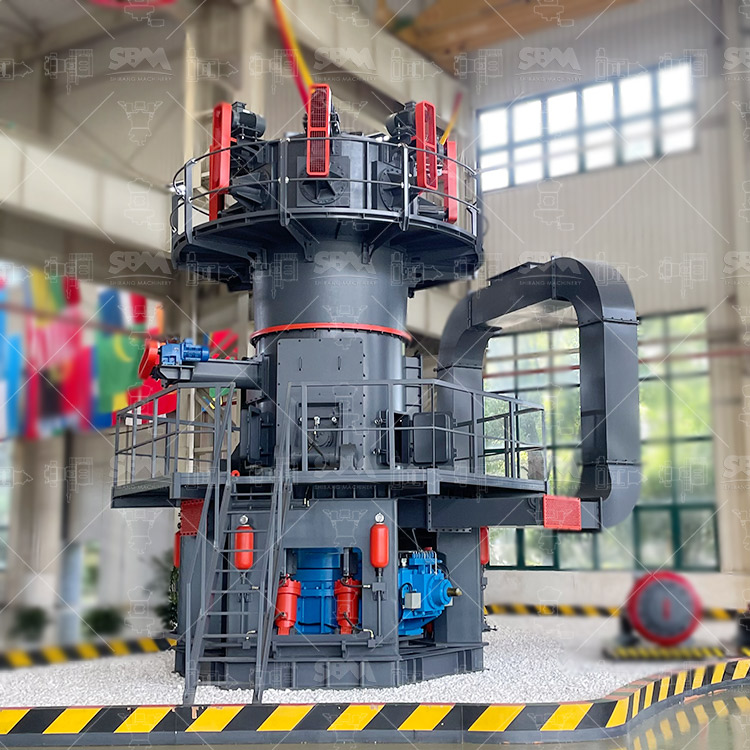
When project scale and energy efficiency are paramount, the LM Vertical Roller Mill emerges as a dominant solution. Its core advantage lies in its remarkably compact and integrated design. By combining multiple process stages into a single unit, it can reduce the plant's floor space by approximately 50% compared to traditional ball mill systems. The grinding principle—where rollers press on a rotating table—is inherently more efficient than impact or attrition in ball mills, leading to 30-40% lower energy consumption. The rollers and table, crafted from special wear-resistant materials, operate without direct metal-to-metal contact, extending service life. This mill, with a capacity range of up to 400 tph, is ideal for large-scale production of GCC for applications like cement, chemicals, and power plant desulfurization.
The demand for ultra-fine (above 400 mesh) and nano-grade calcium carbonate is rapidly growing in high-end sectors such as plastics, paints, and sealants. Meeting this demand requires specialized technology. The SCM Series Ultrafine Mill is engineered for this precise task. It achieves fineness up to 2500 mesh (D97 ≤5µm) through an enhanced grinding mechanism and a highly efficient vertical turbine classifier that ensures precise particle cut-off. Its heavy-duty rotor design and balanced construction provide exceptional stability, minimizing vibration even at ultra-fine settings. For even higher capacity in the ultra-fine range, the LUM Ultrafine Vertical Mill integrates German powder separation technology. Its unique roller and lining plate curve design promotes stable material bed formation, improving primary grinding efficiency and yield. Both mills feature advanced automatic control systems that allow remote operation and precise parameter adjustment for consistent product quality.
While newer technologies offer distinct advantages, the Ball Mill remains a reliable and versatile workhorse, particularly for wet grinding processes or specific mineral dressing applications. Modern optimizations have addressed its historical drawbacks. Improved liner and grinding media materials significantly reduce wear rates, while structural enhancements contribute to better energy utilization. It serves as a proven solution for projects where operational familiarity and specific process requirements align.
Selecting the optimal mill is not merely about matching feed and output size. It requires a holistic analysis of the entire production goal, including desired capacity, energy budget, available space, and target product value. A partner with deep process knowledge can make this critical difference. With experience delivering tailored grinding solutions to over 180 countries, the focus is on providing not just equipment, but a total system designed for longevity, efficiency, and a strong return on investment, turning raw limestone into a precisely engineered product that meets the exacting standards of tomorrow's markets.
Frequently Asked Questions (FAQs)
1. We struggle with frequent replacement of wearing parts in our current mill, leading to high maintenance costs and downtime. How do your mills address this?
Our mills are specifically designed for reduced wear part consumption. For instance, the MTW Mill features a unique combined shovel blade where only the blade tip is replaced. The Vertical Roller and Ultrafine Mills use specially formulated materials for rollers and grinding tables, and their non-impact grinding principles significantly extend component life, lowering your operating costs.
2. Energy consumption is our biggest operational expense. Are there solutions that can genuinely reduce our power usage?
Absolutely. The LM Vertical Roller Mill, for example, uses a highly efficient bed-compression grinding principle, typically consuming 30-40% less energy than a traditional ball mill system for the same output. This direct energy saving has a major impact on your long-term profitability.
3. We need to produce very fine (over 1000 mesh) calcium carbonate but find it difficult to control particle size distribution consistently. Is reliable ultra-fine grinding achievable?
Yes. Our SCM Ultrafine Mill and LUM Ultrafine Vertical Mill are engineered for this challenge. They incorporate advanced, high-precision turbine classifiers (like the multi-rotor system in the LUM mill) that provide accurate particle size cuts and prevent coarse powder spillover, ensuring a consistent, narrow particle distribution up to 2500 mesh.
4. Our plant space is limited. Can modern grinding systems be more space-efficient than traditional layouts?
Modern integrated mills offer a compact footprint. The LM Vertical Roller Mill is a prime example, as it combines multiple processing stages (drying, grinding, separation) into one vertical unit. This integrated design can reduce the required floor space by about 50% compared to a conventional ball mill circuit, allowing for easier installation in constrained areas.
5. We are concerned about environmental compliance, specifically dust emissions and noise. How are these issues managed?
Environmental protection is a core design principle. Our milling systems operate under fully sealed, negative-pressure conditions, effectively preventing dust escape. They are equipped with high-efficiency pulse dust collectors. Furthermore, optimized mechanical designs, sound insulation, and mufflers ensure operational noise is kept well within stringent regulatory standards.


