

Brand selection key for mill purchase
Published: October 26, 2023
Selecting the optimal grinding mill is a critical capital investment decision that directly impacts operational efficiency, product quality, and long-term profitability. This guide synthesizes key technical and strategic considerations, drawing from SBM Machinery's global experience as a total solution provider serving over 180 countries. The core of a sound selection lies in meticulously aligning the mill's technological capabilities with your specific material characteristics, target fineness, required throughput, and overarching operational goals—from energy consumption and footprint to environmental compliance and automation needs. Beyond mere specifications, the chosen partner must demonstrate proven expertise across the entire mineral processing workflow, ensuring the equipment integrates seamlessly into your production line as a future-proof asset.
The foundation of any successful mill purchase is a precise understanding of the application. SBM grinding equipment serves a vast spectrum, from environmental desulfurization limestone powder and large-scale non-metallic mineral processing to specialized sectors like coal powder preparation, petroleum coke grinding, slag micro-powder, and new energy materials. Each application imposes unique demands on grindability, moisture content, abrasiveness, and desired particle size distribution. A mill perfectly suited for producing coarse calcium carbonate at 40 tons per hour (tph) may be entirely inadequate for achieving a 2500-mesh ultrafine powder. Therefore, the initial step is a rigorous analysis of your raw material and final product specifications.
Once application parameters are defined, the selection narrows to matching them with the appropriate mill technology. SBM's portfolio encompasses several distinct architectures, each with inherent strengths.
For robust, high-capacity grinding in the 30-400 mesh range, the MTW Series European Trapezium Grinding Mill represents an evolved Raymond mill design. It incorporates customer-driven innovations such as Cone Gear Whole Transmission for compact, efficient power transfer and an inner oil absorption lubrication system for reliability. Its arc air duct design minimizes pneumatic resistance, while the unique wear-proof shovel blade design allows for partial replacement, significantly reducing maintenance time and spare parts cost. This mill is a workhorse for consistent, large-volume production where extreme fineness is not the primary goal.
_1767511434039.jpg)
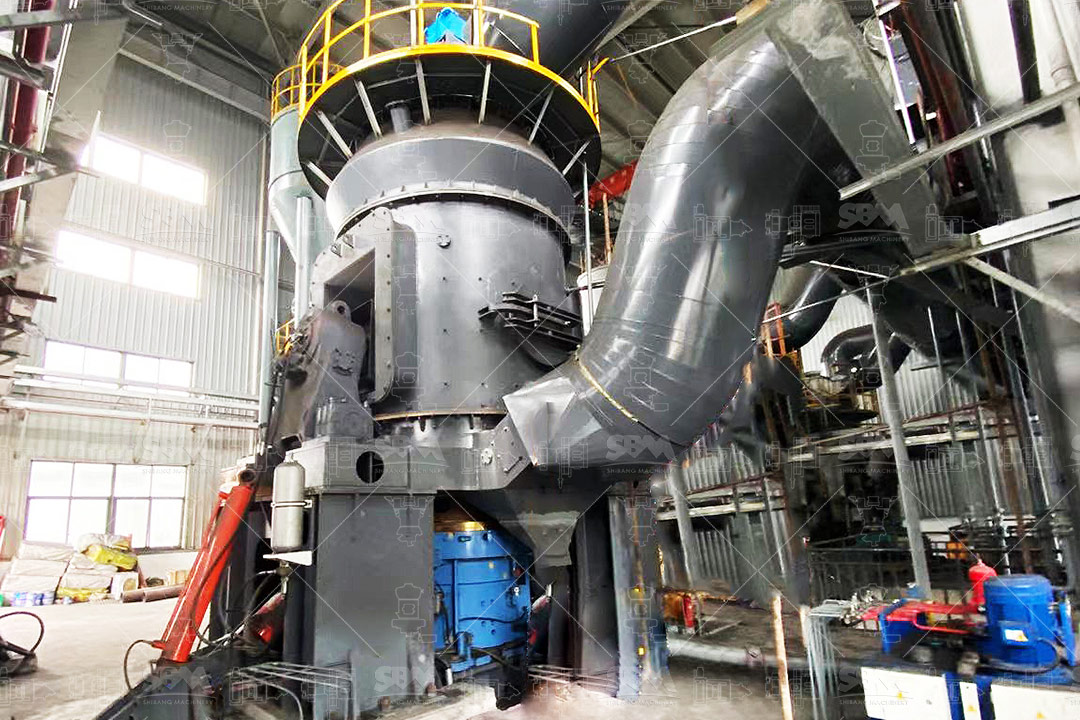
When space optimization, drying capability, and energy efficiency are paramount, the LM Vertical Roller Mill offers a compelling integrated solution. By combining crushing, drying, grinding, and separation in a single unit, it reduces the plant footprint by approximately 50% compared to traditional ball mill systems. Its operating principle—where rollers grind material on a plate without direct metal-to-metal contact—leads to less wear and up to 40% lower energy consumption. Furthermore, its fully sealed, negative-pressure operation ensures an environmentally friendly process with minimal dust emission. This makes it ideal for cement, coal, and chemical industries processing materials with moderate moisture.
The pursuit of ultra-fine powders (325-4000 mesh) necessitates specialized technology. The SCM Series Ultrafine Mill is engineered for high-output, low-energy consumption fine grinding, achieving fineness levels like D97≤5μm. Its heavy rotor design and special material rollers ensure durability, while an efficient turbine powder classifier guarantees precise particle size cuts. For even higher capacity in the ultrafine domain (10-70 tph), the LUM Ultrafine Vertical Mill integrates advanced German separation technology and Taiwan grinding roller expertise. Its intelligent PLC/DCS control system allows precise adjustment of grinding pressure and classifier speed, enabling customization of finished product fineness for high-value industries like plastics, PVC, and artificial stone.
While newer technologies offer advantages, the Ball Mill remains a mature and versatile option, particularly for wet grinding in mineral dressing or producing common powders. Modern optimizations focus on mitigating traditional pain points like high liner and ball wear rates and excessive energy use through improved structural designs and advanced materials. The choice between dry and wet ball milling is fundamentally dictated by the downstream process requirements.
Beyond the core grinding mechanism, several overarching factors define a premium mill supplier. Operational Cost is a lifetime consideration; evaluate designs that lower energy use, reduce wear part consumption, and simplify maintenance. System Intelligence is no longer a luxury; look for expert automatic control systems that enable remote monitoring, stabilize operation, and save labor costs. Environmental Compliance is critical; ensure the system operates under negative pressure with effective dust collection and noise suppression to meet stringent standards. Finally, assess the provider's capability as a Total Solution Partner. Can they offer comprehensive testing, process design, installation support, and responsive after-sales service? A supplier with a proven track record across the global powder processing industry brings invaluable application knowledge that de-risks your investment.
In conclusion, the key to mill selection is moving beyond a simple specification sheet. It requires a holistic analysis of your material, process goals, and total cost of ownership, paired with a supplier whose technological portfolio and project execution expertise can deliver not just a machine, but a optimized, sustainable grinding solution.
Frequently Asked Questions (FAQs)
Q1: We struggle with high energy costs and frequent replacement of worn parts in our current grinding circuit. What solutions can address these twin pain points?
A: Modern mills like the LM Vertical Roller Mill and MTW European Trapezium Mill are specifically designed to tackle these issues. The LM mill's grinding principle can reduce energy consumption by 30-40% versus traditional systems, and its design minimizes direct wear. The MTW mill features a unique shovel blade where only the tip needs replacement, drastically cutting spare part costs and downtime.
Q2: Our new product line requires a very fine and consistent powder (over 1500 mesh). Can standard mills achieve this, and how is consistency ensured?
A: Standard Raymond or trapezium mills are not suitable for such high fineness. You would need an ultrafine grinding solution like the SCM or LUM series. These mills incorporate high-precision turbine or multi-rotor classifiers that provide accurate particle size cuts and prevent coarse powder spillover, ensuring consistent product quality. Intelligent controls further stabilize the process.
Q3: Our plant space is very limited. Are there grinding systems that offer a compact footprint?
A: Yes. Vertical roller mills (LM, LUM) are the ideal choice for space-constrained sites. By integrating multiple functions (drying, grinding, separation) into a single vertical structure, they can reduce the required floor area by up to 50% compared to horizontal ball mill systems and can even be installed outdoors.
Q4: How can we modernize our grinding operation for better environmental compliance and easier operation?
A: Contemporary mills prioritize both. Fully sealed systems operating under negative pressure, like the LM and LUM mills, eliminate dust spillover. Integrated pulse dust collectors and sound insulation meet strict emission and noise standards. Furthermore, PLC/DCS automatic control systems allow for remote operation, simple parameter adjustment, and reduced manual labor, modernizing the entire workflow.
Q5: We process a variety of non-metallic minerals with different hardness and moisture levels. How do we choose one mill that can handle variability?
A: Flexibility is key. Look for mills with a wide adjustable range for fineness (e.g., 30-400 mesh or 325-4000 mesh) and capacity. Vertical roller mills with integrated drying functions handle moderate moisture well. Crucially, partner with a supplier like SBM that offers application testing and expert consulting. Their experience across over 180 countries with diverse materials means they can recommend the most robust and adaptable technology for your specific mix of materials.


