

Auxiliary equipment for a powder production line
Published on: October 26, 2023
A modern powder production line is a complex symphony of machinery, where the core grinding mill is only one part of the equation. True operational excellence, high yield, and consistent product quality depend heavily on a well-engineered ecosystem of auxiliary equipment. From efficient material handling and precise feeding to effective dust collection and intelligent control systems, these supporting components are critical in addressing common industry pain points such as high energy consumption, inconsistent fineness, excessive downtime, and environmental compliance challenges. This article explores the integral role of auxiliary solutions in building a robust, future-proof powder processing operation.
While the selection of the primary grinding mill—be it an MTW European Trapezium Mill for robust mid-range grinding, an LM Vertical Roller Mill for large-scale integrated processing, or an SCM Ultrafine Mill for superfine powders—sets the foundational capability of a plant, its potential is often bottlenecked by auxiliary limitations. A mill operating at peak efficiency can be undermined by erratic feeder performance causing feed surges, or its energy savings negated by an inefficient dust collection system that strains the main fan. Therefore, viewing the production line as a holistic system is paramount for achieving the promised return on investment.
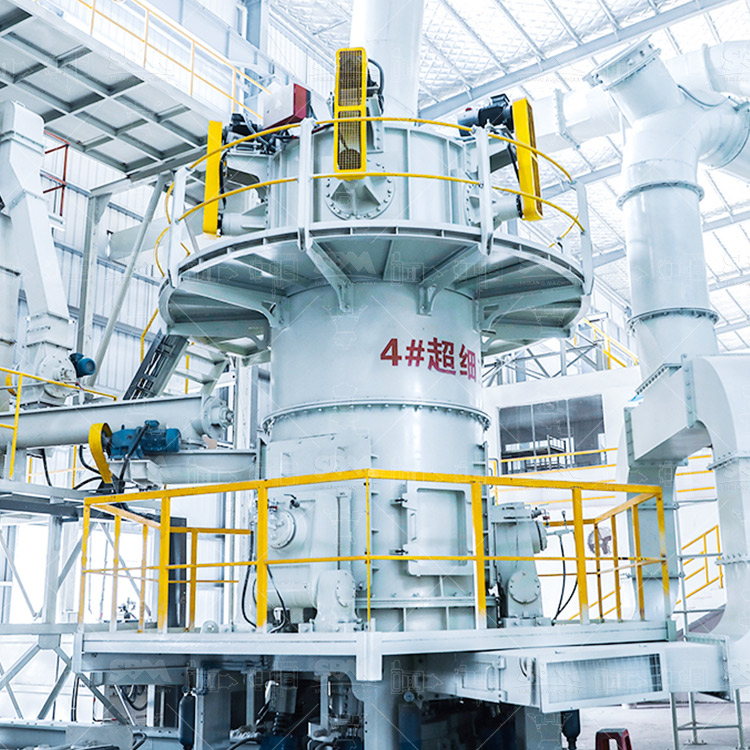
One of the most frequent pain points in powder processing is material handling and pre-processing. Raw materials often arrive with inconsistent moisture content or oversized lumps, which can severely impact grinding efficiency and mill throughput. Auxiliary equipment like pre-dryers, dehumidifiers, and primary crushers or jaw crushers are essential for conditioning the feed. By ensuring a consistent, optimally-sized, and dry feed material, these units protect the grinding mill from shock loads and clogging, directly extending the life of wear parts like rollers, rings, and liners. This pre-processing stage is a critical investment that pays dividends in reduced maintenance costs and stable operation, especially for moisture-sensitive materials processed in vertical or ultrafine mills.
Following grinding, powder classification and collection become the decisive factors for product quality. High-efficiency classifiers, such as dynamic or turbo classifiers, work in tandem with the mill to ensure precise particle size distribution. They recycle coarse particles back to the grinding chamber for further processing, preventing them from contaminating the final product. This is particularly crucial for applications requiring tight fineness specifications, such as those served by the LUM Ultrafine Vertical Mill. Paired with advanced classifiers, these mills can reliably achieve fineness up to 4000 mesh. The collected fine powder then moves to dust collection systems. Modern pulse-jet baghouse filters or cartridge collectors, designed for high filtration efficiency and low pressure drop, are indispensable. They not only ensure a clean working environment and regulatory compliance but also recover valuable product that would otherwise be lost, directly boosting overall yield.
Automation and control systems represent the nervous system of a modern powder line. An intelligent PLC/DCS control system does far more than start and stop sequences. It continuously monitors key parameters: grinding pressure in a vertical mill, classifier speed, fan airflow, and bearing temperatures. By integrating feedback loops, the system can automatically adjust feeder rates or classifier settings to maintain a set product fineness despite variations in raw material hardness. This level of automation, a standard feature in SBM's advanced mills, translates to remarkable consistency in output, significant labor cost savings, and proactive maintenance alerts that prevent catastrophic failures. Operators can manage the entire line from a central console, optimizing performance based on real-time data.
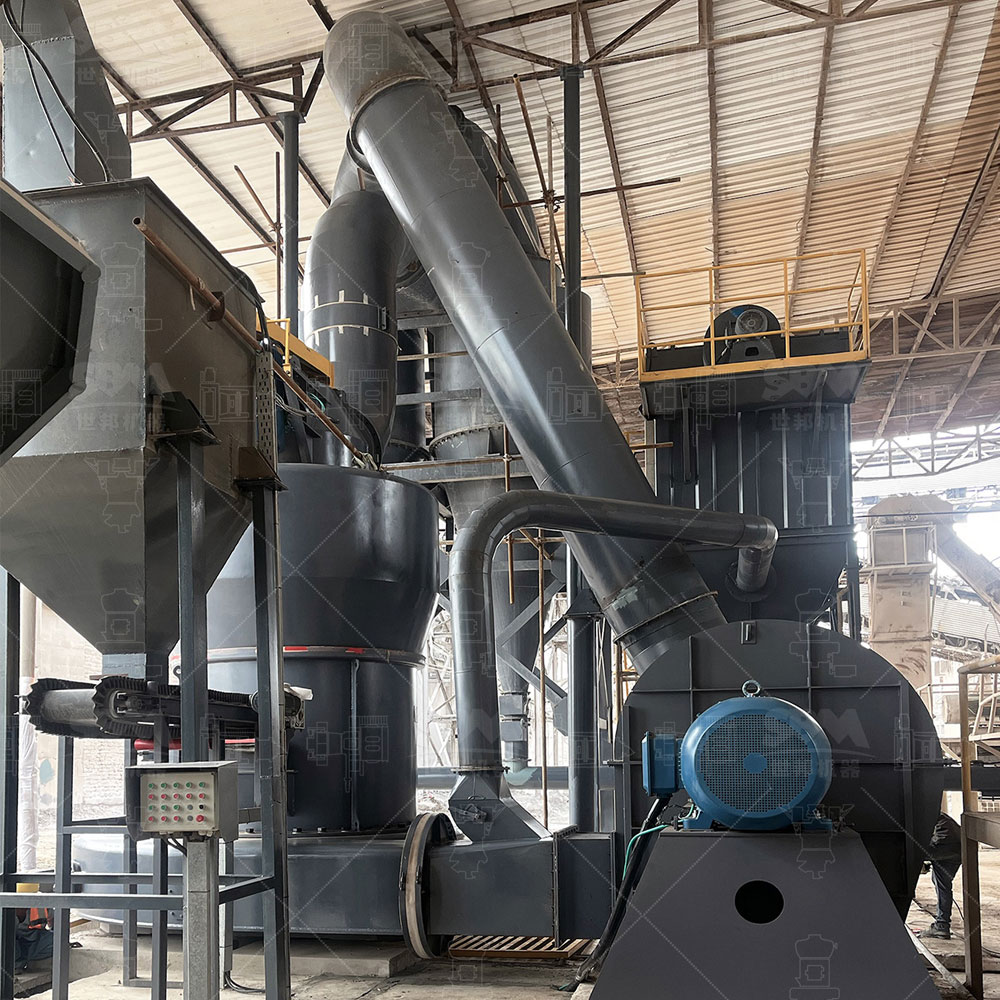
Finally, auxiliary equipment for material storage, conveying, and packaging ensures a smooth transition from production to dispatch. Silo storage systems with proper aeration prevent powder caking and allow for product homogenization. Enclosed screw conveyors, bucket elevators, or pneumatic conveying systems transport material without spillage or contamination. Automated weighing and packaging systems complete the line, ensuring efficiency and accuracy at the final stage. When all these auxiliary components—from feeding to packaging—are seamlessly integrated and matched to the capacity and characteristics of the core grinding mill, the result is a production line that operates with minimal downtime, optimal energy use, and exceptional product quality. It transforms a collection of machines into a coherent, profitable asset.
Frequently Asked Questions (FAQs)
Q1: Our main grinding mill is powerful, but our overall energy consumption is still too high. Where should we look for improvements?
A: Often, the culprit is not the mill itself but auxiliary systems. Inefficient dust collectors with high system resistance can force the main fan to consume excessive power. Similarly, outdated feeders or conveyors may use more energy than necessary. An audit focusing on fan power, conveyor drives, and the efficiency of your classification system can reveal significant savings opportunities.
Q2: We struggle with inconsistent product fineness, especially when raw material properties change. Can auxiliary equipment help?
A: Absolutely. Consistency starts with a uniform feed. Installing a pre-homogenization silo or a more precise weigh feeder can stabilize input to the mill. More importantly, integrating an advanced online particle size analyzer with a feedback loop to your classifier's speed control can automatically adjust settings in real-time to maintain a constant fineness, regardless of feed variations.
Q3: Dust emission and plant cleanliness are major concerns for us. What is the most effective solution?
A: A high-performance pulse-jet bag filter or cartridge dust collector is essential. Ensure it is correctly sized for your air volume and has high-filtration-efficiency media. Crucially, the entire system from mill outlets to conveyor transfers must be tightly sealed and operate under negative pressure to prevent any dust leakage at source points.
Q4: We experience frequent wear and tear on parts not directly in the grinding chamber, leading to unplanned stops. What causes this?
A: This is commonly due to abrasive feed material or improper material handling before the mill. Installing a dedicated pre-crusher to reduce oversized, hard lumps and using wear-resistant liners in feed hoppers, chutes, and elevator legs can dramatically extend the life of these auxiliary components and improve overall line reliability.
Q5: Is automating our existing, older powder line worthwhile, or does it require a completely new mill?
A: Retrofitting automation is often highly worthwhile and can be done independently of replacing the core mill. Upgrading to a modern control system with sensors on key auxiliary equipment (feeders, fans, classifiers) can deliver immediate benefits in operational stability, energy saving, and reduced human error, breathing new life into an existing production line.


