

Carbon black & fine powder processing equipment
Published on: October 26, 2023
The processing of carbon black and fine powders presents unique challenges across industries such as chemicals, new energy materials, and non-metallic minerals. Achieving consistent fineness, managing operational costs, ensuring environmental compliance, and maximizing throughput are persistent concerns. Shanghai SBM Machinery Equipment Co., Ltd. addresses these challenges through a comprehensive portfolio of advanced grinding systems. With expertise spanning the entire mineral processing workflow and equipment serving over 180 countries, SBM provides tailored solutions that enhance efficiency, product quality, and sustainability. This article explores the technical innovations within SBM's key grinding mills—including the European Trapezium Mill, Vertical Roller Mill, and Ultrafine Mill—and how their design directly tackles the core pain points in fine powder production.
In the demanding field of carbon black processing, where fineness and particle distribution are critical for performance in rubber, plastics, and coatings, traditional equipment often falls short. Operators frequently grapple with excessive energy consumption, high wear-part replacement costs, and difficulty in achieving sub-micron ranges consistently. SBM's engineering philosophy centers on overcoming these hurdles through intelligent design. For instance, the MTW Series European Trapezium Grinding Mill incorporates a patented cone gear whole transmission system. This isn't just a minor upgrade; it's a fundamental rethinking of power delivery, resulting in higher transmission efficiency, reduced space requirements, and lower long-term investment costs. The mill's unique wear-proof perching knife design, featuring combined-type curved shovel blades, allows for the replacement of only the blade segment during maintenance, drastically cutting downtime and spare parts expenditure.
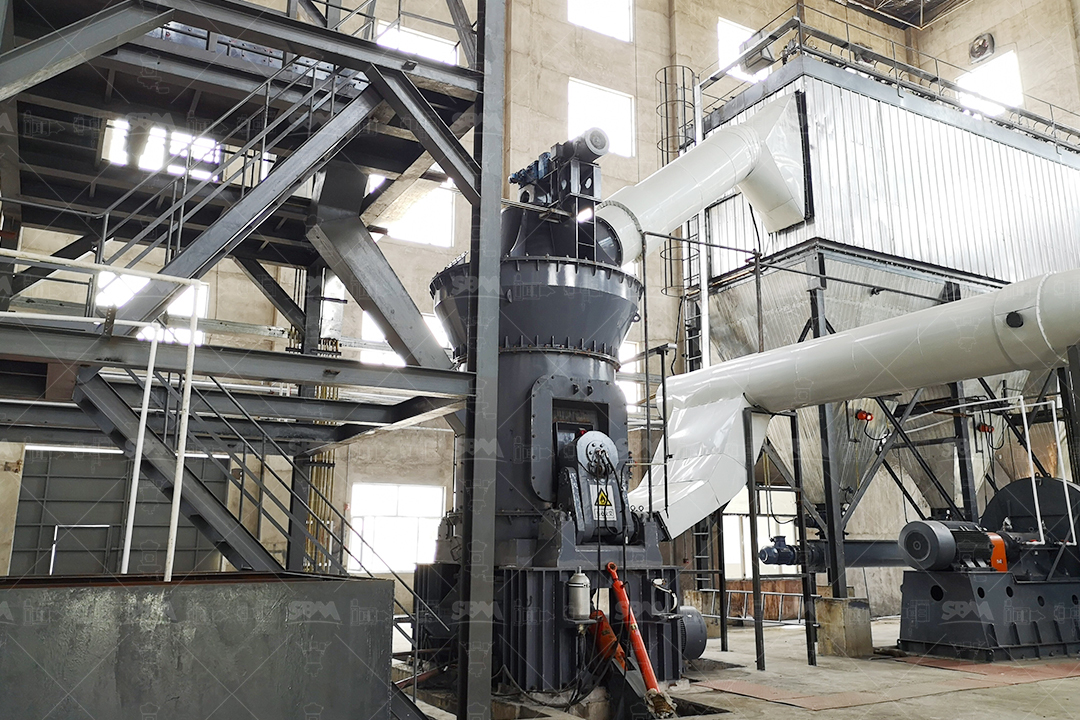
_1767975462406.jpg) The quest for higher capacity and lower operational expense is paramount. Here, the LM Vertical Roller Mill emerges as a game-changer. By integrating crushing, drying, grinding, and classification into a single, compact unit, it slashes the footprint by approximately 50% compared to traditional ball-milling systems. Its operating principle—where rollers grind material on a plate without direct metal-to-metal contact—translates to significantly less wear. Coupled with high-quality materials for rollers and plates, this leads to a service life that is multiples longer than conventional options. The energy savings are even more compelling, with documented reductions of 30-40% versus ball mills. For plant managers, this means a direct and substantial impact on the bottom line.
The quest for higher capacity and lower operational expense is paramount. Here, the LM Vertical Roller Mill emerges as a game-changer. By integrating crushing, drying, grinding, and classification into a single, compact unit, it slashes the footprint by approximately 50% compared to traditional ball-milling systems. Its operating principle—where rollers grind material on a plate without direct metal-to-metal contact—translates to significantly less wear. Coupled with high-quality materials for rollers and plates, this leads to a service life that is multiples longer than conventional options. The energy savings are even more compelling, with documented reductions of 30-40% versus ball mills. For plant managers, this means a direct and substantial impact on the bottom line.
When the application demands ultra-fine powders, such as in advanced battery materials or high-grade coatings, standard mills reach their limits. SBM's SCM Series Ultrafine Mill and LUM Ultrafine Vertical Mill are engineered specifically for this frontier. The SCM mill can achieve a one-time fineness of D97≤5μm (approx. 2500 mesh) while offering output more than twice that of jet mills with 30% lower energy consumption. This high-efficiency performance shatters the traditional trade-off between fineness and productivity. The LUM model takes it further with advanced German powder-separating technology, ensuring precise particle cut-points and eliminating low-grade material from the final product. Its intelligent PLC control system automates critical parameters like grinding pressure and classifier speed, ensuring consistent quality with minimal manual intervention.
 Beyond performance, modern industry cannot overlook environmental and operational stability. All SBM mills are designed with stringent environmental standards in mind. Fully sealed systems operating under negative pressure prevent any dust spillover, while optimized sound insulation keeps noise pollution well below required thresholds. The automated control systems are not mere add-ons but integral components that enable remote monitoring and control, reducing labor costs and human error. This combination of robust engineering, smart technology, and environmental stewardship makes SBM equipment not just a processing tool, but a strategic asset for future-proofing operations in the competitive fine powder market.
Frequently Asked Questions (FAQs)
Q1: We struggle with high energy costs in our fine powder grinding process. What solutions can help?
A: SBM's Vertical Roller Mills (LM & LUM series) are specifically designed for high efficiency, typically reducing energy consumption by 30-40% compared to traditional ball mill systems. Their integrated design and direct grinding principle minimize power loss.
Q2: Achieving consistent ultrafine fineness below 10μm is a major challenge for us. Is reliable equipment available?
A: Yes. The SCM Ultrafine Mill and LUM Ultrafine Vertical Mill are engineered for this purpose. They feature advanced classifier technology and precise control systems to reliably produce powder in the range of 325-4000 mesh (D97≤5μm), ensuring batch-to-batch consistency.
Q3: Wear part replacement causes frequent downtime and high maintenance costs. How is this addressed?
A: Our mills utilize special material formulations for rollers and rings, and designs like the MTW's combined shovel blade. These innovations extend service life significantly, often by multiples, and allow for partial component replacement, reducing both spare part costs and maintenance time.
Q4: Dust control and meeting environmental regulations are constant concerns. How do your systems perform?
A: All SBM grinding systems are fully sealed and operate under negative pressure, inherently preventing dust escape. They are equipped with high-efficiency pulse dust collectors, ensuring emissions easily meet stringent international and national environmental standards.
Q5: We need to process moisture-sensitive materials like certain carbon blacks. Do your mills offer drying capability?
A: Absolutely. The LM and LUM Vertical Roller Mills integrate a highly effective drying function within the grinding chamber. Hot air is introduced alongside the material, allowing simultaneous drying and grinding, which is ideal for materials with residual moisture.


