

Titanium dioxide applications in coatings
Published on: October 26, 2023
Titanium dioxide (TiO2) is the cornerstone pigment in the coatings industry, prized for its exceptional opacity, brightness, and UV resistance. Its effective dispersion and optimal particle size distribution, however, are critical challenges that directly influence coating quality, durability, and production efficiency. This article explores the pivotal role of TiO2 in modern coatings and how advanced grinding technologies, such as those offered by SBM Machinery, provide tailored solutions to overcome processing hurdles, ensuring superior pigment performance and sustainable manufacturing.
The efficacy of titanium dioxide in coatings is fundamentally linked to its particle characteristics. Finely ground, uniformly dispersed TiO2 particles maximize light scattering, which translates into superior hiding power, whiteness, and gloss. Conversely, poor dispersion or inconsistent particle size can lead to agglomeration, reduced opacity, increased binder demand, and ultimately, compromised film integrity and weatherability. Therefore, the selection of grinding equipment is not merely a production step but a strategic decision impacting the final product's market competitiveness.
For large-scale production of standard coating-grade TiO2, where consistent quality and high throughput are paramount, the MTW Series European Trapezium Grinding Mill stands out. Its innovative design, featuring cone gear whole transmission and an inner oil absorption lubrication system, ensures stable, high-efficiency operation with minimal energy loss. The unique curved shovel blade design prolongs the service life of grinding components, directly addressing the industry pain point of high wear-part costs in abrasive material processing. This mill is ideal for achieving fineness between 30-400 mesh, meeting the requirements for many architectural and industrial coatings.
_1768321047888.jpg)
When processing capacity, energy efficiency, and integrated drying are critical—especially for TiO2 slurries or when incorporating surface-treated pigments—the LM Vertical Roller Mill offers a compelling solution. By integrating crushing, drying, grinding, and classification in a single unit, it reduces the plant footprint by approximately 50% compared to traditional ball mill systems. Its grinding principle, where rollers grind materials on a plate without direct metal-to-metal contact, results in up to 40% lower energy consumption and significantly reduced wear. This makes it exceptionally suitable for modern, eco-conscious coating manufacturers aiming to lower operating costs and carbon footprint while maintaining high output.
The demand for high-performance and specialty coatings is driving the need for ultrafine and nano-sized TiO2. These pigments offer enhanced properties like improved transparency, better UV blocking, and superior scratch resistance in clear coats and advanced functional coatings. For this cutting-edge segment, SBM's SCM Ultrafine Mill and LUM Ultrafine Vertical Mill are engineered to excel. Capable of producing powders from 325 to 4000 mesh, these mills achieve fineness levels where D97 ≤ 5μm. The LUM model, integrating advanced powder separation technology, ensures precise particle cut-points and eliminates coarse powder spillover. This level of control is essential for producing the consistent, high-grade ultrafine TiO2 required in automotive, aerospace, and premium industrial coatings.
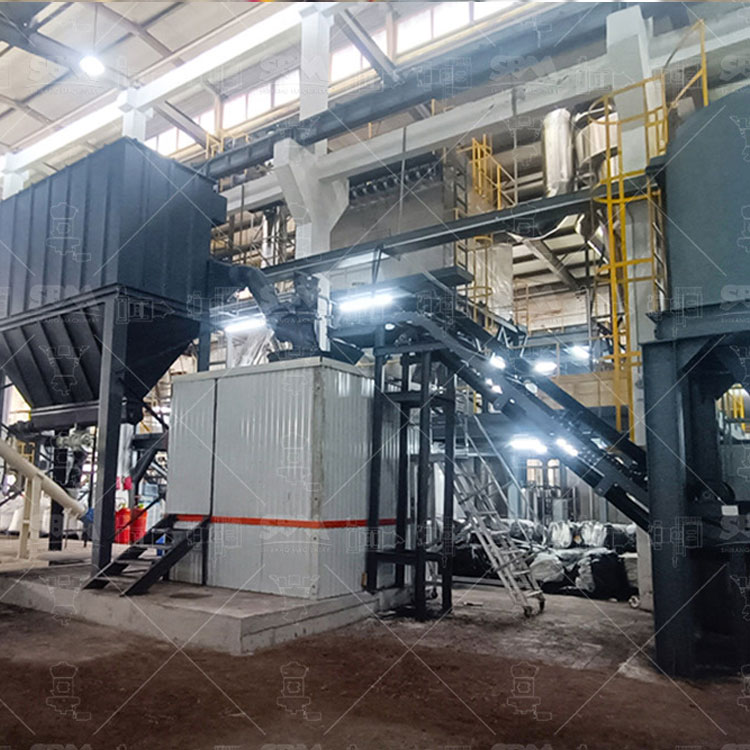
Finally, for certain primer coatings or specific formulations where cost-effective grinding of coarser fills alongside TiO2 is needed, the optimized Ball Mill remains a reliable workhorse. Modern improvements in liner and ball materials have mitigated traditional issues of high wear and energy consumption, making it a viable option for integrated grinding processes.
In conclusion, maximizing the value of titanium dioxide in coatings hinges on precision grinding. From high-volume standard grades to specialty ultrafine pigments, selecting the right grinding technology—one that balances fineness control, energy efficiency, system simplicity, and operational cost—is crucial. Partnering with a total solution provider like SBM Machinery, with expertise spanning the entire mineral processing workflow and a global track record, ensures access to tailored equipment that transforms TiO2 from a raw material into a driver of coating performance and innovation.
Frequently Asked Questions (FAQs)
Q1: We struggle with achieving consistent brightness and opacity in our white coatings. Could our TiO2 grinding process be the issue?
A: Absolutely. Inconsistent particle size distribution and poor dispersion directly reduce TiO2's light-scattering efficiency, leading to lower opacity and batch-to-batch quality variations. Advanced mills with precise classification systems, like our LUM Ultrafine Vertical Mill, ensure uniform fineness and optimal dispersion for maximum hiding power.
Q2: Our energy costs for pigment processing are excessively high. Are there solutions to reduce this without sacrificing output?
A: Yes. Traditional grinding systems can be energy-intensive. Technologies like our LM Vertical Roller Mill are designed for high grinding efficiency, consuming 30-40% less energy than conventional ball mills for the same output, offering significant long-term cost savings.
Q3: We experience rapid wear of grinding parts when processing abrasive materials like TiO2, leading to high maintenance costs and downtime.
A: This is a common challenge. Our equipment addresses this through specialized material science and design. For instance, the MTW Mill's wear-proof shovel blade design and the use of special materials for rollers and rings in our vertical mills dramatically extend service life, reducing spare part costs and improving operational continuity.
Q4: We need to produce ultrafine TiO2 for specialty coatings but face challenges with product consistency and environmental dust control.
A: SBM's ultrafine grinding solutions are built for this. The SCM and LUM series mills feature fully sealed, negative-pressure systems that prevent dust spillover. Coupled with high-efficiency powder collectors and intelligent control systems, they guarantee consistent, high-fineness product while meeting stringent environmental standards.
Q5: We want to expand our production line but have limited factory space. Is integrated equipment available?
A: Space constraints are a key consideration. Our LM Vertical Roller Mill and LUM Ultrafine Vertical Mill are designed with a compact, integrated layout, combining multiple functions (drying, grinding, separation) into one system. This can reduce the floor space requirement by up to 50% compared to traditional setups, allowing for efficient space utilization.


