

Applications of recycled construction waste
Published: October 26, 2023
The recycling of construction and demolition waste (CDW) represents a critical frontier in sustainable urban development, transforming debris into valuable resources. With global urbanization accelerating, the effective processing of concrete, bricks, asphalt, and other inert materials is no longer an option but a necessity for reducing landfill pressure, conserving natural resources, and lowering carbon footprints. The core challenge lies in efficiently converting heterogeneous, often contaminated waste streams into high-quality, specification-grade aggregates and powders for reuse in new construction, road bases, or as raw materials in industrial processes. Advanced grinding technology is pivotal to this transformation, enabling precise particle size reduction and classification that determines the end-product's market value and applicability. This article explores the multifaceted applications of recycled construction waste and the technological solutions that make large-scale, economically viable recycling a reality.
The journey from rubble to resource begins with crushing and sorting, but the true value-addition occurs during the fine and ultra-fine grinding stages. Here, materials like recycled concrete, brick, and glass are processed into powders of specific fineness for targeted applications. For instance, finely ground concrete powder can be used as a supplementary cementitious material (SCM) or in soil stabilization, while processed brick powder finds use in ceramics or as a pigment. The efficiency, consistency, and energy consumption of this grinding process are paramount, directly impacting the economic and environmental calculus of any recycling operation.
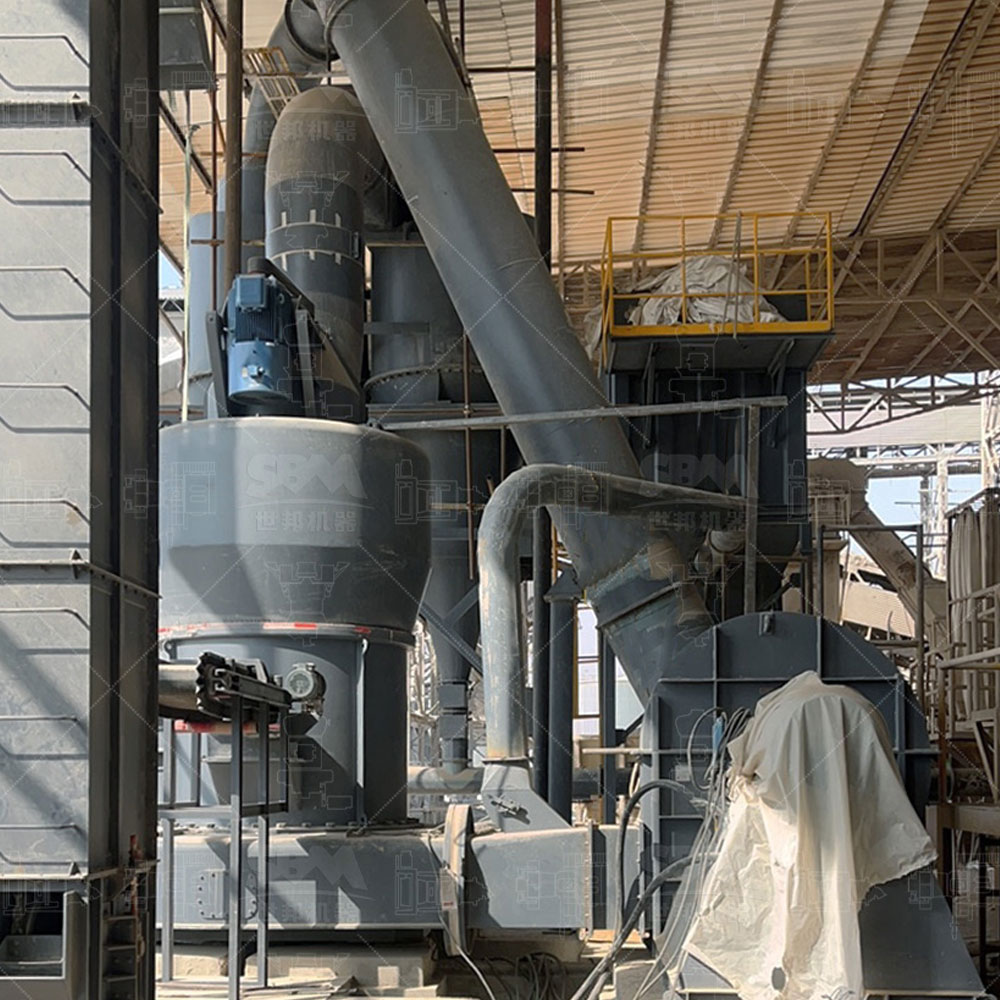
This is where specialized milling equipment proves indispensable. Take the processing of recycled concrete into fine filler for asphalt mixes. Traditional methods might struggle with variable feed material hardness and the need for a consistent 200-mesh output. A solution like the MTW Series European Trapezium Grinding Mill is engineered for such challenges. Its unique wear-proof combined shovel blade design minimizes maintenance costs when processing abrasive materials, while the cone gear whole transmission ensures stable, efficient power delivery crucial for continuous operation. The arc air duct design optimizes airflow, essential for separating and collecting the desired fine powder from the grinding chamber efficiently. This mill's ability to handle input sizes up to 50mm and produce outputs from 30 to 400 mesh makes it exceptionally versatile for the primary and secondary grinding stages in CDW recycling lines.
For operations aiming to produce even finer powders or handle higher throughputs of pre-crushed waste, vertical roller mills offer a compelling advantage. The LM Vertical Roller Mill integrates crushing, grinding, drying, and classification in a single unit, offering a compact footprint—ideal for urban recycling facilities with space constraints. Its principle of material bed grinding, where rollers compress material on a rotating table, results in significantly lower energy consumption (30-40% less than traditional ball mills) and reduced wear, as there is no direct metal-to-metal contact. This is critical when processing construction waste with unpredictable hardness. Furthermore, its fully sealed system operating under negative pressure prevents dust emission, addressing a major operational and environmental concern in recycling plants.
_1768926112241.jpg)
The pursuit of higher-value applications pushes the boundaries of fineness. Ultra-fine powders (above 325 mesh) from processed CDW, such as purified glass cullet or ceramic waste, are used in high-performance concrete, polymer composites, or as functional fillers. Achieving this level of fineness consistently requires advanced technology like the SCM Ultrafine Mill or the LUM Ultrafine Vertical Mill. The LUM model, for example, incorporates advanced multi-rotor powder classifier technology from Germany, allowing precise control over final product size distribution—ensuring no coarse particles contaminate the premium ultra-fine product. Its intelligent PLC control system automatically adjusts grinding pressure and classifier speed in response to feed material variations, a key feature for handling the inconsistent nature of construction waste. The high efficiency of these mills transforms what was once low-value fines into a high-margin product, opening doors to markets in plastics, paints, and advanced building materials.
Finally, for wet or dry processing of certain waste streams to produce coarser graded aggregates, the modernized Ball Mill remains a robust workhorse. Optimized designs using durable materials address historical pain points like high liner and ball wear, making them cost-effective for continuous recycling operations. Whether producing sand-sized aggregates from crushed masonry or grinding materials in a slurry, these mills provide reliable performance.
In conclusion, the applications for recycled construction waste are vast and growing, from bulk aggregates to specialty ultra-fine powders. The economic and environmental success of these applications is intrinsically linked to the performance of the grinding technology at the heart of the process. Equipment that offers energy efficiency, low wear, precise classification, and intelligent control—like the portfolio developed by SBM Machinery—enables recyclers to meet stringent product specifications, control operational costs, and contribute meaningfully to the circular economy in construction.
FAQ
Q1: Our construction waste feedstock is highly variable in composition and hardness. Can your grinding equipment handle such inconsistency without frequent breakdowns or quality issues?
A: Absolutely. Our mills, like the MTW Series and LM Vertical Roller Mill, are designed with robust construction and intelligent control systems. Features like automatic pressure adjustment and durable, wear-resistant components (e.g., the combined shovel blade, high-quality roller/liner materials) allow them to adapt to feed variations and maintain stable output quality with minimal unscheduled downtime.
Q2: Dust control is a major regulatory and health concern at our recycling site. How do your systems address this?
A: Environmental protection is a core design principle. Our vertical mills (LM, LUM) and ultrafine mills operate under fully sealed, negative-pressure systems. This design inherently prevents dust spillage. Additionally, they can be integrated with high-efficiency pulse dust collectors, ensuring emissions are well below national and international standards, creating a cleaner and safer workplace.
Q3: Energy costs are a significant part of our operating expenses. Do your solutions offer real energy savings compared to traditional grinding systems?
A: Yes, significantly. Technologies like the material bed grinding in our Vertical Roller Mills can reduce energy consumption by 30% to 40% compared to conventional ball mills for the same output. The high-efficiency transmission systems (e.g., cone gear whole transmission) and optimized airflow designs further contribute to lower overall power usage, directly improving your bottom line.
Q4: We aim to produce very fine powders for high-value markets, but struggle with achieving consistent fineness and low contamination. Can your equipment deliver this?
A: Our ultra-fine grinding solutions (SCM and LUM Series) are specifically engineered for this challenge. They feature advanced, precision powder classifiers (like the multi-rotor system in the LUM mill) that provide accurate particle size cuts. This ensures a consistent, narrow particle distribution (e.g., D97 ≤5µm) with minimal coarse particle spillover, meeting the strict quality requirements of advanced material applications.
Q5: We have limited space for expanding our recycling facility. Are your grinding systems space-efficient?
A: Our integrated mill systems, particularly the Vertical Roller Mills, offer a compact design. By combining multiple functions (crushing, drying, grinding, separation) into a single unit, they can reduce the floor space requirement by up to 50% compared to a traditional ball mill system. This allows for efficient layout planning even in constrained urban industrial areas.


