

Recommended brands of ore grinding mills
Published on: October 26, 2023
Selecting the right ore grinding mill is a critical decision that directly impacts operational efficiency, product quality, and long-term profitability. In an industry where downtime is costly and precision is paramount, partnering with a reliable, innovative, and experienced equipment provider is not just an option—it’s a strategic necessity. This article explores the essential factors in mill selection and highlights advanced solutions from a leading global provider, SBM Machinery, whose comprehensive portfolio is engineered to address the most pressing challenges in modern mineral processing, from energy consumption and wear part costs to achieving ultra-fine fineness and ensuring environmental compliance.
The journey to optimal grinding begins with a clear understanding of your material characteristics, desired output, and operational constraints. Common pain points across the industry include excessive energy consumption, high maintenance costs due to rapid wear of grinding elements, difficulty in achieving consistent and ultra-fine product fineness, large physical footprint requirements, and challenges in meeting stringent environmental regulations regarding dust and noise. A mill that fails to address these areas can become a significant bottleneck, eroding profit margins and competitive edge.
In this context, SBM Machinery stands out as a total solution provider. With decades of expertise and a presence in over 180 countries, SBM has refined its grinding technology through continuous R&D and direct feedback from thousands of global clients. Their equipment range is designed not as standalone units but as integrated components of an efficient processing workflow, suitable for power generation, mining, metallurgy, chemicals, and advanced material production like GCC, slag micro-powder, and new energy materials.
_1769099081424.jpg)
For operations requiring robust and efficient medium to fine grinding, the MTW Series European Trapezium Mill represents a significant evolution from traditional Raymond mills. Its development incorporated analysis from over 9500 customer proposals, resulting in patented international-level technology. Key innovations directly tackle client pain points: the combined-type curved shovel blade design drastically reduces wear part replacement costs and extends roller and ring service life. The integral bevel gear transmission enhances efficiency while saving space, and the arc air duct design minimizes pneumatic energy loss. With an output range of 30-400 mesh and capacity up to 40 TPH, it is a reliable workhorse for desulfurization limestone powder, coal powder, and non-metallic mineral processing, offering a balance of performance and operating economy.
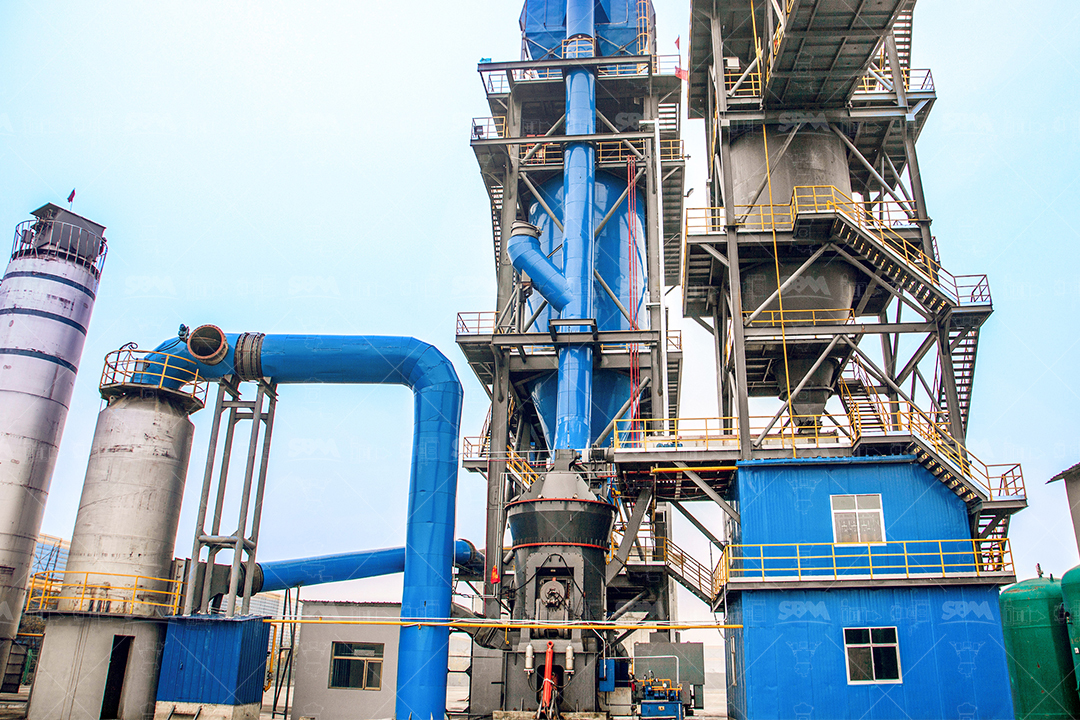
When the priority is maximizing throughput and minimizing footprint for large-scale projects, the LM Vertical Roller Mill is a transformative solution. It integrates crushing, drying, grinding, and classification into a single, compact unit, reducing floor space by approximately 50% compared to traditional ball mill systems—a major advantage for greenfield or space-constrained sites. Its operating costs are notably lower due to a grinding principle where rollers do not directly contact the plate, leading to less wear and 30-40% lower energy consumption. Furthermore, its fully sealed negative-pressure operation eliminates dust spillage, addressing critical environmental and worker safety concerns seamlessly.
The demand for ultra-fine powders (325-4000 mesh) in advanced industries necessitates specialized technology. Here, SBM's SCM Ultrafine Mill and LUM Ultrafine Vertical Mill offer distinct pathways. The SCM series achieves remarkable fineness up to D97≤5μm with high output and low energy consumption—reportedly double the capacity of some jet mills with 30% less energy use. Its heavy-duty rotor and vibration-free design ensure stability. The LUM series, integrating German separation technology, excels in efficiency and product quality for medium-to-high-end applications like masterbatch and synthetic stone. Its intelligent PLC control system allows precise customization of fineness and stable, automated operation, directly reducing labor costs and product variability.
Even for established technology like the Ball Mill, SBM has implemented crucial optimizations. Recognizing traditional issues of high liner/ball wear and energy intensity, SBM's redesigned ball mills use improved structural designs and advanced materials to lower spare part costs. Available in dry and wet process configurations, they provide dependable solutions for applications where other mill types may not be suitable, ensuring versatility within a modern plant's equipment ecosystem.
Ultimately, the recommended brand is one that provides not just a machine, but a partnership and a guarantee of performance. SBM Machinery’s strength lies in its ability to offer a matched solution for virtually any grinding requirement—from raw material intake to finished product packaging—backed by global service support. By focusing on core client pain points: reducing Total Cost of Ownership (TCO), enhancing product quality control, simplifying operation through automation, and guaranteeing environmental compliance, SBM's grinding mills are engineered to be not merely equipment, but foundational investments for sustainable and profitable production.
Frequently Asked Questions (FAQs)
Q1: Our current grinding mill consumes too much energy, significantly raising our operational costs. What solutions can help?
A: Energy efficiency is a primary design focus. Our LM Vertical Roller Mill can reduce energy consumption by 30-40% compared to traditional ball mill systems, while the MTW Mill's cone gear transmission and optimized air flow also deliver significant savings. The Ultrafine Mills are designed for high output with lower specific energy consumption.
Q2: Wear part replacement is frequent and expensive, causing unplanned downtime. How are your mills designed to combat this?
A: We address this through advanced material science and innovative design. The MTW Mill features a unique, replaceable curved shovel blade to protect the roller and ring. Our Vertical and Ultrafine Mills utilize grinding principles that minimize direct metal-to-metal contact, and critical components are made from special, long-lasting materials to extend service cycles dramatically.
Q3: We need to produce very fine and consistent powders (above 1000 mesh), but our existing equipment struggles with stability and yield.
A: Achieving high, consistent fineness is a specialty of our ultrafine grinding series. The SCM and LUM mills are engineered precisely for this, offering adjustable fineness up to 4000 mesh. They incorporate high-precision turbine classifiers and intelligent control systems to ensure stable product size distribution and high primary classification efficiency, minimizing reprocessing.
Q4: Dust control and noise levels are becoming a major compliance issue for our plant. Are your mills environmentally friendly?
A: Absolutely. Our mills, especially the LM Vertical Roller Mill and LUM Ultrafine Vertical Mill, operate under fully sealed, negative-pressure systems, preventing any dust spillage. They are also designed with vibration reduction and noise insulation technologies, ensuring both emissions and noise meet stringent international environmental standards.
Q5: We have limited space for expansion but need to increase grinding capacity. Is an integrated solution possible?
A: Yes. The compact, integrated design of our LM Vertical Roller Mill is ideal for this scenario. It combines multiple processing stages into one unit, reducing the required floor space by about 50% compared to conventional systems, while still offering high capacity (up to 400 TPH), making it perfect for capacity upgrades in space-constrained environments.


