

Calcium carbonate papermaking process
Published on: October 26, 2023
The papermaking industry increasingly relies on high-quality calcium carbonate (CaCO3) as a key filler and coating pigment to enhance paper properties such as brightness, opacity, smoothness, and printability. The efficiency and quality of the final paper product are intrinsically linked to the particle size distribution, purity, and production consistency of the ground calcium carbonate (GCC). However, achieving the optimal fineness—typically ranging from fine (e.g., 400 mesh) to ultra-fine (e.g., 2500 mesh)—while maintaining cost-effectiveness, energy efficiency, and system stability presents significant operational challenges. This article explores how modern grinding technology, specifically tailored for GCC preparation, addresses these pain points by offering integrated solutions that enhance productivity, reduce total operational costs, and ensure environmental compliance.
Traditional grinding systems often struggle with the dual demands of high output and precise particle size control required for modern paper mills. High energy consumption, excessive wear on mechanical parts leading to frequent downtime, inconsistent product fineness, and large physical footprints are common hurdles. Furthermore, environmental regulations necessitate dust-free operations and low noise levels. An effective GCC production line must therefore integrate robust grinding, efficient classification, and reliable material handling into a cohesive, automated system.
For large-scale GCC production with requirements up to 400 mesh, the MTW Series European Trapezium Grinding Mill presents a robust solution. Its design directly tackles core inefficiencies. The patented cone gear whole transmission system ensures higher mechanical efficiency and reliability compared to traditional gearboxes, reducing energy loss. A significant advantage for paper plants is the unique wear-proof shovel blade design. This component, subject to constant abrasion from hard calcium carbonate, is engineered for easy replacement of only the blade segment, drastically cutting maintenance time and spare parts costs. The arc air duct design minimizes pneumatic resistance, ensuring stable material flow and classification within the mill, which is critical for achieving a consistent filler product.
_1769585048661.jpg)
When project scope demands even greater integration and energy savings, the LM Vertical Roller Mill emerges as a mainstream choice. Its core strength lies in consolidating multiple processes—drying (if needed), grinding, and separation—into a single, compact unit. This significantly reduces the plant's floor space, sometimes by up to 50% compared to a traditional ball mill system. For paper mills, this translates to lower civil engineering costs and more flexible layout options. Operationally, the grinding principle of rollers pressing on a rotating table consumes 30-40% less energy than ball mills. The rollers and table, made from high-quality wear-resistant materials, do not directly contact, leading to remarkably lower wear rates and longer service intervals. The integrated automatic control system allows for remote monitoring and adjustment of key parameters, ensuring stable operation and reducing labor dependency.
As paper quality standards escalate, especially for premium coated papers, the demand for ultra-fine calcium carbonate (UF-GCC) with fineness exceeding 1250 mesh grows. This is where specialized ultrafine grinding technology becomes indispensable. The SCM Ultrafine Mill is engineered for this precise task, capable of producing powders with fineness up to 4000 mesh. Its high-efficiency turbine classifier ensures precise particle size cuts, eliminating coarse particles that could impair paper surface quality. The mill's design emphasizes stability and low vibration, which is crucial for maintaining the integrity of ultra-fine particles. Furthermore, its energy consumption is notably lower than alternative jet milling technologies, making ultrafine production economically viable for large-volume paper applications.
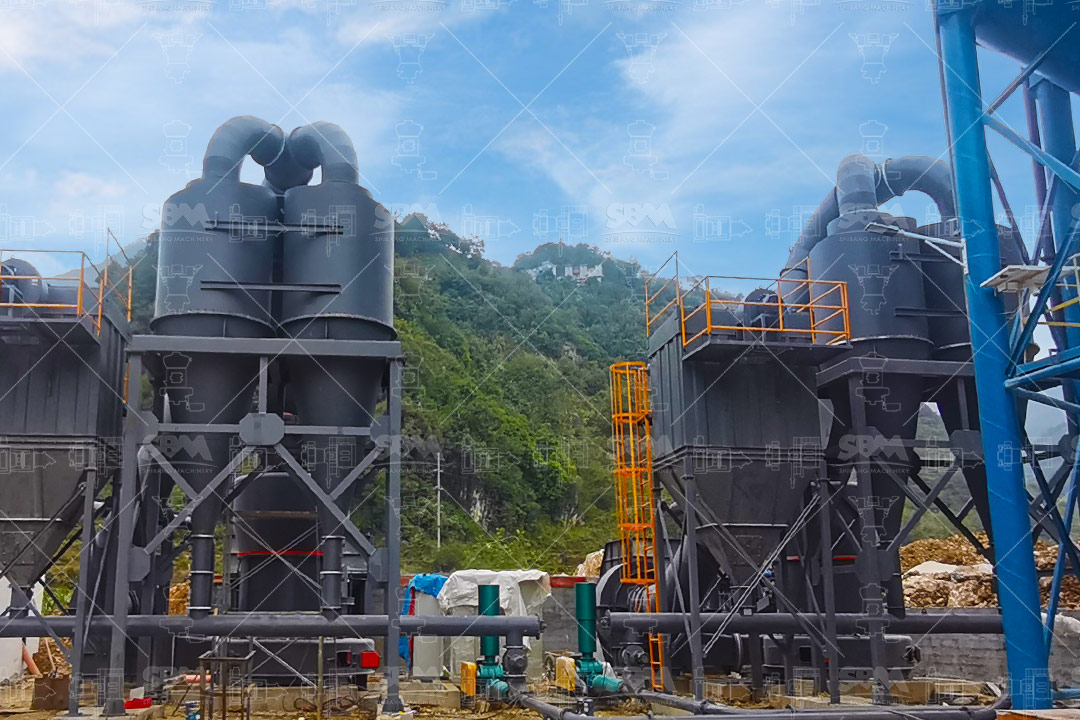
For new projects aiming at the high-end UF-GCC market, the LUM Ultrafine Vertical Mill represents the next generation of technology. It combines advanced grinding roller technology with German-inspired powder separation principles. Its intelligent control system (PLC/DCS) automatically regulates grinding pressure and classifier speed, allowing for real-time customization of product fineness to match specific paper coating recipes. This level of control guarantees batch-to-batch consistency. Environmentally, its fully sealed system operating under negative pressure completely contains dust, a critical feature for maintaining clean plant environments and meeting stringent workplace and emission standards.
Selecting the right grinding solution is not a one-size-fits-all decision. It requires a thorough analysis of the raw material characteristics, desired capacity, target fineness, and existing plant infrastructure. A total solution provider, with expertise across the entire mineral processing workflow, can conduct this analysis and recommend a system—whether it's a standalone mill or a complete turnkey grinding circuit—that delivers optimal lifecycle value. The goal is to move beyond simply purchasing equipment to implementing a production asset that ensures reliable, low-cost, and high-quality GCC supply for the papermaking line.
Frequently Asked Questions (FAQs)
1. What are the main challenges when grinding calcium carbonate for papermaking, and how does your equipment address them?
The primary challenges are high energy consumption, rapid wear of grinding parts, inconsistent particle size distribution, and large system footprint. Our mills are designed with features like integral efficient transmissions, special wear-resistant materials, advanced classifier systems, and compact, integrated designs to directly lower operating costs, extend maintenance cycles, ensure product uniformity, and save space.
2. We need to produce both standard filler GCC and ultra-fine coating-grade GCC. Can one mill handle this range?
While some vertical roller mills offer a wide fineness range, optimal efficiency is achieved with targeted solutions. We often recommend a configuration that may combine different mill types or a system with highly flexible controls, like the LUM series, to cost-effectively cover a broad spectrum from 400 to 2500+ mesh without compromising on efficiency or product quality.
3. How does your equipment ensure environmental compliance in a paper mill setting?
Our grinding systems are designed as fully sealed circuits operating under negative pressure, preventing any dust spillage. Pulse jet bag filters with high collection efficiency (>99.9%) are integrated. Additionally, features like optimized gear drives and sound insulation enclosures ensure noise levels are kept well within regulatory limits.
4. We face issues with unplanned downtime due to mill maintenance. What improvements do you offer?
Downtime is minimized through designs that facilitate easy maintenance and use longer-lasting components. Examples include the replaceable shovel blades in the MTW mill, the non-contact grinding principle in vertical mills that reduces wear, and the use of special alloys for rollers and rings. Our systems also feature remote monitoring to plan maintenance proactively.
5. Is automation supported, and how does it benefit our GCC production line?
Yes, our advanced mills come with PLC/DCS-based automatic control systems. They allow for remote operation, automatic adjustment of key parameters (grinding pressure, classifier speed), and real-time feedback control. This stabilizes the operation, ensures consistent product quality regardless of operator shifts, reduces labor costs, and optimizes energy use.


