

Ore hardness comparison table
Published on: October 26, 2023
Selecting the appropriate grinding equipment is a critical decision that directly impacts operational efficiency, product quality, and total cost of ownership in mineral processing. A primary factor in this selection is the hardness and abrasiveness of the ore being processed. This article provides a professional comparison of ore hardness ranges and matches them with optimal grinding mill technologies, drawing on the extensive application expertise of Shanghai SBM Machinery Equipment Co., Ltd. As a total solution provider serving over 180 countries, SBM's portfolio offers tailored solutions from coarse grinding to ultra-fine powder production, ensuring maximum yield and energy efficiency across the Mohs hardness scale.
The challenge of grinding lies in transforming raw, often highly abrasive mineral feed into a specified particle size distribution. Equipment must withstand wear, deliver consistent output, and operate within economic energy parameters. Harder ores, such as quartz (Mohs 7) or corundum (Mohs 9), demand robust construction and specific grinding mechanics to minimize wear part consumption. Softer materials like calcite (Mohs 3) or gypsum (Mohs 2) may prioritize achieving ultra-fine fineness or high throughput. Misalignment between ore characteristics and mill selection leads to premature wear, unplanned downtime, high maintenance costs, and failure to meet product specifications.
For coarse to medium-fine grinding (output range: 0.2-0.074mm or 30-200 mesh) of hard and abrasive ores, the Ball Mill remains a proven, mature technology. SBM's optimized ball mills address traditional pain points through improved structural design and advanced materials for liners and grinding media, significantly reducing the wear rate that plagues conventional systems. While historically energy-intensive, modern designs focus on efficiency. They are particularly effective in wet grinding applications for mineral dressing, where impact and friction are the primary size reduction mechanisms.
_1769844009486.jpg)
When processing materials of medium hardness like limestone, dolomite, or coal for outputs between 30-400 mesh, the MTW Series European Trapezium Grinding Mill offers a superior balance of efficiency and durability. Its technical advantages directly counter common operational headaches. The unique combined-type curved shovel blade design allows for the replacement of only the blade tip, not the entire assembly, drastically cutting wear part costs and maintenance time. The cone gear whole transmission ensures higher mechanical efficiency and reliability, while the arc air duct design minimizes pneumatic energy loss. This mill is an ideal upgrade from traditional Raymond mills, offering higher capacity and lower operating costs for desulfurization projects, non-metallic mineral processing, and petroleum coke grinding.
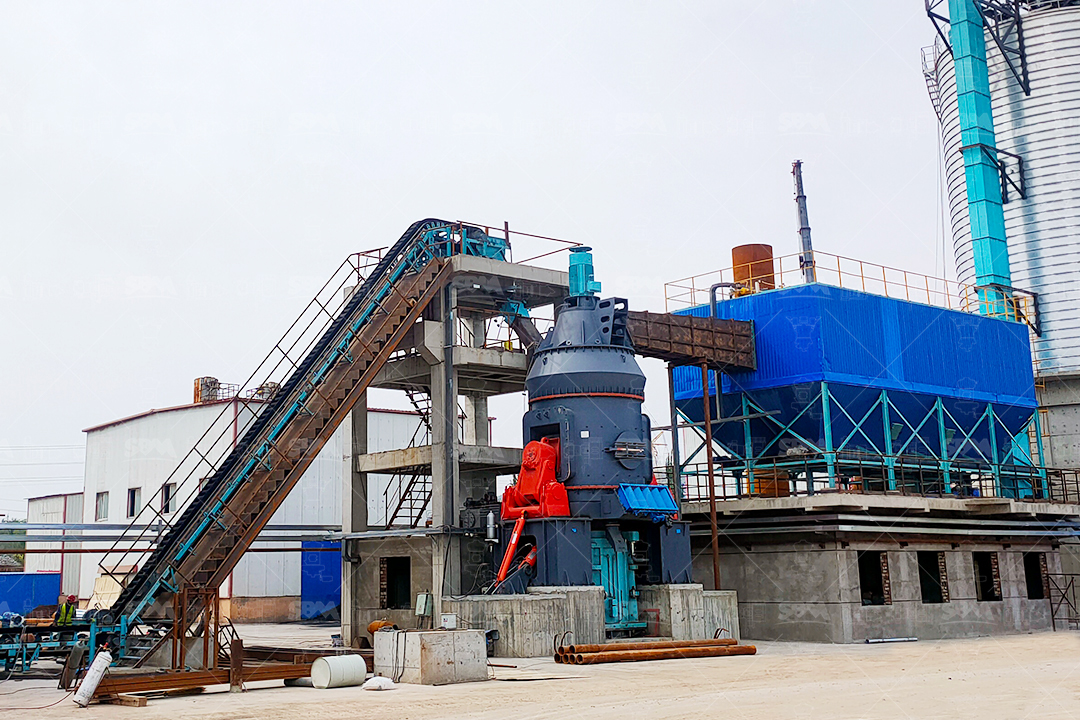
For large-scale production (up to 400tph) of medium-hard materials requiring integrated drying, the LM Vertical Roller Mill represents a leap in efficiency. Its integrated design crushes, dries, grinds, and classifies in a single compact unit, reducing footprint by approximately 50% compared to ball mill systems—a major advantage for space-constrained sites. The operating cost savings are substantial: the grinding roller operates without direct metal-to-metal contact with the table, leading to less wear, and energy consumption is 30-40% lower. Its expert automatic control system enables remote operation and stable process control, addressing labor cost and consistency concerns.
The demand for ultra-fine powders (325-4000 mesh) in advanced industries necessitates specialized technology. For high-value non-metallic minerals like calcite, talc, and barite, the SCM Series Ultrafine Mill and the LUM Ultrafine Vertical Mill provide distinct pathways. The SCM mill is renowned for its ability to achieve consistent fineness down to D97≤5μm with high output and low energy consumption—often double the capacity of jet mills with 30% less energy use. Its heavy-duty rotor and special material rollers ensure durability in continuous operation.
The LUM Ultrafine Vertical Mill, incorporating advanced grinding roller and German powder separation technology, is engineered for the highest tier of ultra-fine processing. It excels in forming a stable material bed for efficient grinding, and its multi-rotor classifier ensures precise particle cut-points with no coarse powder spillover. The PLC/DCS control system allows for precise adjustment of grinding pressure and classifier speed, making it the professional choice for masterbatch, high-grade fillers, and new energy materials where product uniformity is paramount. Both ultra-fine systems feature comprehensive sealing and advanced dust collection, operating under negative pressure to meet stringent environmental standards.
Frequently Asked Questions (FAQs)
Q1: We experience rapid wear of grinding rollers and rings when processing hard quartzite. Which mill technology best mitigates this?
A: For hard, abrasive ores like quartzite, the MTW European Trapezium Mill with its special wear-proof curved shovel blade and durable roller/ring design significantly extends service life. The design allows for partial replacement of wear parts, reducing long-term maintenance costs compared to systems requiring full assembly changes.
Q2: Our project has strict space limitations but requires high capacity for limestone grinding. Is there a compact solution?
A: Absolutely. The LM Vertical Roller Mill integrates multiple functions into a single unit with a footprint about 50% smaller than a traditional ball mill circuit. It can also be installed outdoors, making it an ideal choice for space-constrained greenfield or retrofit projects requiring high throughput.
Q3: We need to produce D97=10μm calcium carbonate powder efficiently. Are jet mills the only option?
A: Not at all. SBM's ultra-fine mills (SCM and LUM) offer a more energy-efficient alternative. The SCM Ultrafine Mill, for instance, can achieve this fineness with over twice the capacity of a typical jet mill while consuming approximately 30% less energy, dramatically lowering your production cost per ton.
Q4: How can we achieve stable product fineness and reduce manual intervention in our grinding process?
A: Modern mills like the LM Vertical Roller Mill and LUM Ultrafine Vertical Mill come equipped with expert automatic control systems (PLC/DCS). These systems enable remote monitoring and control, automatically adjusting key parameters like grinding pressure and classifier speed to maintain consistent product quality, save labor, and ensure operational stability.
Q5: Dust emission and noise are major concerns for our plant's environmental compliance. Do your mills address this?
A> Yes, environmental protection is a core design principle. Our advanced mills (MTW, LM, SCM, LUM) feature fully sealed systems that operate under negative pressure, preventing dust spillage. They are also engineered for low vibration and noise, with optional sound insulation solutions, ensuring your operation meets national and international environmental standards.


