

Professional desulfurization mills in shanghai?
Published: October 26, 2023
In the critical field of environmental desulfurization, particularly for power generation and heavy industries, the preparation of high-quality limestone powder is paramount. Shanghai SBM Machinery Equipment Co., Ltd. stands as a leading total solution provider, offering a suite of advanced grinding technologies specifically engineered to address the complex demands of flue gas desulfurization (FGD) and other air quality control processes. This article explores the specialized milling solutions from SBM, focusing on their application in desulfurization, their technological advantages in overcoming industry-wide operational challenges, and their role in enhancing efficiency and sustainability for global clients.
The core requirement for effective wet limestone-gypsum flue gas desulfurization is a consistent supply of finely ground limestone slurry. The particle size distribution, reactivity, and overall quality of this limestone powder directly impact the efficiency of SO2 removal, system reliability, and operational costs. Traditional grinding systems often struggle with high energy consumption, excessive wear of components, inconsistent fineness, and significant maintenance downtime. SBM's portfolio, developed from decades of global experience serving over 180 countries, provides targeted answers to these persistent pain points.
For large-scale power plant applications requiring high-capacity production of desulfurization limestone powder, the MTW Series European Trapezium Grinding Mill represents a significant evolution. Its design incorporates direct feedback from thousands of industrial users. Key innovations like the Cone Gear Whole Transmission system eliminate traditional vulnerable components like reducers, delivering higher mechanical efficiency and remarkable space savings. The Unique Wear-Proof Perching Knife Design allows for the replacement of only the shovel blade tip, drastically reducing the cost and downtime associated with wearing parts. Furthermore, its optimized Arc Air Duct ensures smooth airflow with minimal resistance, enhancing the internal classification and transportation of fine powder, which is crucial for achieving the target 325-400 mesh fineness typical for FGD systems.
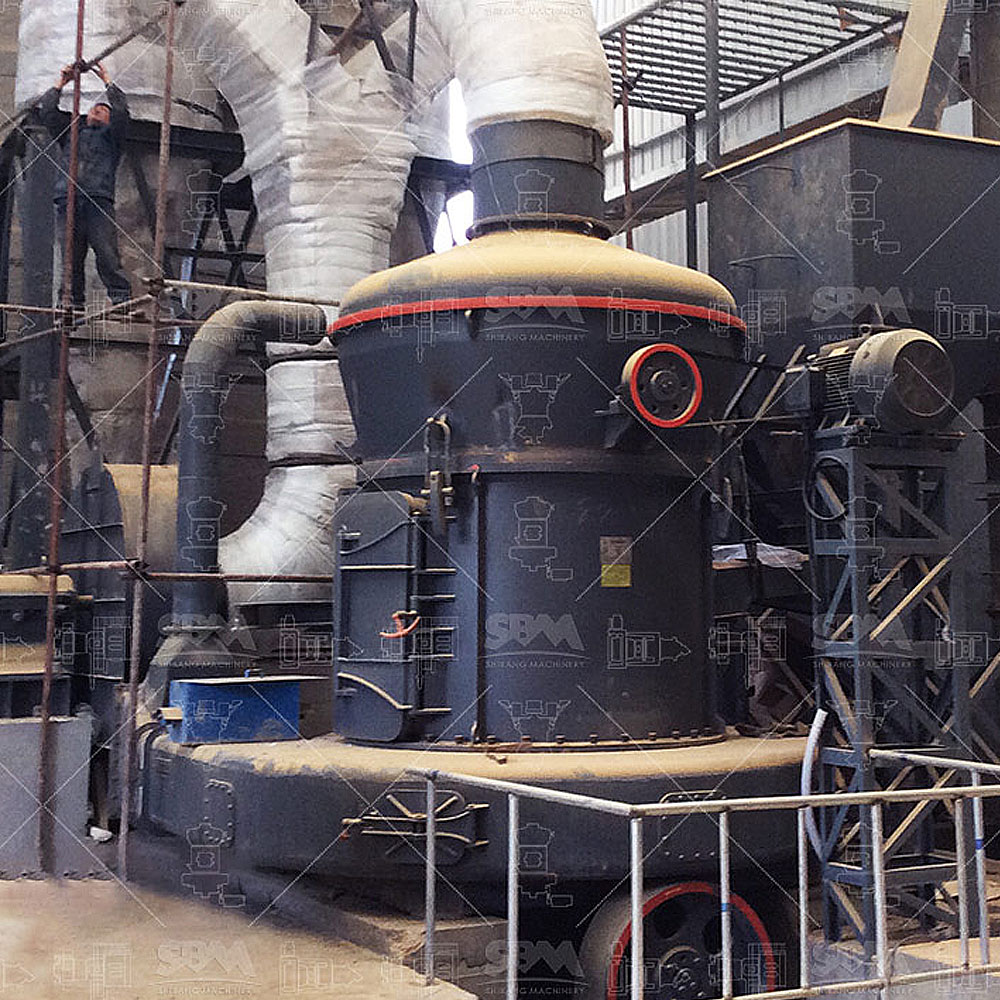
When project constraints demand a more compact footprint and integrated processing, the LM Vertical Roller Mill emerges as a superior choice. It integrates crushing, grinding, drying, and classification into a single unit, reducing the plant's floor area by approximately 50% compared to traditional ball mill systems. This integration is not just about space; it translates directly into lower comprehensive investment costs. For desulfurization, its low operating cost is a major advantage. The grinding rollers operate on a bed of material without direct metal-to-metal contact with the table, leading to dramatically less wear. Combined with its focused grinding action, it achieves energy savings of 30-40% over ball mills. The fully sealed system operating under negative pressure is inherently environmentally friendly, preventing dust spillage and ensuring a clean working environment—a critical consideration for modern industrial facilities.
For applications demanding ultra-fine limestone powders to enhance reaction kinetics or for specialized industrial processes, SBM's ultrafine grinding technology takes center stage. The SCM Series Ultrafine Mill is capable of producing powders in the range of 325 to 2500 mesh, with a one-time fineness reaching D97≤5μm. Its High Output and Low Energy Consumption are achieved through an efficient grinding mechanism, offering more than twice the capacity of some jet mills while consuming 30% less energy. The LUM Ultrafine Vertical Mill further advances this concept, integrating German powder-separating technology for exceptional classification accuracy. Its Intelligentized Control System allows for precise adjustment of grinding pressure and classifier speed, ensuring a stable and customizable product fineness crucial for high-end applications. Both mills feature advanced sealing and dust collection systems, with emissions far exceeding international environmental standards.
_1770275881549.jpg)
Even for the well-established technology of the ball mill, SBM has implemented focused optimizations. Recognizing complaints about rapid liner and grinding media wear and high energy use, SBM's optimized ball mills employ improved structural designs and premium materials to extend service life and reduce the frequency of spare part replacement. They offer both dry and wet grinding configurations, providing versatile solutions for various desulfurization reagent preparation methods.
Ultimately, selecting the right desulfurization mill is a strategic decision that balances capacity, fineness, energy use, longevity, and total cost of ownership. Shanghai SBM Machinery provides not just equipment, but a comprehensive partnership, drawing on a vast repository of global project experience to deliver grinding systems that are reliable, efficient, and built to meet the stringent demands of modern environmental protection. Their machinery ensures that industries can meet their desulfurization goals effectively, contributing to cleaner air and sustainable industrial operations worldwide.
Frequently Asked Questions (FAQs)
1. What is the most common operational challenge with desulfurization mills, and how does SBM address it?
The most frequent issues are high energy consumption and rapid wear of grinding components, leading to elevated operating costs. SBM mills like the LM Vertical Roller Mill and MTW European Mill are designed specifically to combat this. The LM mill's bed-grinding principle reduces wear by up to 50% and cuts energy use by 30-40%, while the MTW's modular wear-part design minimizes replacement cost and downtime.
2. Can your mills achieve the very fine particle size (e.g., 2500 mesh) sometimes required for advanced applications?
Yes, for specialized applications requiring ultra-fine powders, our SCM Ultrafine Mill and LUM Ultrafine Vertical Mill are engineered to produce powders from 325 to 4000 mesh. They incorporate high-efficiency turbine classifiers and precise control systems to ensure consistent, high-fineness output, enhancing the reactivity of sorbents.
3. How does your equipment ensure environmental compliance within the grinding plant itself?
Our mills, particularly the vertical roller and ultrafine series, are designed as fully sealed systems operating under negative pressure. This design, coupled with high-efficiency pulse dust collectors, virtually eliminates dust spillage. Additionally, noise reduction technologies are integrated to keep workplace noise levels well within regulatory limits.
4. We have limited plant space. Is a compact grinding system possible for desulfurization?
Absolutely. The LM Vertical Roller Mill is an ideal solution for space-constrained sites. By integrating multiple functions (drying, grinding, separation) into a single unit, its footprint is about half that of a traditional ball mill circuit. It can also be installed outdoors, further saving on building costs.
5. How do you ensure the stability and consistent quality of the limestone powder for continuous FGD operation?
Consistency is ensured through intelligent automation. Our mills feature advanced PLC/DCS control systems that continuously monitor and adjust key parameters like grinding pressure, feed rate, and classifier speed. This automation maintains a stable material bed and precise classification, resulting in a uniform product fineness that is critical for reliable and efficient desulfurization reactor performance.


