

Causes of backflow at mill feed inlet?
Published on: October 26, 2023
Backflow at the mill feed inlet is a disruptive operational issue characterized by the reverse flow of material or air from the grinding chamber back into the feeding system. This phenomenon can lead to significant production losses, equipment wear, safety hazards, and system instability. Primarily caused by pressure imbalances, improper system design, or suboptimal equipment configuration, backflow undermines the efficiency and reliability of any milling operation. This article delves into the root causes of this common industrial challenge and explores how SBM Machinery's advanced grinding technologies, such as the MTW European Trapezium Mill and LUM Ultrafine Vertical Mill, are engineered with specific features to prevent such issues, ensuring smooth, continuous, and high-yield production.
The grinding process is a delicate balance of material flow, air pressure, and mechanical force. When this equilibrium is disrupted, backflow can occur. One of the most frequent culprits is an excessive negative pressure within the grinding chamber. While negative pressure is essential for directing airflow and finished powder toward the collection system, an overly strong suction can create a vacuum that pulls material backward through the feed inlet, especially if the feeding mechanism cannot supply material at a matching rate. This is often a symptom of an improperly tuned fan or damper system.
Another critical factor is the design and condition of the feeding system itself. A feed inlet that is too narrow, obstructed, or positioned incorrectly relative to the grinding rollers/balls can create a physical bottleneck. When incoming material cannot enter the grinding zone swiftly enough, it builds up and can be forced back by the dynamic action inside the mill. Furthermore, worn or inefficient airlock feeders (like rotary valves) in closed-circuit systems can fail to provide an adequate seal against the mill's internal pressure differential, allowing air and fine particles to escape backward.
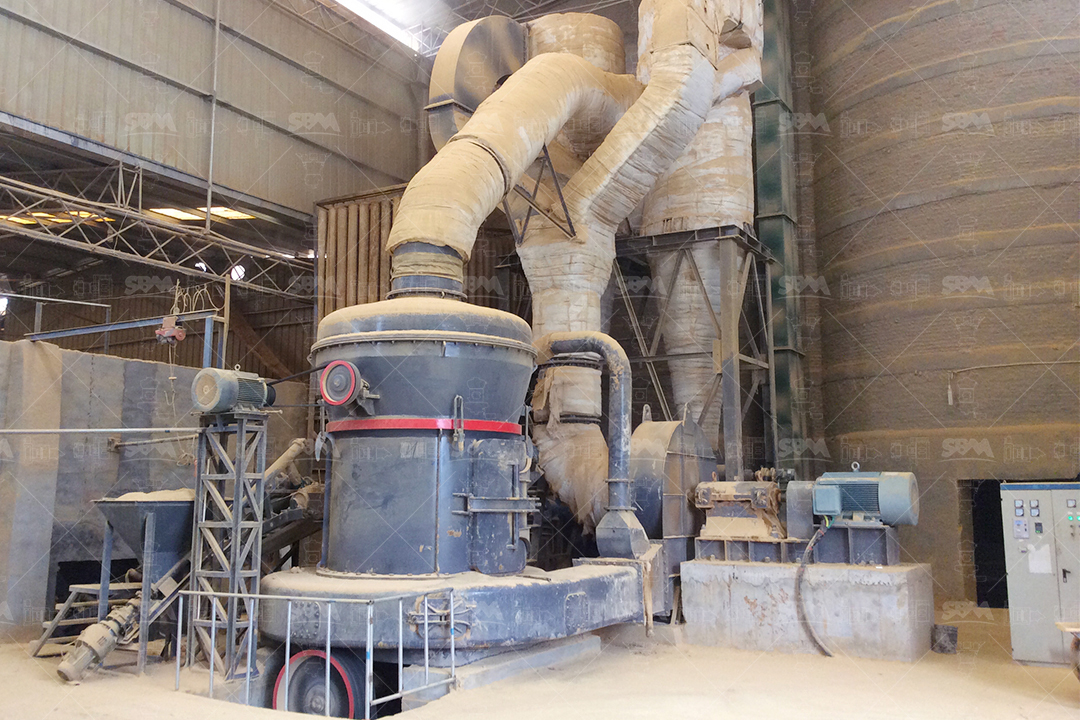
The physical properties of the feed material also play a significant role. Materials with high moisture content can be sticky and prone to clogging the feed chute. Similarly, very fine or low-density raw materials are more susceptible to being carried by errant air currents. A sudden change in feed rate or material characteristics can instantly upset the system's equilibrium, triggering a backflow event. This underscores the need for a mill system that is not only robust but also adaptable and intelligently controlled.
SBM Machinery addresses these core challenges through intelligent mill design. Take our MTW European Trapezium Mill as an example. Its innovative curved shovel blade design is not merely for wear resistance. By optimizing the feeding angle, it actively guides material into the grinding zone with positive engagement, reducing the chance of material hesitation or rollback at the critical entry point. Furthermore, the mill's arc air duct design ensures smooth, laminar airflow within the system. This minimizes turbulent eddies near the feed area that could otherwise disrupt the forward material path and contribute to reverse flow. The system is engineered for efficient, directed material and air movement.
For operations requiring ultra-fine grinding, the LUM Ultrafine Vertical Roller Mill and SCM Ultrafine Mill offer superior stability. The LUM mill's advanced grinding curve design for the roller and lining plate promotes the rapid formation of a stable material bed. This bed acts as a natural buffer and seal at the grinding zone, stabilizing internal pressures and minimizing pressure spikes that can cause backflow. Its integration with a PLC/DCS automatic control system is crucial. This system continuously monitors and automatically adjusts key parameters like grinding pressure and classifier speed. If a sensor detects a pressure imbalance that could precede backflow, the system can make micro-adjustments to the grinding roller pressure or fan speed in real-time, maintaining equilibrium before a problem manifests.
_1770308480294.jpg)
Moreover, SBM's Vertical Roller Mills (LM Series) inherently benefit from a compact and integrated design. By combining drying, grinding, and classification in a single, vertically arranged unit, the material transport path is more direct and less prone to the complex pressure nodes found in longer, horizontal systems. The negative pressure operation across the fully sealed system is carefully calibrated. While sufficient for powder conveyance, it is managed to avoid the excessive suction that pulls material backward, supported by high-efficiency sealing at all transfer points.
Preventing backflow is not about a single component but a holistic system approach. It requires a mill designed with aerodynamic efficiency, precise feeding mechanics, intelligent control, and structural integrity. SBM's portfolio, from the high-capacity MTW and LM mills to the precision-focused LUM and SCM ultrafine mills, is built on this philosophy. By choosing equipment engineered with these preventative features, plant operators can eliminate a major source of downtime, reduce maintenance costs from feed system wear, and achieve the consistent, high-quality output that modern industry demands.
Frequently Asked Questions (FAQs)
- We frequently get blockages and backflow when processing sticky, high-moisture clay. Can SBM mills handle this?
Absolutely. Our LM Vertical Roller Mill and MTW European Trapezium Mill integrate robust drying capabilities. The LM mill, in particular, uses hot air (from a hot air furnace or kiln exhaust) to dry moisture content of up to 15% simultaneously with grinding, effectively preventing material agglomeration and ensuring smooth feed. - Our current mill's backflow causes dust to leak from the feed inlet, creating an environmental and housekeeping issue. How is this solved?
SBM mills are designed as fully sealed, negative-pressure systems. The combination of advanced sealing technology (like at rotary valve joints) and efficient pulse dust collectors ensures that the entire grinding circuit contains dust. Any air escaping the feed inlet is inward, not outward, meeting stringent environmental standards. - We experience backflow especially during startup and shutdown. Is this normal?
While common in poorly configured systems, it is not inevitable. SBM's expert automatic control systems (standard on LM, LUM, and SCM mills) manage sequential startup and shutdown procedures. This includes carefully balancing fan speed, feeder rate, and grinding pressure to maintain stable internal conditions throughout transient operational phases. - Does increasing mill output automatically increase the risk of backflow?
Not with properly designed equipment. SBM mills like the MTW and LUM series are engineered for stable operation across their capacity range (e.g., 3-40tph for MTW, 10-70tph for LUM). The key is the synchronized design of the feeding system, grinding power, and air volume. Our systems are balanced at the factory for optimal performance at their rated capacity. - Can the classifier settings affect feed inlet backflow?
Yes, significantly. An incorrectly set or malfunctioning classifier can allow excessive coarse material to recirculate, disrupting the internal material balance and airflow. SBM's high-efficiency classifiers (like the multi-rotor classifier in the LUM mill) provide precise particle separation, ensuring smooth internal circulation and stable system pressure, which mitigates backflow risk.


